Bitunix card: a virtual Visa for USDT, scored honestly
 Available in US
The Bitunix card is a payment card that turns a Bitunix exchange balance into a spendable Visa balance. The thing that makes it different from most crypto cards is what it is *not*: it is not yet a physical card, it does not work at ATMs, and it accepts exactly one cryptocurrency, USDT, sent from inside the Bitunix app. Everything you pay for is converted from that USDT balance into the merchant’s currency, and a small number of fees sit on top of that conversion.
I have been through the card’s public help center, the cardholder agreement, the press release from July 2026 and the public Trustpilot profile for the wider exchange. The picture that comes out is mixed. The card is free to issue and use, and the cashback on offer is competitive once your exchange VIP level is high. But the closed list of 80 countries and regions, the absence of a named card issuer or licence, and the fact that the only thing you can load is USDT, moved from inside Bitunix, all narrow who this product is actually for.
The conditions in this review are current as of October 28, 2026.
Verdict
The card sits at 5.3 out of 10. The score reflects the trade-off that defines this product: the card is cheap and simple to run once you already hold USDT on Bitunix, but it is also narrow, and the wider company behind it has more questions than the card page answers.

| Criterion | Mark | Why it lands there |
|---|---|---|
| Who can get it | 7 / 10 | Eighty countries and regions are listed as restricted, but the list is presented as “may include”, and major economies (US, Canada, France, Turkey, Singapore, Hong Kong, China, India, UAE, Brazil) are on it |
| Cost | 6 / 10 | No issuance, monthly or annual fee; 0% crypto conversion; 1.5% FX markup on top of the Visa rate; 0.5% cross-border fee; USD 1 inactivity fee per month after 12 months |
| Top-up options | 3 / 10 | USDT only, moved from the Bitunix Spot, Futures or Earn account; no external blockchain deposits and no bank transfers |
| Reliability and complaints | 4 / 10 | The card programme is run by Blue Rock Management Pte. Ltd., the card issuer and licences are not named; the Bitunix exchange Trustpilot profile is at 3.7 stars over 819 reviews and includes account-freeze reports |
| Everyday use | 5 / 10 | Virtual Visa only at launch, with a physical card planned; Apple Pay, Google Pay, WeChat Pay, Alipay, PayPal, LINE Pay, GrabPay and Samsung Pay are listed; ATMs are not supported in this first version |
The audience this suits is, in practice, Bitunix exchange users who hold USDT and want to spend it directly online without first cashing out to a bank. If you do not already keep a USDT balance on Bitunix, this card has very little reason to exist for you. And if you live in a country on the restricted list, it is not an option at all.
Who can get the Bitunix card
The eligibility rule is by residence, and the test is which country you live in rather than which passport you hold. The Help Center page called “Restricted Jurisdictions” lists 80 countries and regions that the card is not available in, and warns that the list “may include” those names, so it is not exhaustive. The list I read includes the United States, Canada, France, Turkey, Ukraine, Singapore, Hong Kong, China, India, the United Arab Emirates, Cyprus, Serbia, Armenia, Kyrgyzstan, Tajikistan, Brazil, Israel, the Russian Federation and Belarus, among others. The card agreement is the controlling document; the help center list is a working guide.
You also have to finish the exchange’s identity verification before you can apply for a card, and that verification covers a confirmed residential address. The card does not sit in its own onboarding flow — it is one product in a wider KYC framework. The card-specific level, the documents asked for, the age threshold and the expected processing time are not stated on the public pages I checked. If the standard exchange KYC requirements are not enough for a card, you will only find that out when you try to apply.
A few practical consequences follow. If you live in one of the listed countries, the application will not proceed. If you live somewhere not on the list but travel frequently, the rule is still the country of your residence. Citizenship of a restricted country is not, on its own, a bar — the card tests where you live. And if Bitunix adds more countries to the restricted list (the list was last updated on 8 October 2026), existing cardholders can in principle lose access at renewal, so this is something to check before you load a balance.
How to get the Bitunix card
The signup path is short and is laid out as a straight line: sign up to Bitunix, complete verification, apply for the card, and the virtual card is ready once your application is approved. There is no separate card application form that I could see — the card lives inside the existing exchange account.
The card itself is a Visa, virtual only at launch. A physical card is described as “Phase Two” and is not yet available to apply for. The cardholder agreement, last updated in mid-2026, says the expected delivery window for a future physical card is seven to twenty business days once it is in production, and that the physical card fees “depend on delivery location” — in other words, the fee table for the physical card is not yet published.
Inside the app the card sits in Card Management, which is also where you freeze or unfreeze the card, adjust limits, and close it. There is no separate card app, so anyone who has used the Bitunix mobile app for trading will already be familiar with the screens the card shows up in. The Help Center says you can replace the virtual card at no cost, and that closing the card is also free.
The actual document list, processing time and rejection reasons are not stated on the public card pages. If you have gone through Bitunix’s standard KYC already, the card step appears to be a single click; if you have not, the card waits on the exchange-level verification.
What the Bitunix card really costs
Issuance is free, the monthly fee is zero, and the annual fee is zero. That is the headline. The cost story only really starts once you spend.
| Fee or limit | Value |
|---|---|
| Issuance (virtual) | 0 |
| Monthly fee | 0 |
| Annual fee | 0 |
| Crypto conversion fee | 0 |
| FX markup | 1.5% on top of the Visa rate |
| Cross-border fee | 0.5% on USD spending |
| Small-transaction service fee | USD 0.30 per transaction for settlements under USD 10, first 3 per month waived |
| WeChat Pay and Alipay fee | 3% on payments over 200 CNY |
| Inactivity fee | USD 1 per month after 12 months of no activity |
| Card replacement | 0 |
| Cancellation | 0 |
| ATM withdrawals | not supported in the current version |
| Spending limit per transaction | USD 10,000 |
| Daily spending limit | USD 10,000 |
| Monthly spending limit | USD 50,000 |
These limits are adjustable from inside Card Management, so the defaults are not a hard ceiling — they are a starting point. But the only thing you can adjust them to is something Bitunix is willing to allow.
What this looks like in everyday payments
A USD payment to a US merchant. Your USDT is converted to USD at 1:1 on the card, so the card balance is in USD, and the merchant is paid in USD. The cross-border fee is 0.5% on top of the 1.5% FX markup, plus any cashback you are owed. If you are at VIP 1 you receive 1% back; at VIP 8 you receive 8% back. For a USD 100 payment at the top VIP level, you are paying USD 1.50 in FX markup, USD 0.50 in cross-border fee and getting USD 8 of cashback. The card is, in practice, free or slightly profitable at that VIP level.
A EUR payment to a European merchant from a US-issued card. This is the more realistic test for a lot of readers. The card converts USD to EUR using the Visa rate, with a 1.5% FX markup on top, plus the 0.5% cross-border fee. On a EUR 100 payment the markup is about EUR 1.50 and the cross-border fee is about EUR 0.50, before any cashback. WeChat Pay and Alipay are not in play because you are not paying in China.
A small WeChat Pay or Alipay payment under 200 CNY. The 3% China-domestic fee does not apply, so the only charges are the FX markup and any cross-border fee. A small-payment service fee of USD 0.30 kicks in for settlements under USD 10, but the first three such transactions in any month are waived, so light users do not see this charge at all.
The honest summary is that this card is cheapest at the top of Bitunix’s VIP ladder, and gets more expensive — in cash terms — the lower your VIP level and the smaller your transactions. If you spend some amount a month at VIP 4 (4% cashback), the cashback you get back is offset by the FX markup and cross-border fees. At VIP 1 (1% cashback) the fees may be higher than the cashback depending on your volume. The maths still works, but it works much better if you hold the exchange’s higher VIP tiers.
Top up: how the Bitunix card is loaded
Top-up is the single most restrictive thing about this product. Only one cryptocurrency is supported, and only one way of moving it is supported.
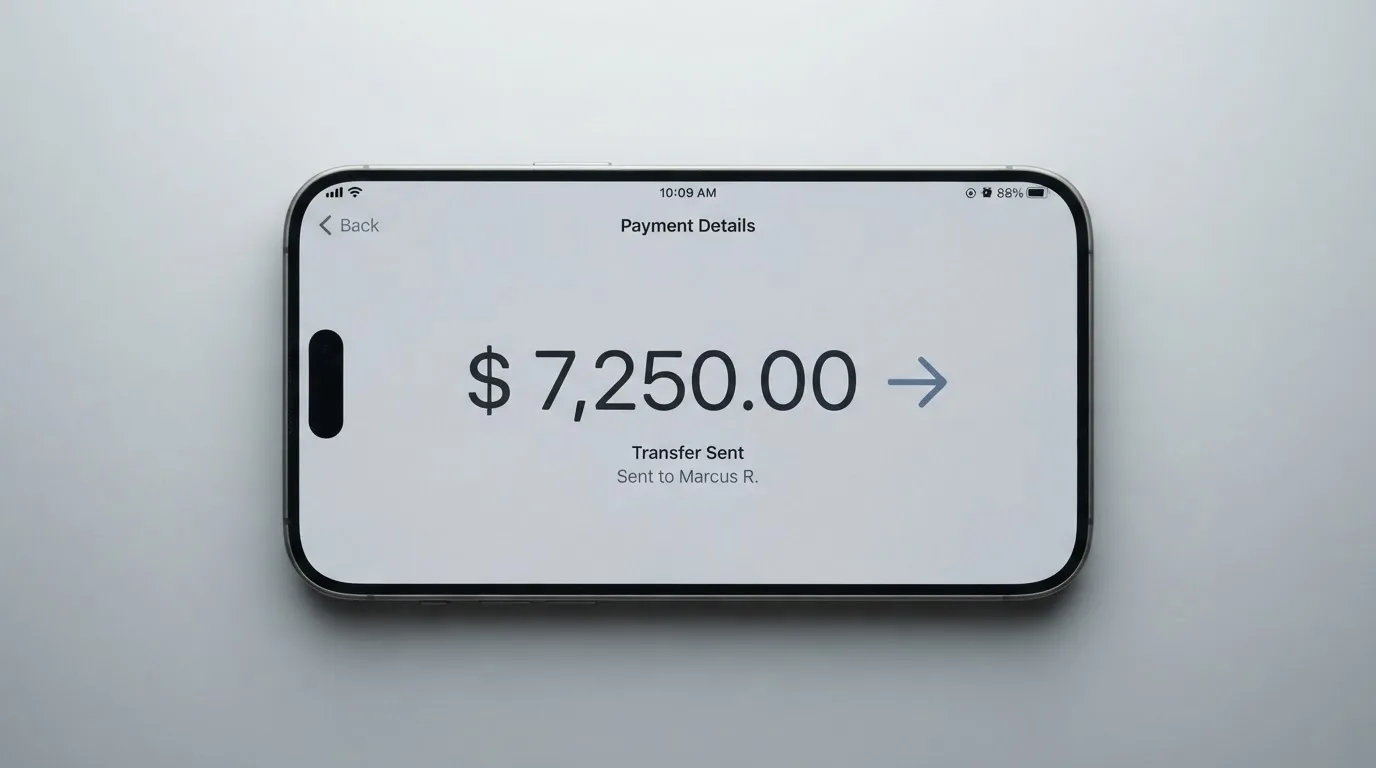
You move USDT from your Bitunix Spot, Futures or Earn account into the Card Account. That is the entire top-up flow. There is no way to send USDT directly to the card from an external wallet, no bank transfer, no card-to-card funding, and no direct blockchain deposit. Networks are not stated on the public pages — because the network is irrelevant if the USDT never leaves Bitunix’s own system.
The USDT converts to USD at 1:1 on the card, so the card balance is denominated in US dollars and that is the balance the merchant sees. A minimum top-up is not stated. The top-up is “instant” in the sense that it is an internal ledger move, not a blockchain transaction, so there is no network fee and no waiting for confirmations.
The flipside is that you cannot pre-load a card from a hardware wallet or a self-custody address, and you cannot fund the card from outside Bitunix at all. If your USDT is on another exchange or in your own wallet, you have to withdraw it to Bitunix first — which is a withdrawal fee on that other platform and, in the case of a self-custody wallet, a network fee. By the time the USDT arrives on Bitunix, you have paid for it twice: once to send it, and again to swap it later.
There is also no auto top-up. If the card balance is too low at the moment of payment, the transaction declines. Card Account can be topped up manually in the app, but you do not get a notification before a decline, and partial authorisations are not described.
Paying with the Bitunix card every day
Once the virtual card is in the Bitunix app, it can be tokenised into the major mobile wallets. The Help Center lists Apple Pay, Google Pay, WeChat Pay, Alipay, PayPal, LINE Pay, GrabPay and Samsung Pay, with the usual caveat that availability depends on the platform and the region. In practice, the wallets that are usable in your country are the ones that will work — the list is wide, but the regional restrictions are real.
You can also spend the card online at any merchant that accepts Visa, subject to the merchant category codes that Bitunix blocks. The Help Center mentions that cashback excludes “certain MCCs” and cash-like transactions, but the blocked list itself is not given. A gambling MCC (the four-digit code covering casinos, betting and lotteries) is the kind of code that is often excluded by issuer policy, so it is worth assuming that gambling will not earn cashback even if the card does not decline at the till.
Cashback, in detail
Cashback is paid in USDT to the Card Account after each transaction settles, and the rate depends on your Bitunix exchange VIP level. The rates are:
- VIP 1: 1%
- VIP 2 to 3: 2%
- VIP 4 to 5: 4%
- VIP 6 to 7: 6%
- VIP 8: 8%
The cashback is described as “up to” these percentages, which usually means the actual rate is the figure shown in your account, not the headline figure. The card page does not give a per-transaction cashback cap, but a company press release from 16 July 2026 (distributed via Chainwire and reported on by Decrypt and others) says the cap is 1,000 USDT per month at the top rate. The same release says the card balance can earn a yield “up to” 11.6% a year, depending on the asset and the conditions — that number is a press-release figure, not a card-page figure, so treat it as unofficial until Bitunix confirms it in the app.
Refunds, chargebacks and cash-like transactions are excluded from cashback. Pending cashback does not show up in the balance until the transaction is settled, and a refund reverses the cashback as well as the spend.
Disputes and refunds
If something goes wrong, the first step is to contact the merchant — the cardholder agreement says merchant refunds usually arrive in five to fourteen business days. If the merchant will not refund, you can file a dispute through the card app; filing is free, but if the dispute escalates to a formal Visa chargeback, the fee is USD 50. The investigation is described as “several weeks and, in some cases, up to 90 days”. You have to report any unauthorised transaction within 14 days of the transaction or its posting date, whichever is the relevant date for you.
Two things to bear in mind. First, the fee wording in the help center says USD 50 per case, while the fees article says USD 50 per transaction — if you have several disputed transactions on the same merchant relationship, the total cost could be more than USD 50. Second, the cardholder agreement says chargeback rights are not guaranteed, and that cash-like transactions may be ineligible. The contract, not the marketing page, is the one that applies in a dispute.
What can go wrong with the Bitunix card
This is the section I would read first if I were deciding whether to put a meaningful balance on this card.
Company and licensing
The company named in the card agreement is Blue Rock Management Pte. Ltd., a Singapore entity. The card itself is issued by an unnamed “Issuer”, and Bitunix’s licences are not stated on the card pages. The exchange side of the business is run through Bitunix.com, which has been operating since 2022. The Trustpilot profile for the exchange (not the card) shows 3.7 stars from 819 reviews, with 546 of those in the last 12 months; themes include poor customer service, a slow mobile interface, and account freezes that require extra verification. The profile itself notes that the company “has received regulatory attention”. None of that is a finding about the card specifically — no card-related complaints appeared in the search I ran — but it tells you the kind of operational friction other users have reported.
Card funds are not bank deposits
The cardholder agreement is explicit: no entity takes custody of fiat funds on behalf of users, and card funds are not bank deposits and not deposit-insured. If Bitunix or the issuer were to fail, the card balance would be a claim in a liquidation, not a guaranteed payout. This is the same risk you take on any prepaid card issued by a non-bank, but it is worth saying out loud: the money on the card is only as safe as the company behind it.
Country and rule changes
The restricted-jurisdictions list is updated periodically — the version I read was dated 8 October 2026. If your country of residence is added after you have a card, the card can stop working for you, and the agreement gives the issuer the right to close the programme. There is no grandfathering promise on the public pages.
The single-asset trap
The card accepts only USDT. Tether says USDT is intended to be backed 1:1, but the issuer has historically had moments of stress, and a stablecoin is only as stable as the reserves behind it. If you want to spend Bitcoin or Ethereum, the card does not support that, and converting to USDT first means a second conversion step (and a second spread) before you can spend. The card also has no auto-conversion feature, so the only asset that pays the bill is USDT.
Customer support and dispute friction
Support is available through the Bitunix app (upper-right corner), the Help Center, the Contact Support page, Telegram and Discord. There is no card-specific phone line, and no card-specific live chat. The exchange-level reputation for support is poor, and that is the same team that handles card disputes.
Cashback is conditional
The cashback rate is tied to your exchange VIP level, which is tied to your 30-day trading volume and your asset holdings on the exchange. If you stop trading, your VIP level drops, and so does your cashback. The “up to 8%” headline is, in practice, a ceiling that requires you to keep trading at the top tier. The 1,000 USDT monthly cap is a figure mentioned in company press releases rather than on the card page itself, so it is unofficial and not confirmed by the card. It is a separate ceiling that even high-volume users can hit.
What to take instead of the Bitunix card
The Bitunix card is the only one of the cards below that locks you to a single cryptocurrency and to internal funding. The alternatives give you more flexibility, and each costs that flexibility in a different way.
Bybit Card
The Bybit Card scores 6.0 out of 10 in this comparison. The available regions are Argentina, AIFC (Kazakhstan), Georgia, Kazakhstan, Australia, Mexico, Brazil, Peru and a wider Asia Pacific group, with the application asking for your country of residence and offering a waitlist if yours is not on the list. The cards page is explicit that the product is not for European Economic Area customers. Bybit’s fiat-service restricted list (not the card as such) includes Belarus, Russia, Serbia, China and the US, so the availability picture overlaps with Bitunix’s in some places and differs in others.
The card supports both virtual and physical issues, with virtual issuance free “until further notice” and physical card fees that depend on the region (29.99 USD in Australia, 5 USD/USDT in Argentina, 29.99 USDT in Georgia and Kazakhstan’s AIFC, 5 USDT in Asia Pacific, and free in Brazil and Mexico; VIPs in Australia, AIFC, Georgia and Asia Pacific get the physical card free). Crypto conversion is 0.9% over the One-Click Sell rate in most regions, 0.5% in Argentina. FX is 2% on top of the network rate in most regions, 7% in Argentina, 1.5% in Brazil and 1% in Peru.
The funding model is more flexible: the card has no balance of its own, drawing on the Funding Account and Flexible Easy Earn balance instead, with fiat spent first and crypto converted at the point of payment if fiat is short. Supported assets are BTC, ETH, XRP, USDT, USDC and GRAM, with a default priority order you can change in the dashboard.
Cashback is points-based, with tiers from Base (2%, USD 5 cap, no spend threshold) up to Infinite (10%, USD 600 cap, USD 25,000 monthly spend). Crypto-funded spending earns points or cashback, fiat-funded spending does not. There is a 30-day welcome offer of 10% cashback up to 110 USDT.
Coinbase Card
The Coinbase Card scores 6.4 out of 10. It is the most restrictive geographically: all US states except Hawaii, with no other countries currently. KYC follows the USA PATRIOT Act identity rules. The card is a Visa prepaid debit available as virtual or physical, and any crypto held on Coinbase can be spent — the conversion happens at the point of payment, so the card balance itself is in US dollars.
The fee structure is “zero spending fees and no annual fees”, with the conversion spread at the point of payment being the main cost. Funding is by linking a bank account or having part of a paycheck deposited into Coinbase, both fee-free. The optional crypto rewards are paid on every purchase, but the rate is variable, shown in the app, and the user picks from a rotating list of reward coins.
This is the cleanest of the three to use, but the geographic limit is hard: outside the US, the card is not available.
OKX Card
The OKX Card scores 6.2 out of 10. It is an EU product — the EEA plus Norway was the launch footprint, with Iceland and Liechtenstein excluded (one source describes the carve-out as “the entire EEA”, which is inconsistent with the launch statement). The card is a Mastercard, euro-denominated, virtual only, and sits inside OKX Pay. The issuer is an unnamed European licensed payment provider; OKX Europe Ltd. is the MiCAR-licensed entity on the crypto side.
Card fees are listed as none. There is no OKX FX fee, and the conversion spread is 0.1% per the most recent explainer, against a 0.4% figure in the launch press release — the explainer is the newer number, but the conflict is real and the actual rate is what shows up in the app at the time of payment. Funding is by USDC or USDG held in OKX Pay; other coins must be converted first, and there is no auto top-up, so a payment that exceeds the balance declines.
Cashback is paid on USDG purchases only (USDC earns nothing), and the rates are: Regular 2% capped at EUR 10; VIP1 4% capped at EUR 300; VIP2 4.5% capped at EUR 450; VIP3 5% capped at EUR 1,000; VIP4+ 10% capped at EUR 1,000. Note that these figures, including the 1,000 EUR cap at the top tier, come from company press releases and are not confirmed by the official card documentation, so the in-app number is the one to trust. The table figure of 10% is in tension with the body text of 2–5%. There was a 30-day launch promo of up to 20% cashback for VIPs and 15% for regular users.
Who I would recommend the Bitunix card to
The short answer is: people who already keep a USDT balance on Bitunix, and who spend most of that balance online in USD. Everyone else will get a better experience from a card that takes more assets, costs less on FX, or has a clearer regulatory wrapper.
If you are a Bitunix user with a meaningful USDT position, this card is a clean way to spend that balance without first cashing out to a bank account. The 1:1 USDT-to-USD conversion on the card means you do not have to take stablecoin depeg risk on the way in, and the cashback at the upper VIP levels can offset most of the FX and cross-border fees. The card is also free to issue, free to replace, and free to close, so trying it out is essentially free if you already pass the exchange’s KYC.
If you are not already a Bitunix user, the picture is different. Funding the card means depositing USDT to Bitunix from another exchange or your own wallet, paying the withdrawal fee on the source side and the network fee on the chain you choose. The card is then a payment rail that is geographically narrower than its alternatives, has a single funding asset, has no physical card yet, and is run by a company that does not name its issuer or its licences. None of these are deal-breakers on their own, but together they add up to a card that is hard to recommend as a primary payment method outside the Bitunix ecosystem.
If you live in one of the 80 countries and regions on the restricted list, the card is not an option. The list covers many major economies, so this is not a small-print restriction. And if you live somewhere that is not on the list today, bear in mind that the list was updated in October 2026, and that the issuer reserves the right to add more countries.
The honest summary is that this is a niche product done at a competitive price, with the niche being “Bitunix exchange users who want to spend USDT online”. If that is you, the card is worth setting up. If it is not, the alternatives above are stronger.
Frequently asked questions
What is the Bitunix card?
The Bitunix card is a virtual Visa card issued through the Bitunix exchange, with the card balance funded in USDT that converts 1:1 to USD on the card. At launch the card is virtual only, with a physical card described as a future phase, and ATMs are not supported in the first version.
How does the Bitunix card work?
You move USDT from your Bitunix Spot, Futures or Earn account into a Card Account inside the app, and the virtual card spends that balance at merchants that accept Visa. The card has a USD balance, and the merchant’s currency conversion happens at the Visa rate with a 1.5% markup on top.
Is Bitunix a bank?
No. Bitunix is a cryptocurrency exchange, and the company named in the card agreement is Blue Rock Management Pte. Ltd. The cardholder agreement is explicit that card funds are not bank deposits and are not deposit-insured, so the balance on the card is a claim against the company rather than a guaranteed deposit.
Who owns Bitunix?
The card pages and the cardholder agreement name Blue Rock Management Pte. Ltd. as the company. The exchange side of the business is run through Bitunix.com, which has been operating since 2022. The card issuer is referred to as “the Issuer” in the agreement and is not named on the public pages.
Is the Bitunix card available in my country?
The card is available everywhere except the 80 countries and regions on Bitunix’s restricted list, which includes the United States, Canada, France, Turkey, Ukraine, Singapore, Hong Kong, China, India, the UAE, Brazil, Israel, the Russian Federation and Belarus among others. The rule is by residence, not by citizenship, and the list is updated from time to time — the version I read was dated 8 October 2026.
How do I get the Bitunix card?
You sign up to Bitunix, complete identity verification including a confirmed residential address, and apply for the card inside the app. Once approved, the virtual card appears in Card Management. There is no separate card app; the card lives in the same Bitunix app you use for trading.
Does the Bitunix card require KYC?
Yes. Identity verification, including a confirmed residential address, is required before you can apply. The verification is the exchange-level KYC; the card pages do not list any extra document requirements on top of that, but the exchange has its own KYC levels and additional verification can be requested at any point.
How do I top up the Bitunix card?
You move USDT from your Bitunix Spot, Futures or Earn account into the Card Account. There is no external deposit option, no direct blockchain transfer, and no bank funding; the only path is internal, and the only asset is USDT, which converts to USD at 1:1.
Is the Bitunix card free?
Issuance, monthly and annual fees are all 0. The crypto conversion fee is also 0. The fees you actually pay are the 1.5% FX markup on top of the Visa rate, the 0.5% cross-border fee on USD spending, the 3% WeChat Pay and Alipay fee on payments over 200 CNY, a USD 0.30 small-transaction fee for settlements under USD 10 (waived for the first three such transactions per month), and a USD 1 per month inactivity fee after 12 months without activity.
Is the Bitunix card safe?
The card uses standard safeguards — email alerts for transactions over USD 200, 2FA recommended, instant freeze from inside the app, adjustable limits, and tokenised mobile wallets — but the underlying company does not name its card issuer or its licences, the exchange-level Trustpilot profile sits at 3.7 stars from 819 reviews and includes account-freeze reports, and the cardholder agreement makes clear that card funds are not deposit-insured. The card is as safe as the company behind it, and that company has fewer public answers than most of its peers.
Exchange cards – cryptocardpedia.com
Content created by the «cryptocardpedia.com» team