
SORA Card is closed: what happened, who gets their money back, and what replaces it
 Available in US
The SORA Card was one of the more interesting crypto cards that came out of the Japanese-web3 scene: a self-custody wallet (SORA Wallet) paired with a Visa-linked debit card that let you spend your crypto directly. It is now closed. The card, the app’s card functions, and the ability to load or spend stopped after Friday 30 January 2026 at 18:00 GMT. The card was issued by Unlimit EU Ltd, a Cyprus-based e-money institution (EMI, licence 115.1.3.7), and run by SORA Biome (Bulgaria). In this review I look at what actually happened, what holders should do about the balances Unlimit says they must release, and which alternatives — MetaMask, KAST, and Zeal — actually replace it today. My score for the SORA Card is 2.2 / 10, but that number understates how serious the closure is for people holding funds on it.
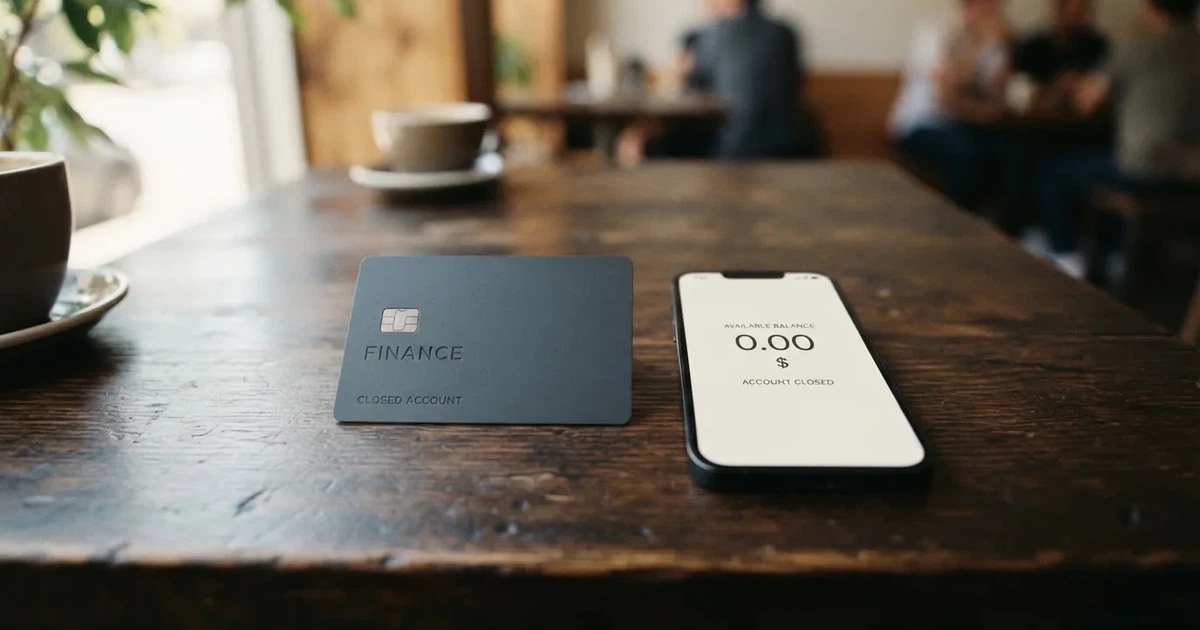
The conditions described below are current as of October 28, 2026.
Verdict: 2.2 / 10 — the card does not exist any more
The score is not a judgement on SORA’s technology, its fee schedule, or its security model. It is a judgement on the only thing that matters right now: the programme is closed, new applicants are refused, card functions in the app are dead, and — the part that should worry anyone who still has money in the system — some accounts at the issuer have been suspended and are awaiting Unlimit’s review before balances can be reached. For a prepaid-style card, the stored balance is the product. If the balance is locked, there is no product.
I want to be precise about who this card suits and who it does not, because the honest answer for a closed card is narrow. It suits nobody as a way to spend in 2026. The audience this review actually serves is people who already hold the card and are trying to withdraw their balance after the closure — that is the real “who is this for” here. For everyone else, the useful reading is the alternatives section and the fee and cost comparisons in between.
| Criterion | Mark | Why |
|---|---|---|
| Who can get it | 0 / 10 | Issuance is closed: the card and the app’s card functions stopped after 30 January 2026 18:00 GMT |
| Cost | 5 / 10 | Card issuance and the monthly fee are €0, membership €39 a year after the first year; international payments €0.90 + 1.1%, ATM €1.20 + 3% |
| Top-up options | 2 / 10 | Load the card by converting XOR to EUR or by a SEPA transfer; there is no direct crypto load |
| Reliability and complaints | 1 / 10 | The programme is closed; the issuer Unlimit EU Ltd has suspended some accounts and balances are inaccessible until Unlimit reviews them |
| Everyday use | 3 / 10 | Physical and digital card, ATM withdrawals, Apple Pay and Google Pay promised for a “Phase 2”; the card is closed |
| Total | 2.2 / 10 | Closed programme; useful mainly to holders winding down |
Read that table row by row and a picture forms. Cost was the one respectable column — a genuinely free card with a modest membership fee is a real thing, and the ATM and international-transaction numbers were honest ones. But cost is a feature you can only enjoy while a card works. Top-up was middling-to-poor even when live (no direct crypto load; you converted XOR or used SEPA). Reliability and complaints — the column that decides whether a financial product deserves trust — is a 1 because the programme has stopped and the issuer is holding part of the user base in suspense. Everyday use was always going to be capped by the promised-but-undelivered Apple Pay and Google Pay “Phase 2”.
What happened to the programme
Three things happened, roughly in this order, and it is worth separating them because they hit different people.
The issuer pulled the plug on part of the customer base before the official closure. Unlimit EU Ltd suspended some accounts. That suspension happened before the formal wind-down, and it is the reason the closure is not simply “the card switched off, everyone takes their money home”. A suspended account can still show a balance on screen but that balance stays inaccessible until Unlimit completes its review.
The formal notice. A notice dated 10 January 2026 told users that the card, the app, and the card functions would stop after Friday 30 January 2026 at 18:00 GMT. As part of that, crypto held in the GateHub wallets had to be emptied before that cutoff — a deadline that has long since passed for anyone reading this now.
The card stopped. After 30 January 2026 18:00 GMT the app gives no access to balances at all. The only route to a balance is Unlimit’s own support channel ([email protected]). SORA says plainly that it cannot submit release requests on users’ behalf — so if your money is in the system, Unlimit is the party that has to move it, not SORA.
Notably, the SORA Wallet itself continues. The wallet side of the product was not the same thing as the card side, and the crypto in self-custody is not what the closure is about — but anything that was loaded into the card’s e-money balance, or sitting in a GateHub wallet you did not empty before the cutoff, is what is in question now.
A few other facts about the programme’s shape, so the closure sits in context. The card was available to residents of the EEA who passed KYC — eligibility was by residence, not nationality, with residents of Russia, Iran and the DPRK excluded (the full blacklist sits at a /blacklist page on the site). KYC itself required a selfie, an identity document, and proof of address; the pages did not state processing times or tiers of verification. The product was a single one: a physical and a digital debit card, with a client membership of €39 a year charged after the first year as the only paid level — there were no other tiers. Apple Pay and Google Pay were promised for a “Phase 2” that, as far as the pages I read go, described blocked categories and never landed. Rewards are not stated.
If you already have the card
This is the section that matters most if any of this is about your own money rather than a general review.
- The app no longer gives you access to balances after 30 January 2026 18:00 GMT.
- Your only route out is Unlimit support: [email protected].
- Some accounts are suspended; the balance may display but remain inaccessible until Unlimit’s review completes.
- SORA cannot submit release requests for users — you must deal with Unlimit directly.
- If you held crypto in a GateHub wallet, it had to be withdrawn before the cutoff; if you did not, that is a separate problem to raise with support.
Withdrawals, for what it is worth as a reference point: SEPA outgoing and SEPA Instant outgoing were €0.50 each. Top-up was via XOR conversion or a SEPA transfer, with a €0 ledger load fee and no stated minimum. Domestic ATM withdrawals in the EU, Iceland, Liechtenstein and Norway were €1.20 + 3%; international ones €1.75 + 3%; a balance inquiry was free the first time each month. Limits were said to be on a /fees page but the amounts were not present on the page I read — and neither were closure fees or a replacement-card cost. Disputes were not stated.
Support runs through soracard.com/support, soracard.com/contact and [email protected], plus Discord, Telegram, X and Reddit. The site is in English and Español; Russian is not offered, which is worth noting if you came to this card from a Russian-language context. Support hours were not stated. A Trustpilot page for soracard. exists, but I found no Reddit or Trustpilot reports as of 2026-10-20 — which, given the closure, is itself informative about how quietly this ended.
One thing I want to be careful about: I am not a lawyer and this is not legal or tax advice. If a meaningful balance is stuck, the pattern to follow is simply the ordinary one — keep written records, keep pressing the issuer in writing, and get advice appropriate to your own jurisdiction. I am also not going to tell you there is a trick, a workaround, or a way to move a suspended balance faster than the issuer’s own process. There is not one that I can vouch for, and a closed programme’s support queue is exactly where invented shortcuts do the most damage.
What can go wrong
The blunt answer: your money can be inaccessible, and that has already happened to some users.
The single largest risk is the issuer’s suspension-and-review process. Unlimit EU Ltd suspended some accounts; balances may show but remain inaccessible until Unlimit reviews them; and SORA explicitly cannot submit release requests for users. That combination — a suspended account, a balance you can see, and a front-end company that cannot act on your behalf — is the situation to fear. It is not a hypothetical; it is the documented state of some accounts.
Beyond that, structural points that a closed card exposes more sharply than a live one:
- Not deposit-guaranteed. The card was issued by Unlimit EU Ltd (Cyprus), an EMI licensed by the Central Bank of Cyprus, licence 115.1.3.7. The funds were e-money safeguarded by the issuer, not bank deposits, and were not covered by Cyprus Deposit Insurance.
- Two different companies, one product. SORA Biome (Bulgaria) ran the site and the apps; Unlimit EU Ltd issued the card. In a closure, the party you need is the issuer, not the brand you signed up with.
- GateHub wallets and the cutoff. Crypto that had to be withdrawn before 30 January 2026 was, by definition, only reachable before that moment. After it, the wallet story and the card story separate.
- Reversibility cuts both ways. Blockchain transfers are typically irreversible and a stolen private key has no recovery; equally, funds held in an e-money balance have a support process rather than an on-chain one, and the two worlds fail differently. Either way, the risk sits with you during a wind-down.
On the security side, the card’s design was actually a point in its favour and worth saying, because it tells you what kind of product this was. The crypto side was self-custodial: with SORA Wallet you kept your own keys, so SORA did not hold your crypto for you. Two-factor authentication and biometrics were mentioned. But card freeze was not described, the network the card ran on was not stated on the pages I read, and the issuer was an EMI, not a deposit-taking bank. Self-custody of the crypto and custodianship of the loaded e-money balance were two different risk profiles sitting in one product — and in a closure, only the second one had a support queue attached.
No cause for the closure is stated. I will not speculate about one. But I will say the practical lesson, because it generalises to every card in this category: programmes close. Visa terminated its global agreements with FTX on 13 November 2022 and the FTX US debit card was wound down; WaveCrest, a Visa issuer that supplied crypto card brands, was suspended by Visa in Europe in 2018, closing all its Visa programmes. A closure is not an exotic event in crypto cards. It is a normal, recurring one, and a card whose issuer is a licensed EMI rather than a bank carries that risk without the deposit insurance a bank would bring.
What to take instead
The realistic question for anyone who wanted a crypto card and can no longer use SORA is which live programme fits. Here are the three I would weigh, with their own scores, and the trade-offs that actually decide between them.
| MetaMask | KAST | Zeal | |
|---|---|---|---|
| Score | 7.1 / 10 | 6.1 / 10 | 6.1 / 10 |
| Who can get it | Sign-up open in 45 listed countries/territories; other regions waitlisted; US/UK temporarily closed | Residence-based; country list not published; ID citizenship also matters | Spend in 150+ countries; card live in EU, UK, Brazil, Colombia, Mexico, Japan, Singapore, Philippines, Indonesia, Thailand |
| Card | Mastercard; Virtual instant, Metal pre-order; one per user | Virtual and physical, up to 10; Visa Platinum / Infinite metal / Infinite gold | Visa; virtual, addable to Apple Pay; physical not stated |
| Cost | Virtual free; Metal $199/year | Standard $0; Premium $1,000/yr; Private $10,000/yr | Not stated |
| Rewards | 1% virtual / up to 3% metal cashback in mUSD; $FLY bonus | 1.5% / 2% / 3% USD cashback by tier; KAST Points | Up to 4% cashback in GNO (Gnosis Chain) |
MetaMask is the strongest of the three on my scoring, and the reason is that it spends directly from the wallet you already have rather than asking you to hold an e-money balance with the provider — the very structure that made SORA’s closure painful. It supports Linea, Base, Monad and Solana, and tokens including mUSD, wETH, EURe, GBPe, USDC and USDT. It is also the strictest about who it serves: proof of residency, 45 listed countries, waitlists elsewhere, and US/UK sign-ups temporarily closed, so it is the least useful if you are in a country outside that list.
KAST is the feature-rich one and the one with the sharpest eligibility edge. It is built around stablecoin balances — USDT, USDC, PYUSD, RLUSD — with stablecoin top-up at 0% and USD spending at 0%, no bank account needed, and spending straight from your own balance rather than credit. Its costs are tiered and steep at the top: Premium is $1,000 a year and Private is $10,000 a year, billed annually upfront. Its eligibility rules are also the most intricate: a supported-country residence is not enough if your ID is from a restricted region, dual citizens with a supported-country ID may pass, only your own ID is accepted, and a VPN does not bypass it. An account can be created in an unsupported country but KYC stays locked.
Zeal is the middle ground, and honestly the least transparent. It spends from balances in a card Safe in EUR, USD and GBP stablecoin accounts on Gnosis Chain and Celo; charges no additional FX fee and converts at the Visa wholesale rate; and pays up to 4% cashback in GNO, provided you hold GNO in the card Safe. But it publishes no fee schedule on its site or in its App Store listing — cost is simply not stated — and the exact coins it holds are not stated either. For a card you would use as a daily spend, I would want that number on the page before signing up.
The three trade-offs in one view:
- MetaMask — cheapest to start and closest to self-custody, but the least widely available.
- KAST — most features and generous fees, but the highest tier prices and the most restrictive identity checks.
- Zeal — broad geographic reach and no FX fee, but no published fee schedule.
Whichever you pick, check the issuer and the licence before you load anything. A card of this kind usually depends on two licences, not one — the payment-card side is regulated as e-money or under payment-services law, while MiCA covers the crypto side. SORA’s own lesson was that the card (Unlimit EU Ltd, Cyprus) and the crypto brand (SORA Biome, Bulgaria) were two separate entities; that separation is normal, and knowing which of them holds your balance is not optional information.
Who I would recommend it to
Honestly? Almost no one, in 2026, for spending — the card is closed and no one can get one.
I would recommend it to exactly one group: existing cardholders who are still working on getting their balance released from Unlimit. For them the useful parts of this page are the sequence of what happened, the fact that the app no longer shows balances, and the fact that the only channel is [email protected]. Keep a record of every message you send. That is not a trick; it is simply what an ordinary dispute with a financial institution looks like.
For everyone else reading this because they were looking for a crypto card: treat SORA as a case study in what to ask before you load funds. Ask who the issuer is and which licence it holds. Ask whether your balance is deposit-guaranteed or safeguarded e-money. Ask what happens to your money if the programme closes. Ask whether you are spending from a provider-held balance (prepaid-like, and recoverable only through support) or from your own wallet at the moment of payment (self-custody-linked, and yours). SORA answered those questions reasonably on paper — self-custody for the crypto, a licensed EMI for the card — and it still ended with balances behind a support queue. Good answers do not guarantee a company lasts.
If you do want a working card now, look at the three above with those four questions in hand, and check a provider against ESMA’s interim register of authorised CASPs before you commit money.
Frequently asked questions
What is the SORA Card?
It was a crypto-linked debit card that spent from a balance you loaded by converting XOR to EUR or by a SEPA transfer — not directly from crypto. It came in physical and digital form, was issued by Unlimit EU Ltd in Cyprus, and was run by SORA Biome in Bulgaria. The whole card programme, including the app’s card functions, stopped after 30 January 2026 at 18:00 GMT, so it can no longer be obtained or used.
How does the SORA Card work now?
It does not. After 30 January 2026 at 18:00 GMT the app gives no access to balances, and no card functions run. The SORA Wallet side continues separately, but anything loaded into the card’s e-money balance is now reachable only through Unlimit’s own support process at [email protected]. SORA states it cannot submit release requests on users’ behalf.
Is SORA a bank?
No. The card was issued by Unlimit EU Ltd, an electronic money institution licensed by the Central Bank of Cyprus under licence 115.1.3.7, and the crypto side was run by SORA Biome, a company in Bulgaria. An EMI can issue e-money and payment cards but is not a deposit-taking bank, and the balances were not covered by Cyprus Deposit Insurance.
Can I still get a SORA card?
No. Issuance is closed. The programme’s card and app functions were stopped after 30 January 2026 at 18:00 GMT, and no new applicants are being served. Before the closure the card was open to EEA residents who passed KYC, by residence rather than nationality, with residents of Russia, Iran and the DPRK excluded.
I have a SORA card — how do I get my money out?
Contact Unlimit support at [email protected]; that is the only route once the app stops showing balances. If your account was suspended, the balance may display but stay inaccessible until Unlimit completes its review. SORA says it cannot lodge release requests for you, so keep every message you send and escalate through the issuer, not the brand.
Was the SORA card free to keep?
The standard fees, dated 17 September 2024, were €0 for card issuance — both virtual and physical — and €0 monthly, with a client membership of €39 a year charged after the first year. Spending was free domestically for the first 10 online and 10 point-of-sale transactions, and international card payments cost €0.90 + 1.1%.
What did it cost to withdraw cash or convert currency?
Domestic ATM withdrawals in the EU, Iceland, Liechtenstein and Norway were €1.20 + 3%, and international ones €1.75 + 3%; the first balance inquiry each month was free. You converted directly between XOR and EUR, and withdrawals in a currency other than the card currency were charged as international payments at €0.90 + 1.1%. The card currency itself was not named on the pages I read.
Was the SORA card safe to use?
On design, reasonably: the crypto was self-custodial in SORA Wallet, so you kept your own keys, and two-factor authentication and biometrics were mentioned. On custody, not equivalently: the card balance was e-money held by an EMI, not a deposit, and not covered by Cyprus Deposit Insurance. And no design makes a programme immune to closure — as SORA’s own wind-down shows.
Why did the SORA card programme close?
No cause is stated. The documented sequence is that Unlimit EU Ltd suspended some accounts, then a notice dated 10 January 2026 said the card, app and card functions would stop after 30 January 2026 at 18:00 GMT, with GateHub wallet balances to be emptied before that cutoff. The SORA Wallet itself continues.
What can I use instead of the SORA card?
Three live programmes I looked at: MetaMask (7.1/10) spends directly from a connected wallet on Mastercard, free at Virtual tier; KAST (6.1/10) is a stablecoin-balance Visa with rich rewards but tier costs up to $10,000 a year; Zeal (6.1/10) is a Visa card Safe with no FX fee but no published fee schedule. All three have their own eligibility rules worth checking before you load money.
Wallet cards – cryptocardpedia.com
Content created by the «cryptocardpedia.com» team