A crypto card that is easy to start and hard to verify
 Available in US
Getting a normal bank card is not easy for everyone. If you live in a country where the banking system is awkward, if you have no local address documents, if you are new to a country and cannot present a utility bill, or if you simply do not want a bank to see everything you spend, a prepaid card that runs off a crypto balance looks practical. That is the promise here, and it is a promise a lot of people act on.
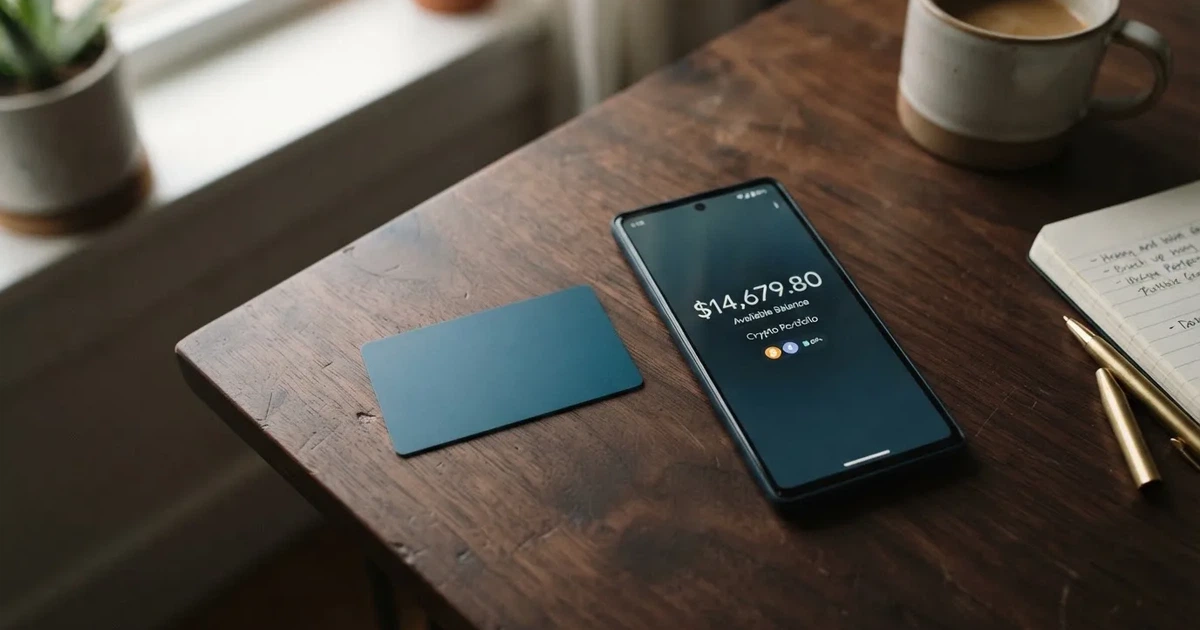
Pintopay is one of these cards. It describes itself in plain terms: a Visa-powered debit card, virtual and physical, that you fund with crypto and spend like any other card, with Apple Pay support and ATM withdrawals mentioned on the page. The pitch is speed and reach — the site says payments in more than 180 countries, and getting the card in 2 minutes. My score for it is 6.1 out of 10. That is a middling score, and it comes almost entirely from one thing: the card’s own public pages tell you a surprising amount about how to use it, and almost nothing about who stands behind it.
Conditions described here are current as of October 28, 2026.
Verdict: 6.1 out of 10
| Criterion | Mark | Why |
|---|---|---|
| Who can get it | 9 / 10 | Payments in 180+ countries, no exclusion list on the page; services unavailable to people in Hong Kong and Hong Kong citizens |
| Cost | 4 / 10 | Card $35, top-up 2.5%; unofficial: issuance $10 and $35, $0.25 per transaction; official FX data is “competitive rates” with no number |
| Top-up options | 7 / 10 | USDT and other crypto; unofficial: BTC, ETH, USDT, BNB, TRX, top-up up to 12 hours; a review mentions USDT TRC-20 |
| Reliability and complaints | 3 / 10 | Issuer not named, operator UANT Limited (Hong Kong); Trustpilot 2.0 of 5 from 42 reviews: blocked balances, a $1,100 refund still pending |
| Everyday use | 8 / 10 | Virtual and physical Visa, Apple Pay, ATMs; unofficial: Google Pay too |
| Total | 6.1 / 10 | Strong on reach and daily spending, weak on published numbers and on what users report |
Here is who I think this suits. If you spend USDT or another crypto regularly, you want a card that works in shops the same day, and you are comfortable running your balance through a company you have researched yourself — this is a workable tool. The everyday-use side is genuinely good. Virtual and physical cards, Apple Pay, ATMs, online and offline, all named on the site, and a $10 first-purchase cashback is a small incentive that costs the operator little.
And here is who I would steer away. If you are holding money you cannot afford to have frozen for a week, if you are a business expecting a named issuer to answer a dispute, or if you intend to load a large balance and leave it there, this is a poor fit — because the three things I could not verify are exactly the three things that matter when something goes wrong. I did not find a named issuing bank. I did not find published FX rates, only the phrase “competitive rates”. And the operator is a Hong Kong company that appears alongside a group entity, UANT Limited (Hong Kong, company no. 77341227), with card issuance passed to unnamed third-party licensed issuers.
One more thing worth saying at the top: this is a Telegram-first product. The site says “Get Card with Telegram”, and support runs through a Telegram bot and a contacts form. If you live in the Telegram world and want a card wired to your USDT without a long banking application, that is the audience this was built for, and the shape of the service reflects that.
Will they give you the card
Broadly, yes — this is the strongest part of the offer. The card’s headline is “Global Payments in 180+ Countries”, and there is no exclusion list published alongside it. For anyone who has been turned away by a local bank, that sentence is doing a lot of work.
But before you read that as unlimited, read the one exclusion that is stated. The Terms say the services are not available to persons located in, resident in, or citizens of Hong Kong. So Hong Kong residents and Hong Kong citizens are out regardless of where they are sitting when they apply. That is the only country restriction on the public pages.
What is not stated matters just as much. The card does not say whether eligibility follows citizenship or residence. That is not a technicality — sanctions screening and issuer risk policy are routinely applied to citizenship and country of birth, not only to where you live, and those two can differ for a lot of people. Nor does it publish a list of documents, a proof-of-address requirement, an age threshold, or the actual sequence of steps. The site’s instruction is “Get Card with Telegram”, which is a navigation hint rather than a procedure.
Here is a rough picture of what verification normally involves on cards like this, so you know what to expect rather than being surprised. In the EU, customer due diligence covers name, address, date of birth, nationality and identity documentation, a sanctions check, the purpose of the relationship, and whether you are a politically exposed person. In the US, the customer identification programme requires name, date of birth, address and an identification number, with electronic systems also validating proof-of-address documents against records. Prepaid and debit cards are generally available to adults from 18, and some issuers set higher limits. Treat those as the shape of the category, not as Pintopay’s stated rules.
One more structural thing you should understand before you apply, because it explains a lot of card behaviour. When you pay with one of these cards, several parties are involved: the network (Visa or Mastercard) routes the messages and sets the rules; the issuer — a bank or e-money institution licensed to issue under that network’s licence — holds the card programme; and the crypto brand is often only a programme manager and front end. Here the network is Visa, the front end is Pintopay, and the issuer is not named on the public pages. When a payment goes wrong, the party you need is usually the issuer. That is the gap I would want closed before I loaded anything significant.
How to get it
The card comes in two forms: a virtual card and a physical one, both described by the site as Visa-powered debit cards. The card currency is not stated.
Getting started is a Telegram flow. The page tells you to get the card with Telegram, and support is a Telegram bot plus a contacts form (Telegram or X) and the email address [email protected]. The preferred channel, per the support notes, is the in-service support system — meaning the support system inside the product rather than the contacts form. Opening hours are not stated.
On the identity side, the card’s security credentials list includes “KYC” and “ISO AML/KYC”. That tells you the programme claims to run checks and claims an anti-money-laundering certification. It does not tell you what you will be asked for. The documents required, whether proof of address is needed, the age requirement, and the step-by-step sequence are all not stated on the public pages.
What is stated in the Terms is that verification is not a one-time gate. The Terms allow ongoing requests for information and documents, and allow suspension where KYC or AML checks fail. KYC levels, how long each takes, and the specific reasons for rejection are not stated. I would plan for the possibility that you are asked for documents months after you have started using the card, and treat that as a feature of the model rather than a warning sign about this particular operator.
You will also see the card referred to as active in 2 minutes. That is a claim about the virtual card, and virtual cards do not ship. The physical card is a separate question, and the honest answer is that the public pages do not say: delivery countries, delivery time, delivery cost and replacement terms are all not stated. If the physical card is the reason you are considering this, ask support before you rely on it.
Finally, one thing to check yourself before you apply anywhere: whether the provider appears on ESMA’s interim register of authorised crypto-asset service providers, of white papers, and of non-compliant entities. MiCA — the EU’s markets-in-crypto-assets regulation, Regulation (EU) 2023/1114, which ESMA says took legal effect in June 2023 — is the framework that matters for the crypto side. Its rules on asset-referenced tokens and e-money tokens applied from 30 June 2024, with the remaining provisions, including crypto-asset service provider rules, applying from 30 December 2024. A transitional period lets providers already operating under national law continue only until 1 July 2026 or until they receive or are refused a MiCA authorisation, whichever comes first. This matters for cards because a crypto card typically depends on two licences: one for the card itself as a payment service under e-money and payment-services law, and one for the crypto side under MiCA. And EMIs must safeguard customer funds by segregating them in dedicated accounts or insuring them — which is not the same as a bank deposit and may not sit inside a deposit guarantee scheme. That is the difference between “your money is held separately” and “your money is handled by a regulated institution”.
Fees: what it really costs
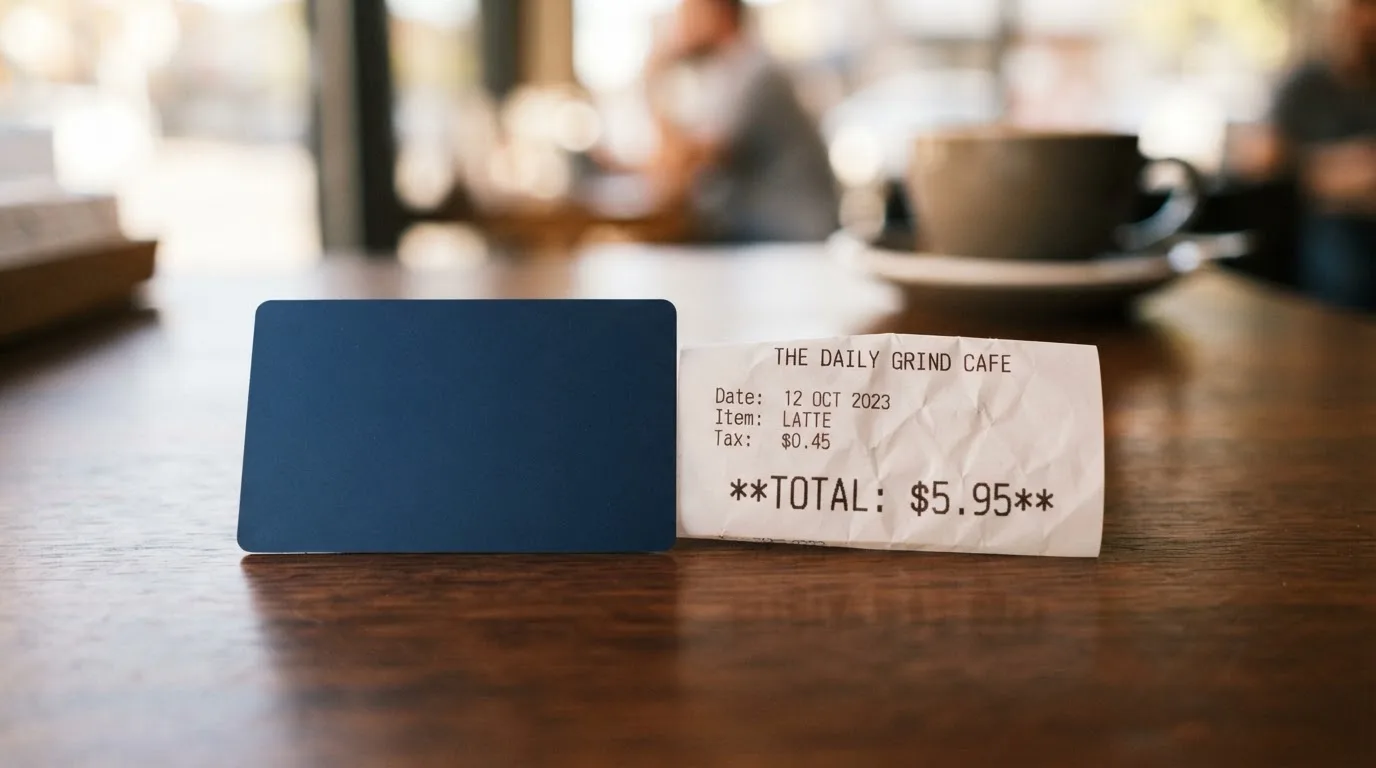
The card’s cost picture is the weak point of the whole offer, and mostly because so much of it is unpublished rather than because what is published is high. Here is everything the card states, plus the third-party figures I found, marked as unofficial and not confirmed by Pintopay.
| Fee or limit | Value | Source |
|---|---|---|
| Card cost | $35 | Pintopay |
| Monthly or annual fee | Not stated | — |
| Top-up fee | Just 2.5% | Pintopay |
| FX / conversion rate | “Competitive rates”, no figures | Pintopay |
| ATM | Works at ATMs; fee and allowance not stated | Pintopay |
| Daily and monthly limits | Not stated | — |
| Issuance | $10 (PintoPay Card) and $35 (Virtual Card); monthly fee free | Unofficial |
| FX fee | Free (PintoPay Card), 1% (Virtual Card) | Unofficial |
| Per-transaction fee | $0.25 listed under cons | Unofficial |
| Decline fee | Free | Unofficial |
| ATM fee and withdrawal allowance | Free on both cards; ATM withdrawal limit unlimited | Unofficial |
| Daily spend | $25,000 physical card, $1,500 virtual card | Unofficial |
| Monthly spend | Unlimited | Unofficial |
| Alternative figures | Up to $300,000/month and withdrawal fees after $1,000/month | Unofficial, secondary source, updated February 2026 |
So the confirmed numbers are three: the card costs $35, the top-up fee is 2.5%, and FX is described only as “competitive”. Everything else you may read about limits, ATM charges and per-transaction costs comes from sites I would not treat as authoritative — and one of those unofficial issuance figures ($10 and $35 for two different cards) directly contradicts the official $35, which is exactly the sort of inconsistency that tells you these pages are not maintained.
Now let me walk three ordinary payments through that table, because that is where a percentage either matters or does not.
Buying coffee for $4. The top-up fee does not apply here — it applies when you load, not when you spend. What applies is conversion plus any per-transaction fee. On official numbers alone, conversion is unpriced, so I cannot tell you what this coffee cost beyond the $4. On unofficial numbers, a $0.25 per-transaction fee would add a per-transaction cost to that purchase. That single line item is why I would not rely on unofficial numbers being wrong in your favour.
A $200 online purchase abroad. This is where the missing FX number hurts. If you loaded the balance in one currency and buy in another, the spread sits between you and a good exchange rate, and the card does not publish what that spread is. If the unofficial figure of a 1% virtual-card FX fee were right, $200 would cost an extra $2. If the unofficial “free on PintoPay Card” figure were right, it would cost nothing. These are wildly different outcomes and the card does not say which one you get. It also does not say what currency the card holds balances in.
A $60 ATM withdrawal. The card confirms ATMs work; it does not state a fee or an allowance. The unofficial claim is that ATM withdrawals are free with no withdrawal limit. If that is wrong, you have no published fallback figure to compare against, and ATM fees are exactly the place where providers add charges quietly.
Two further charges worth understanding. First, one of the unofficial listings puts a cap at up to $300,000 a month with withdrawal fees after $1,000 a month — an odd shape that may well be a misreading of a tier rather than a real rule, but if anything like it applies it would matter enormously to anyone using this as a business card. Second, a “Premium card” with VIP access is mentioned, at the $35 price, with no tier structure and no stated differences. I would ask what premium actually buys before paying.
There is also a category-level fee that is not the card’s: on-chain network fees for your deposit are charged by the blockchain, not by the provider. On Ethereum that means gas, paid only in ETH, so a wallet holding USDT with no ETH cannot send it at all. On Tron, fees are paid via bandwidth and energy resources and often burn TRX. Neither cost is the card’s, but both are real money out of your deposit.
How to Top up
Topping up is where this card does what it says. The official line is “Spend USDT and other crypto”, with the crypto converted to fiat instantly and loaded as the card’s balance.
The official coin and network list is not stated. The site’s own copy mentions USDT, and a testimonial on the site refers to USDT TRC-20 — that is the closest thing to a network instruction published anywhere, and it is a testimonial, not a specification. The fee is 2.5% when you top up from a crypto wallet, which is the one confirmed percentage in the entire price list. The minimum top-up is not stated. Whether you can add money by fiat at all is not stated.
The unofficial list is broader: BTC, ETH, USDT, BNB and TRX across networks, with top-ups taking up to 12 hours. Treat the twelve-hour figure as a warning rather than a fact — if your rent is due and your deposit is still in flight, that is a problem, and the card itself will not tell you in advance.
Networks are where people lose money in this category, so let me be specific about the risk without pretending to give you a workaround. Blockchain transfers are irreversible. A deposit sent on a network the provider does not support, or sent to an address belonging to another network, can be lost or need manual support recovery with no guarantee of any outcome. Two concrete examples of the confusion: USDC over TRC20 is not a native option, because Circle stopped supporting USDC on Tron in February 2024, so if you send USDC on that route expecting it to work you are relying on someone recovering it manually. And USDT, which is the coin the card is built around, has been issued on networks including Ethereum, Tron, Solana, Polygon and Avalanche — the same token, several incompatible chains. Confirm the network on the receiving side, using the provider’s own current instructions, before you send anything.
A last caution about stablecoins themselves, because it undercuts the word in the name. A stablecoin aims to hold a stable value against a currency, but stablecoins are not necessarily stable. TerraUSD collapsed in May 2022; USDC temporarily lost its peg in March 2023 during the US banking crisis. Tether describes USDT as backed one-to-one by reserves, while Circle says USDC is redeemable 1:1 for USD and fully backed by cash and cash equivalents, mostly in an SEC-registered government money market fund, with monthly reserve attestations by a Big Four firm — and Circle listed USDC as natively supported on 38 networks as of 16 September 2026. The BIS put about 90% of stablecoin market capitalisation in USDT and USDC combined in July 2025, so the two coins named on this card are the two that dominate. Neither is free of risk, and Tether says it disables tokens in wallets on the OFAC sanctions list and has frozen funds tied to illicit activity.
One small comfort from the Terms: if you close the account, you are entitled to return of your remaining Wallet Balance, release of your Vault Balance, or withdrawal from your Virtual Account balance, subject to the Terms. The same clause lets Pintopay delay, refuse or reduce that return to cover amounts owed to it, and states fees are non-refundable. The withdrawal fee itself is not stated.
Paying with it every day
This is the section where the card scores well, and for once the reasons are simple.
Apple Pay is supported, and the card works at ATMs, online and offline. The everyday picture is a card you can wave at a terminal, use in an app, or hold to a phone. Some unofficial sources also mark Google Pay as supported on both cards; Pintopay does not mention Google Pay on its own pages, so treat that as unconfirmed.
Rewards are thinner than the marketing suggests. The confirmed offer is “$10 cashback instantly on your first purchase”, plus referral cashback on card activations and top-ups, described as lifetime. There is no stated regular cashback rate — and an unofficial source says there is no regular cashback at all, that the $10 welcome bonus applies to the Virtual Card only, and that referral bonuses are $10 and $10.5. Note how different those two pictures are: a flat welcome bonus and referral payments on one side, nothing recurring on the other. If you are choosing this card for rewards, the honest answer from the official pages is that there is no recurring rate to compare against competitors on.
The software side is light. There is a Telegram bot and mini-app and a mobile application, but no App Store or Google Play link and no user rating appears on the site. Not a red flag — just thinner than you would get from an established card — and it means I cannot tell you how the app has held up for real users.
Blocked merchant categories are not stated. This matters more than it sounds. A merchant category code is a four-digit number classifying a business under ISO 18245; MCC 7995 covers gambling — casinos, betting, lotteries — and many issuers block it on specific cards by policy rather than by law, with the list varying by issuer. Whether you can pay for travel, tickets, crypto-adjacent services or adult material is not something I can answer from the public pages. If any of that is part of your life, ask.
If a payment goes wrong, the route is the interface or support, inside whatever deadline the payment system or issuer imposes. The review period can run up to 90 calendar days. The outcome of a chargeback is decided solely by the issuer or the card scheme, and no refund is guaranteed. Two pieces of category background that explain why declines happen even when you have money in the account. Address verification compares numeric parts of your billing address with issuer records, and is mainly offered in the US, Canada and the UK — it is generally unavailable for foreign-issued cards, which can cause declines. And because merchants can look up the BIN to see which institution and country issued a card, and may apply extra scrutiny when the issuer country differs from the billing address, a card issued in one country can look foreign to a shop in another. Also worth knowing: a declined authorisation can leave a hold on your funds for several days, typically up to seven.
What can go wrong
The card’s own marketing uses the phrase “Bank-grade security” and lists 3D Secure alongside “ISO AML/KYC”. 3-D Secure does mean something concrete: the issuer assesses risk on an online payment and either approves it frictionlessly or challenges you, for example with a one-time code or biometric — Visa’s brand is Visa Secure. Address verification and tokenisation do the rest of the work; Apple Pay replaces the card number with a device-specific number stored in the Secure Element, never on Apple’s servers, and each payment uses a one-time dynamic security code. The issuer can still restrict a tokenised number, for example blocking it on phone or website use.
Here is what I would actually worry about, in order.
Balances being frozen. The Terms contain two provisions that most people never read. The card may be blocked after 45 days without a successful payment. And a deposit of USD 2,000 or more followed by quick disposal of funds within 48 hours triggers an additional review that can delay or suspend withdrawals. That second one is an automated-looking trigger on large, fast-moving balances, and it is written into the contract rather than discovered after the fact.
Not knowing who the issuer is. This is the structural risk. The footer says “© 2026 Pintopay Inc.”, but the registration country, the issuer and the licences are not stated. The Terms version is dated 16 October 2026 and says the service is operated by a PTP group including UANT Limited (Hong Kong, company no. 77341227), with cards issued by unnamed third-party licensed issuers, Hong Kong law applying, and HKIAC arbitration. If you have a dispute about a payment, the Terms contemplate arbitration in Hong Kong rather than a local court process.
What users actually report. On Trustpilot, pintopay.me scores 2.0 out of 5 from 42 reviews, 26 of them in the last twelve months, as read on 2026-10-20. The reports include frozen or blocked balances across August 2025 and January through July 2026, in sums from $388 to $1.1k; a refund of $1,100 still pending from July to August 2026; generic support replies between February and July 2026; and unexplained fees in July 2025 and January 2026. The company’s replies blame migrations and partners. To be fair, I searched for Pintopay complaints on Trustpilot and Reddit and found no Pintopay-specific discussion there beyond the Trustpilot page — so this is one visible cluster of complaints rather than a broad pattern. Still, “frozen balance” and “unexplained fee” are the two complaints that would hurt me most, and they are exactly what appears here.
Choosing no regular cashback. No stated recurring rate, so your effective cost is the 2.5% top-up plus an unpriced conversion, forever.
Custody risk, in general. If the provider holds the credentials to your balance, you must trust it completely — a seed phrase, typically 12 to 24 words, is the unencrypted private key, and anyone who obtains it can restore the wallet and spend the funds. Transfers are typically irreversible, and a stolen key has no built-in recovery: the network cannot freeze or return anything. This is not a Pintopay-specific complaint; it is the risk every custodial card carries. The record of custodial platforms includes Mt. Gox (about US$350 million reported stolen, 2011-2014), Coincheck (about US$400 million, 2018) and Ronin Network (US$625 million, 2022). Self-custody-linked cards invert the trade: the funds stay in your own wallet until the moment of payment, but then you bear sole responsibility for key loss, phishing and malware that silently swaps a copied address. Neither model is safe; they are safe in different ways.
Programmes disappearing. Card programmes do close. Visa terminated its global agreements with FTX on 13 November 2022 and the FTX US debit card was wound down by its issuer. WaveCrest, a Visa issuer that supplied crypto card brands, was suspended by Visa in Europe in 2018, closing all its Visa programmes. The usual sequence is a notice period, then loading and spending stop, then you’re asked to withdraw remaining balances. One 2026 closure reported by a secondary source ended new loads on 8 July 2026 and spending on 8 August 2026 — single source, unconfirmed, but the pattern itself is well documented.
A wrong idea about protections. A chargeback is a refund ordered by the card issuer, with reason codes such as fraud, duplicate billing or goods not received. In the US, debit card reversal rights come from Regulation E and credit card rights from Regulation Z, while prepaid-card coverage varies and should not be assumed — and this card is a prepaid-style product drawing on a stored balance. Under 3-D Secure, liability for a fraudulent online payment can shift from the merchant to your bank, or per critics to you. The card’s Terms say fees may be debeted from your Wallet, Vault or Virtual Account balance, and that fee schedules are published in the interfaces — meaning the detailed numbers may exist somewhere other than the public site. Look there before you decide the public page told you everything.
And one thing you should plan for independently: taxes. The IRS treats digital assets as property, so exchanging them for goods, services, dollars or other digital assets generally produces a taxable gain or loss, measured in local currency at fair market value on the date of the transaction. Every card payment funded from crypto may therefore be a separate disposal. I am not telling you what to pay — that depends on where you live and your own situation — but I am telling you to keep records of the value at the moment of each payment, because the cost of reconstructing it later is much higher than the cost of noting it now.
What to take instead
If you want the same job done — spend crypto through an ordinary card — there are three alternatives I looked at, and none of them is clearly better on the numbers. What differs is how much each one publishes, which is exactly the thing that made this review difficult.
| Alternative | Score | Card cost and monthly | Key fees | Funding | Cashback |
|---|---|---|---|---|---|
| Bitrefill | 6.8 / 10 | Free through the app; amounts not stated; inactivity fee after 12 months without spending or cash-out, amount not stated | Deposit spread on crypto-to-euro conversion, percentage not stated; SEPA pay-in 1.99%; spread by payment processors or ATM operators; FX not stated | Bitcoin, Lightning, Ethereum, USDC, USDT, Solana, BASE, Polygon, Li.Finance, Apple Pay, Google Pay, Visa, MasterCard on the “Buy with” list; SEPA transfer per terms | 2% total, “no cap”: 1% on each crypto deposit and 1% on each purchase; payout currency not stated, rate published on the site |
| UPay | 6.1 / 10 | Not stated | Not stated; card page says conversion may occur during payment depending on network and settlement | BTC, ETH, USDT; USDC also listed; networks not stated | None stated on the card page |
| Kemy | 6.0 / 10 | Virtual: $15 issuance valid 3 years, $2/month. Physical: $250 issuance with DHL Express, valid 3 years, one per user, $10/month | Virtual: top-up $1.5 under $100 or 1.25% from $100 (min $5), transaction fee 3.5% + $1, failed transaction $0.8. Physical: same top-up (min $10), failed $0.80. FX not listed; deposit fee shown as 8% in the summary and 5% in a section — a conflict | USDT and USDC “on the main networks” (chains not listed), plus BTC, ETH, SOL via on/off ramp; fiat via mobile money and virtual bank accounts | Not mentioned |
Bitrefill is the closest comparison and scores slightly higher, 6.8 against 6.1. It offers virtual and physical Visa, with the card currency implied to be the euro since crypto deposits are converted to euros. It states a real cashback rate — 2% total with no cap, split 1% on each crypto deposit and 1% on each purchase — which is more generous and far clearer than a $10 welcome bonus. Its access terms say access is “subject to eligibility criteria” and that further eligibility requirements, established and verified by partners, shall apply; the country list is not stated. Its weaknesses mirror Pintopay’s: the conversion spread has no percentage, and an inactivity fee applies after twelve months without spending or cash-out, with no amount given.
UPay scores exactly what Pintopay does, 6.1, and its pages are similarly quiet on price — card cost not stated, fees not stated. Where it is more concrete: virtual and physical options in personal and business flavours, payments converting to USD, EUR, AED and others, and support claimed in 180+ countries. It also says it does not serve residents of certain countries, with the list subject to change, and its KYC partner accepts only identity documents issued by the same country as the user — which is a sharper restriction than Pintopay publishes, and one you can check yourself before applying. No cashback is stated on the card page.
Kemy is the outlier on price, and the outlier on risk in a different way. It states everything: $15 for a virtual card valid three years at $2 a month, or $250 for a physical Mastercard with DHL Express included at $10 a month, one per user. It also states that the virtual card charges a 3.5% plus $1 transaction fee and up to 1.25% to top up. Those are real numbers — the only ones on this list — but they are much worse than Pintopay’s 2.5% top-up, and $250 for a physical card is a serious sum to park with an operator of this size. It covers 190+ countries with “a few restrictions apply”, unlimited virtual cards, and cashback is not mentioned.
My read across the four: if your priority is published numbers, Kemy wins on transparency and loses badly on price. If your priority is a rewards rate, Bitrefill is the only one that prints one. If your priority is the simplest path to spending USDT today, Pintopay and UPay are the same proposition with the same silence about fees — and between those two, Pintopay at least publishes its top-up percentage and its card price.
Who I would recommend it to
To someone who already holds USDT, uses Telegram daily, and wants a card in a few minutes rather than a banking relationship measured in weeks. Under those conditions this is a decent tool: the daily-use features are all there, the reach is genuinely wide, and $35 plus 2.5% to load is not an outrageous entry point.
I would not recommend it as the only card someone relies on. Three specific reasons, in order of weight: the issuer is not named, so the party who actually decides disputes and chargebacks is invisible; the FX rate is described as “competitive” with no figure, so the largest cost on a foreign purchase is the one number you cannot see; and the complaint pattern on Trustpilot — frozen balances from $388 to $1.1k, a $1,100 refund pending for a month, unexplained fees — describes precisely the failure modes that hurt most when the money is not spare.
Before you load anything beyond a month’s spending, I would do four things, none of which needs this review. Read the Terms in the interfaces, where the fee schedules actually live, and note the withdrawal fee and the currencies. Ask support, in writing, who the issuing bank is and in which jurisdiction it is regulated, and keep the answer. Check whether the operator appears on ESMA’s interim register. And keep a small working balance rather than a large idle one, partly because a deposit of USD 2,000 or more followed by quick disposal within 48 hours triggers the additional review described in the Terms.
None of that is exotic. It is what you would do with any prepaid card from an unfamiliar issuer, and the reason it comes up here is that Pintopay’s public pages leave these questions open by default.
Frequently asked questions
What is a Pintopay card?
A prepaid-style Visa debit card that draws on a balance you load with crypto. The card itself is virtual or physical, the site describes both as Visa-powered debit cards, and crypto held in the account is converted to fiat and spent like any other card. The card currency is not stated on the public pages.
Is Pintopay a bank?
Not on the evidence of its public pages. The footer names Pintopay Inc., the Terms say the service is run by a PTP group including UANT Limited (Hong Kong, company no. 77341227), and cards are issued by unnamed third-party licensed issuers. The registration country and the licences are not stated, so I could not verify a banking or e-money authorisation.
Who owns Pintopay?
The footer reads “© 2026 Pintopay Inc.” and the Terms, version dated 16 October 2026, describe a PTP group that includes UANT Limited, a Hong Kong company with company number 77341227. Beyond that, ownership, registration country and licensing are not stated, and no licence is named.
Does the Pintopay card require KYC?
The card’s public pages list “KYC” and “ISO AML/KYC” as security credentials, and its Terms require verification and allow suspension where checks fail. But documents, proof of address, age and the actual steps are not stated. A third-party site lists it as “No KYC”, which contradicts the official pages — do not plan around that.
Which countries can use the Pintopay card?
The site says “Global Payments in 180+ Countries” with no exclusion list published. The one stated exclusion is Hong Kong: the Terms say services are not available to persons located in, resident in, or citizens of Hong Kong. Whether eligibility follows citizenship or residence is not stated, and those can differ for you.
How much does the Pintopay card cost?
Officially the card costs $35, there is no stated monthly or annual fee, and topping up from a crypto wallet costs 2.5%. FX is described only as “competitive rates” with no figure, and ATM fees and spending limits are not stated. Unofficial sites list $10 and $35 issuance, a $0.25 transaction fee, and free or 1% FX depending on card — none of which Pintopay confirms.
Can I add the Pintopay card to Apple Wallet?
Apple Pay is listed among the supported ways to pay, so the tokenised card should be addable. Note that Apple Pay stores a device-specific number in the Secure Element rather than the card number, and the issuer can still restrict a tokenised number on phone or website use. Google Pay is not mentioned by Pintopay; a third party marks it supported.
How do I top up the Pintopay card?
By sending crypto from a wallet, at a stated 2.5% fee, in the currencies the card supports — USDT is named on the site and a site testimonial refers to USDT TRC-20, while the full official coin and network list is not stated. Third-party sources add BTC, ETH, BNB and TRX, with top-ups taking up to 12 hours. Minimum top-up and fiat top-ups are not stated.
Is the Pintopay card safe?
The card advertises “Bank-grade security”, 3D Secure and “ISO AML/KYC”, which are real protections. What I could not check is who issues the card. On Trustpilot, pintopay.me scored 2.0 out of 5 from 42 reviews as of 2026-10-20, with reports of frozen balances, a $1,100 refund pending and unexplained fees, and the company blaming migrations and partners.
Is the Pintopay card worth it?
For a monthly spender who wants a card today and already holds USDT, the $35 and 2.5% top-up are defensible. There is no stated recurring cashback, only $10 on a first purchase, so rewards do not justify it. If your priority is a printed rate, Kemy publishes everything but charges 3.5% plus $1 per transaction, and Bitrefill publishes a 2% uncapped cashback.
Virtual cards – cryptocardpedia.com
Content created by the «cryptocardpedia.com» team