A virtual-only card that gets the money side right and the hardware side wrong
 Available in US
The Onboard card is a virtual Visa you hold in your phone, priced for people who already spend across borders and want a crypto balance to pay with directly. I gave it 6.5 out of 10. The number is not a punishment; it is a description of a product that is genuinely good at two things — a free first card and cheap USD spending — and genuinely incomplete at the one thing most people actually want from a card, which is plastic in a drawer. If your problem is that you cannot get an ordinary bank card, this solves that problem and no more. If your problem is a physical card that works in a shop terminal, at an ATM and behind a plastic-free hand of the counter, Onboard does not solve it, and no amount of good intentions in the fee schedule changes that.

The details below are current as of October 28, 2026.
The score in full
The score table breaks the card down the way I actually weighed it. Every number here is the number I used; nothing has been rounded in either direction.
| Criterion | Mark | Why |
|---|---|---|
| Who can get it | 8 / 10 | Verification is closed in a long list of countries, and among them the United States — most of the world is open; in Turkey, Israel, India and several others only the Classic card |
| Cost | 6 / 10 | First Flex card free, then $2 each; USD payments free, other currencies $0.30 + 1.5%; top-up 1.25% |
| Top-up options | 8 / 10 | USDT and USDC on a chosen network, Tron and Ethereum named, plus bank transfer in NGN, IDR, KES; an article covers BTC and SOL |
| Reliability and complaints | 5 / 10 | A platform, not a bank: partners are Gopay Financial Services (FINTRAC) and Onboard Digital (FinCEN); issuing bank not named; Trustpilot 2.6 out of 5 from 4 reviews |
| Everyday use | 5 / 10 | Virtual Visa only, Apple Pay and Google Pay available; ATM not disclosed, no physical card |
Total: 6.5 / 10
Two audiences sit at opposite ends of that table. The card suits professionals paying abroad who want a free first card and will live inside their phone; the fee table rewards exactly that person. It does not suit anyone who needs a physical card, cash withdrawal, or a payment card in a country where the BIN looks foreign — and that is a larger share of people than the marketing suggests.
Will they give you the card?
Here is the part most card reviews bury: Onboard does not issue to everyone, and the lists are not the same list. The card’s own pages say it is “built for professionals who spend across borders” and to “spend globally”, which is a positioning sentence rather than an eligibility rule. The concrete rule is country-based, and there are two of them.
The first list is where verification is unavailable — and therefore where no Onboard feature works, cards included. It is long, and some entries on it will surprise you. Read it before you download anything:
- Countries where Onboard verification is not available at all: Afghanistan, Algeria, Belarus, Burundi, Central African Republic, China, Comoros, Congo (DR), Congo (Republic), Cuba, Gambia, Iran, Iraq, Kyrgyzstan, Lebanon, Liberia, Libya, Maldives, Myanmar, Nicaragua, North Korea, Russia, Sao Tome and Principe, Serbia, Somalia, South Sudan, Sudan, Suriname, Svalbard and Jan Mayen, Syria, Tajikistan, Togo, Tokelau, Turkmenistan, Ukraine, United States, Uzbekistan, Venezuela, Wallis and Futuna, Yemen, Zimbabwe.
The second list is narrower in a different way: the Classic Card only, no Flex. Cyprus, India, Israel, Montenegro, Nepal, North Macedonia, Palestine, Turkey and Vietnam are in this group. If you are in Istanbul and have been reading about Flex’s free first card, that reading does not apply to you.
And then there are the countries that are on neither list: Georgia, Armenia, Kazakhstan and the UAE are not named in either. That is not the same as a guarantee — it means the card’s public pages do not single them out, and you would find out at sign-up.
The United States being on the first list deserves a line of its own. For a reader in the US, everything else in this review is academic. The card’s own page lists the US among places where verification is not available, so there is no US route to Onboard cards described here.
One more piece of background that explains why the lists exist. Nationality is recorded and screened separately from where you live, because sanctions screening and issuer risk policy are often applied to citizenship and country of birth, not just to your address. That is why a country can appear on a list while its neighbour does not. And in the United States, FinCEN guidance (FIN-2013-G001) treats administrators and exchangers of convertible virtual currency as money transmitters — money services businesses — while ordinary people buying goods or services with their own money are not the target of that rule. The lists I quoted above come from the card itself; the reasoning behind them is the general kind.
How to get it
The application is short and the card is not: app, verify, and a virtual Flex card appears. The card describes this as “verify your account in minutes – free and instant”.
What verification actually asks for, per the card’s own description, is a phone number confirmed by SMS or WhatsApp code, your address, a photo of a passport, national ID card or driver’s licence, and a live selfie. KYC is prompted when you fund, withdraw, trade or create a card — so verification is not a wall in front of sign-up, it is attached to the moment you try to do anything with money. The card says it “usually finishes within seconds”, with some cases going to manual review.
Two things the pages I read did not say: the specific age limit (prepaid and debit cards are generally available to adults 18 and over, and some issuers set higher limits) and the per-tier breakdown of verification levels. The accepted documents depend on which country you select at sign-up. There is a help article on how to verify identity on Onboard that I did not read, so treat my list as the summary, not the full procedure.
Before you start: verification is unavailable in the first country list above, and the second list gets you Classic only.
Fees: what it really costs
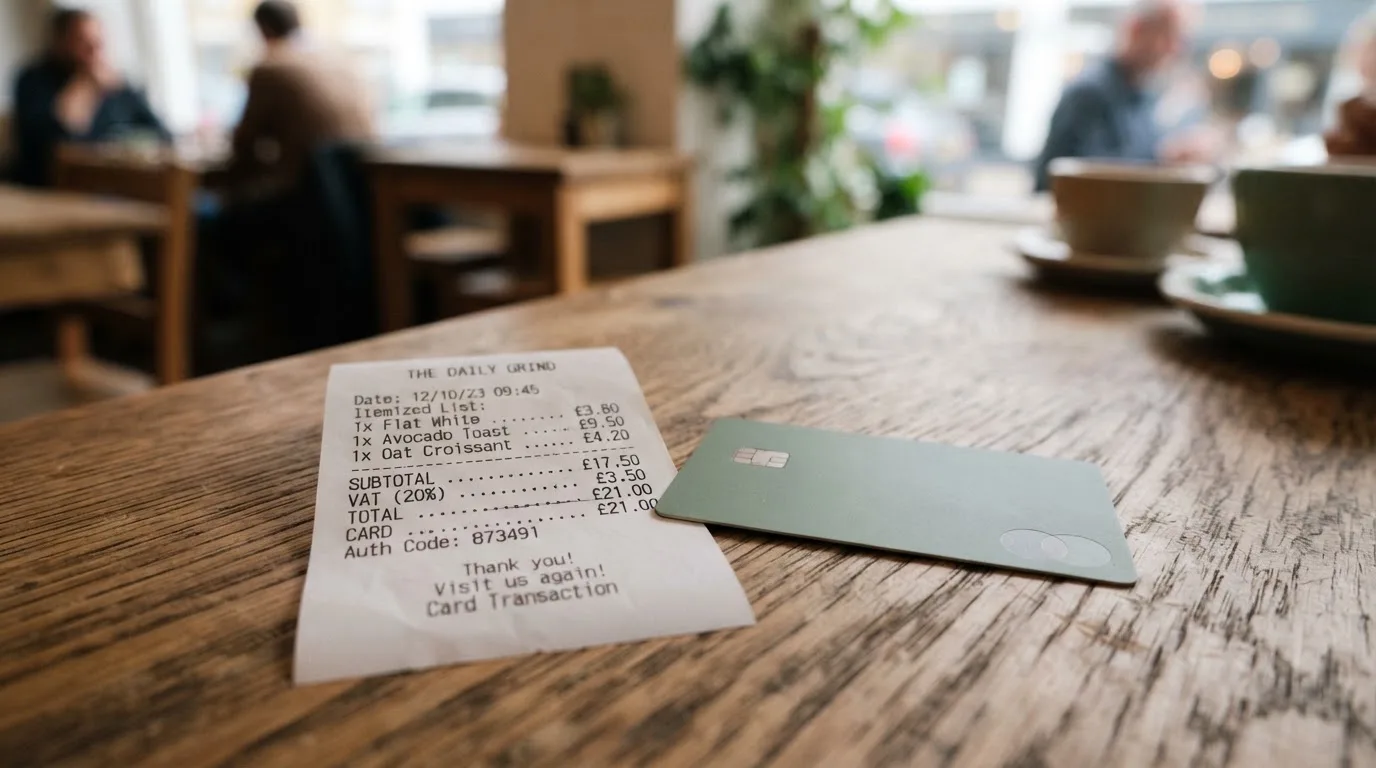
This is the strongest part of the card, and the reason the cost mark is not lower. The headline is genuinely free — “your first card is free” — and subsequent cards carry a $2 creation fee each. No monthly or annual fee is stated. Then the payment fees, which is where most people’s eyebrows go up, but they are not as bad as they look for a USD spender.
| Fee or limit | Value |
|---|---|
| First card (Flex) | Free |
| Each further Flex card | $2 |
| Monthly or annual fee | Not stated |
| USD payments on Flex | Free |
| Non-USD and cross-border USD payments on Flex | $0.30 + 1.5% |
| Declined payment charges on Flex | None |
| Non-USD and cross-border payments on Classic | $0.50 + 2.5% |
| Decline charges on Classic | $0.32 international / $0.02 domestic |
| Top-up (funding) on Flex | 1.25% |
| Top-up (funding) on Classic | 1.5% |
| Network base fee, Tron | $1.25 |
| Network base fee, Ethereum | $0.10 |
| Card limits | $5,000 daily / $20,000 monthly, higher on request via support |
| ATM withdrawal | Not stated |
| Crypto conversion rate | Not stated — fees for actions like funding and currency conversion are mentioned without amounts |
Three everyday payments, to make the table land:
- A $60 lunch in dollars, in a dollar country, on a Flex card. No FX fee, no decline fee, no monthly fee. This is the payment the fee schedule is built for, and it costs you nothing beyond the 1.25% you already paid to load the balance.
- A €40 dinner in Europe, on a Flex card. $0.30 plus 1.5% — roughly $0.90 on top of the €40, before whatever spread the conversion itself carries. The card names fees for currency conversion without publishing the rate, so treat the total as a floor rather than a figure.
- A decline on Classic because the merchant looked twice at the BIN. $0.32 international, and $0.02 domestic. On Flex there is no decline charge at all, which is a small and genuinely nice detail for anyone who has ever eaten at a cash register that turned out to have opinions.
The underlying reason a card can be declined, and why that $0.32 exists on Classic, is not Onboard’s design so much as the internet’s. A card number starts with a six- or eight-digit issuer identification number that any merchant can look up. If the issuer country differs from the billing address, the shop may apply extra scrutiny. That is the background against which a virtual, crypto-funded, foreign-BIN card operates, and it is why “where can I use the Onboard card” is a question with a longer answer than the app would like.
Top up: how the money gets in
The card says “fund from local currency or stablecoins”. The specifics are: Flex accepts USDT and USDC on a network you choose, with Tron and Ethereum named, plus bank transfer in NGN, IDR and KES. There is an article covering BTC, SOL and other crypto that I did not read. You can also move money internally between your Cash balance, Trading Wallet and other cards, with no network involved.
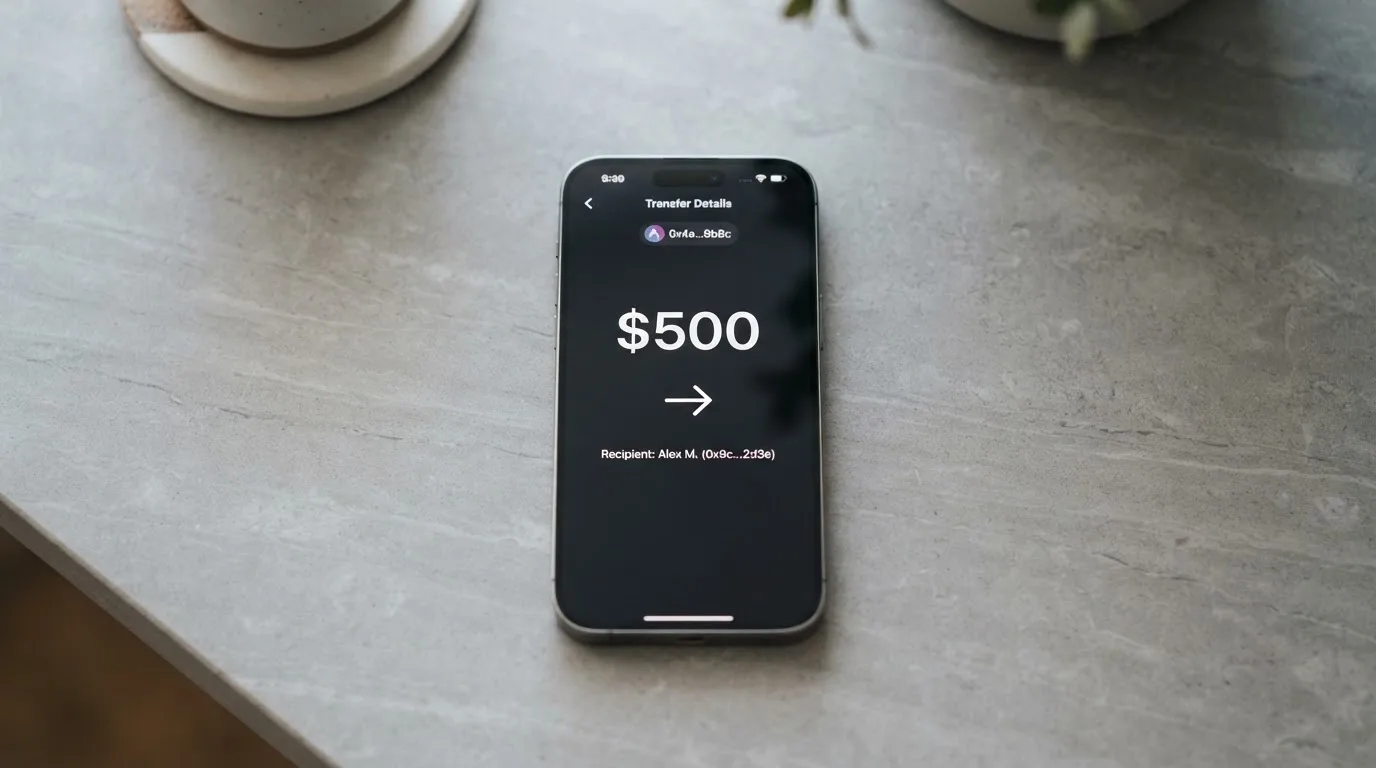
The fee is 1.25% per transaction on Flex, 1.5% on Classic. The limits are $1 minimum, $5,000 maximum per transaction. Two details matter more than they look. Stablecoins are not credited 1:1 — on Flex, roughly 1.0125 USDT per $1 — and some networks add a base fee: $1.25 on Tron, $0.10 on Ethereum, paid by you.
Why the network matters more than the brand of the coin. ERC-20 is the Ethereum token standard, and gas on it is paid only in ETH, so a wallet holding USDT and no ETH cannot send. Tron prices with bandwidth and energy, often burning TRX. USDC specifically is no longer natively supported on Tron — Circle stopped supporting that in February 2024 — so “USDC over TRC20” is not an option you can assume. And blockchain transfers are irreversible: a deposit sent on a network the provider does not support, or to an address belonging to a different network, can be lost or need manual recovery with no guarantee attached.
One reassurance, offered with its caveat: Circle says USDC is redeemable 1:1 for USD and 100% backed by cash and cash equivalents, mostly in an SEC-registered government money market fund, with monthly reserve attestations. Tether describes USDT as a token built on multiple blockchains with reserves intended to back it one-to-one. But stablecoins can and have depegged — TerraUSD collapsed in May 2022, and USDC briefly lost its peg in March 2023 — and Tether says it disables tokens in wallets on the OFAC sanctions list. “Stable” is a target, not a guarantee.
Taking money out is the mirror image. Card withdrawals are free, at least $1 must remain on an active card, and you move the balance to your Cash/USD balance, Trading Wallet or another card. Out to a bank account, you can send NGN, IDR, KES, UGX or USDT/USDC wallets. USD and EUR cannot leave a card directly — they have to go to the Cash Balance first.
Paying with it every day
In a shop, you push the card into Apple Pay or Google Pay, which the card confirms is supported for in-store payments. Since there is no physical card, those wallets are not a convenience; they are the entire interface. Apple Pay handles this well: it replaces the card number with a device-specific number held in the phone’s secure hardware, never on Apple’s servers, and generates a one-time security code per payment.
What you will not find: no cashback, no spending rewards of any kind. There is a referral programme, “Refer & earn”. If someone told you Onboard pays you back for spending, they have confused it with a different card.
The blocked-category list is unusually specific, and it is worth reading whether or not you intend to break any of these rules, because it shows the risk profile the card is designed for. Automatically blocked: money transfer services, cryptocurrency platforms, securities brokers, dating services, massage parlors, telemarketing, government-licensed gambling, financial services companies. Prohibited outright: unlicensed controlled substances, weapons, gambling, counterfeit goods, Ponzi schemes, pirated media. Note the second blocked category in particular — you cannot use this card to buy crypto on an exchange. The card’s pages do not say what is blocked beyond this list, and gambling-adjacent merchant codes are the kind of thing issuers block individually anyway.
Refunds are slow, and this is one of the things that irritates people most. A merchant refund goes back to the same card and “can take up to 30 days to process after the merchant initiates it”. After 30 days you contact support with the transaction ID, merchant name and proof of payment. If the card has been terminated by then, the refund goes to your Cash Balance. No chargeback procedure is described — and a chargeback, the refund a card issuer orders to settle a dispute over fraud or goods not received, is a different thing from a merchant’s goodwill return.
What can go wrong
Four risks, in order of how much they should worry you.
The company is not a bank and names its issuing bank as nobody. Onboard says plainly that it is “a technology platform, not a bank”. Services come through licensed partners: Gopay Financial Services Inc. d/b/a Onboard Pay in Canada, registered with FINTRAC as MSB C100000565, and Onboard Digital, FinCEN MSB 31000293152346, a subsidiary of Nestcoin Holding Limited in the BVI. The card issuing bank or BIN sponsor is not named on the pages I read. That is the structural fact a customer of a crypto card should hold onto: the brand you are reading is a programme manager and front-end, and the licence sits somewhere behind it. This is not unique to Onboard — Visa and Mastercard do not issue crypto cards to consumers themselves; they license issuers and can suspend a programme. In November 2022 Visa said it had “terminated our global agreements with FTX” and the FTX US debit card programme was wound down. WaveCrest, a Visa issuer that supplied crypto card brands, was suspended in Europe in 2018, closing all its Visa programmes. Programme closures typically mean a notice period, then loading and spending stop, then you are asked to withdraw what remains. One 2026 closure reported by a secondary source ended new loads on 8 July 2026 and spending on 8 August 2026 — a single unconfirmed source, but the shape of it is what to expect.
Holding your balance means trusting a custodian. Control of crypto belongs to whoever holds the private key. With a custodial wallet the provider holds the credentials and you must trust them completely; the seed phrase is typically 12 to 24 words, unencrypted, and anyone who obtains it can restore the wallet and spend from it. Transfers are typically irreversible and a stolen key has no built-in recovery — the network cannot freeze or return funds. This is not hypothetical history: Mt. Gox reported about US$350 million stolen 2011–2014, Coincheck about US$400 million in 2018, Ronin Network US$625 million in 2022.
The user reports that exist are bad, and there are almost none. This is the honest state of the record. The card’s official channels produce no complaints; a dedicated search for card complaints returned unrelated brands only. The one signal I could find is unofficial and small: on Trustpilot, the onboard.xyz profile — unclaimed, meaning nobody answers the reviews — shows a TrustScore of 2.6 out of 5 from four reviews, all one-star. The themes across those four are unpaid promo and referral rewards (February 2026), generic support replies (August 2025 to May 2026), slow or difficult verification and restricted services (August 2025, May 2026), and unclear fees (February 2026). Four reviews is not a pattern, and I would not let it stand alone against a fee table that is transparent by comparison. But “no complaints found” and “no complaints” are different sentences, and only the first is true here.
Access can be restricted without much warning. If your account gets restricted, the card’s own help article on the reasons exists; I did not read it, so I cannot tell you the trigger list. What is documented is that a refund arriving after termination goes to the Cash Balance, that at least $1 must remain on an active card for withdrawals, and that there is no published per-KYC-level limit split.
On the plus side, the security controls are current rather than bolted on: passkeys (the card’s recommendation) for login and withdrawal authorisation, a 6-digit passcode, Face ID or Touch ID, a phone OTP for sensitive actions, and an instant freeze in the app — Cards, swipe to the card, more, Freeze — with the honest caveats that pending transactions may still settle and subscriptions are not cancelled. Custody insurance is not stated.
One thing to check before you budget for foreign spending: address verification, which compares the numeric parts of a billing address against issuer records, is mainly offered in the US, Canada and the UK and is generally unavailable for foreign-issued cards. Some merchants decline prepaid or foreign BINs for the same reason. And a declined authorisation can leave a hold on your funds for several days, typically up to seven. On a $5,000 daily limit that is not a rounding error.
What to take instead
All three alternatives below score slightly above Onboard, and all three score slightly above it for the same reason: each offers something physical, or pays you something, that Onboard does not.
| Onboard | Bitrefill | UPay | Kemy | |
|---|---|---|---|---|
| Score | 6.5 / 10 | 6.8 / 10 | 6.1 / 10 | 6.0 / 10 |
| Card | Virtual Visa only | Virtual and physical Visa | Virtual and physical, personal and business | Unlimited virtual cards, one physical Mastercard |
| Card currency | USD | EUR implied by terms | USD, EUR, AED and others convert on payment | Not stated |
| Cost of card | First free, then $2 | Free through the app; amounts not stated | Not stated | Virtual $15 issuance, $2/month; physical $250 with DHL, $10/month |
| Payment fees | USD free; non-USD $0.30 + 1.5% | Deposit spread on crypto-to-euro, not stated; SEPA pay-in 1.99%; spreads by processors and ATM operators | Not stated; conversion may occur during payment | Transaction fee 3.5% + $1; failed $0.80 |
| Top-up | USDT/USDC on chosen network, bank transfer NGN/IDR/KES | Bitcoin, Lightning, Ethereum, USDC, USDT, Solana, BASE, Polygon, Li.Finance, Apple Pay, Google Pay, Visa, MasterCard; SEPA per terms | BTC, ETH, USDT, USDC; networks not stated | USDT and USDC on main networks, plus BTC, ETH, SOL; fiat via mobile money and virtual bank accounts |
| Cashback | None mentioned | 2% total, 1% on deposit and 1% on purchase, no cap; payout currency not stated | Not stated | Not mentioned |
| Where | Long closed-country list; Flex unavailable in nine countries | Country list not stated; “subject to eligibility criteria” | Not stated; says it does not serve residents of certain countries, list may change | 190+ countries, “a few restrictions apply” |
Where each one beats Onboard, plainly:
- Bitrefill (6.8) pays 2% cashback, uncapped, and its “Buy with” list is the widest here — a genuine option if your money arrives as Solana or Lightning rather than USDT on Tron. Its card is free through the app, and it is physical as well as virtual. What I cannot verify: the issuance and monthly amounts, the cashback payout currency, and the country list are all not stated on the pages read. It has an inactivity fee after 12 months without spending or cash-out, amount not stated.
- UPay (6.1) offers personal and business cards, virtual and physical, and converts payments to USD, EUR, AED and others. Its KYC partner accepts only ID documents issued by the same country as yours — worth knowing before you start, if you hold a passport from one country and live in another. Costs and fees are not stated at all, which is its own answer.
- Kemy (6.0) is the outlier structurally: unlimited virtual cards and one physical Mastercard with contactless, valid three years, one per user. But it is the most expensive on paper — $15 virtual issuance plus $2 a month, or $250 for the physical card plus $10 a month — and charges 3.5% plus $1 per transaction and $0.80 for a failed one. Its own pricing page conflicts with itself on the main-account deposit fee, shown as 8% in the summary and 5% in the section, which is the kind of thing I would want resolved before topping up.
None of these is a clean win, and none is a recommendation to switch today. Bitrefill is the one I would test first if your spending earns you nothing on Onboard and a card in your hand matters.
Who I would recommend it to
I would recommend Onboard to someone in this specific position: you earn or hold stablecoins, you spend in dollars or you spend abroad professionally, you are comfortable never holding plastic, and you want the first card to cost nothing. The 1.25% top-up against free USD payments and no decline charges is a coherent design, and the $5,000 daily and $20,000 monthly limits are real limits rather than a rounding error — higher ones are available on request through support.
I would not recommend it to you if any of these are true. You are in the United States or any other country on the closed list. You need cash from an ATM — no ATM terms are published at all. You travel to places that decline foreign-issued cards, which is a larger set of places than people assume. You want to be paid cashback for spending, because there is none. You are the kind of person who wants to know which bank stands behind the card, because none is named. Or you simply need a card you can hand to someone, hand to a machine, or leave in a wallet — in which case the absence of plastic is not a limitation but the whole design, and one of the three alternatives above is a better fit.
The last thing I would tell anyone: keep the balance small and transactional. With a platform rather than a bank, custody insurance is not stated, the record of custodians failing is long, and a balance you would be devastated to lose is a balance to hold somewhere whose failure you could survive.
Frequently asked questions
What is Onboard card?
Onboard is a crypto payment platform that issues a virtual Visa card, funded from stablecoins or local currency rather than a bank account. You load a balance, and the card spends it — closer to a prepaid card than a debit card, since there is no overdraft. The card positions itself for “professionals who spend across borders”, and in practice it is a virtual-only product: no physical plastic version of the Flex or Classic card is offered.
Is Onboard a bank?
No, and the card says so itself: “Onboard is a technology platform, not a bank”. Services run through licensed partners — Gopay Financial Services Inc. d/b/a Onboard Pay in Canada (FINTRAC MSB C100000565) and Onboard Digital (FinCEN MSB 31000293152346), a subsidiary of Nestcoin Holding Limited in the BVI. The card issuing bank is not named on the pages I read, which is worth knowing before you hold a large balance.
Who owns Onboard?
The platform is backed by Nestcoin Holding Limited, a British Virgin Islands entity, with Onboard Digital as a US subsidiary under its FinCEN money services registration. That is the ownership structure as stated: a BVI parent over a US-registered MSB, with a separate Canadian entity, Gopay Financial Services, providing the other half of the regulated services.
Is Onboard card available in my country?
Not everywhere. Verification — and therefore every feature, cards included — is unavailable in Afghanistan, Algeria, Belarus, Burundi, Central African Republic, China, Comoros, Congo (DR), Congo (Republic), Cuba, Gambia, Iran, Iraq, Kyrgyzstan, Lebanon, Liberia, Libya, Maldives, Myanmar, Nicaragua, North Korea, Russia, Sao Tome and Principe, Serbia, Somalia, South Sudan, Sudan, Suriname, Svalbard and Jan Mayen, Syria, Tajikistan, Togo, Tokelau, Turkmenistan, Ukraine, the United States, Uzbekistan, Venezuela, Wallis and Futuna, Yemen and Zimbabwe.
Is Onboard card safe?
The security tooling is modern — passkeys, Face ID or Touch ID, a 6-digit passcode, phone OTP for sensitive actions, and instant freeze in the app. What is not established is the financial side: no issuing bank is named, no custody insurance or deposit-style protection is stated, and your balance sits with a platform rather than a bank. Card programmes from other providers have been wound down before, so treat the balance as working money.
Does Onboard card require KYC?
Yes, and it is prompted when you fund, withdraw, trade or create a card rather than at sign-up. You need a phone number verified by SMS or WhatsApp code, your address, a photo of a passport, national ID or driver’s licence, and a live selfie. The card says this “usually finishes within seconds”, though some cases go to manual review, and the documents accepted depend on the country you choose at sign-up.
How do I top up the Onboard card?
Flex accepts USDT and USDC on a network you choose — Tron and Ethereum are the named ones — plus bank transfer in NGN, IDR and KES, and internal moves between your Cash balance, Trading Wallet or other cards. Funding costs 1.25% on Flex and 1.5% on Classic, from $1 to $5,000 per transaction. Stablecoins are not credited 1:1, and network base fees of $1.25 on Tron or $0.10 on Ethereum apply on top.
Where can I use the Onboard card?
In stores through Apple Pay or Google Pay, which is the only interface, since the card is virtual. Several merchant categories are blocked automatically, including cryptocurrency platforms, money transfer services, securities brokers and gambling. Merchants can also decline a foreign-issued card on sight after looking up the issuer country, and address verification is generally unavailable for foreign-issued cards — which is the practical reason a payment can fail at the till.
How do I withdraw money from Onboard?
Withdrawals from the card are free, with at least $1 required to remain on an active card. You move the balance to your Cash or USD balance, Trading Wallet, or another card first, then out externally to a bank account in NGN, IDR, KES or UGX, or to USDT/USDC wallets. USD and EUR cannot leave a card directly — they must go to the Cash Balance first, which adds a step to every currency withdrawal.
Is Onboard card worth it?
Worth it if your spending is mostly in USD, you will never need cash, and the free first card plus no decline charges matter to you. Not worth it if you want cashback, a physical card, ATM access, or the reassurance of a named issuing bank. At 6.5 out of 10 the card is competent and narrowly built, and Bitrefill at 6.8 is worth a look for the 2% cashback and a physical option.
Virtual cards – cryptocardpedia.com
Content created by the «cryptocardpedia.com» team