A Gibraltar bank with a USD 1,000 membership and no FX markup
 Available in US
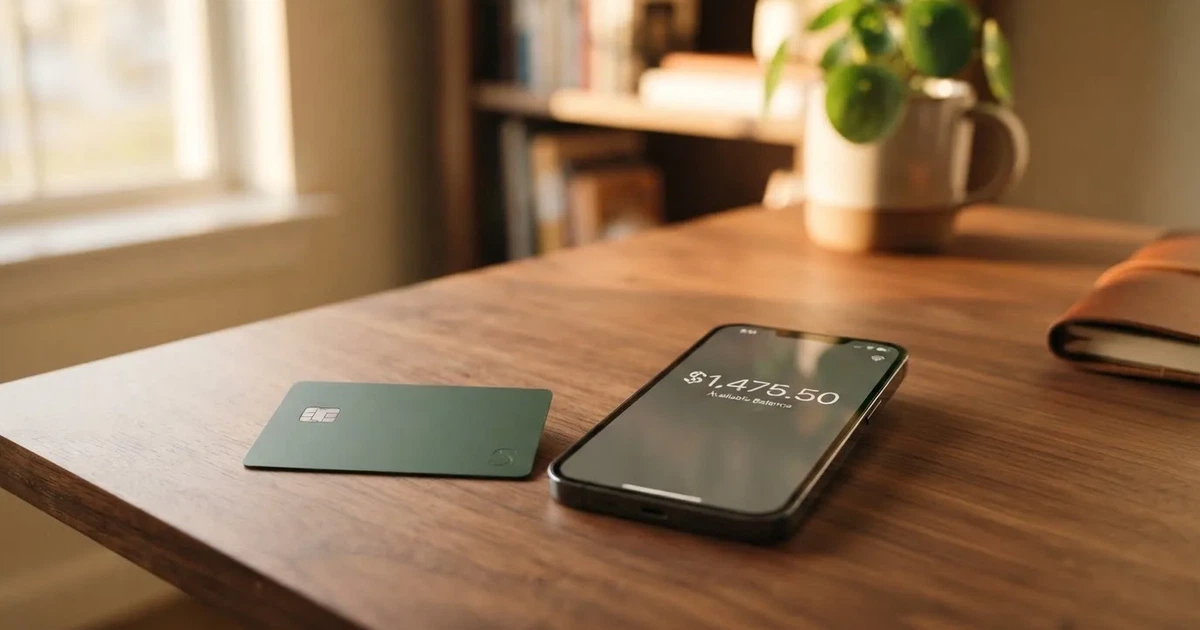
The Xapo Bank card is not a normal debit card with a crypto wrapper bolted on. It is a metal, standard and virtual card set attached to a bank account in Gibraltar, and the account is a membership product that costs USD 1,000 a year. That single number tells you most of what you need to know about who this card is for. If you are paying someone in crypto today, want to hold dollars, euros, pounds and bitcoin in one place, and value a metal card with no foreign-exchange markup more than you value the membership fee, this is a serious product with a serious bank behind it. If you are looking for a cheap way to spend small amounts of crypto without giving up control of it, this is the wrong card, and the wrong price.
The card comes with a real licence and a deposit guarantee, which many crypto-branded cards cannot offer. It also has a Trustpilot score of 3.9 out of 5 from 1,141 reviews, with 31% of those reviews one-star, and the recurring themes in those reviews are account freezes and complaints about the annual fee. Those two facts have to sit next to each other in your head rather than cancel each other out.
The conditions described here are current as of October 28, 2026.
Verdict: 5.8 out of 10
My score for the Xapo Bank card is 5.8 out of 10. It is a genuinely capable card attached to a properly licensed bank, held back mostly by one number: the annual membership. Let me give you the whole breakdown first, then explain who should be reading the rest of this page and who should stop here.
| Criterion | Mark | Why |
|---|---|---|
| Who can get it | 7 / 10 | The official terms do not list countries; unofficial sources point to 50 supported and 28 restricted countries including the United States |
| Cost | 2 / 10 | Membership of USD 1,000 a year, refundable within 30 days; no FX fees or hidden markups, ATM at 2% of the withdrawal amount above USD 100 a month |
| Top-up options | 6 / 10 | The card spends the Xapo balance; USDC and USDT convert to USD; SWIFT, ACH, SEPA, Faster Payments and bitcoin over Lightning |
| Reliability and complaints | 7 / 10 | Gibraltar-regulated, permission No. 23171, USD deposits covered up to the equivalent of GBP 120,000; Trustpilot 3.9 out of 5 across 1,141 reviews with freezes in the complaints |
| Everyday use | 8 / 10 | Metal, standard and virtual debit cards; ATMs in 100+ countries; Apple Pay and Google Pay not disclosed |
| Total | 5.8 / 10 | A premium product with a premium price |
Who this suits: people who already treat Xapo as their primary financial home and hold meaningful balances of USD, EUR and bitcoin. For them the USD 1,000 is a small fraction of the money in play, and they get a bank licence, a deposit guarantee and a fee-free foreign exchange rate instead of the usual spread.
Who it does not suit: anyone spending a few hundred dollars a month, anyone whose country is not clearly supported, anyone who needs Apple Pay or Google Pay, and anyone who is uneasy about the custody arrangement or about the freeze patterns in the reviews. The audience this card is built for is premium banking clients holding USD, EUR and bitcoin — that is not a way of speaking. It is what the product is.
Will they give you the card?
Here is the honest answer, and it has a soft spot in it: probably, if you are in a supported country and your verification goes cleanly — but the card’s own public pages never actually list the countries.
The card terms are titled “Cards Issued Outside Europe Region” and neither those terms nor the Transact page states a country list. Citizenship versus residence is not stated either, so you cannot tell from the official material whether it is where you were born or where you live that decides. Xapo reserves the right to refuse a card at its discretion, and people whose accounts were previously suspended cannot order one. That combination — an unpublished country list plus a discretionary refusal right — means the only honest way to find out is to apply and be verified.
What is available is third-party information, and I want to be clear that it is unofficial and not confirmed by the card. One such source lists availability in 50 named countries, with the United Kingdom, Canada, Germany, Japan and Singapore among them, and 28 restricted countries or jurisdictions including the United States, Russia and Ukraine. Another source says over 100 countries except for US residents and holders of a US passport. These two accounts do not agree with each other, and neither comes from Xapo. Treat them as a hint, not a list.
Practically, here is what the application involves. You need to be at least 18. The card is linked to a Xapo account, so you must open the account before you can order the card at all. The card itself comes in three forms — metal, standard and virtual — and Visa terms apply to cards issued outside Europe. What network is used on the Transact page is not named, which is an odd thing for a card page not to say.
There is also the small print about who gets refused: Xapo may decline a card at its discretion, and anyone previously suspended cannot order. If you have had an account closed or frozen before, that is the first thing to check, because you will not get a second attempt.
How to get it
The short version: you open a Xapo account, complete identity verification, pay for the membership, and order the card in the app. The card is linked to the account, so the account has to exist first.
Identity verification is the part with the most moving parts and the least published detail. You need a valid passport or national ID, personal details that confirm both your identity and where you live, and a real-time photo or short video taken in the app. Age 18 or over. What the card terms do not state is which KYC documents are acceptable or what proof of address is required. Tiers, how long verification takes and the grounds for rejection are not stated either. So do not plan your month around an approval date you have been given; plan around a verification you do not control.
Ordering the card itself: metal, standard and virtual debit cards are all included with the membership, and the premium metal card is described as complimentary and free to order.
Delivery has one firm rule and several silences. Cards are posted only to the verified address. You can use an alternative address, but that is at your own risk and is not guaranteed. Countries served, delivery times and delivery costs are not stated. On replacements, an additional replacement card in a calendar year is USD 25, and other lost, stolen or damaged re-issue fees “may apply” — the amounts live in a Fees Information Sheet that I did not read, so I cannot give you those numbers.
Unofficial, from the same kind of third-party source: delivery time varies by region, emergency replacement runs USD 100 plus address-dependent shipping, and the first replacement each year is free. Again, not confirmed by the card.
Fees: what it really costs
The cost table is short, and then there is one enormous line at the top of it. Membership is USD 1,000 a year with a full refund window of 30 days. Everything else is either free or a percentage that is better than most of the category.

| Fee or limit | What it is | Value |
|---|---|---|
| Membership | Annual fee for the Xapo Bank account | USD 1,000 per year, 30-day full refund |
| Card issuance | Metal card | Free to order; standard and virtual cards also included |
| Additional replacement card | More than one in a calendar year | USD 25 |
| Foreign exchange | Spending in a currency you do not hold | “No FX fees and no hidden markups” |
| Bitcoin spending | Paying from the bitcoin balance | “No fees and competitive spreads” |
| ATM withdrawal | Cash | 2% of the withdrawal amount above USD 100 a month; first USD 100 a month free; ATM operator fees may apply |
| Monthly spending limit | Default, adjustable in the app | Amounts not stated; “high spending limits” |
| Monthly withdrawal limit | Default, adjustable in the app | Amounts not stated |
| Refund timing | Refunds back to you | Usually up to 10 Business Days |
Now let me take three ordinary payments and tell you which of those lines actually applies, because “no hidden markups” is doing a lot of work in that table and you should see where it stops.
A coffee in your own city, paid in dollars. This is the clean case. No conversion, no fee. The card draws down your USD balance. There is nothing to pay and nothing to read.
A subscription billed in euros while you hold dollars. Your balance is converted and debited, and the card’s own words are “no FX fees and no hidden markups” — the rate is the rate. What you must not do is let the merchant or terminal offer you dynamic currency conversion, the option to be charged in dollars at the merchant’s own rate. Xapo’s terms discourage it, and so should you: that choice is where the markup usually hides.
A foreign ATM withdrawal, say USD 250 in one month. Here is the number people miss. The first USD 100 of withdrawal in a month is free; above that, 2% of the withdrawal amount applies. On USD 250 that fee is charged on the amount over the threshold, and the ATM operator may add their own fee on top. ATMs are available in 100+ countries, which is genuinely broad coverage — but it is broad coverage at 2%, not free cash.
One more thing worth knowing before you spend: if you pay in a currency you do not hold, it is converted and debited from your balance, and fiat balances are USD, GBP and EUR plus bitcoin, with each individual payment able to draw from either the USD or the bitcoin balance.
Top up options
Top up the account, not the card — the card spends the account balance and there is no separate card balance to load. The routes are numerous, and the details matter.
- Stablecoins: deposit USDC or USDT and they are automatically converted to USD.
- USD rails: SWIFT, ACH, RTP and FedACH.
- GBP and EUR rails: Faster Payments for GBP, SEPA for EUR.
- Bitcoin: the Lightning network.
- Withdrawals go out the same way: SWIFT, ACH, Faster Payments, SEPA and Lightning.
What is not stated is the deposit fee and the minimum top-up, and neither is a published withdrawal fee amount. I would not assume either is zero; I would ask, or find it in the app before your first large transfer.
Three practical warnings about moving money onto this card. First, a blockchain transfer is irreversible, so sending on a network the provider does not support, or to an address belonging to a different network, can mean the money is gone or needs a manual support recovery with no guarantee. Second, network fees for an on-chain deposit are charged by the blockchain, not by the card provider, so they come out on top. Third, and specific to the stablecoin route: USDC over Tron is not a native option, since Circle stopped supporting USDC on Tron in February 2024, and a wallet holding USDT but no ETH cannot send ERC-20 tokens because gas is paid only in ETH.
There is one more closure rule to know: closing the account cancels the card, the card can be cancelled separately, what happens to any remaining balance on closure is not stated, and Xapo may end the agreement on two months’ written notice.
Paying with it every day
Daily use is where this card scores best, and that is where the 8 out of 10 comes from. Three card forms — metal, standard and virtual — cover everything from a phone-only virtual card to something you can hand over at a restaurant. ATMs in more than 100 countries. No foreign exchange fee or hidden markup. That is a good, plain, usable card.
The friction points are narrower and worth listing honestly:
- Apple Pay and Google Pay are not disclosed. The card terms do not say whether either mobile wallet is supported. If tap-to-pay on your phone is central to how you live, this is the single thing to ask before you commit to a year.
- Some merchant categories are blocked. Xapo blocks a list of merchant category codes and does not publish that list on the page. In practice, recurring pre-authorised payments, self-service petrol pumps and cash-like transactions may be declined.
- Refund timing. Refunds usually arrive within 10 Business Days, and if the refund comes in a currency Xapo does not support it is converted at the payment system’s rate, with Xapo stating it is not liable for losses from that conversion.
One change to the reward structure is worth flagging, because it tells you where the product is heading. From 1 July 2026, general everyday cashback was replaced by targeted campaigns. The first is 3% cashback in bitcoin on rideshare and taxi spending from 1 July to 31 October 2026, and it requires an active Metal Card. Cashback is available for selected spending only, and no general cashback rate is stated. There is also an introductory offer of 4.6% per year on the first USD 100,000 of USD Savings for 90 days, for members paying between 22 September and 23 November 2026.
The app is a single app for iOS and Android, available 24/7. I did not retrieve the store pages, so I cannot tell you the App Store or Google Play rating or how many ratings sit behind it.
What can go wrong
This is the section I would not skip, because the gaps between what is regulated and what has actually happened to users are wider than they look.
Account freezes and closures are the most reported problem. In the Trustpilot reviews, 31% of 1,141 reviews are one-star. Themes include account freezes and closures, users unable to withdraw or close their account, and one report of the USD 1,000 annual fee not being refunded. These are user reports, not confirmed findings, and they are the reason the reliability mark is 7 rather than 9. On the other side of the same reviews there is praise for support. One reviewer describes the bank as fraudulent over a year of failed transactions. A Reddit user in 2025 reports an unresolved identity-verification problem lasting more than three years with unresponsive support.
Compliance reviews take a long time. Slow compliance checks appear repeatedly in the reviews, one reportedly running seven weeks across June to August 2026. If your money is due to move on a deadline, that is a real operational risk.
There are no published dispute timeframes. The terms give no dispute or chargeback window. That is worth understanding as a category fact rather than a criticism: a chargeback is a refund ordered by the issuer to settle a dispute, and in the US reversal rights for debit cards come from Regulation E and credit card rights from Regulation Z — prepaid-card coverage varies and should not be assumed. A card with no stated dispute timeframe leaves you with fewer obvious handholds.
Holds can linger. A declined authorisation may leave a hold on funds that stays for several days, typically up to seven. Combined with blocked categories and slow reviews, that is where “my payment is stuck” stories come from.
Custody is the structural risk. Xapo Bank is a custodial bank in Gibraltar: Xapo Bank Limited, incorporated at 2 Irish Town, Gibraltar GX11 1AA, Company No. 111928, regulated by the Gibraltar Financial Services Commission with permission No. 23171 as a credit institution under the Financial Services Act 2019. Your money sits with them. USD deposits are covered by the Gibraltar Deposit Guarantee Scheme up to the equivalent of GBP 120,000; bitcoin and crypto are not covered by that. In the wider category, custodians have a poor record — Mt. Gox, Coincheck and the Ronin Network all lost large sums — and that history is the reason to keep the balance you do not need here somewhere else.
A card can be frozen at any time, including by you. The app has instant freeze and unfreeze, which is a genuine security feature and also a two-edged one: you can lock yourself out of spending at the wrong moment.
One historical warning, clearly marked as old. In 2014 there was public backlash over the fee schedule on the previous Xapo debit card; Xapo blamed its issuer and promised reimbursement. It is a different product and it is ancient history, but if you have read the name and wondered, that is where the anecdote comes from.
What to take instead
There is no single alternative — the alternatives differ from Xapo Bank in one important way each. Here is how they compare.
| Xapo Bank | RedotPay | Bitpanda | Wirex | |
|---|---|---|---|---|
| Score | 5.8 / 10 | 6.9 / 10 | 6.5 / 10 | 6.7 / 10 |
| Membership or ongoing fee | USD 1,000 a year | Account maintenance waived; Pro tier 12.90 USD monthly or 129.00 USD annual | Account opening and monthly cost not stated as charged; first shipment free | Card issuance free in listed regions; “no annual or foreign exchange fees” |
| Card cost | Metal card free to order | Virtual card 10.00 USD; physical card 100.00 USD, non-refundable | First shipment free; reissue EUR 5.90, or EUR 9.90 for lost or stolen; each additional card EUR 10 | Metal card order fee 45 GBP on the UK page; “only 45 EUR” delivery elsewhere |
| Currency | USD, GBP, EUR plus bitcoin | USD card and HKD card | EUR only | Not stated |
| FX and conversion | No FX fees, no hidden markups; bitcoin spending “no fees and competitive spreads” | 1.00% transaction fee; 1.20% for a non-default currency; some merchants 1.5%, minimum 0.50 USD | Non-EUR FX fee EUR 0 but Visa mark-up fees apply | No fixed amount; rate varies by pair and shown in the app |
| Who qualifies | Country list not stated on the terms | Two official lists; KYC list bans citizens of the named places, card list bans residents of 47 | Verified account plus residence in a euro-area country | Depends on region; residence country must match the ID |
| Notable limits | Defaults adjustable in app, amounts not stated | — | One active card at a time | One physical and one virtual card at a time |
RedotPay is the cheapest way into this category on paper — waived maintenance, a 10 USD virtual card, on-chain deposits — and the least clear on eligibility. It has two official lists worded differently: a KYC list of countries and regions whose citizens cannot complete verification, and a card-issuance list dated 28 August 2026 covering 47 places whose residents are ineligible for both physical and virtual cards and cannot use them as a billing address. Russia, Belarus, Ukraine and Serbia appear on both; Georgia, Armenia, Kazakhstan and the UAE appear on neither. If your country is not named on either list, that is a better-defined position than Xapo’s unpublished list, though the 100 USD physical card fee is not refundable and the 1.00% transaction fee is a permanent haircut.
Bitpanda is the narrow, regulated option: a euro-area residence requirement, a physical Visa debit card in EUR only, one active card. Its cost structure is gentle and its rule is by residence, which is a cleaner test. Its weakness is scope — EUR only, and the cashback figure is unreconciled on its own pages, with the body saying 1% and the summary “up to 2%”.
Wirex sits between: free issuance in the UK, EEA, APAC, Singapore, Australia and “Other”, a metal Visa Signature debit card, spending from cash, stablecoins and cryptocurrencies, and “Cryptoback” in WXT from 0.5% Standard up to 8% on Elite. Against that, its availability depends on your region, cash withdrawals are not permitted in Singapore, and its fees are published per region and are “subject to change”.
If your problem is specifically that you cannot get an ordinary bank card, note that all four of these are still financial institutions performing KYC, and the rules above are what decide who gets one — there is no version of this that avoids them.
Who I would recommend it to
I would recommend the Xapo Bank card to someone who already has a Xapo account with real money in it, holds USD, EUR or bitcoin rather than needing a small top-up, and pays in more than one country. The no-FX-fee promise, the three card types, the ATMs in 100+ countries and the deposit guarantee up to the equivalent of GBP 120,000 make it a good card for that person, and the metal card being free to order removes the usual upsell.
I would not recommend it to someone spending modestly. At USD 1,000 a year, the membership dwarfs almost any reasonable card spend, and the 30-day refund window is the only real off-ramp. I would also hold back if Apple Pay or Google Pay matters to you, if you need to know your country is supported before you apply, if you rely on crypto earning you a cashback rate, or if you are uneasy about bitcoin not being covered by the deposit guarantee.
And I would be careful in one specific case: if you are someone who has already been through an account freeze or a slow compliance review, the reports suggest your experience may not improve. Read the complaints section again before you pay.
Frequently asked questions
What is the Xapo Bank card?
It is a set of three debit cards — metal, standard and virtual — attached to a bank account held with Xapo Bank in Gibraltar. The card spends the account balance directly, drawing on USD, GBP, EUR or bitcoin holdings. It is not a prepaid voucher in the usual sense: it is a bank-issued card from a regulated credit institution, with USD deposits covered by the Gibraltar Deposit Guarantee Scheme up to the equivalent of GBP 120,000.
How does the Xapo Bank card work?
You top up the Xapo account, then pay with the card and the balance is debited at the moment of purchase. Each payment can draw from your USD balance or your bitcoin balance. If you pay in a currency you do not hold, it is converted and debited, with the card stating “no FX fees and no hidden markups”. You should decline dynamic currency conversion when a terminal offers it.
Is Xapo Bank actually a bank?
Yes, in the regulatory sense. Xapo Bank Limited is incorporated in Gibraltar, Company No. 111928, at 2 Irish Town, Gibraltar GX11 1AA, and is regulated by the Gibraltar Financial Services Commission with permission No. 23171 as a credit institution under the Financial Services Act 2019. Xapo VASP Limited is separately listed as a DLT provider under permission No. 26061. That is why the card can offer a deposit guarantee.
Who owns Xapo Bank?
The card’s public pages in front of me identify the issuer as Xapo Bank, a Gibraltar-incorporated entity, but they do not lay out a parent company or ownership structure, and I am not going to guess at one. What the official material does give you is the registered company number, the address and the regulator, which are the details you can verify yourself against the Gibraltar Financial Services Commission’s records.
Does the Xapo Bank card require KYC?
Yes, and fairly thorough KYC. You need a valid passport or national ID, personal details confirming identity and residence, and a real-time photo or short video in the app, at 18 or over. The card is linked to a Xapo account, so the account must be opened first. The specific documents and proof-of-address requirements are not stated in the card terms, so expect to be asked for more than the published list.
Is the Xapo Bank card available in my country?
Honestly, the official terms and the Transact page do not list countries, and do not say whether citizenship or residence decides it. Unofficial sources point to 50 supported countries — including the United Kingdom, Canada, Germany, Japan and Singapore — and 28 restricted ones including the United States, Russia and Ukraine, with another source claiming over 100 countries. None of that is confirmed by the card, so check with Xapo before spending time on an application.
How much does the Xapo Bank card cost?
Membership is USD 1,000 a year, refundable in full within 30 days. The metal, standard and virtual cards are included and the metal card is free to order. An additional replacement card within a calendar year is USD 25. Foreign exchange carries no fee and no hidden markup. ATM withdrawals are free for the first USD 100 a month and 2% of the amount above that, plus any ATM operator fee.
Can I use the card in Apple Wallet or Google Pay?
The card terms do not disclose Apple Pay or Google Pay support, so I cannot tell you either way, and you should not assume it. This is the first question I would put to support, because if tap-to-pay on your phone is how you pay for everything, it is worth knowing before you commit to a year of membership.
Is the Xapo Bank card safe?
The safety question has two halves and they point in different directions. Structurally, it is a Gibraltar-regulated credit institution with USD deposits covered to the equivalent of GBP 120,000, PCI DSS, SOC 2 Type II and SOC 3 certifications, fraud monitoring, and instant card freeze in the app. Practically, the Trustpilot score is 3.9 out of 5 from 1,141 reviews with 31% one-star, and the recurring themes are account freezes, slow compliance reviews and annual-fee disputes.
How do I close the account, and what happens to my money?
Closing the account cancels the card, and the card can also be cancelled separately. What happens to any remaining balance on closure is not stated, and Xapo may end the agreement with two months’ written notice — so do not leave funds sitting there assuming you can walk away with them the same day. Ask about balance handling and about withdrawal fees before you ever need either, because neither figure is published.
App and neobank cards – cryptocardpedia.com
Content created by the «cryptocardpedia.com» team