
The cheapest Visa entry I found, and the price is exactly zero
 Available in US
Fuse is a virtual Visa debit card that you fund with USDC and spend like an ordinary card. There is no card to hold, no monthly fee, no charge for opening the account, and no fee on the international transaction itself. On the cost side it is hard to beat. What you give up for that is scope: the card is virtual only, it loads from one stablecoin through one app, it has no cash machine, and it is aimed at residents of a specific list of countries rather than at everyone.
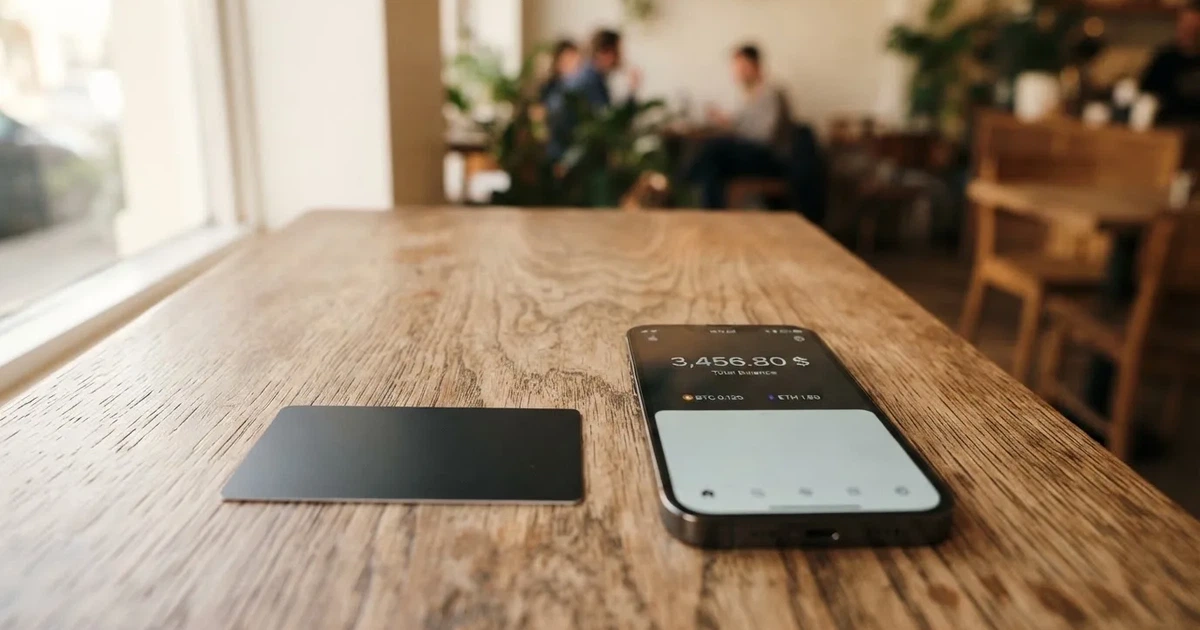
I scored it 6.3 out of 10. The cost is the reason that number is not lower. The top-up options and everyday use are the reason it is not higher.
The conditions described here are current as of October 28, 2026.
Verdict: 6.3 / 10 — free to open, free to hold, narrow to use
Fuse fits a fairly specific person: someone living in one of the listed American countries who already holds USDC, is comfortable moving it between two accounts inside an app, and wants a dollar Visa number for subscriptions and online spending without opening a traditional account. For that person the economics are genuinely good — issuance at $0, monthly fee at $0.00, no inactivity charge, and 0% on international transactions.
It does not fit several other people. If you need a physical card, if you need cash from an ATM, if you want to pay for things in a currency other than dollars without thinking about it, or if you want to top up with a bank transfer or a card, this is the wrong card. So is Android: the app listing I read is iPhone only. And if you are put off by a binding arbitration clause with a class-action waiver, read the agreement before you open the account.
| Criterion | Mark | Why |
|---|---|---|
| Who can get it | 5 / 10 | Issued in 18 jurisdictions: US (except New York and Alaska), Argentina, Brazil, Colombia, Mexico, Ghana, Nigeria and other Latin American countries |
| Cost | 9 / 10 | Issuance $0, monthly fee $0.00, inactivity $0; FX on international transactions 0%; crypto conversion fee not disclosed |
| Top-up options | 4 / 10 | Only USDC from the Main Account to the Card Account; networks not disclosed |
| Reliability and complaints | 8 / 10 | Issued by Lead Bank under Visa U.S.A. licence, Bridge Ventures LLC manages the programme; one complaint about a closed account with about $600 stuck, no Trustpilot page |
| Everyday use | 4 / 10 | Virtual Visa only; Apple Pay available, Google Pay not mentioned; no ATM |
| Total | 6.3 / 10 | A cheap card with a narrow job to do |
Two of those marks are worth expanding. The cost mark is high because almost every number a newcomer looks at is zero — and because the one number that would hurt, the crypto conversion fee, is not published on the pages I read. The everyday-use mark is low because “virtual only” removes the fallback options people normally rely on when a virtual card does not work at a shop.
Will they give you the card?
Eligibility is decided by where you live, not by what you hold. The residence-based list is: the United States, excluding New York and Alaska; Argentina; Bolivia; Brazil; Colombia; Costa Rica; the Dominican Republic; Ecuador; El Salvador; Ghana; Guatemala; Honduras; Mexico; Panama; Nigeria; Paraguay; Peru; and Uruguay. The citizenship rule is not stated on the public pages, so I cannot tell you whether holding a passport from somewhere else blocks an application — and that matters more than it sounds, because compliance screening is usually applied to citizenship and country of birth as well as to where you live. If you live in a listed country but hold an ID from elsewhere, ask them directly before you invest an afternoon in the application.
The age rule is 18+. Prepaid and debit cards are generally available to adults, and some issuers set higher limits on their own; that is the norm, not a Fuse-specific concession.
What this section does not tell you, and you should not guess at: the documents required beyond identity, the proof of address, the processing time, and the reasons a particular application can be refused. Those are not stated on the pages I read. Assume you will be asked for more than the minimum and that you will not get a same-day answer.
How to get it
The route is short. You verify in the Fuse app, then create the virtual card, then move USDC from your Main Account to the Card Account. That third step is not optional decoration — it is how the card gets its money, and it is the step that defines what this card is.
Verification runs through Bridge. It is mandatory, there are no tiers, and everyone has to pass it. The information collected at that point is name, address, date of birth and government ID number. Further documents, a driver’s licence being the example given, may be requested at any time — including later, after the account is already open. That last point is the one to consider. The people behind these programmes treat onboarding as an ongoing process rather than a single gate, because anti-money-laundering rules require ongoing monitoring and reporting, not one check at the door.
One thing worth understanding about who is actually on the other side. The card is issued by Lead Bank, a Missouri state-chartered bank, under a Visa U.S.A. licence. Bridge Ventures LLC is the Programme Manager. Squads Labs Inc. is the Platform Provider and is not a bank. Visa and Mastercard do not issue crypto cards to consumers themselves; they license issuers and can suspend a programme — Visa terminated its global agreements with FTX on 13 November 2022 and the FTX US debit card was wound down by its issuer. That structure is normal for this category, and it also means your card depends on a licence held by a company you will never interact with directly.
There is no physical card to wait for. Delivery is not applicable here — this is a virtual card and the public pages do not mention a physical one.
Fees: what it really costs
The headline numbers are excellent and the fine print is thin. Here is every cost figure the card publishes.
| Fee or limit | Value |
|---|---|
| Card issuance | $0 |
| Monthly fee | $0.00 |
| Annual fee | not listed |
| Inactivity fee | $0 |
| FX / international transaction | 0% of the USD amount |
| Per-purchase fee | none |
| Card transaction fees | none stated on the Support page |
| Top-up fees | none stated on the Support page; the agreement says “fees may apply” |
| Cash reload | $0 |
| Crypto conversion fee | not stated |
| ATM | not available — Fuse Cards cannot be used at ATMs currently |
| Default daily spending limit | $2,000, adjustable up to $2,000 in settings |
| Per-transaction limit | $2,000 |
| Monthly limit | not stated |
Three everyday payments to illustrate the costs.
A $30 subscription in dollars. No per-purchase fee, no card transaction fee. If the balance is already USDC sitting in the Card Account, the only number that could move is the crypto conversion fee, and that figure is not published. This is the payment where Fuse is hardest to beat on price.
A $30 purchase from a euro-denominated site. The international transaction fee is 0% of the USD amount, so no FX markup is added by the card. What that means in practice is that the conversion happens at whatever rate your card network gives you, with no extra layer on top. A foreign-issued BIN can still cause friction at checkout: merchants can see the issuer country from the card’s first six or eight digits and some decline prepaid or foreign cards on that basis alone, and address verification is mainly offered in the US, Canada and the UK, so a mismatch on a foreign-issued card is a common cause of a decline rather than a fraud signal.
A $60 cash withdrawal. Impossible. Fuse Cards cannot be used at ATMs currently, and the agreement lists ATM withdrawal and balance inquiry as not applicable. Plan for cash separately.
The $2,000 daily cap is adjustable in settings, and the FAQ says it may increase after usage. The FAQ’s wording is the kind I would want you to read twice before you rely on it for a month with more spending than that.
On-chain network fees are worth separating out. When you move USDC, any gas or bandwidth cost is charged by the blockchain, not by Fuse. That is a category fact, not a Fuse charge, but it comes out of your wallet.
What nobody publishes is the crypto conversion fee, and that is the number most likely to matter if you ever hold something other than USDC. The Support page says there are no top-up fees and no card transaction fees; the agreement hedges with “fees may apply”. Where a company says both in the same breath, I take the second as the binding version.
Top up: how money gets onto the card
Topping up is a transfer inside the app, not a payment to a card account. You move USDC from the Main Account to the Card Account; the funds are ready immediately; only USDC sitting in the Card Account can be spent. That last point is the one to understand rather than skim. The card does not reach into the Main Account when you tap. It spends the Card Account balance, so a Main Account full of USDC buys you nothing until you move it.
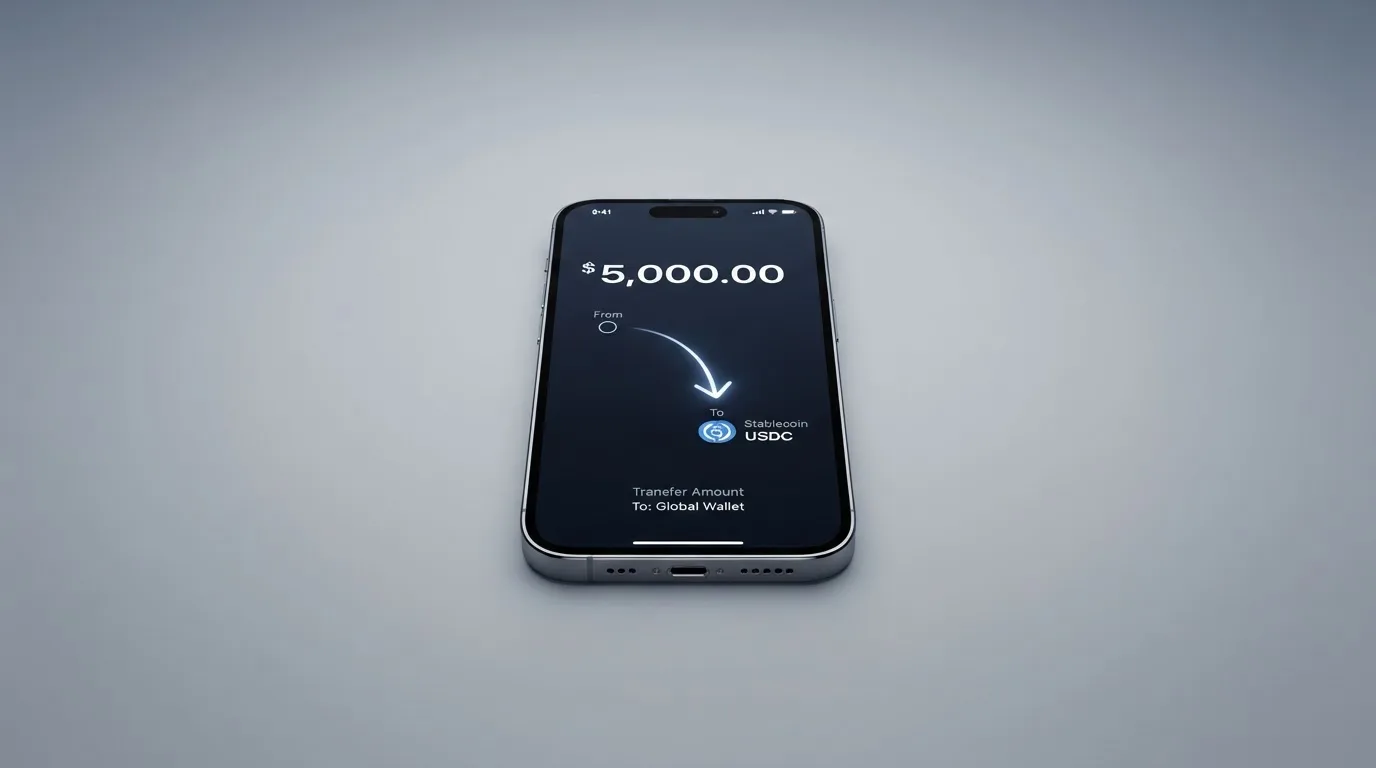
USDC is the only token listed. No minimum top-up is published, cash reload is $0, and no top-up fee is stated. Two things are not stated and both matter: which networks are supported, and what fiat top-up options exist. The product positioning is Solana-oriented, but the public pages do not confirm the network for this card, and I would not assume it. A transfer on a network the provider does not support can be lost or need manual support recovery with no guarantee, because blockchain transfers do not reverse.
There is one cost hiding here. The Platform Provider or Programme Manager may charge separate fees for stablecoin sales. If you are buying USDC with fiat to load the card, that is a third-party charge on top of the conversion fee that is not published.
Going back out works too. USDC can be moved from the Card Account back to the Main Account, with a five-minute security time lock on withdrawal. On closure, the remaining balance is returned to the Platform Provider wallet as stablecoin at no fee — but the bank may refuse to return balances under $1.00, and a closure can be blocked by a pending transaction, an open dispute, an amount owed, or a hold. That is four separate ways to be unable to close, and worth knowing before you need to.
A practical note on the five-minute lock: it is there to stop someone draining a compromised account in one go. It will also make you wait once.
Paying with it every day
This is where the card is narrowest, and I would rather say so plainly than sell the Apple Pay line.
The card is virtual. There is no physical card. Apple Pay is supported for in-person payments; Google Pay is not mentioned anywhere I read. If you are on Android, that is not a small gap — it removes the usual way people make a virtual card usable in a shop. To pay in person without Apple Pay you would be typing card details into a terminal, which not every reader will want to do.
Two restrictions on what it can be used for: no cash back at point of sale, and no illegal transactions. No blocked merchant category codes are listed, so I cannot tell you whether gambling or similar categories work — that is not stated. Some issuers block categories such as gambling by policy rather than by law, and the blocked list varies by issuer.
There is no cashback stated. Nothing is promised for spending.
On the app: the App Store listing I read is iPhone only, iOS 16.4 or later, under the name “Fuse – Solana Smart Wallet”, with a Paraguay storefront and no rating shown (“not enough ratings”). Google Play was not checked. One unofficial figure floats around third-party sites — an aggregate of roughly 4.5 to 4.6 from about 35 ratings — but that comes from a site other than Apple, carries no date, and is not confirmed by the card, so I would not treat it as a rating. A listing with no ratings and an unofficial estimate from thirty-five ratings tells you very little either way.
Apple Pay itself is worth understanding, because it changes what you are handing over. It replaces your card number with a device-specific number stored in the Secure Element, never on Apple’s servers, and each payment carries a one-time dynamic security code. The issuer can still restrict that tokenised number — blocking it on magnetic stripe, on phone, or on websites — which is a real possibility with a new programme.
If a payment goes wrong
The dispute terms are unusually complete, which I would count as a point in the card’s favour. Unauthorised use must be reported within 2 business days to cap your liability at $50; report later and it can reach $500. Errors must be reported within 60 days. The bank aims to decide in 10 business days, up to 45, with credit within 10 business days if it takes longer; up to 90 days applies to point-of-sale, foreign and new-card errors. You are told the outcome within 3 business days of the investigation ending. Pending amounts become available in 24 hours after clearing.
Three limits to hold onto. Merchant disputes go to the merchant first, and refunds are credited to the wallet as stablecoin — so you are waiting on the merchant before you are waiting on anyone else. There is no provisional credit for goods and services disputes. And you cannot stop a payment on a card purchase.
A declined authorisation can also leave a hold on your funds for several days — typically up to seven — which matters more than usual here, because your balance is USDC you may have moved on the assumption it was spendable.
What can go wrong
The balance you hold is not a bank deposit. Funds are not FDIC insured, and fiat sitting in transit during a conversion is not insured either. That is not a defect; it is what this category is. Deposits sit with counterparties, and the history of that is long: Mt. Gox reported about US$350 million stolen between 2011 and 2014, Coincheck about US$400 million in 2018, and the Ronin Network US$625 million in 2022. Here the specific counterparties are named and visible — Lead Bank holds the card programme, Bridge Ventures manages it, Squads Labs is the Platform Provider — which is more than most cards in this category offer.
On complaints, the picture is thin rather than bad. There is no Trustpilot page for Fuse specifically and no Reddit threads I could find. There is one App Store review reporting an account closed with about $600 stuck and inaccessible, and an X user reporting unanswered emails — both per an aggregator, date not shown, so treat the timing as unknown. No official incidents were found. And the card agreement carries binding arbitration with a class-action waiver, which the aggregator also notes. In the United States, debit card reversal rights come from Regulation E, credit card rights from Regulation Z, and prepaid-card coverage varies and should not be assumed — read this clause knowing that going to court is likely not how a dispute gets settled.
The controls you do have are real but modest. You can freeze and unfreeze the card in settings, set and reset a PIN, set the daily spending limit up to $2,000, and use the “smart account” enforced spending limits. Two-factor authentication is not mentioned. The bank may block or cancel a card for suspected fraud. There is no overdraft.
One structural point about how these cards fail, since it bears directly on the complaint above. Programme closures usually follow a pattern: a notice period, then spending and loading stop, then users are asked to withdraw what remains. One 2026 closure reported by a secondary source ended new loads on 8 July 2026 and spending on 8 August 2026 — single source, unconfirmed, and not Fuse. WaveCrest was suspended by Visa in Europe in 2018, closing all WaveCrest-issued Visa programmes. The point is not that Fuse will close. It is that a small programme with one user complaint is also a programme where a closure would leave you negotiating by email.
What I found not stated: any dated licence or programme event, support hours (the agreement refers to business days, Monday to Friday excluding holidays, but no hours are given), and the reasons an application may be refused.
Support is email at [email protected] and phone on 833-237-8104.
A note on taxes, not advice
I am not qualified to advise you on tax and I will not try. One structural fact is worth knowing before you spend: in the US the IRS treats digital assets as property, so exchanging them for goods, services or dollars generally produces a taxable gain or loss, measured in local fiat currency at the value on the date of the transaction. That means each card payment funded from crypto can be a separate disposal. Your country will do something, and it will not necessarily be the same thing. Ask someone who knows your jurisdiction.
What to take instead
If the reason you are here is that an ordinary bank card is hard to get, Fuse is not the only route, and the alternatives are often broader. All four cards below scored higher overall than Fuse in the same exercise, though for different reasons and with their own gaps. These are third-party details from their own published material, not my testing of any of them.
MetaMask — 7.1 / 10. Sign-up is open in 45 listed countries and territories, with examples including Andorra, Argentina, Brazil, Canada, Mexico, Germany, France, Spain and Uruguay; other regions join a waitlist. Proof of residency is required, and the card’s own line is useful: ineligible regions limit sign-ups, not spending. US and UK sign-ups are temporarily closed per its FAQ. It issues a Mastercard, virtual first and instantly, with a metal version pre-orderable in the app after approval. The virtual card is free with no annual or maintenance fee; metal is $199 a year. Fees are described as a “minimal fee for each transaction” with no additional MetaMask fees and no foreign transaction fee — the amount itself is not stated on the pages read. It spends directly from a connected wallet across Linea, Base, Monad and Solana, with mUSD, wETH, EURe, GBPe, USDC and USDT named. Cashback is real here: 1% on Virtual, and a headline 3% on Metal whose footnote caps it at 3% up to the first $10,000 spent and 1% after, paid in mUSD, with a 5X or 7X dining bonus.
KAST — 6.1 / 10. The most transparent tier structure of the four: Standard at 0 USD a year, Premium at 1,000 USD, Private at 10,000 USD, billed annually upfront. Extra virtual cards are 2 USD, Standard physical cards are 0 USD card fee plus 40 USD delivery, and there is a 1 USD per month inactivity fee after 12 months. Fees are unusually explicit: stablecoin top-up 0%, card spend in USD 0%, transaction fee 0%, Apple and Google Pay 0%, non-USD FX 0.5% to 1.75% depending on where you live and which programme you are on, non-USD transactions under 25 USD at 0.10 USD, declined payments 0.50 USD. Up to ten cards, virtual and physical, Visa Platinum, Visa Infinite metal, Visa Infinite gold-plated, plus Pengu, Solana and Bitcoin designs. Cashback is USD, 1.5% on the first 2,000 USD a month up to 3% on the first 40,000. The catch is access: the country list is not published, and its own KYC text warns that living in a supported country while holding an ID from a restricted region may still make you ineligible.
Zeal — 6.1 / 10. A Visa with a virtual card for online use, addable to Apple Pay, spending from card Safe balances in EUR, USD and GBP on Gnosis Chain and Celo. Charges no additional FX fee and converts at the Visa wholesale rate, though Gnosis Pay fees such as ATM may still apply. Spend is accepted in 150+ countries, with the card programme live in the EU, UK, Brazil, Colombia, Mexico, Japan, Singapore, Philippines, Indonesia and Thailand. Cashback is up to 4% in GNO, which must be held in the card Safe to qualify and whose rates can change. No fee schedule is published on its site or App Store — that is not stated — so you would be signing up without seeing the numbers.
| Card | Score | Cost | Card type | Where it is strongest |
|---|---|---|---|---|
| Fuse | 6.3 / 10 | $0 issuance, $0.00 monthly, 0% FX | Virtual Visa | Cheapest entry; Americas-only, USDC-only |
| MetaMask | 7.1 / 10 | Virtual free; metal $199/year | Virtual Mastercard, metal optional | 45 countries; direct wallet spend; cashback |
| KAST | 6.1 / 10 | 0 / 1,000 / 10,000 USD yearly tiers | Virtual and physical Visa, up to 10 | Published fee schedule; FX capped at 1.75% |
| Zeal | 6.1 / 10 | not stated | Virtual Visa | Multi-currency Safe balances; wholesale FX rate |
If your problem is Android, Apple Pay, a physical card in your hand, or a country not on Fuse’s list, the comparison above is more useful to you than anything else here.
Who I would recommend it to
I would recommend Fuse to someone who has a specific job in mind and can do the setup without flinching. Concretely: you live in one of the eighteen listed jurisdictions, you are 18 or over, you already hold USDC or are comfortable acquiring it, you use Apple Pay, you spend mostly online or in dollars, and you want to try a dollar card without a monthly charge. Under those conditions the numbers are hard to argue with, and the app does one thing rather than five.
I would not recommend it if you need a physical card, cash, Android, a card that can be loaded with a bank transfer, a stablecoin other than USDC, or a published fee schedule you can read before you commit. I would also pause if the sum involved is money you cannot afford to have caught in a support queue, given the one report of an account closed with about $600 stuck.
And I would check two things before you sign up anything: the current network for USDC transfers, which is not stated on the pages I read, and whether your citizenship causes any issue, which is also not stated. Neither is a reason to walk away. Both are questions worth thirty seconds of support’s time before you move funds.
Frequently asked questions
What is the Fuse card?
Fuse is a virtual Visa debit card in US dollars that you fund with USDC. It is issued by Lead Bank, a Missouri state-chartered bank, under a Visa U.S.A. licence; Bridge Ventures LLC manages the programme and Squads Labs Inc. is the Platform Provider. You move USDC from a Main Account to a Card Account inside the app, and the card spends that balance. There is no physical card, and no cash withdrawal.
How does the Fuse card work?
You verify in the app, create the virtual card, and move USDC from the Main Account to the Card Account, where funds are ready immediately. Only USDC sitting in the Card Account can be spent, so you move funds before you need them rather than on the day. Withdrawals back to the Main Account work too, subject to a five-minute security time lock.
Is Fuse a bank?
No. Fuse is the brand in front of the card; the issuing bank is Lead Bank. Squads Labs, the Platform Provider, is explicitly not a bank. That means your funds are not FDIC insured, and fiat in transit during a conversion is not insured either. The card agreement also carries binding arbitration with a class-action waiver, which you should read before opening an account.
Who owns Fuse?
The programme is issued under Visa U.S.A.’s licence by Lead Bank, managed by Bridge Ventures LLC, with Squads Labs Inc. as Platform Provider. Visa itself does not issue consumer crypto cards — it licenses issuers and can suspend a programme, as it did when it terminated its global agreements with FTX on 13 November 2022. Ownership details beyond those roles are not stated on the public pages I read.
Who can get the Fuse card?
Eligibility follows residence, across eighteen jurisdictions: the US excluding New York and Alaska, Argentina, Bolivia, Brazil, Colombia, Costa Rica, the Dominican Republic, Ecuador, El Salvador, Ghana, Guatemala, Honduras, Mexico, Panama, Nigeria, Paraguay, Peru and Uruguay. Applicants must be 18+. The citizenship rule is not stated, so ask before applying if your passport is from elsewhere. Documents beyond identity and proof of address are also not stated.
Does the Fuse card require KYC?
Yes, and there are no tiers to skip. Verification runs through Bridge, is mandatory, and everyone must pass. The information collected is name, address, date of birth and government ID number; further documents such as a driver’s licence may be requested at any time, including after the account is open. Processing time and rejection reasons are not stated, so do not plan around a quick answer.
Is the Fuse card free?
Yes, and that is its strongest point. Issuance is $0, the monthly fee is $0.00, there is no inactivity fee, cash reload is $0, no per-purchase fee is listed, and the international transaction fee is 0% of the USD amount. The number to chase before you commit is the crypto conversion fee, which is not stated on the public pages.
Can I use the Fuse card in my country?
You can spend wherever cards are accepted, but you cannot open it unless you live in one of the eighteen listed jurisdictions. There is a second catch: because the card is virtual, in-person use realistically means Apple Pay, which is supported, while Google Pay is not mentioned. A foreign-issued card number can also be declined by some merchants on sight.
How do I top up the Fuse card, and can I withdraw?
Top up by transferring USDC from the Main Account to the Card Account; funds are ready immediately, no top-up fee is stated, and no minimum is listed. USDC only — networks are not stated, so do not assume one. You can withdraw back to the Main Account with a five-minute lock. On closure the balance returns as stablecoin at no fee, but balances under $1.00 may be refused.
Is the Fuse card safe?
There is no fraud-free answer to that. Funds are not FDIC insured, so you carry custodian risk the same as any card in this category. Against that, the safeguards exist: freeze and unfreeze, PIN controls, spending limits up to $2,000 a day, and 3-D Secure handling online. Two-factor authentication is not mentioned. I found no Trustpilot page for Fuse and one report of a closed account with about $600 stuck.
Wallet cards – cryptocardpedia.com
Content created by the «cryptocardpedia.com» team