A euro-balance crypto card with no monthly fee and a 0.4% conversion charge — and several unanswered questions
 Available in US
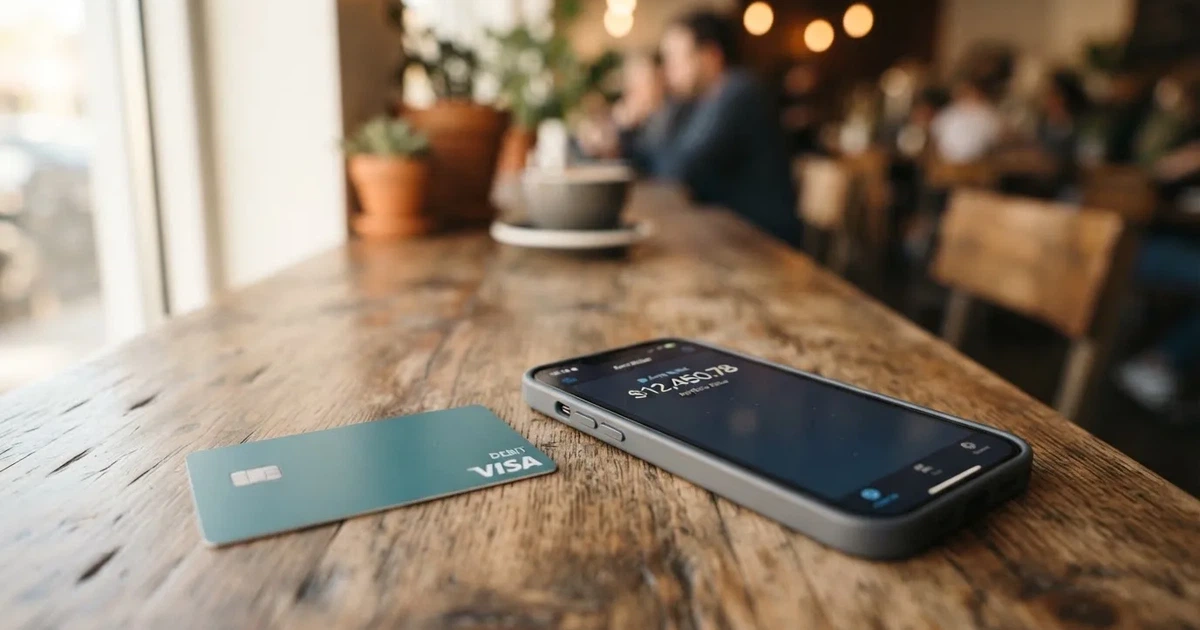
The PayPilot card is a Visa card that spends from a euro balance you load yourself, by crypto or by euro. On the cost side it is unusually clean: no issuance fee, no monthly fee, no commission on payments made from the euro balance, and 0.4% to convert crypto into euros. On the transparency side it is unusually thin: the list of supported countries is not published, the FX fee is not stated, ATM fees are not stated, limits are not stated, and the network to use for a crypto deposit is not named. My score is 7.4 out of 10 — dragged down by those gaps rather than by anything bad I found.
Conditions are current as of October 28, 2026.
Who this suits: you already live and pay in euros, you hold BTC, ETH or USDT, and you would rather not hold a second crypto balance just to buy lunch. Who it does not suit: anyone outside the euro area hoping to spend dollars, pounds or roubles; anyone who plans to live on ATM withdrawals; anyone who needs a specific merchant category to work; and anyone for whom a “supported regions” list published up front would settle the question before they start.
Verdict: 7.4 out of 10
Let me put the parts on the table first, then walk you through what each mark means.
| Criterion | Mark | Why |
|---|---|---|
| Who can get it | 5 / 10 | Availability depends on your country of residence and local regulations, and the list of supported regions is not disclosed |
| Cost | 9 / 10 | Issuance 0 EUR, service 0 EUR, payments from the euro balance with no commission, crypto-to-euro conversion 0.4%; the FX fee is not disclosed |
| Top-up options | 6 / 10 | BTC, ETH, USDT and EUR; top up with crypto or with EUR, but the networks are not named |
| Reliability and complaints | 8 / 10 | Issuer Walletto UAB, electronic money licence No 33 from the Bank of Lithuania dated 29 March 2018; no complaints found |
| Everyday use | 9 / 10 | Visa, virtual immediately and physical by post, Apple Pay and Google Pay, bank ATMs |
| Total | 7.4 / 10 |
The 9s are real and worth having. A card that costs nothing to open, nothing to keep and nothing to spend from a topped-up euro balance is rare in this category, and the 0.4% conversion charge is a genuinely low number. The 9 for everyday use is generous because of the wide surface: a Visa card you can put in a phone wallet and use both online and in stores, virtual straight away and physical in the post.
The two weak marks are both about *unknowns*, not about bad behaviour. Availability scores 5 because the rule is “depends on your country of residence and local regulations” with no list attached — so if you are reading this from outside the euro area, you cannot tell from the public pages whether you qualify. Top-up options score 6 for the same reason in the other direction: four assets are named, and not one network.
Will they give you the card?
Yes if you are resident somewhere the card supports — and that is where I have to be straight with you, because the card’s own words are all we have: availability “depends on your country of residence and local regulations”, and the “supported regions” are not listed. The rule is drawn by *residence*, not citizenship, which is worth noting on its own: citizenship is never mentioned. In practice that means the address you register with is the thing being judged, not your passport.
If that ambiguity worries you, there is a concrete comparison further down: at least one rival publishes two explicit country lists, one of them naming 47 places. You are entitled to the same standard here, and asking support is the reasonable next step.
The category background explains why residence matters so much more than it used to. A card number starts with a six- or eight-digit issuer identification number, and any merchant can look that up to see which institution and which country issued it — and may apply extra scrutiny when the issuer country differs from your billing address. A card issued in Lithuania can therefore look “foreign” to a shop in another country. Issuers restrict who they take based on exactly that mismatch of risk.
How to get it
Three steps, and one gate in front of them:
- Register an account.
- Complete a one-time quick identity verification.
- Create the card.
The verification is where the detail stops. The card’s pages describe it as a one-time “quick identity verification” before the card is created, and say the account is “verified once” — but which documents, whether proof of address is required, and what age you must be are not stated. Named verification partners are KycAid and Ondato. The number of levels, how long checks take and the grounds for rejection are all not stated as well.
Two things about this are worth carrying forward. First, identity checking is not a formality bolted onto a crypto product — it is a legal obligation for regulated businesses, including ongoing monitoring of transactions and reporting of anything suspicious. In the EU that due diligence covers your name, address, date of birth, nationality and identity documentation, a sanctions check, the purpose of the relationship, and whether you are a politically exposed person. Second, and more practically: the issuer may re-verify your identity and ask for more documents at any time, not just at signup. If your address changes, expect to be asked again.
On delivery, the card page itself says nothing. The card terms are more informative: a virtual card that is usable immediately, and a physical card that needs activation and is sent by post, with the issuance fee understood to include postal costs according to the issuer’s own pricing by country. How many countries that covers, how long the post takes and whether it is charged separately are not stated.
So “how do I get it” has a clean procedural answer and a thin practical one. Register, verify once, create. Then: does it arrive as a number on screen, or in an envelope, or both?
Fees: what it really costs
The costs table first, then three everyday payments walked through, because the difference between them is the whole point of this card.
| Fee or limit | Value |
|---|---|
| Issuance | 0 EUR |
| Monthly service fee | 0 EUR |
| Payment from euro balance | No commission |
| Crypto-to-euro conversion | 0.4% |
| FX fee | Not stated |
| ATM cash withdrawal | Available; fee and allowance not stated |
| Single, daily and monthly limits | Exist; values not stated |
| Tiers | Not stated — a single card, no tiers described |
Three payments, one after another:
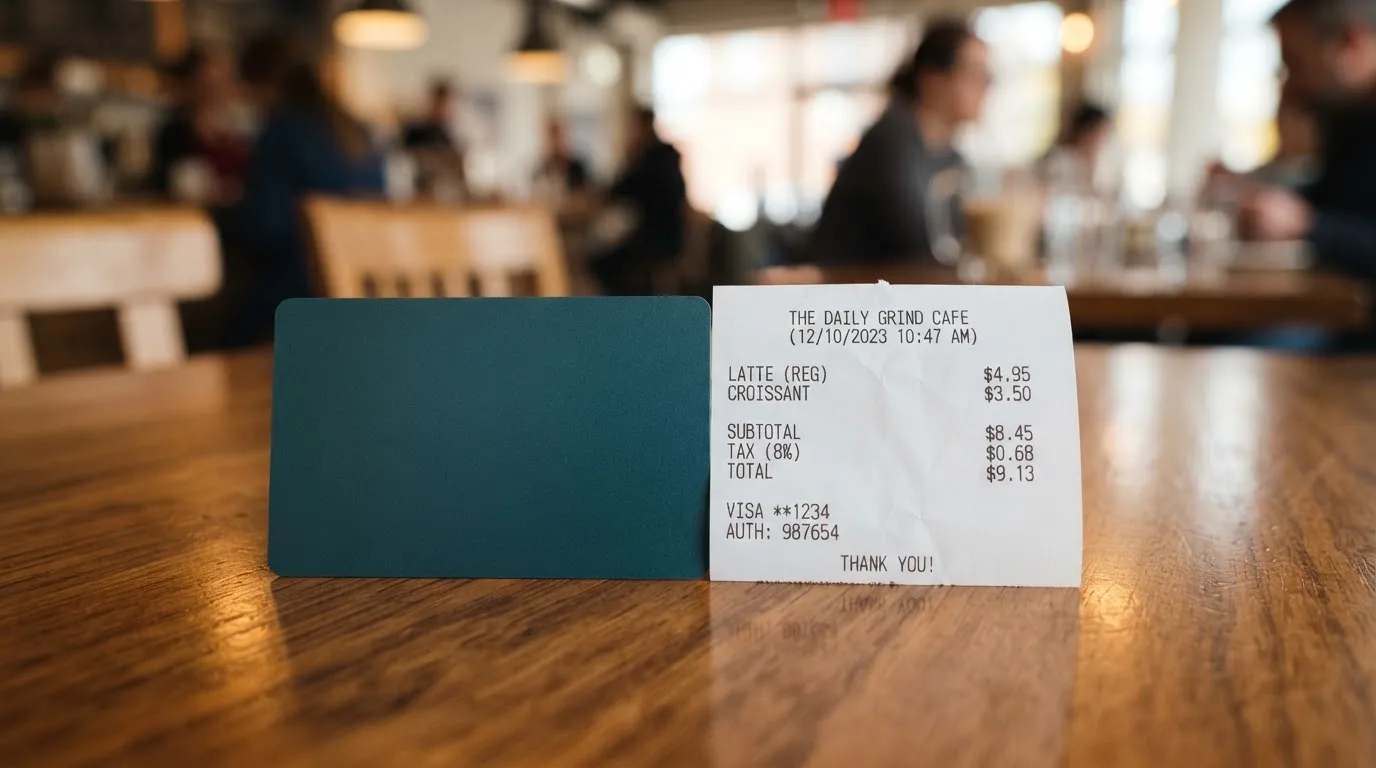
Buying a 4 EUR coffee with a topped-up euro balance. No commission. The card spends euros you already converted, so nothing else applies. This is the payment the card is designed for.
Buying the same coffee after loading 500 USDT. The crypto is converted into euros at 0.4%. On a small purchase the percentage barely registers, and there is no per-payment commission on top of it — the number of payments you make does not change the fee.
Buying the same coffee in a shop that prices in dollars. Here I cannot tell you the cost. The card converts to the merchant’s currency when needed, and the FX fee is not stated on the public pages. The card terms say exchange fees are specified in the payment account and are based on Visa or Mastercard published rates at the time of exchange — which tells you where the rate comes from, not what the card adds on top. The wallet holds BTC, ETH, USDT and EUR; the euro balance is the one you spend.
ATM cash is the other gap. The page says cash can be withdrawn from ATMs; the fee and the allowance are not stated. Cash is also where the pre-loaded-balance model is least comfortable, since you need funds sitting there before you leave home.
One limit detail from the card terms is worth a line of its own: daily, weekly and monthly maximum payment amounts are set by the issuer, with values not stated. Single, daily and monthly limits exist as a category. If you are someone who needs to know the ceiling before the first payment, you will have to ask.
Top up: crypto or euros, network unspecified
Top up with crypto or with EUR. The FAQ lists BTC, ETH, USDT and EUR as what you can fund with — but the networks are not specified, and that is not a technicality.
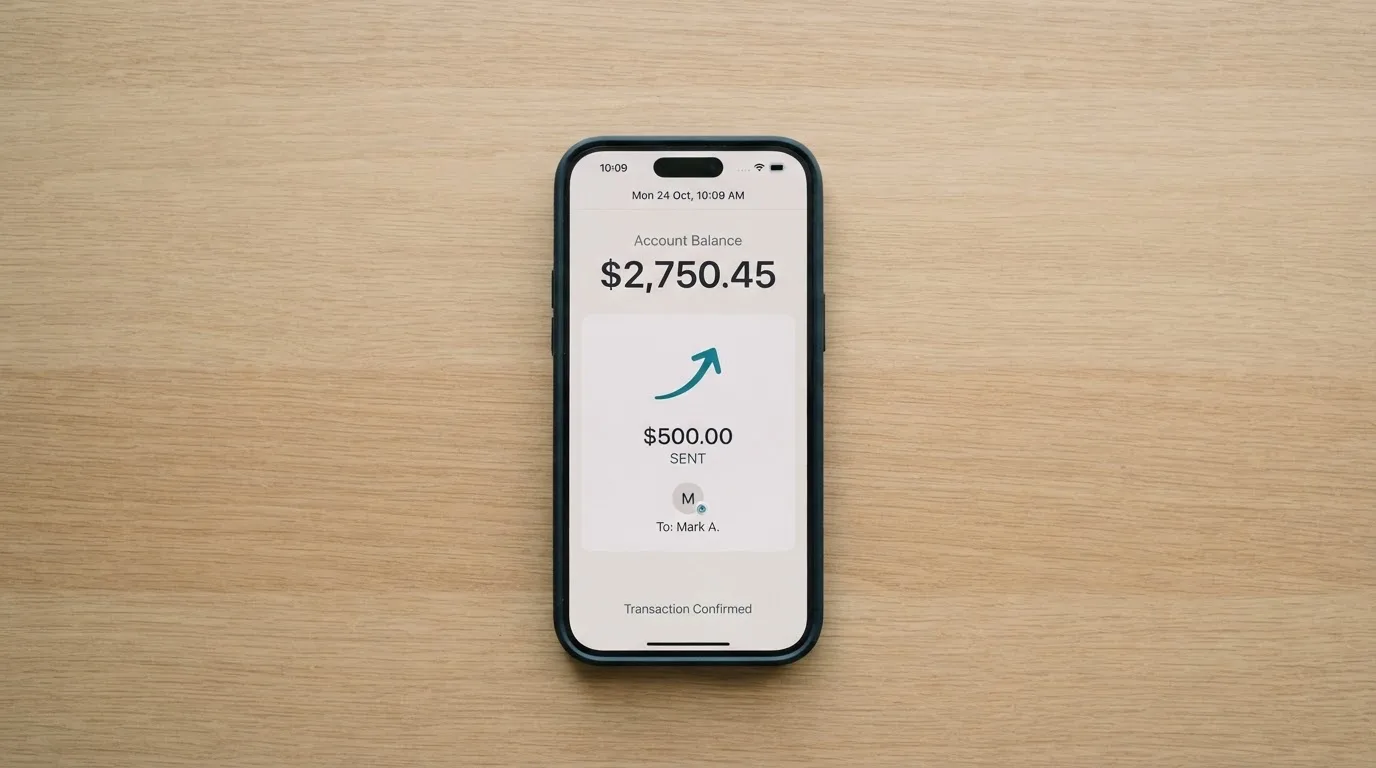
Every blockchain transfer has to arrive on a chain the provider supports, sent to an address belonging to that chain. Blockchain transfers are irreversible. If you send on a network the card provider does not support, or to an address belonging to a different network, the deposit can be lost or need manual support recovery with no guarantee of the outcome. The network fee for your deposit is charged by the blockchain, not by the card.
The assets named span three very different chains. BTC has its own main network. ETH sits on Ethereum. USDT is a token issued on several chains including Ethereum, Tron, Solana, Polygon and Avalanche. Sending USDT over the wrong one is the classic self-inflicted wound.
That Tron line deserves a specific note, because USDT and USDC look interchangeable and are not. Tether’s USDT is issued on many networks including Tron. Circle lists USDC as natively supported on 38 networks as of 16 September 2026 — Ethereum, Solana, Base, Polygon PoS, Avalanche, Arbitrum, Stellar among them — but Circle stopped supporting USDC on Tron in February 2024, so “USDC over TRC20” is not a native option. Where a provider supports Tron for USDT, that is a Tether path, not a Circle one.
If you deposit on Ethereum, remember what ERC-20 spending requires: gas is paid only in ETH, so a wallet holding USDT with no ETH behind it cannot send. Tron prices its own fees through bandwidth and energy resources, often burning TRX.
On the money side: the 0.4% fee applies only when converting crypto into euros. The minimum top-up and any fee on a EUR top-up are not stated.
And there is an exit route, which is rarer than people expect. You can sell crypto for EUR and withdraw to an IBAN, “subject to limits and compliance checks”. The same terms warn that if the payment account is closed the card becomes invalid — and what happens to any balance left on closure is not stated.
Paying with it every day
Visa, for online and in stores, spending from the euro balance. The card can be linked to Apple Pay or Google Pay. Blocked merchant categories are not stated, which is the phrase to watch here — you may be able to spend at the casino and not at the petrol station, and the public pages will not tell you which.
Some background on why that matters, and why cards like this sometimes fail in ways that have nothing to do with you. A merchant category code is a four-digit number classifying a business by goods or services, specified in ISO 18245 and assigned when the business starts accepting cards. MCC 7995 covers gambling — casinos, betting, lotteries — and many issuers block it on specific cards by policy rather than by law, with the blocked list varying by issuer. That is the clean example of a category rule. Others are not published as codes at all.
Then there are the technical reasons a payment is declined. Address Verification Service compares the numeric parts of the billing address you typed against issuer records; it is mainly offered in the US, Canada and the UK and is generally unavailable for foreign-issued cards, which can cause declines. Some merchants decline prepaid or foreign BINs precisely because the lookup reveals the card type and issuer country. A declined authorisation may leave a hold on your funds that can stay for several days — typically up to seven. If a decline surprises you, check for a hold before you assume the money is gone.
On the app: Android on Google Play under org.paypilot.app, iOS on the Apple App Store. Store ratings could not be read, so I am not going to characterise them in either direction.
Two more daily-use items are not stated: any rewards or cashback programme, and the chargeback procedure and time frames. That second one is the one I would push on.
Apple Pay itself is worth understanding, since it changes what happens at the shop. It replaces the card number with a device-specific Device Account Number stored in the Secure Element, never on Apple’s servers, and each payment uses a one-time dynamic security code. The issuer can still restrict a tokenised number — blocking it on magnetic-stripe, phone or website use, for instance.
What can go wrong
Start with the quietest risk, because it is the one people ignore. The card terms say a payment made with the card credentials is deemed authorised, with no refund unless the payee agrees to one. Read that again when you next wonder about a disputed purchase. A chargeback — a refund ordered by the issuer to settle a dispute, with reason codes such as fraud, duplicate billing or goods not received — is the mechanism that would normally help you, and its procedure and time frames are not stated here. The default position in the terms is against you.
What can go wrong technically:
- A wrong-network deposit, which is irreversible and may be gone.
- A stablecoin that moves. Stablecoins aim to hold a stable value but are not necessarily stable: TerraUSD collapsed in May 2022, and USDC temporarily lost its peg in March 2023 during the US banking crisis. USDT and USDC are both pegged to the US dollar, and the BIS put about 90% of stablecoin market capitalisation in those two.
- Freezes and blocks. You can request a block at any time; the physical card is blocked after three wrong PINs; the issuer may block for suspected fraud; a card can be rejected if blocked or if the account is restricted. If the account is closed, the card becomes invalid.
- Custody risk, whatever the balance. Whoever holds the private key controls the crypto, and a seed phrase of 12 to 24 words is the unencrypted form of it — anyone who gets it can restore the wallet and spend everything. Transfers are irreversible and a stolen key has no built-in recovery, because the network cannot freeze or return funds. Custodial platforms have a record: Mt. Gox (about US$350 million reported stolen, 2011–2014), Coincheck (about US$400 million, 2018), Ronin Network (US$625 million, 2022). The custody model here is not stated, so I cannot tell you which side of that line this card sits on.
- A programme ending. In November 2022 Visa said it had terminated its global agreements with FTX, and the FTX US debit card was wound down by its issuer. WaveCrest, a Visa issuer that supplied crypto card brands, was suspended by Visa in Europe in 2018, closing all WaveCrest-issued Visa programmes. Closures typically mean a notice period, then loading and spending stop, then users are asked to withdraw remaining balances.
On security, the site claims AES-256 encryption, PCI-DSS, ISO 27001, cold wallet storage, two-factor authentication and an audit reserve. Those are claims on a website, not an audit report you can inspect. The same page names no incident, and the card terms describe the block and PIN mechanisms above.
Who you actually deal with is worth reading carefully, because three companies appear in different roles. The footer says platform development by Pilot Innovation Sp. z o.o., financial services provided by Nexora Fintech Limited “where applicable”, and links terms for Walletto UAB as the card e-money provider in Lithuania. The issuer is not explicitly named on the page; the terms name Walletto UAB (company code 304686884, Vilnius) as Card Issuer, holding electronic money institution licence No 33 issued by the Bank of Lithuania on 29 March 2018 (terms dated May 2024). Licence status for the others is not stated — the page says “regulated partners”.
One industry note that belongs here: Tether says it disables tokens in wallets on the OFAC sanctions list and has frozen funds tied to illicit activity. Stablecoins are not censorship-proof, in either direction.
I found no PayPilot-specific complaints — no Trustpilot or Reddit threads, no news reports of incidents. I also found no complaint detail at all to report: there is nothing to summarise, which is a weaker statement than it looks. Absence of complaints on a small platform is at least as likely to mean few users as few problems. Support is email at [email protected] plus a “Write to us” form, with X, Telegram, Instagram, Facebook and LinkedIn; hours are not stated, which for a card with “subject to limits and compliance checks” on withdrawals is a real gap.
What to take instead
I want this to be fair to PayPilot rather than a sales page for something else, so the comparison is against three cards I looked at on their own terms. Scores on the same scale: PayPilot 7.4, RedotPay 6.9, Wirex 6.7, Bitpanda 6.5.
| PayPilot | RedotPay | Wirex | Bitpanda | |
|---|---|---|---|---|
| Score | 7.4 / 10 | 6.9 / 10 | 6.7 / 10 | 6.5 / 10 |
| Who can get it | By residence; regions not listed | Two explicit country lists | By region; fees published for UK, EEA, APAC, SG, AU and “Other” | Euro-area residence; Bankident users excluded |
| Card | Visa, virtual and physical | Virtual and physical; Visa debit in Singapore terms | Virtual and physical; Visa Signature metal option | Physical Visa debit, EUR only, one active |
| Card currency | Euro balance | USD and HKD cards | Not stated | EUR only |
| Issuance | 0 EUR | 10.00 USD virtual, 100.00 USD physical | Free in listed regions | Free first shipment |
| Monthly fee | 0 EUR | Waived; Pro tier 12.90 USD monthly / 129.00 USD annual | “No annual or foreign exchange fees” (marketing text) | Not stated |
| Conversion / FX | 0.4% crypto-to-euro; FX not stated | 1.00% transaction, 1.20% non-default currency | Not specified on fee page | FX fee EUR 0, “VISA mark-up fees apply” |
| Top-up | BTC, ETH, USDT, EUR; networks not named | On-chain deposit, or buy crypto by card | Account, another person, third-party provider; SEPA/Faster Payments/ACH/PIX free | Spends from a chosen asset |
Where each of them is genuinely stronger than PayPilot:
RedotPay, on clarity and on who can get in. Two official lists word the rule differently. The KYC list (“Unsupported Countries/Regions”) says if you are a citizen of any listed country you cannot complete identity verification or use the services, and that restrictions are “based on local regulations and sanction policies—not on individuals”; it names Afghanistan, Albania, Belarus, Bosnia and Herzegovina, Bouvet Island, Burkina Faso, Burundi, Central African Republic, Congo (DR), Croatia, Cuba, Eritrea, Ethiopia, Guinea-Bissau, Haiti, Iran, Iraq, Kosovo, Lebanon, Liberia, Libya, Mainland China, Mali, Montenegro, Myanmar, Netherlands Antilles, Nicaragua, North Korea, North Macedonia, Russia, Serbia, Slovenia, Somalia, South Sudan, Sudan, Syria, Ukraine, United States, Venezuela, Yemen, Zimbabwe. The card-issuance list, dated August 28, 2026 and covering 47 places, adds India, Indonesia, Morocco, Nepal, Singapore and Turkey: “Residents of these areas are ineligible for both virtual and physical cards”, and cannot be billing addresses; citizenship is not mentioned there. Russia, Belarus, Ukraine and Serbia appear on both lists; Georgia, Armenia, Kazakhstan and the UAE appear on neither. It is also the only one of the four with any reward at all: a 5 USD welcome reward, spending-only, valid 30 days, which cannot be used toward the issuance fee. It is also the most expensive to open by an order of magnitude, and non-default-currency payments cost 1.20%.
Wirex, on breadth and on being a bank-like account rather than a card. Top-ups can come from another Wirex account, from another person, or via a third-party payment provider, with fiat deposits by SEPA (EUR), Faster Payments (GBP), ACH (US) and PIX (Brazil) free. Spending can draw on “cash, stablecoins, and cryptocurrencies”. Homepage says the service area is “Worldwide (130+ countries)” and the exchange covers “200+ cryptocurrencies” — though which coins and networks are supported for deposit is not stated. It also has the only tiered reward scheme of the four: Cryptoback in WXT at Standard 0.5%, Premium 3%, Elite up to 8%, with limits and currencies differing for UK and US customers, and an explicit exclusion list — ATM withdrawals, cash advances, crypto purchases, gambling, refunds, and a set of MCCs. Singapore terms bar cash withdrawals entirely and block transactions with “Prohibited Countries” (Iran, Cuba, Syria “and others”).
Bitpanda, on a regulated euro home and rewards. A verified account plus residence in a euro-area country, one active card, EUR only, and spending from a chosen main asset with an optional fallback — listed cryptocurrencies, precious metals or EUR, converted to EUR at payment, with a minimum payment of EUR 1; Crypto Indices excluded. Reissue is EUR 5.90 (the FAQ says EUR 9.90 for lost or stolen) and each additional physical card EUR 10. It is also the only one with cashback at all: the body text says 1% on crypto spending while the page summary says “up to 2%”, which the card’s own pages leave unreconciled; fiat, stocks, metals and stablecoins are excluded and the payout currency is not stated. Users verified via Bankident cannot order a card at all — a detail worth knowing before you try.
And where PayPilot still wins: it is the only one of the four that combines a free opening, a free monthly fee, no commission on euro-balance payments and a 0.4% conversion fee with Apple Pay and Google Pay. That combination is the reason it scores highest even while publishing less than any of them.
Who I would recommend it to
I would recommend this card to a euro-area resident who already holds BTC, ETH or USDT, pays most things in euros, and wants one Visa number for everyday spending without opening a second exchange account purely to buy coffee. The economics work: 0.4% to convert, nothing to hold it, nothing to spend from a converted balance, and both phone wallets supported. If you spend from crypto regularly, that 0.4% is the number that decides it.
I would not recommend it, without asking support first, to anyone who cannot answer “which country do I reside in, and is it on the list” — because the list is not published. I would not recommend it to a non-euro spender, since a card with a euro balance and an undisclosed FX fee is the wrong instrument for a dollar budget. I would not recommend it as your primary card, or as a card to keep a large balance on, given that the custody model is not stated and the card’s terms make you the one who carries the burden on a disputed payment.
And the honest test: if you would feel more comfortable with a provider that publishes its country list, its FX fee and its limits on the page rather than in a support reply, one of the three above will serve you better. PayPilot’s fee structure is the best of the four. Its disclosure is the thinnest. Which of those two things matters more is a personal judgement, and it is the only part of this review I would not want to make for you.
Frequently asked questions
What is the PayPilot card?
The PayPilot card is a Visa card that spends from a euro balance you load yourself. You top up with crypto or with euros, and when you pay, the card draws on that balance — more like a prepaid card than a bank debit card. It works online and in stores. The platform’s development is by Pilot Innovation Sp. z o.o., financial services by Nexora Fintech Limited where applicable, and the card terms name Walletto UAB as the Lithuanian-licensed issuer.
Is PayPilot a bank?
No — the card’s own pages describe a platform with partners rather than a bank. The card terms name Walletto UAB (Vilnius, company code 304686884) as Card Issuer, holding electronic money institution licence No 33 from the Bank of Lithuania, issued 29 March 2018. The footer names Pilot Innovation Sp. z o.o. for platform development and Nexora Fintech Limited for financial services “where applicable”. Licence status for the other two is not stated.
Who can get the PayPilot card?
Availability “depends on your country of residence and local regulations”, and the supported regions are not listed anywhere on the public pages. The rule is by residence — citizenship is not mentioned. So the only way to know is to ask support at [email protected], or to read the answer in the eligibility check at signup.
How much does the PayPilot card cost?
Issuance is 0 EUR and the monthly service fee is 0 EUR. Payments made from a topped-up euro balance carry no commission. Converting crypto into euros costs 0.4%, and that applies only on conversion, not per payment. What is not stated: the FX fee, ATM withdrawal fees and allowances, and the values of the single, daily and monthly limits.
Does PayPilot require KYC?
Yes — a one-time quick identity verification before the card is created, after which the account is described as “verified once”. Verification partners named are KycAid and Ondato. Which documents are needed, whether proof of address is required, the age threshold, the number of levels and the rejection reasons are not stated. The issuer may re-verify your identity and request more documents at any time.
Is the PayPilot card safe?
The site claims AES-256 encryption, PCI-DSS, ISO 27001, cold wallet storage, 2FA and an audit reserve — claims rather than reports you can inspect. I found no PayPilot-specific complaints and no reported incidents. What I would weigh instead: the custody model is not stated, crypto deposits are irreversible, and the terms deem any payment made with your credentials authorised with no refund unless the payee agrees.
How do I top up the PayPilot card?
With crypto or with EUR. The FAQ names BTC, ETH, USDT and EUR. The catch is that no networks are specified, so you must confirm the correct chain before sending — an on-chain transfer to the wrong network or a wrong-network address is irreversible and may be lost. On-chain network fees are charged by the blockchain, not by PayPilot. Minimum top-up and any EUR top-up fee are not stated.
Can I use the PayPilot card with Apple Pay?
Yes. The card can be linked to Apple Pay or Google Pay, which is part of why it scores well for everyday use. Apple Pay stores a device-specific Device Account Number in the Secure Element rather than your card number, and uses a one-time dynamic code per payment. Note that the issuer can still restrict a tokenised number — for example blocking it on phone or website use.
How do I withdraw money from PayPilot?
You can sell crypto for euros and withdraw to an IBAN, “subject to limits and compliance checks”. That off-ramp exists, which is more than some cards in this category offer. Two cautions: the withdrawal limits are not stated, and the terms warn that if the payment account is closed the card becomes invalid, with no stated rule for what happens to a remaining balance.
Is the PayPilot card worth it?
If you live in the euro area, pay in euros, already hold BTC, ETH or USDT, and want one Visa number for daily spending, then yes: 0 EUR to open, 0 EUR a month, no commission on euro-balance payments and 0.4% to convert. If you are outside the euro area, spend in other currencies, or plan to use ATMs heavily, the undisclosed FX fee and ATM terms make it a poor fit — and the unlisted supported regions may rule you out entirely.
App and neobank cards – cryptocardpedia.com
Content created by the «cryptocardpedia.com» team