MaxSwap Card Review: A Fast Virtual Card With Very Expensive Top Ups
 Available in US
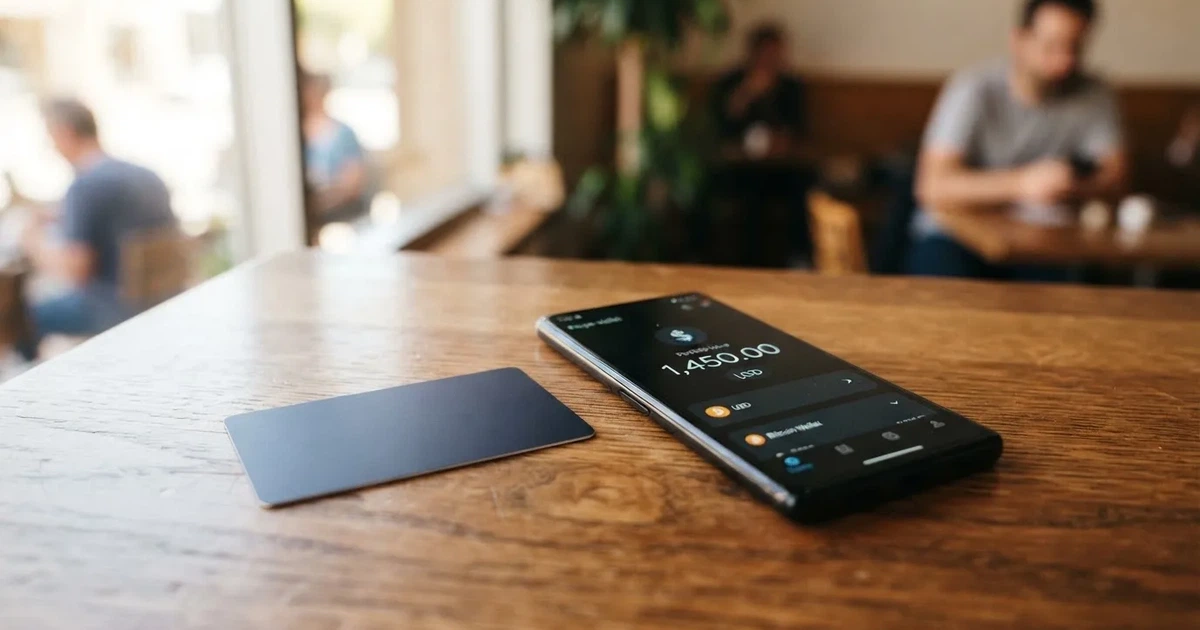
MaxSwap is a custodial crypto wallet that hands out one thing: a virtual Mastercard you fund with crypto and spend like an ordinary payment card, with no paper, no plastic and, according to the site, “no geographical restrictions.” If you have trouble getting a normal bank card — because your country is unsupported, your name does not travel well, or you simply want a card that does not sit attached to a salary account — the pitch is genuinely attractive. Setup is described as taking less than a minute inside a Telegram bot, and you can top up from a long list of coins.
I gave it 5.2 out of 10. That is not a rounding of a bad card; it is a card with one exceptional dimension and several expensive ones. Who can get it scores 8 out of 10, and top-up options score 8 out of 10. Everything that costs you money scores much lower, and cost came out at 1 out of 10 — the single worst number on the card. That gap between access and price is the whole story, and the rest of this review is an attempt to help you decide whether it is a gap you can live with.
The conditions described here are current as of October 28, 2026.
| Criterion | Mark | Why |
|---|---|---|
| Who can get it | 8 / 10 | The site claims no geographical restrictions and publishes no list of blocked countries; you are expected to follow the laws where you live |
| Cost | 1 / 10 | 50 USD card fee with a 25 USD first deposit, 4.5% + 1 USD to top up, 0.25 USD + 0.4% to pay |
| Top-up options | 8 / 10 | BTC, ETH, TRX, USDT, USDC, TON, XRP and many more; the networks are not named |
| Reliability and complaints | 5 / 10 | Operator MW Profit Ltd (London), issuer not named, custodial wallet; Trustpilot 4.6 from 40 reviews, one report of a lost deposit |
| Everyday use | 5 / 10 | Virtual Mastercard only, Apple Pay and Google Pay exist; ATM access undisclosed, and unofficial mentions of a “Premium Card with ATM USA” |
| Total | 5.2 / 10 | Fast, paperless virtual card, paid with many coins |
Will they give you the card?
Probably yes, and that is the strongest thing about MaxSwap. The site says there are no geographical restrictions, and it publishes no list of countries it will not serve. That is not the same as a bank saying the same thing — a bank’s “available in X countries” usually comes with exclusions, whereas here the absence of a list is itself the claim. Still, the Terms of Use put the responsibility on you: users must comply with the laws of their own jurisdiction (section 15.1). That sentence is doing a lot of quiet work. It means the card will not check whether what you are doing is legal where you are, and it means the burden of that check sits entirely with you.
There is no country list on the public pages at all — neither a supported list nor a restricted one. So if your question is “can I use MaxSwap in {country},” the honest answer from the card’s own material is: nobody publishes one, and whether it works will depend on where you are and on the merchants you meet. If your country has its own rules on holding or spending crypto, or on cards issued abroad, you need to know what they are before you touch the service, because section 15.1 hands that question to you.
One more thing about eligibility you should not skip. Prepaid and debit cards are generally available to adults aged 18 or over, and some issuers set higher limits on top of that. MaxSwap’s own pages do not publish an age policy, so treat the general rule as the floor and confirm the specifics with the service before you rely on it.
How to get it
The whole journey happens inside Telegram, which is either the best feature or the biggest obstacle depending on your temperament. There is no separate app: the service runs through the MaxSwap Wallet Telegram bot, you open “MaxSwap Card,” and the card is created there. The site promises “no paperwork or long registration process” and says the card is issued “in less than a minute.” Delivery is not a factor because there is nothing to deliver — the card is virtual from the first second.
The card itself is a virtual Mastercard. Nothing else is offered in the main lineup; the site menu mentions a “Premium Card with ATM USA” but gives no details about it, which tells you how little you can plan around that mention. The card’s currency is not stated on the home page, though fees are quoted in USD, so USD is the reasonable working assumption for reading the pricing.
Now the part you should read twice: KYC rules are not stated. The site says “no paperwork,” and the Terms of Use say users “may be required to complete a verification process” (section 3.2), with an AML policy in section 16. No levels, no processing time, no rejection reasons, no stated proof of address, no stated age check. Those two statements are not in conflict — “may be required” is doing all the work — but the practical consequence is that you cannot know in advance whether you will be asked for documents, and the moment you are asked is a moment the site never describes.
A note on third-party descriptions. A comparison site, cardik.duckdns.org, describes MaxSwap as no-KYC, one Mastercard, with the balance returned to USDT on closure and monthly limits up to $2M. Those figures come from an affiliate-linked source with no second source, and I could not confirm them anywhere on MaxSwap’s own pages. I would not plan around the $2M monthly limit — the card’s own published transaction limits are the numbers I use below.
Fees: what it really costs
This is where the score drops to 1 out of 10, and I want to be exact about why rather than dramatic. The issue is not one bad line item. It is that a 50 USD card fee and a 4.5% top-up charge stack on top of each other every time you move money, and then a further fee hits every payment.
| Fee or limit | Value |
|---|---|
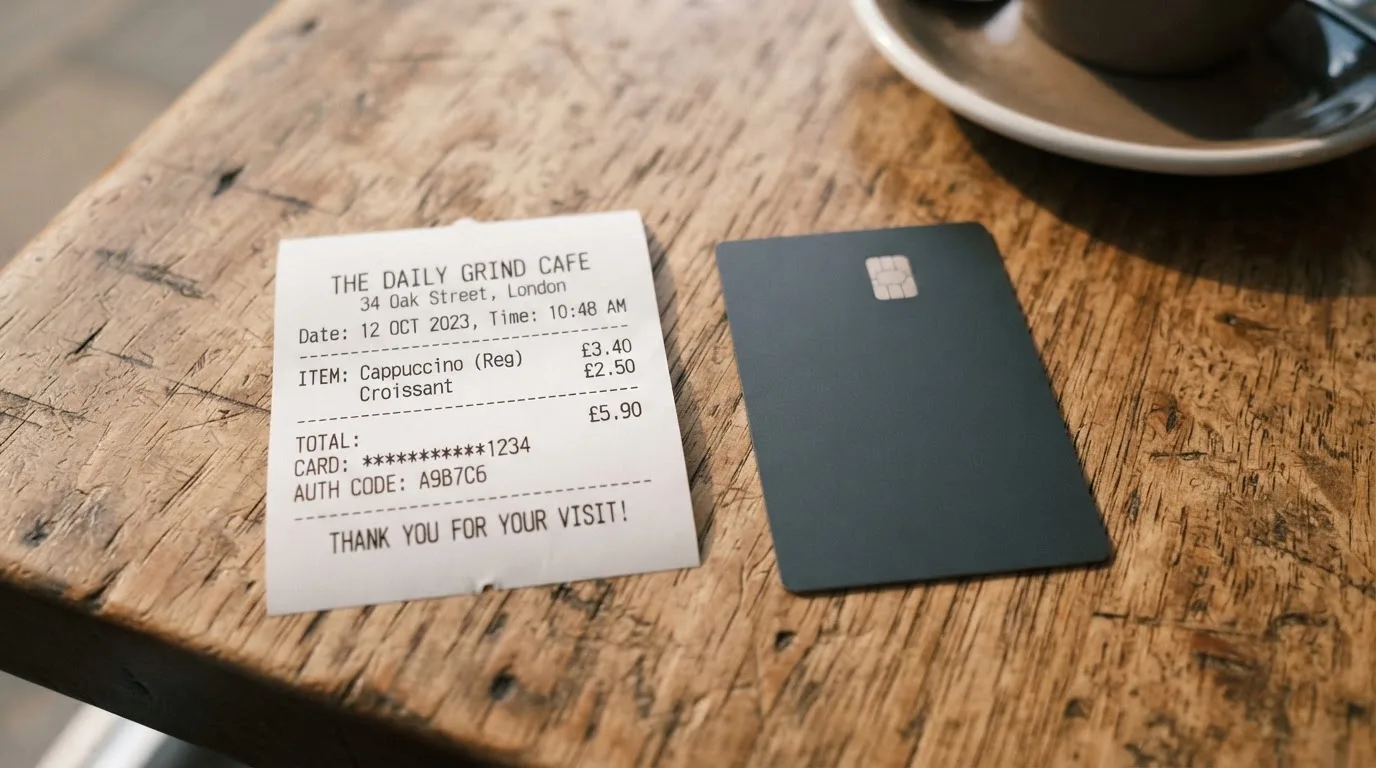
| Card issuance | 50 USD, with a 25 USD first deposit required (total issuance listed as 77.125 USD) |
| Monthly fee | Not stated |
| Top-up fee | 4.5% + 1 USD |
| Transaction fee | 0.25 USD + 0.4% |
| FX / conversion | No separate FX rate listed; the site says to take into account possible fees when paying and converting currencies |
| ATM fee | Not stated |
| Top-up limits | Minimum 10 USD; maximum single 5,000 USD; maximum monthly 200,000 USD |
| Card balance maximum | 200,000 USD |
| Single online payment maximum | 50,000 USD |
| Transaction limits | Single 50,000; daily 200,000; monthly 2,000,000 (currency not stated) |
| Apple Pay / Google Pay | Card can be added to Apple Pay or Google Pay; Google Pay setup uses a code from the bot sent by email |
| ATM access | Not stated; unofficial mention of a “Premium Card with ATM USA” in the site menu |
| Blocked merchants | Not stated |
| Cashback / rewards | Not stated |
Let me run three ordinary payments through those numbers, because the percentages hide their own weight.
A 20 USD coffee. You pay 0.25 USD + 0.4% of 20 USD, so roughly 0.33 USD. On its own that reads like an ordinary card fee.
A 100 USD grocery shop. The transaction fee is 0.25 + 0.4 = 0.65 USD, under 1%. Reasonable.
A 300 USD online purchase. The fee is 0.25 + 1.2 = 1.45 USD. This is where the per-payment fee looks almost irrelevant — and that is exactly the trap. The 4.5% + 1 USD is not per payment, it is per top-up. If you top up once a month with 300 USD, you pay 13.5 + 1 = 14.5 USD to load the balance, then spend it. Spread across the month, you are paying that loading cost plus the payment fees, plus the 50 USD card charge you already paid.
The word that matters here is “top up.” Every dollar you spend had to be loaded first, and loading is the expensive step. Someone who tops up once, spends carefully for a month and tops up once more is paying 4.5% on each load. Someone who tops up weekly pays it four times. The card’s own ceiling — 5,000 USD per top-up, 200,000 USD per month — is generous enough to let you consolidate, and if you are going to use MaxSwap seriously, batching your loads is the single most effective thing you can do about the fee.
On currencies: top-ups are in USD, and purchases are promoted as possible “in any currency.” What is not stated is the conversion rate, whether there is a spread on top of it, or whether you can hold more than one currency at once. Currency conversion can add fees; how many is the question the site does not answer. If you mostly spend in a currency other than dollars, that is an open line item in your budget and you should find out what it is before you commit, not after.
There is no monthly fee listed. That is worth noting as a genuine positive — many crypto cards charge a subscription — but it is also worth noting that “not stated” and “free” are different sentences, and only the second one helps you at the end of the year.
How to Top up the card
The coin list is long, and this is the second 8 out of 10. Top-ups are accepted in ADA, ALGO, AVAX, BCH, BNB, BTC, DOT, ETH, HBAR, HT, KRRX, LINK, LTC, MATIC, NEAR, SHIB, SUSHI, TON, TRX, UNI, USDC, USDT, XLM and XRP. A card you can load from twenty-five coins, without first converting everything to one of them, is genuinely useful for anyone whose holdings are spread out.
Here is the problem, and it is the one thing I would not compromise on. The site names the coins but does not name the networks. That sounds like a small omission until you try to send, because the same token exists on several chains and getting it wrong is usually unrecoverable. Blockchain transfers are irreversible: a deposit sent on a network the card provider does not support, or to an address belonging to a different network, can be lost or need manual support recovery with no guarantee. So the missing network list is not trivia — it is the detail that determines whether your money arrives.
A second-order detail worth knowing before you send anything: on Ethereum, fees are paid only in ETH, so a wallet holding USDT but no ETH cannot send. Tron prices transactions through bandwidth and energy rather than gas, often burning TRX. And USDC over TRC20 is not a native option at all — Circle stopped supporting USDC on Tron in February 2024. If a provider tells you to send “USDC on Tron,” that is a conversion question, not a simple transfer, and it is worth confirming which network they actually mean.
The mechanics are simple once you know the network. You enter the amount in USD, the system adds the 4.5% + 1 USD fee, and you pay from the chosen MaxSwap crypto wallet. The minimum is 10 USD, the maximum is 5,000 USD per top-up and 200,000 USD per month, and the first deposit must be at least 25 USD when the card is issued. Fiat top-up is not stated — there is no bank transfer route described, which means this is a crypto-only funding model.
One more thing about on-chain costs: the network fee for your deposit is charged by the blockchain, not by MaxSwap. Whatever gas or bandwidth the chain takes comes out of your deposit on top of the 4.5% + 1 USD. On an expensive network at a busy moment, that is not nothing, and it is a third layer of cost on a top-up that is already the expensive part.
Withdrawing is the gap I would flag hardest. For cards, withdrawal is not stated. The Terms of Use say withdrawals follow platform procedures (section 9.2), and that an account may be terminated under conditions the Terms do not specify (section 11.2) — with no balance-return process described anywhere. A third-party site claims the balance is returned to USDT when the card is closed; I found no second source and nothing on MaxSwap’s own pages, so treat it as unconfirmed. The practical question — what happens to my balance if I stop using this — has no published answer, and that is a real thing to weigh before you load a large amount.
Paying with it every day
The honest summary is that this is a card for spending online and in stores through a phone wallet, and not much else. It is virtual, so there is no ATM story you can rely on: ATM access is not stated, and the only trace of cash is an unofficial mention of a “Premium Card with ATM USA” in the site menu with no fees or limits attached. If you need cash regularly, you have a virtual card and no plan.
Phone wallets work. You can add the card to Apple Pay, and Google Pay setup is done with a code the bot sends by email. Apple Pay is the more robust of the two, because it replaces your card number with a device-specific number stored in the Secure Element rather than on Apple’s servers, and every payment uses a one-time dynamic code. Tokenisation like that is one of the better things that can happen to a card with these characteristics. Google Pay is supported too; it simply is not described on the home page the way Apple Pay is, so the email-code step is worth doing early rather than at a till.
A user also reported linking the card to PayPal. That is a single report, not a documented feature, and I would not build a payment routine on it.
No cashback, no rewards, no points — nothing is stated, and for once the silence is not a problem. Just do not model a rebate into your calculations.
Then there is the acceptance question, which is the one that catches people out with any virtual card. A merchant can look up the six- or eight-digit issuer identification number at the front of your card number and see which institution and country issued it, and some merchants apply extra scrutiny when that country differs from the billing address on file. That is why a card issued in one country can look “foreign” in a shop in another, and why some merchants decline prepaid or foreign-issuer cards outright. Address verification is another quiet one: the service that compares the numeric parts of the billing address you type with the issuer’s records is mainly offered in the US, Canada and the UK, and is generally unavailable for foreign-issued cards, which can cause declines that look like anything other than what they are.
Gambling is worth a separate mention because it surprises people. The merchant category code that classifies gambling businesses — 7995 — is frequently blocked on specific cards by issuer policy rather than by law, and the blocked list differs by issuer. The MaxSwap pages do not publish a blocked-merchant list, so you cannot check in advance. Assume some categories are closed to you and find out which by trying, not by asking me.
Cash-flow details that bite: a declined authorisation can leave a hold on your funds that stays for several days, typically up to seven. And 3-D Secure, the identity check on online payments, can approve frictionlessly or challenge you with a one-time code depending on risk. On a card issued outside your own country, expect the challenge version more often.
What can go wrong
No official incidents and no user reports of a serious problem came up. That is genuinely worth saying, and it is also worth saying what it is not: it is not a track record. The card is young relative to the failures in this category, and its Trustpilot page — read on 2026-10-20 — shows 4.6 out of 5 from 40 reviews, 92% of them five-star, with only 2 in the last 12 months. The page also says the company has not been inviting reviews recently, which tells you something about how representative 40 reviews really are.
The real exposure is structural, and you should understand it before you load anything.
The money is custodial. Control of crypto belongs to whoever holds the private key. MaxSwap is a custodial wallet, which means you are trusting the provider completely with your funds. Custodial platforms have a record of failures: Mt. Gox, about US$350 million reported stolen between 2011 and 2014; Coincheck, about US$400 million in 2018; Ronin Network, US$625 million in 2022. A seed phrase — typically 12 to 24 words, and an unencrypted form of the private key — can restore a wallet and spend its funds if anyone obtains it, and because transfers are irreversible the network cannot freeze or return anything.
The issuer is not named. MaxSwap is a custodial crypto wallet; the card issuer, the BIN sponsor and its registration are not stated anywhere on the public pages. The operator is MW Profit Ltd, registered in London, company number 15541776, per the Terms of Use effective 1 October 2023, and the site footer reads 2026. But disputes are governed by Seychelles law (section 12.1), and if you have a disagreement, the Terms say you take it to MW Profit Ltd with no procedure, no refund policy and no time frames set out. One user report describes slow support replies and a lost deposit with no compensation; another says the minimum BTC deposit was not clearly disclosed. Two complaints are not a pattern, but both sit exactly where you would expect risk in a custodial setup with an unnamed issuer.
Accounts can be suspended. Section 11.1 allows suspension for suspected unlawful activity, and section 11.2 allows termination under conditions the Terms do not specify. Combined with the missing balance-return process, that is the scenario to plan for: what is the last thing you want to discover about your money in a hurry?
These programmes do close. Visa terminated its global agreements with FTX on 13 November 2022 and the FTX US debit card was wound down by its issuer. WaveCrest, a Visa issuer that supplied crypto card brands, was suspended by Visa in Europe in 2018, closing all WaveCrest-issued Visa programmes. The pattern in a closure is a notice period, then spending and loading stop, then users are asked to withdraw remaining balances. A 2026 closure reported by a secondary source had new loads end on 8 July 2026 and spending stop on 8 August 2026 — single source, unconfirmed, but the shape of it is what a closure looks like.
Regulatory timing is not on your side. In the EU, MiCA took legal effect in June 2023, its rules on stablecoins applied from 30 June 2024 and the remaining provisions, including the crypto-asset service provider rules, from 30 December 2024. E-money tokens may be issued only by a credit institution or an electronic money institution. Providers operating under national law had a transitional period ending 1 July 2026, or until they received or were refused a MiCA authorisation, whichever came first. A card is a payment service regulated separately from the crypto side, so a crypto card often depends on two licences. None of this is a prediction about MaxSwap specifically; it is a description of the ground shifting under providers in this category, and ESMA maintains an interim register of authorised providers and non-compliant entities if you want to check.
Stablecoins are not the safe harbour people assume. They aim to hold a stable value, but despite the name, stablecoins are not necessarily stable: TerraUSD collapsed in May 2022 and USDC temporarily lost its peg in March 2023 during the US banking crisis. Tether says it disables tokens in wallets on the OFAC sanctions list and has frozen funds tied to illicit activity, so stablecoins are not censorship-proof either.
If something goes wrong in a purchase. Contact MW Profit Ltd about disputes, per section 12.1 — but there is no stated procedure, no refund policy, no time frames, and chargebacks are not addressed. Under 3-D Secure, liability for a fraudulent online payment can shift from the merchant to your bank, or per critics to you. Prepaid-card coverage varies by jurisdiction and should not be assumed.
What to take instead
MaxSwap is not alone, and the comparison is uncomfortable for it on price while being more comfortable on access. Here is what else I looked at.
| MaxSwap | Karta | Tegro | Worldwide | |
|---|---|---|---|---|
| Score | 5.2 / 10 | 7.9 / 10 | 4.7 / 10 | 4.2 / 10 |
| Card | Virtual Mastercard | Visa Signature, virtual and physical | Virtual Visa | Virtual Mastercard (Borderless Card) |
| Cost | 50 USD card + 25 USD first deposit | Virtual activation 5.00 USDT; physical from 100.00 USDT | 13 USD one-time; minimum 50 USD | Standard from 2,900 RUB/year |
| Top-up fee | 4.5% + 1 USD | Crypto top-up free | Deposit fee 4% | 0% top-up fee on Promo tier |
| Payment fee | 0.25 USD + 0.4% | 1.5% | Not stated | 0.00 USD per operation |
| Networks | Not named | Tron, Ethereum, BNB Chain, Polygon, Arbitrum, Optimism, Base, Solana; fiat rails too | USDT on Tron (TRC-20) only | SBP from Russian accounts; USDT TRC-20 in app |
| Availability | No country list published | 200+ countries where Visa is accepted, depends on local regulations | Not stated | Ordered from Russia without a VPN |
Karta is the one that scores well, at 7.9 out of 10, and the reason is visible in one line: crypto top-up is free. It works in 200 or more countries and territories where Visa is accepted, though availability depends on local regulations and partner coverage. It is a Visa Signature, virtual and physical, funded from USDT or USDC on Tron (TRC-20), Ethereum, BNB Smart Chain, Polygon, Arbitrum, Optimism, Base and Solana — plus fiat through ACH, SWIFT, domestic wire, SEPA, PIX, bank transfer and SPEI depending on the country. Card payments cost 1.5%. You pay for the card itself: virtual activation 5.00 USDT (the FAQ shows “30 USDT 5 USDT”, apparently an old price struck through) and the physical card from 100.00 USDT. Cashback on spending is claimed, with the rate and payout currency not stated. If your use case is “hold crypto, spend it without paying to move it,” Karta’s fee structure is better than MaxSwap’s by a wide margin.
Tegro, at 4.7 out of 10, is the closest structural match to MaxSwap — virtual, one fee to issue, small minimum — but the numbers are tighter and the funding narrower. The issue fee is 13 USD one-time with no subscriptions or monthly fee, the minimum card amount is 50 USD (a 50 USD card costs 65 USD total in their example), and the deposit fee is 4% of the amount, slightly under MaxSwap’s 4.5% plus the dollar. Funding is USDT on Tron (TRC-20) only; anything else has to be converted to TRC-20 first. The bot issues an address and a unique amount and the top-up credits automatically. Where eligibility is concerned, not stated.
Worldwide, at 4.2 out of 10, is a different shape of answer. The product is a virtual Mastercard in Russian-ruble pricing with Standard from 2,900 RUB/year, Premium from 3,900 RUB/year, Promo at 2,390 RUB to issue with 0 RUB maintenance in the first year and a 0% top-up fee, and Business from 12,900 RUB/year. It charges 0.00 USD per card operation and top-up by SBP — Russia’s Fast Payment System — from any Russian card or account, credited in 1 to 3 minutes, with FX described as close to the exchange or central bank rate and shown before you top up. It is ordered and funded “from Russia without a VPN,” and eligibility rules are not described. An App Store app for top-ups and a virtual card is listed in many storefronts but says nothing about where the card is issued.
The honest summary of the comparison: if you can get Karta in your country, its free top-up makes it the better financial proposition despite a higher card cost. MaxSwap’s case is not price, it is that it publishes no country list at all and asks for no paperwork. Tegro is cheaper to issue. Worldwide is dramatically cheaper to use but built around one country’s rails.
Who I would recommend it to
MaxSwap, if you cannot get a normal card where you are, you value speed and absence of paperwork above all else, you already hold crypto and would top up rarely and in large batches, and you treat the balance as working money rather than savings. Under those conditions — no alternative available, few load cycles, low reliance — the 4.5% top-up hurts far less than it sounds, because you pay it a handful of times a month instead of weekly.
MaxSwap, with eyes open, if you mostly spend in USD, you are comfortable with a custodial wallet, and you can live with the fact that the issuer is not named, the balance-return process is not published, and the operator is a London company with disputes under Seychelles law. In that case read section 15.1 as what it is: your legal responsibility, delegated to you.
Not MaxSwap if you hold most of your money in crypto as savings rather than as a spending balance. A custodial wallet with no named issuer and no published withdrawal process is the wrong home for that. Also not if you need cash — there is a virtual card and no ATM story. Also not if you are in the EU and value a named regulated provider, since the MiCA transitional window closed on 1 July 2026 and a crypto card commonly depends on two separate licences.
Take Karta instead if your country is covered and you want to stop paying 4.5% to move money onto a card.
Frequently asked questions
What is the MaxSwap card?
The MaxSwap card is a virtual Mastercard issued through a custodial crypto wallet. You load it with crypto from a long list of coins, and it spends a stored balance like a prepaid card — there is no linked bank account and no overdraft. It exists only as a card number: you add it to Apple Pay or Google Pay, and there is no plastic to wait for.
How does the MaxSwap card work?
Everything happens in the MaxSwap Wallet Telegram bot. You open “Open MaxSwap Card,” the card is created, and the site says it is issued in less than a minute with no paperwork. You then top up in USD from a supported coin, paying 4.5% plus 1 USD, and spend from that balance. Each payment costs 0.25 USD plus 0.4%.
Is MaxSwap a bank?
No, and it does not present itself as one. MaxSwap is a custodial crypto wallet and card programme front-end; the card issuer and BIN sponsor are not named on its public pages. The operator is MW Profit Ltd, a London company numbered 15541776, while disputes are governed by Seychelles law. Treat it as a crypto platform, not a bank.
Who owns MaxSwap?
The Terms of Use name MW Profit Ltd, registered in London with company number 15541776, as operator, effective 1 October 2023. The site footer reads 2026. Beyond that, ownership structure is not stated, and no card issuer or BIN sponsor is identified anywhere in the public material.
Does the MaxSwap card require KYC?
The site’s own answer is “no paperwork or long registration process,” but the Terms of Use say users “may be required to complete a verification process” and point to an AML policy. No levels, processing times or rejection reasons are published. Third-party sites call it no-KYC, but that claim is unofficial and I could not confirm it.
How much does a MaxSwap card cost?
The card is 50 USD and requires a first deposit of at least 25 USD, putting total issuance at 77.125 USD as listed. No monthly fee is stated. Top-ups cost 4.5% plus 1 USD, and each payment costs 0.25 USD plus 0.4%. There is no separate FX rate published, though conversion can add fees.
How do I top up the MaxSwap card?
You enter the amount in USD inside the bot and pay from your MaxSwap wallet in a supported coin. The site lists ADA, ALGO, AVAX, BCH, BNB, BTC, DOT, ETH, HBAR, HT, KRRX, LINK, LTC, MATIC, NEAR, SHIB, SUSHI, TON, TRX, UNI, USDC, USDT, XLM and XRP. Critically, the networks are not named, so confirm the chain before sending — irreversible transfers to a wrong network can be lost.
Can I use the MaxSwap card in my country?
There is no published list of supported or unsupported countries, and the site claims no geographical restrictions. The Terms of Use put the law of your own jurisdiction on you. Because some merchants apply extra scrutiny when the issuer country differs from your billing address, acceptance can vary in practice even where the card technically works.
How do I add the MaxSwap card to Apple Wallet?
You add it to Apple Pay from the card details in the Telegram bot. Apple Pay stores a device-specific number in the Secure Element rather than on Apple’s servers, and each payment uses a one-time dynamic code. Google Pay also works, set up with a code the bot sends by email — worth configuring early rather than at a till.
Is the MaxSwap card safe, and can I get my money out?
It is a custodial wallet, so your funds depend on the provider, and custodial platforms have a real failure history. Withdrawal from the card is not stated, the Terms allow suspension and termination under unspecified conditions, and no balance-return process is published. A third-party site claims the balance returns to USDT on closure; that is unofficial and unconfirmed. Do not treat it as a savings home.
Virtual cards – cryptocardpedia.com
Content created by the «cryptocardpedia.com» team