A virtual Mastercard sold mostly through a Telegram mini app, with one stated way to load it
 Available in US
The Worldwide card is not a normal bank card with a crypto app bolted on. It is a virtual Mastercard that you order and load inside a Telegram mini app, in Russian, and the only funding route its own top-up page describes is a transfer through SBP, the Russian Fast Payment System. That single fact decides most of what follows. If your money is in a Russian bank account, this card fits a narrow job well enough. If your money is in USDT on a blockchain, or you want a physical card, or you want to know exactly which institution stands behind the balance, the same card quickly stops being useful.
I scored it 4.2 out of 10. That is not a rounding of a better number, and it is not a comment on whether crypto cards are a good idea in general. It is a comment on this particular product, judged on the six criteria below, using only what the card’s public pages say.
Who it suits: Anyone who mostly pays online, is comfortable ordering inside Telegram, and wants a virtual card. Who it does not suit: anyone outside that setup, anyone who needs a physical card or an ATM, anyone who wants to load with crypto, and anyone who is uneasy about an unnamed foreign issuer holding their balance.
Conditions are current as of October 28, 2026.
Verdict: 4.2 out of 10
Here is the score criterion by criterion, so you can see exactly where the card earns and where it does not.
| Criterion | Mark | Why |
|---|---|---|
| Who can get it | 5 / 10 | Eligibility rules and issuing countries are not described; the marketing says “150+ countries” and the app is listed in many storefronts, with no statement of where the card is issued |
| Cost | 5 / 10 | Standard from 2,900 RUB a year, Premium from 3,900 RUB, Promo 2,390 RUB to issue with 0 RUB maintenance in the first year; operations 0.00 USD, top-up 0%, but the conversion markup is not disclosed |
| Top-up options | 3 / 10 | The site says top up by SBP only and crypto “not offered”; the App Store app lists USDT TRC-20 |
| Reliability and complaints | 3 / 10 | The issuer is an unnamed “licensed foreign issuer”, the app developer is URUS – FZCO, there are no reviews, and the single App Store rating is 1.0 out of 5 with a scam note, unverified |
| Everyday use | 4 / 10 | Virtual Mastercard only; Apple Pay and Google Pay on the Premium and Promo tiers; no physical card and no ATM |
| Total | 4.2 / 10 | The card is a thin, virtual, single-route product with no physical tier and no public issuer |
The clearest thing the score hides is a split identity. There is a site describing a Telegram mini app with ruble pricing, SBP funding and four tiers. There is a separate app in the App Store called Worldwide: Wallet USDT Card that describes USDT deposits over TRC-20 and almost nothing else. Whether these are one operation with two front doors or two operations with a similar name, the public material does not say. That ambiguity is why the top-up mark is 3 rather than higher: the card’s own pages disagree with each other about how you are meant to put money in.
For the reader who came here from a search for a card that works abroad, the honest summary is this: you get a virtual Mastercard, you load it from a Russian card through SBP, you pay online in many places, and you do not learn much more than that from the outside.
Will they give you the card?
Yes for a Russian cardholder, apparently without an in-person step — but the card never tells you the rule, so nobody outside can tell you either.
The site presents itself as a Russian-language Telegram mini app where the card can be ordered and topped up “from Russia without a VPN”. It does not describe eligibility rules, and it does not name the countries where the card is actually issued. Citizenship versus residence is not stated. That distinction matters more here than it usually does, because it decides whether you could open it at all; the card simply does not answer it.
The marketing runs on reach rather than eligibility: the card is advertised as working “where Russian cards are not accepted” and in “150+ countries”. Neither claim tells you who qualifies to hold one. The App Store app, meanwhile, is listed in many storefronts, including the US, the UK, Canada and Turkey, while saying nothing about where the card behind it is issued. An app being visible in a country’s App Store is a fact about Apple’s distribution, not about your eligibility.
Your practical check, before you invest any time: confirm with the card’s own Telegram support whether a person in your country of residence, with your citizenship and your documents, can be issued the card. Ask in writing and keep the answer. The card’s public pages leave this open, so the only reliable source is the operator.
How to get it
The application path is short by design: it runs inside Telegram, it is fully online, and the card states you will not queue anywhere or meet a courier.
The activation is described as taking 5 minutes through the Telegram mini app. What documents you need, what the KYC steps actually consist of, and what would make you refused are not stated. The site uses marketing wording that no visits, no paperwork and no passport are needed; the App Store app mentions biometric unlock but says nothing about identity verification. Levels and rejection reasons are not stated either.
The card itself is virtual, on Mastercard according to the site’s own FAQ, with four tiers: Standard, Premium, Promo and Business. The Promo tier runs on a USD account. A metal card is not mentioned. The App Store app says “virtual card” but does not name the network.
What you should take from this is that the decision to issue you the card, and the reason you might be refused, are inside a black box run through a chat window. That is not automatically bad; plenty of legitimate cards work this way. But it does mean you cannot self-assess your chances before you try.
Fees and what a payment really costs
The headline numbers are generous. The catch is that the one fee that would matter most to a Russian payer, the conversion markup, is never put on the page.
| Fee or limit | What the card states |
|---|---|
| Standard | from 2,900 RUB/year |
| Premium | from 3,900 RUB/year |
| Promo | 2,390 RUB to issue, 0 RUB maintenance in the first year |
| Business | from 12,900 RUB/year |
| Card operation | 0.00 USD |
| SBP top-up transfer | no transfer fee, 0% |
| Conversion | at the Central Bank rate plus a markup, amount not stated |
| Foreign-exchange rate | “close to the exchange/central bank rate”, no percentage given |
| ATM | not stated |
| Numeric limits | none published |
| SBP top-up minimum | 500 RUB |
| SBP top-up maximum | 200,000 RUB per transfer |
| Physical card | not mentioned |
| Metal card | not stated |
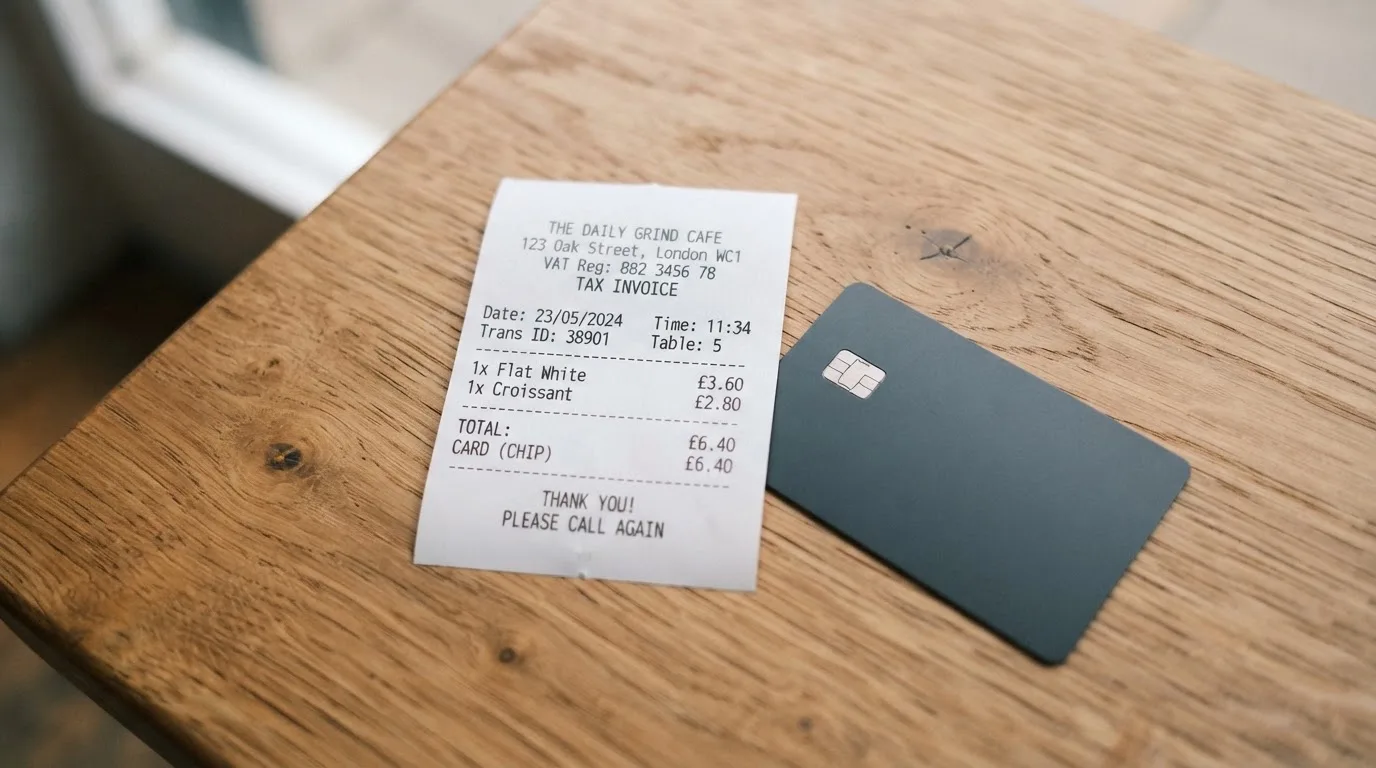
The App Store app publishes no amounts at all. One user review there claims a 20 USDT card fee; that is an unverified claim from a single review, not a published price, and I treat it as such.
Three everyday payments, and which fees apply to each:
- An online subscription payment. The card is a virtual Mastercard, so a browser checkout fits its design. The operation fee is 0.00 USD and the account fee is what you chose to pay at signup. The rubles get converted into your balance currency first, and that conversion is where the undisclosed markup lands.
- Paying something priced in euros while your balance is in dollars. The card currency is USD and EUR per the top-up page. The card’s blog warns that a foreign-currency charge can come out slightly above the ruble amount, so it recommends keeping a buffer. What fee applies on top of the conversion when you spend in a currency other than the balance currency is not stated.
- Paying a Russian service in rubles from a balance that holds dollars. This is where the cost is least visible. The site says the rate is “close to the exchange/central bank rate” and that you see the rate before the top-up, but it never gives a percentage. A card that advertises a 0.00 USD operation fee is not free to use if the conversion takes a cut, and this card will not tell you how much.
On limits: no numbers are published at all. Premium is described as “purchases without restrictions” and Business as “unlimited turnover” — marketing wording, not a specification. If your spending pattern depends on a ceiling, ask for the ceiling.
Top up: one route on the site, another in the app
On the website, there is exactly one way in, and it is SBP. The App Store app describes a second, entirely different way: USDT over TRC-20.
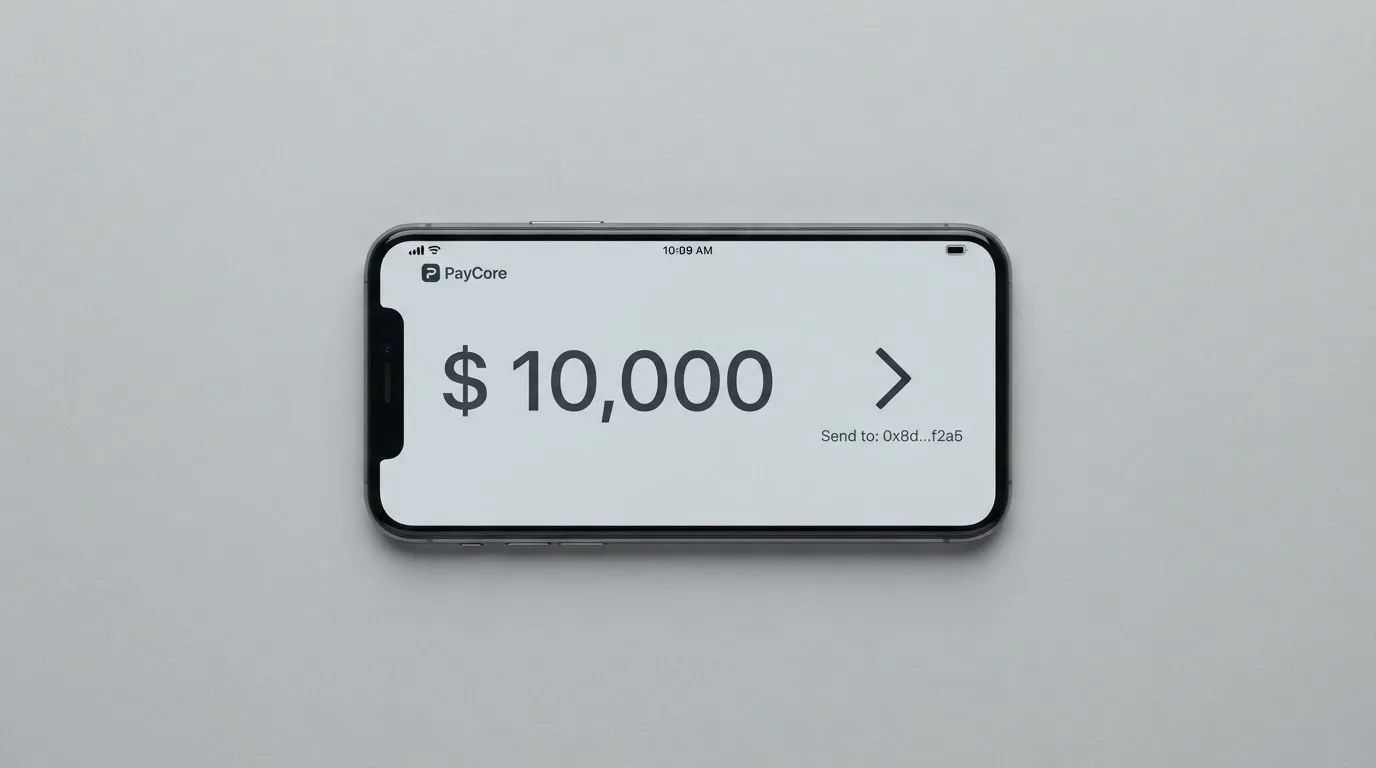
By SBP, from any Russian card or account, by QR code or by the bank app’s payment details. The credited amount arrives in one to three minutes, sometimes up to fifteen. The transfer fee is 0%. The minimum is 500 RUB and the maximum is 200,000 RUB per transfer, which the card attributes to the Central Bank’s SBP limit. The conversion happens at the Central Bank rate plus a markup that is not quantified, and you see the rate before the transfer. The card’s own top-up page states that crypto top-up is “not offered”.
Through the app, the picture flips. The App Store listing describes USDT TRC-20 deposits, plus top-ups from an account balance, with fee terms shown on the deposit and top-up screens. Withdrawals over TRC-20 are supported there too, while the card itself says nothing about cashing out. What happens to a leftover balance when an account closes is not stated anywhere.
That is the single most important practical warning on this page, and it is not about rules or compliance. Blockchain transfers are irreversible. If you send funds on a network the provider does not support, or to an address belonging to a different network, the money can be gone, or recoverable only through a support request with no guarantee. If you go the USDT route, confirm the exact network on the provider’s own screen, at the moment of sending, and send a small amount first.
Paying with it every day
Fine for online subscriptions, weak for everything else. The card is virtual, which means the phone is your wallet.
- Apple Pay and Google Pay are listed on the Premium and Promo tiers. The Standard and Business tiers do not appear to have them. The card’s blog says the card works with both, but also calls the network “Mastercard or Visa”, which contradicts the site’s FAQ saying Mastercard. The FAQ is the more specific source, so I would plan around Mastercard.
- There is no physical card and no ATM. So no contactless taps, no cash withdrawals, no paying at a market stall.
- The interface is a Telegram mini app, with no app link given on the page. The separate App Store app is “Worldwide: Wallet USDT Card” for iPhone and iPad, iOS 16.0 and later, free, 18.3 MB, nine languages including Russian, versions from 1.0 on 30 June to 1.3.12 on 1 October. It was rated 1.0 out of 5 from a single rating when I looked. Google Play: not found.
- Which merchants are blocked is not stated. For context, this matters more than it sounds: a merchant category code is a four-digit number classifying a business by what it sells, and issuers often block specific categories such as gambling on policy rather than by law, with the blocked list differing per issuer. This card publishes no list, so you cannot know in advance.
- Rewards are not stated. There is no cashback, no points, nothing.
When a payment fails, the card says the money returns to the card balance automatically, and that if the problem is on the merchant’s side, Telegram support can help and return funds by SBP. That is a reasonable remedy for a failed charge. It is not the same as a chargeback procedure, which is a formal refund ordered by the issuer against a disputed transaction, and no chargeback process is described here.
What can go wrong
The risk here is not mainly a bad exchange rate. It is that the people behind the card are not named on the pages I can see.
- The issuer is not named. The site says the card is “issued by a licensed foreign issuer” and stops there. Licences are not stated. The operator is not named. The App Store developer is URUS – FZCO, a UAE free-zone company form. So you are being asked to hold a balance with an institution you cannot identify from the public pages.
- There is almost no user history to check. Trustpilot, Reddit and Otzovik returned nothing for this product. A search for reviews turned up only an unrelated old Worldwallet complaint page and some Kazakh CardB news. I found one App Store rating, 1.0 out of 5, saying it is “not safe and probably a scam” and mentioning a 20 USDT card fee — a single unverified report, not evidence, but it is the only user voice that exists, and it is negative.
- Security claims are generic. The card site mentions 3D Secure and “modern encryption”. The custody model, the freeze function and the spending controls are not stated. The App Store app mentions biometric unlock, one account per user, and says the “Assets” positions shown are internal products and the company is “not an exchange, broker or investment adviser”.
- Support is Telegram, described as 24/7 with live staff. If a transfer does not arrive, support checks the receipt and credits it manually. The site is in Russian; the app lists Russian among nine languages.
- There is no dated news to anchor trust. A blog post dated 19 September 2026 is the latest dated item on the site, and the app’s first version is dated 30 June with no year shown.
Two structural risks sit underneath all of this. First, a card programme can close: when one does, the usual pattern is a notice period, then spending and loading stop, then users are asked to withdraw what is left. Second, “not stated” is repeated so often on these pages that it starts to look like a design choice. A card that will not name its issuer, its licence, its fee margins, its ATM terms or its spending limits is asking you to take on trust precisely the things you would check first in any other financial product.
I am not telling you it is a scam. I am telling you that the material a careful buyer would use to decide is absent, and that the only user report available is negative.
What to take instead
The honest comparison is not Worldwide against a perfect card. It is Worldwide against other virtual crypto cards where the missing pieces are actually filled in. Here is what I found on three.
| Worldwide | MaxSwap | Karta | Tegro | |
|---|---|---|---|---|
| Score | 4.2 / 10 | 5.2 / 10 | 7.9 / 10 | 4.7 / 10 |
| Card | Virtual Mastercard | Virtual only, Mastercard | Visa Signature, virtual and physical | Virtual Visa |
| Cost | from 2,390 RUB | 50 USD with a 25 USD first deposit, 77.125 USD total issuance | Virtual activation 5.00 USDT, Physical from 100.00 USDT | 13 USD one-time issue fee, no subscription, 50 USD minimum |
| Funding | SBP on the site; USDT TRC-20 in the app | Crypto, many networks, network list published | USDT or USDC across Tron, Ethereum, BNB Chain, Polygon, Arbitrum, Optimism, Base, Solana; plus ACH, SWIFT, SEPA, PIX, SPEI and others by country | USDT on Tron (TRC-20) only |
| Fees | 0.00 USD per operation, 0% SBP, conversion markup not stated | Top-up 4.5% plus 1 USD; 0.25 USD plus 0.4% per transaction; no separate FX rate stated | Crypto top-up free; card payments 1.5%; SEPA 1.5% plus EUR 2; SWIFT (USD) 1.4% plus 2 USD; FX fee separate, not stated | 4% deposit fee; FX fee and conversion spread not stated |
| Rewards | not stated | not stated | Cashback claimed, rate not stated; referrals in KARAT points, 1 KARAT = 0.01 USDT | not stated |
Reading that table, two things stand out.
Karta is the one to look at first if you want a picture of what the same category looks like when the company publishes its numbers. It states its tiers, its card networks, its exact percentage on card payments, its SEPA and SWIFT charges, and the specific networks it accepts: Tron, Ethereum, BNB Smart Chain, Polygon, Arbitrum, Optimism, Base and Solana for USDT and USDC, plus fiat rails including ACH, SWIFT, domestic wire, SEPA, PIX, bank transfer and SPEI depending on country. It has a physical card, it works “in 200+ countries and territories where Visa is accepted” with availability depending on local regulations and partner coverage, and it offers cashback and referral points. Its costs are not cheap — 1.5% on card payments is real — but you can compute with them.
MaxSwap and Tegro are the nearer comparisons and both cut the same way. MaxSwap charges more openly, at 4.5% plus 1 USD to load and 0.25 USD plus 0.4% per transaction, and publishes a long list of accepted networks, though it makes no separate FX promise. Tegro is 13 USD to issue with no subscription, charges 4% to deposit, accepts USDT on Tron only, and does not state its FX fee or conversion spread. Neither pretends to cheaper; both simply tell you the number.
The gap, then, is not price. Worldwide’s published prices are among the friendlier ones. The gap is disclosure. Its competitors publish fees I can add up; it publishes a 0.00 USD operation fee and then says the markup on conversion is undisclosed.
Who I would recommend it to
I would recommend it to a person who ticks all of these: your money is in a Russian bank account, you mostly spend online in rubles or dollars, you want a second virtual card that your main bank will not issue, you are happy to do everything inside Telegram, and you have checked with support that your country and documents qualify — because the site will not tell you.
I would not recommend it as a first card, and I would not recommend it to anyone whose money arrives as USDT on a blockchain, anyone who needs cash or a physical card, anyone who needs a merchant category list, or anyone who intends to hold a balance on it for months. In that last case the missing issuer name and the missing licence become the whole story: you would be keeping money with an institution you cannot name.
My own order of operations, if I were doing it: ask support in writing which countries issue the card and what documents are required; ask what the conversion markup is, as a percentage; ask what happens to the balance if the card is closed. If the answers to those three come back clear, the card is a reasonable tool for the job it does. If they come back vague, that vagueness is the answer.
FAQ
Is Worldwide a bank?
No, Worldwide is not a bank and does not provide traditional banking services like deposit insurance. It operates as a virtual card issuer, marketing a payment card that draws from a stored balance. Because the operator is not fully identified on the site, you should not treat it as a financial institution you would trust for long-term savings.
How do I top up the Worldwide card?
The website indicates that the only way to top up is through the Russian Fast Payment System (SBP), which allows transfers from any Russian bank account with a 0% fee. Conversely, the App Store app version describes USDT deposits over the TRC-20 network, highlighting a confusing split between the product’s interfaces.
How do I activate the Worldwide card?
Activation is designed to be fully online and happens directly through a Telegram mini app, which the service claims takes 5 minutes to complete. You do not need to visit an office or meet a courier, but the site provides very little information regarding the specific documents or identification steps required for approval.
Is the Worldwide card safe?
Safety is difficult to assess because the issuer remains unnamed and the company does not provide a track record of security audits or regulatory compliance. While the service claims to use modern encryption and 3D Secure for payments, the lack of transparency about who holds your funds creates counterparty risk that users must consider.
How do I use the Worldwide virtual card?
As a virtual Mastercard, the card is meant for online payments and subscriptions where a card number is required. If you choose the Premium or Promo tiers, you can add the card to Apple Pay or Google Pay for mobile payments, but you cannot use it for cash withdrawals or at physical ATMs.
2026Virtual cards – cryptocardpedia.com
Content created by the «cryptocardpedia.com» team