The CoinJar card is a prepaid Mastercard on top of an Australian exchange account, and almost everything about it — who can get it, what it charges, how you fund it — comes back to that one fact.
 Available in US
The CoinJar card is a prepaid Mastercard that spends the Australian-dollar value of crypto you already hold on CoinJar. That single sentence explains most of what follows. It is not a bank account with a crypto interface attached; it is a stored-value payment card issued by a licensed payments company, sitting on top of an exchange account that holds your money. Every practical question you might have — can you get it, what does a coffee cost, what happens to your balance if you cancel — is answered by looking at that structure rather than at the crypto.
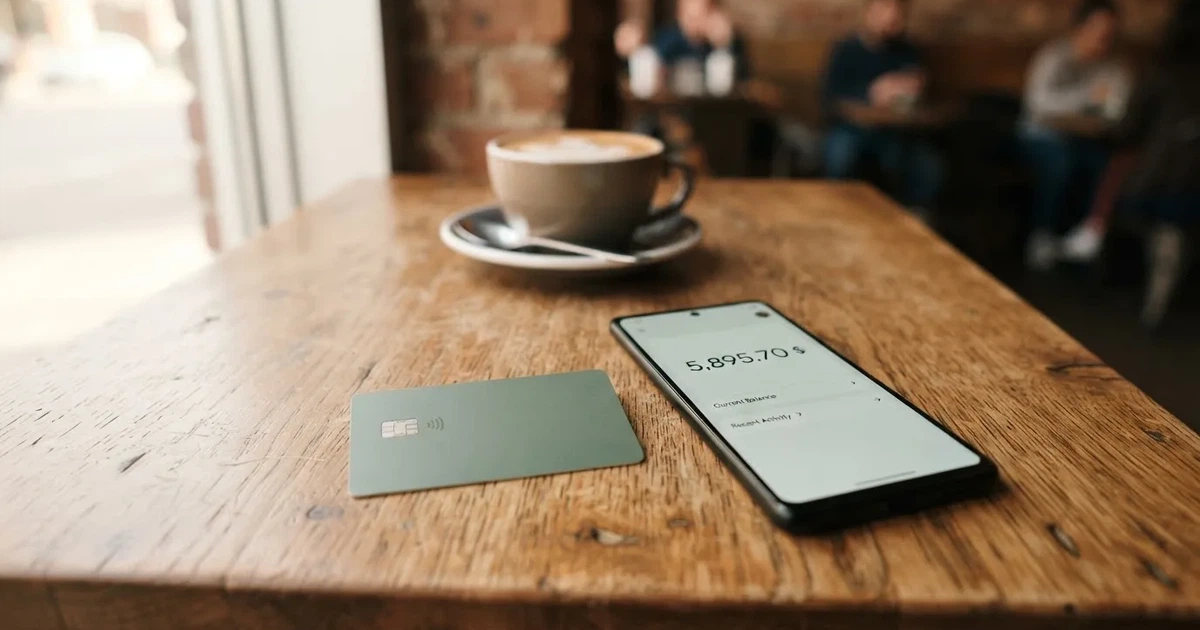
My score for the card is 5.5 out of 10. That is not a verdict on the crypto platform behind it, and it is not a claim that the card is badly run. It reflects a card that is genuinely pleasant to use day to day, sitting behind a narrow geographic front door and a fee structure that is ordinary for crypto but expensive compared with an ordinary bank card. For the reader this page is written for — someone anywhere who has trouble getting a normal bank card and is weighing crypto cards as a way to spend — the disappointment is rarely the card. It is the eligibility rule.
The conditions described here are current as of October 28, 2026.
| Criterion | Mark | Why |
|---|---|---|
| Who can get it | 3 / 10 | 18+, resident of Australia, verified CoinJar account — the card page names no countries at all |
| Cost | 5 / 10 | Issuance and replacement free; 1% on purchases, foreign transactions “2.99%+”, ATM 1%, dispute fee 27.50 AUD |
| Top-up options | 5 / 10 | Chosen crypto held as a “Spend” account with automatic conversion at CoinJar rates; coin list not disclosed |
| Reliability and complaints | 7 / 10 | Issuer EML Payment Solutions Limited (AFSL 404131), CoinJar Australia Pty Ltd as authorised representative; exchange Trustpilot 3.3/5 across 2,549 reviews |
| Everyday use | 9 / 10 | Free physical and digital Mastercard, Apple Pay and Google Pay, 1% ATM fee |
Total: 5.5 / 10.
Who will they give you the card to
Here is the short answer: only Australian residents, aged 18 or over, who already hold a verified CoinJar account. Everything else about who qualifies is either stated in the platform’s terms or simply not published.
The card’s own public page does not state eligibility rules and does not name any country. That absence matters, because it means if you land somewhere in Europe, Asia, Africa or Latin America, you will not find a country list on the card page telling you no — you find nothing at all. The rule lives one level down, in CoinJar’s Australian product disclosure statement, which sets three conditions: you must be 18 or older, you must be an Australian resident, and you must have a verified CoinJar account. Those three conditions are the gate.
If you are reading this hoping for the answer “yes, because I hold crypto” — that is not how the gate works. Holding crypto does not make you eligible. Living in Australia does not by itself make you eligible either; the account has to be verified as well. And the verification step has its own unanswered questions: the card documents do not say which verification levels exist, how long each takes, or what the rejection reasons might be. If your verification stalls, you are in the same place as everyone else: reading a help centre article.
One point worth stating clearly, because it recurs in this whole category: eligibility runs on residence, not citizenship. That is not the same thing, and the distinction is worth holding onto when you compare cards later. Sanctions screening, by contrast, is applied to citizenship and country of birth as well as to address. A card can be open to residents of several countries and still be closed to nationals of some of them, without the two rules ever appearing in the same sentence. CoinJar’s own page does not address citizenship at all.
So the honest summary for you: unless you are an Australian resident with a verified CoinJar account, this is not your card. Read the rest of this page as background on what crypto cards do, not as an option.
How to get it
The application path is short, because almost all of the work happens before the card section is ever reached. You need a verified CoinJar account first — that is the stated prerequisite for eligibility, not an optional extra. The documents required for that verification are not stated on the card materials, so I cannot tell you whether to expect a passport, a driver’s licence, a proof of address, or some combination; you will be told at the point where the account platform asks for them.
Once you are verified, what you get is a prepaid, reloadable Mastercard: a digital card in the app plus a free physical card. The physical card is free, and so is a replacement — the fee table lists Card Issue Fee as Free and Replacement Card Fee as Free, so losing the card and getting another one is not a chargeable event. Currency is AUD; the fee table prices everything in Australian dollars, GST inclusive, and the card is implied to be Australian-dollar denominated from the fee text, though the currency is not stated in so many words.
Two things I could not find, and you should plan around not knowing them. Delivery countries and delivery time are not stated. If you are outside Australia and wondering whether a physical card would even reach you, the honest answer from published material is that nobody has published it. And the activation method is not described on the card page either.
Here is the sequence as far as it is documented: verify the CoinJar account, request the card, receive a digital card and a free physical one, then fund the Spendable Balance described in the next sections. Nothing in this list requires anything unusual from you, but nothing in it is possible either if the first step is out of reach.
Fees: what it really costs
The card’s headline cost is 1% on purchases, and that is the number most people will feel. Foreign transactions are “2.99%+” — the plus matters, because the card materials show the foreign exchange fee stacking on top of the Mastercard rate rather than replacing it. Cash withdrawals carry a 1% fee on top of the ATM operator’s own charge. Disputing a transaction costs 27.50 AUD, and that is charged per transaction per unsuccessful dispute, which is worth understanding before you decide to file one over a small amount.
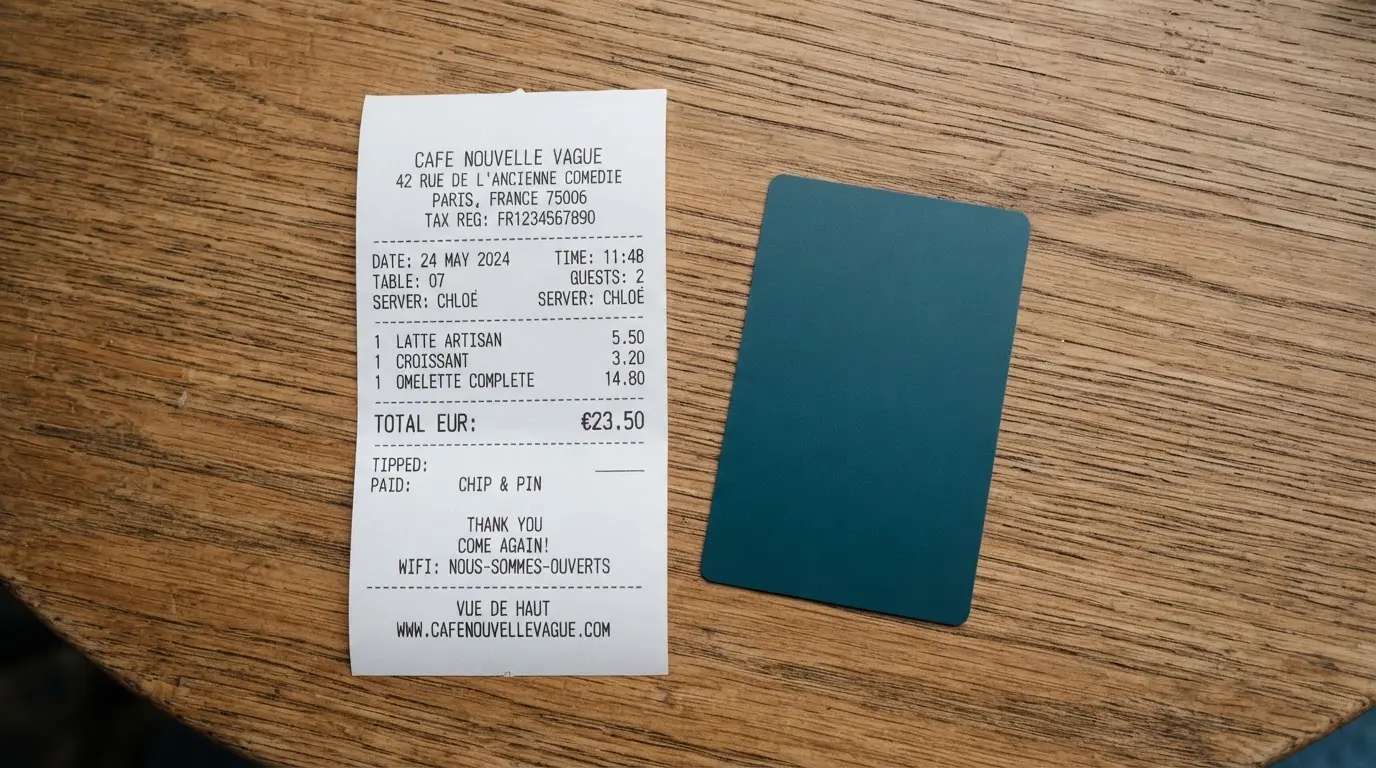
Issuance and replacement are both free, and there is no account-keeping fee line in the fee table. That is the good news, and it is genuinely good news compared with many cards in this category that charge for the plastic.
| Fee or limit | Value |
|---|---|
| Card issuance | No fee |
| Replacement card | Free |
| Account keeping fee | No such line charged in the fee table |
| In-store and online purchase | 1% (returned in Rewards points) |
| Foreign transaction | “2.99%+” on top of the Mastercard rate |
| ATM withdrawal | 1% of the withdrawal, plus the ATM operator fee |
| Dispute fee | 27.50 AUD per unsuccessful dispute |
| Maximum point-of-sale transaction | $5,000 |
| Daily point-of-sale limit | $5,000, including ATM withdrawals |
| ATM daily limit | $1,000 |
| Per-withdrawal ATM limits | Minimum $20, maximum $1,000 |
Now let me walk three ordinary payments through that table, because percentages hide more than they reveal.
A $60 grocery shop, paid by card, costs you $0.60 in fees. Nothing else changes — no monthly charge, no balance requirement. This is the case the 1% is designed for, and at this size it is easy to forget about.
The same $60 shop when you are in another country costs more than double in friction: 1% on the purchase plus 2.99% or more on the foreign exchange, on top of whatever rate the Mastercard network applies. On $60 that is at least $2.39 in card-programme fees before the network rate is counted. If you travel often, or if you are an Australian resident living abroad spending an Australian balance, this is the fee that decides whether the card is convenient or expensive. The “2.99%+” wording means the final figure is not a fixed promise — the plus is real.
And the ATM: a $200 withdrawal costs you $2 in the card’s own fee, plus whatever the operator charges, with a daily ceiling of $1,000 and a per-withdrawal floor of $20. If the operator fee is $3, the withdrawal has just cost you $5 to obtain $200 in cash. Cash is the most expensive way to use this card, and it is worth treating it as a fallback rather than a habit.
One more thing to know about money coming back. Refunds do not return your original crypto. A merchant refund goes into the CoinJar Everyday Account in Australian dollars. So if you paid with a token that has moved since, the amount you get back is an AUD figure determined at the refund, not the token you thought you were spending.
How to top it up
Topping up this card does not involve topping up the card. What happens is that you choose a crypto in your CoinJar account to act as your “Spend” account, and the card automatically converts it at CoinJar’s rates whenever you spend. Your Spendable Balance in the CoinJar Everyday Account is what the card actually draws on.
The coin list is not disclosed. That is a genuine gap, not a subtlety. When the card launched, a press release described 30 digital currencies and a flat 1% conversion, but that is launch material and not the current card page — treat it as unofficial for today. Which coins and networks are actually available now is not stated, so if your holding is not among them, the only way to find out is to look inside your account.
The cost of a purchase is therefore two-part, and this is the thing people miss. One part is the 1% card fee. The other is CoinJar’s normal trading fee, charged separately when it sells your crypto to fund the purchase. On top of that sits the spread between the rate you would have seen on screen and the rate you actually get. Card top-up fee, minimum top-up and network fees are not stated.
If you are coming at this from a stablecoin background, a warning that applies to any provider: a transfer sent on a network the provider does not support, or to an address belonging to a different network, can be lost or need manual recovery with no guarantee. Blockchain transfers are irreversible by design. Check the network before you send anything, because there is no undo button and no customer service that can reverse a chain.
There is one more top-up-adjacent fact worth knowing, and it is about leaving rather than entering. You can cancel the card at any time. The issuer can cancel it with 14 days’ notice, or immediately if misuse or false information is suspected. On cancellation, the remaining value goes back to CoinJar and then into your Everyday Account in Australian dollars — but only once no pending authorisations remain and only when you instruct CoinJar to do it. That last part is easy to miss: the money does not simply arrive. You have to ask.
Paying with it every day
Everyday use is where this card scores best, and the reason is simple: there is almost nothing to learn. It is a Mastercard, so it works wherever Mastercard works, and it plugs into the mobile wallets you already use. Apple Pay and Google Pay are both supported, and the card is tokenised into them — the number stored on your phone is a device-specific token, not the card number, and each payment carries a fresh code. If someone loses a phone, the issuer can disable the tokenised card remotely without touching the physical one.
In the app you can hold and unblock the card, change the PIN, and view your transaction history. Contactless payments are mentioned with a limit under $100. That threshold is small enough that you will rarely notice it, but it is a real number: contactless above it needs the PIN.
Rewards are simple to state and simple to value: one CoinJar Rewards point per $1 spent. The points offset future trades, or you redeem them in the Rewards Store. Note that the 1% purchase fee is described as returned in Rewards points — so the fee is charged and then given back in a different currency of your own choosing, which is convenient without being the same as not paying it.
Cash remains the weak point at 1% plus the operator’s fee. Paying in shops or online does not attract that. If you mostly want to spend rather than withdraw, the daily economics are among the better in this category.
On the app itself: there are iOS and Android apps and cards are managed inside the CoinJar app. Official store ratings were not readable from the listing. Unofficial figures — that is, from third-party aggregators, not confirmed by CoinJar — put the iOS app at 4.1/5 across 123 reviews and Google Play at 3.91 from roughly 2.6 thousand ratings, as read on 2026-10-20. One aggregator’s review count for iOS was 128 rather than 123, which tells you how much precision to expect from these numbers.
If a payment goes wrong, the route is Mastercard’s standard chargeback scheme: notify the issuer as soon as possible, with a time limit generally running 90 days from the transaction, and supply extra information within 10 days or the chargeback may be lost or reversed. A fee of 27.50 AUD applies to an unsuccessful dispute. If the merchant refunds the money themselves, it lands in your Everyday Account in AUD rather than back in crypto. For an unresolved complaint, the card materials commit to attempting resolution within 5 days and otherwise within 30 days, after which the route is AFCA — the Australian Financial Complaints Authority.
What can go wrong
Start with the thing that is not really the card’s fault: the accounts behind it. Official card-specific complaint searches turned up nothing, and no Reddit or Trustpilot complaints specific to the card were found. But the exchange underneath carries a visible load. On Trustpilot, CoinJar scores a TrustScore of 3.3 across 2,549 reviews with 17% one-star, as read on 2026-10-20 — and CoinJar replies to 100% of negative reviews, which is worth something.
The complaint themes on the exchange account between June and October 2026 were transfers and withdrawals held “under review” or under Travel Rule holds — a Bitcoin transfer paused for more than four days in August 2026 is one example — alongside identity re-checks and account freezes between May and September 2026, and slow support through the same period. Only one review in that set concerns the card itself: a virtual Mastercard with “constantly having technical issues”, dated 18 October 2026. One card complaint is not a pattern. But the exchange themes matter to you as a cardholder in one specific way: a freeze or a held withdrawal is a freeze of the balance your card spends from.
One third-party news-level review names the 1% purchase fee as the main drawback. That is a fair characterisation and it matches what the fee table shows.
The second thing that can go wrong is structural, and it is worth understanding rather than worrying about. The card is custodial: your funds sit in a CoinJar account and the card is issued by a separate company, EML Payment Solutions Limited, with CoinJar Australia Pty Ltd as its authorised representative. Custody means you are trusting an institution, and institutions in this sector have a record of it — Mt. Gox reported around US$350 million stolen in 2011–2014, Coincheck around US$400 million in 2018, and the Ronin Network US$625 million in 2022. Whatever safeguarding applies to your balance, the card materials do not state it, so I cannot tell you whether funds are segregated or insured; that is a question to put to support directly rather than assume either way.
The third is that crypto cards are programmes, and programmes end. Visa and Mastercard do not issue these cards themselves — they license issuers and can suspend a programme. In November 2022 Visa said it had terminated its global agreements with FTX, and the FTX US debit card was wound down by its issuer. WaveCrest, a Visa issuer that supplied several crypto card brands, was suspended by Visa in Europe in 2018, closing all its Visa programmes. Closures follow a pattern: a notice period, then spending and loading stop, then users are asked to withdraw remaining balances. So a card that works well this year may not work next year, and the honest way to hold one is to keep a withdrawal route you do not depend on the card for.
A fourth, smaller one: because the card is prepaid with a foreign BIN relative to some merchants, a shop can look at the number, see it is a prepaid Australian card, and decline it or ask questions. That is why a card issued in one country can look “foreign” in another. Address verification services, which compare the numeric parts of a billing address, are mostly offered in the US, Canada and the UK and are generally unavailable for foreign-issued cards, which can cause declines online. Declined authorisations can also leave a hold on your funds for several days, typically up to seven. If you plan to use this card for travel or subscriptions, keep a second payment method.
Nothing about this section is a reason not to use the card. It is a reason to know which company holds your money before you leave a balance there.
What to take instead
If you are Australian and verified, the honest comparison is between this card and other ways of spending an Australian balance. Here is where the alternatives stand.
| Card | Score | Where it operates | Headline cost structure |
|---|---|---|---|
| CoinJar | 5.5 / 10 | Australia, residents only | 1% purchases, “2.99%+” abroad, 1% ATM |
| Bybit Card | 6.0 / 10 | Argentina, AIFC (Kazakhstan), Georgia, Kazakhstan, Australia, Mexico, Brazil, Peru, Asia Pacific | 0.9% crypto conversion (0.5% Argentina), 2% FX in most regions |
| Coinbase Card | 6.4 / 10 | US states except Hawaii | “Zero spending fees and no annual fees”; crypto spread at conversion |
| OKX | 6.2 / 10 | EU plus Norway, from 28 January 2026 | No transaction or FX fee; conversion spread 0.1%–0.4% |
The two that could plausibly help a reader outside Australia are Bybit and OKX, and each comes with its own walls.
Bybit is the broadest: its help centre lists Argentina, AIFC (Kazakhstan), Georgia, Kazakhstan, Australia, Mexico, Brazil, Peru and Asia Pacific, and the application asks for your country of residence — if the country is unsupported, Bybit registers your interest. Its cards page states plainly: “This product is not meant for European Economic Area customers. All European Economic Area customer participation is strictly prohibited.” Its fiat-service restricted list — deposits, withdrawals and One-Click Buy, not the card itself — includes Belarus, the Russian Federation, Serbia, China and the United States, and it says Russian users can only make RUB transactions in fiat. No card-specific statement on Russian or Belarusian citizens, and no citizenship-versus-residence rule, was found. Card currency depends on the country of your Advanced Identity Verification. Costs: virtual issuance is free everywhere “until further notice”; physical issuance is 29.99 USD in Australia, 5 USD or USDT in Argentina, 29.99 USDT in Georgia and Kazakhstan (AIFC), 5 USDT in Asia Pacific, and free in Brazil and Mexico. VIPs holding physical cards in Australia, Kazakhstan (AIFC), Georgia or Asia Pacific pay no issuance or replacement fee. The cards page promises “no annual fees”. One detail worth planning around: from 2026-10-05 at 10:00 UTC only crypto-funded transactions earn points or cashback — fiat-funded spending does not.
OKX is the European route, launched 28 January 2026 for the EU plus Norway, with Iceland and Liechtenstein excluded. It is a Mastercard euro-denominated virtual debit card linked to OKX Pay, issued via an unnamed European licensed payment provider, and no physical card is mentioned. Funding is USDC or USDG held in OKX Pay; other coins must be converted first, there is no auto top-up, and payment is declined if the balance is insufficient. No transaction fee and no OKX FX fee, with a conversion spread of 0.1% per the explainer as of May 2026 against 0.4% in the launch press release — an unresolved conflict, with the explainer being the newer source. Cashback applies only on USDG purchases; USDC earns none.
Coinbase Card, if you are in the United States, is the outlier in the other direction: available in all US states except Hawaii, a Visa prepaid debit card spending cash or crypto, with “zero spending fees and no annual fees”. The catch is that no Coinbase transaction fees does not mean no cost — a spread applies when Coinbase buys, sells or trades crypto, and the conversion happens at payment. Funding is by linking a bank account or depositing part of a paycheck into Coinbase at zero fees. Optional crypto rewards apply on every purchase for US card users, at a variable rate shown in the app.
For a reader outside the US and Australia, the realistic shortlist is Bybit or OKX, and the choice comes down to geography first and cost second. For an Australian who simply wants to spend, none of these is obviously better than the card in front of you — you would be trading 1% for a wider region you do not live in.
Who I would recommend it to
I would recommend this card to an Australian resident who already uses CoinJar to hold crypto, already has a verified account, and wants to spend that holding in Australian dollars without repeatedly moving funds around. For that person it works: no monthly fee, free plastic and replacement, Apple Pay and Google Pay, 1% on everyday purchases, and a Rewards point per dollar that offsets future trades. The day-to-day experience is the best part of the product, and the score of 9 out of 10 on everyday use reflects that honestly.
I would not recommend it as a general spending card, and I would not recommend it to anyone outside Australia at all. If you live elsewhere, this is not a shortlist item — the eligibility rule ends the conversation before the fee table begins.
If your priority is spending rather than holding, an ordinary bank card is cheaper on every measure except access to the balance. The 1% plus spread plus separate trading fee is the price of converting crypto at the moment of purchase, and no card removes it. What a card like this genuinely offers is a way to spend a crypto balance you already decided to hold — that is a narrower and more honest description than “spend your crypto anywhere”, and it is worth keeping it in mind while reading any card’s marketing.
And if your reason for being here is that ordinary bank cards are hard to get, I want to be careful about what I have just told you. This card is not a route around identity checks. It requires a verified account, and verification is exactly the gate you are trying to get through somewhere else. Whether a given crypto provider will serve you depends on your country of residence and your citizenship, on sanctions screening that is applied separately from where you live, and on a licensing regime you may not be able to influence. None of that is something a card can shortcut, and no one offering you one can honestly promise otherwise.
Frequently asked questions
What is the CoinJar card?
It is a prepaid, reloadable Mastercard that spends the Australian-dollar value of crypto held in your CoinJar account. You pick a crypto as your “Spend” account and the card converts it automatically at CoinJar rates when you pay. The card itself is issued by EML Payment Solutions Limited, with CoinJar Australia Pty Ltd as authorised representative. It is a stored-value payment card, not a bank account.
Who is eligible for the CoinJar card?
Australian residents aged 18 or over who hold a verified CoinJar account. Those three conditions come from CoinJar’s Australian product disclosure statement, because the card’s own page states no eligibility and names no countries. The card documents do not say which verification levels exist, how long they take, or why an application might be refused. If you are not an Australian resident, the answer is no.
Is CoinJar a bank?
No — it is a crypto exchange and, separately, the marketing front end for a card programme. The card is issued by EML Payment Solutions Limited, a licensed Australian payments company holding AFSL 404131, with CoinJar Australia Pty Ltd acting as its authorised representative. CoinJar holds your crypto; EML issues the payment instrument. Two companies, two sets of terms to read.
How do I get the CoinJar card?
Verify your CoinJar account first, since a verified account is the stated eligibility requirement, then request the card. You receive a free digital Mastercard plus a free physical one; a replacement card is also free. What documents the verification needs, how long it takes, which countries the physical card ships to, and how long delivery takes are all not stated on the card materials.
How much does the CoinJar card cost to use?
In-store and online purchases cost 1%, returned as CoinJar Rewards points at one point per $1 spent. Foreign transactions cost “2.99%+” on top of the Mastercard rate. ATM withdrawals cost 1% of the withdrawal plus the ATM operator’s fee. Card issuance and replacement are free, and there is no account-keeping fee line in the fee table. A dispute fee of 27.50 AUD applies per unsuccessful dispute.
How do I top up the CoinJar card?
You do not top up the card directly. You choose a crypto in your CoinJar account as your “Spend” account, and the card spends the Spendable Balance of your CoinJar Everyday Account, converting at CoinJar rates. CoinJar separately charges its normal trading fee when it sells crypto for a purchase. The list of supported coins and networks is not stated, and card top-up fees, minimums and network fees are not stated either.
Where can I use the CoinJar card?
Wherever Mastercard is accepted, since it is a standard Mastercard with Apple Pay and Google Pay support and contactless under $100. Two practical caveats: some merchants decline prepaid or foreign-issued cards after checking the issuer country, and address verification is generally unavailable for foreign-issued cards, which can cause online declines. A declined authorisation can also leave a hold on your balance for up to 7 days.
Is the CoinJar card safe?
Use it as you would any prepaid card, with the usual app-based controls: hold and unblock the card, change the PIN, view history, and tokenise it into your mobile wallet. Note that the balance is custodial — it sits with CoinJar, not with you — and the card materials do not state what safeguarding or insurance applies to it. Crypto card programmes have been terminated before, so keep a withdrawal route that does not depend on the card.
Can I use the CoinJar card outside Australia?
The card is AUD-denominated and issued in Australia, but using it abroad is expensive rather than impossible: foreign transactions carry 2.99% or more on top of the Mastercard rate, and the Mastercard rate itself applies. Refunds come back to your Everyday Account in Australian dollars, not in the original crypto. If you are a non-Australian looking to obtain the card, eligibility is the blocker, not the usage.
What should I do if a CoinJar card payment goes wrong?
Tell EML as soon as possible; chargeback time limits generally run 90 days from the transaction, and you must supply extra information within 10 days or the chargeback may be lost or reversed. An unsuccessful dispute costs 27.50 AUD. For a complaint, CoinJar’s process is to attempt resolution within 5 days and otherwise within 30 days, after which the route is AFCA. Official contact for card complaints is [email protected].
Exchange cards – cryptocardpedia.com
Content created by the «cryptocardpedia.com» team