The Etoro Money card in practice: free to hold, but it only spends money you have already converted
 Available in US
The Etoro Money card is a Visa debit card that spends from your eToro Money balance rather than from your crypto directly. My score for it is 6.8 out of 10. That is a deliberately middle-of-the-road number, and it reflects what the card actually is: a low-cost, no-subscription Visa card that only exists inside the eToro ecosystem, is limited to residents of the EU and the UK, and cannot spend straight from a crypto wallet. If you are already an EU or UK resident who invests on eToro and holds a Club-tier membership, you are the exact person this was built for, and the card does its job without charging you a thing. If you are looking for a crypto card that debits your Bitcoin or stablecoin balance directly at the till, or you live outside the EU and UK, or you do not want to open an investment account, this is the wrong card and I would not try to make it work for you. What follows is everything I could find on the card’s own pages, in the order you probably want it: who gets one, how to apply, what it costs, how you load it, how you use it day to day, and what can go wrong.
These conditions are current as of October 28, 2026.
Verdict: 6.8 out of 10, and who it is really for
Six point eight out of ten. I will not dress that up. The card earns its points almost entirely on cost and reliability, and gives them back on who can actually get one and how narrow the funding route is. Here is where each mark came from.
| Criterion | Mark | Why |
|---|---|---|
| Who can get it | 5 / 10 | Only EU and UK residents qualify, and you also need a Club tier on eToro |
| Cost | 9 / 10 | Free to issue, free to maintain, no subscription; free replacement up to 3 cards a year; free delivery; “Zero FX fees abroad”; ATM free allowance then 1%; but the crypto conversion fee is not disclosed |
| Top-up options | 4 / 10 | The card draws on the eToro Money fiat account; crypto must first be converted to GBP or EUR through the eToro crypto wallet; EUR accounts top up by SEPA |
| Reliability and complaints | 8 / 10 | The card is issued by etoro Money Malta Ltd in the EU or etoro Money UK Ltd in the UK, with funds in a separate safeguarding account; eToro scores 4.0 from 32,233 Trustpilot reviews, and those complaints are not about the card |
| Everyday use | 7 / 10 | Visa debit, Apple Pay and Google Pay, and cash withdrawals: GBP 2,000 a month free on Green or GBP 10,000 on Black; whether you get a virtual or physical card is not stated |
Read that table as a portrait of a card built for one audience: EU and UK residents who are already investing on eToro. It is not a general-purpose entry into crypto payments, and the two lowest marks are the two you cannot argue your way out of. Who can get it is five out of ten because residence in the EU or UK is mandatory and a Club tier on top of that, with the country list sitting on a separate availability page I did not read, so I cannot tell you which individual countries are covered beyond that EU-or-UK framing. Top-up options is four out of ten because the card does not touch your crypto. It spends a fiat balance, and getting crypto into that balance means converting it first.
The cost mark is the reason this is not a two-out-of-ten card. Issuing and keeping the card are free, there is no subscription, replacement is free up to three a year, delivery is free, and card payments carry no fee. That is genuinely rare. The asterisk is that the crypto conversion fee is not stated on these pages, so the free part stops at the moment you convert.
Who will they give you the card to?
They give it to residents of the EU or the UK, and to almost nobody else. That is the whole eligibility rule as the card states it, and it is residence-based rather than citizenship-based, which matters if you are a citizen of one country living in another. On top of residence, you need an eToro Club membership at a qualifying tier and an account in the matching currency: a EUR account in the EU or a GBP account in the UK.
The tiers matter, because they decide both which card you get and how much free cash you can take out. There are two card programmes. Green goes to the Silver and Platinum Club tiers. Black goes to Platinum+ and Diamond. The differences between them are narrow, and the honest summary is that Black is mostly a cash-withdrawal upgrade, plus access to stock rewards that Green holders at lower tiers do not reliably get. Issue, maintenance, card payments and delivery are free on both, so there is no argument for paying up for Black unless you take out real cash or care about the rewards.
| Green card | Black card |
|---|---|
| Silver and Platinum Club tiers | Platinum+ and Diamond |
| GBP 2,000 a month ATM free, then 1% | GBP 10,000 a month ATM free, then 1% |
| Stock rewards for Platinum and above | Stock rewards for Platinum+ and Diamond |
One inconsistency worth knowing before you apply: the Club-tier requirement for the EU is stated as Diamond, Platinum+ or Platinum in one place, while one FAQ says Diamond only. If you are in the EU on a Platinum tier, that is exactly the case where the pages disagree, so it is worth checking with support rather than assuming you qualify.
If you are reading this hoping to find your own country listed, and you are outside the EU and UK, stop here. The card’s own pages put availability to EU or UK residents and push the country detail onto a separate availability page that I did not read.
How to get it
Getting the card means opening or using an eToro Money account, not applying to a bank in the usual sense. You need a EUR account if you are in the EU or a GBP account if you are in the UK, and you need the Club tier that matches the card you want: Green for Silver and Platinum, Black for Platinum+ and Diamond. Your first card, whether standard or urgent, is free on both tiers, and a replacement card is free up to three a year on a GBP card; on a EUR account, Green has no replacement allowance and Black is free up to three.
What I could not tell you is almost everything about the application itself. The card’s public pages do not state which identity documents you need, what level of verification you will go through, how long approval takes, or what would get an application refused. They require EU or UK residence, Club membership and a EUR or GBP account, and that is the entire stated eligibility picture. The pages also do not say whether you receive a virtual card, a physical card, or both, and they say nothing about a metal version. Delivery times are not given either; the card page simply links to a help article. If any of those points are the difference between yes and no for you, ask before you commit.
The card is a Visa debit card, available in the Green and Black tiers, and it is tied to the currency of the account behind it: GBP or EUR.
Fees: what it really costs
The headline cost of this card is zero, and it stays zero for most of what you will ever do with it. Issuing is free, monthly maintenance is free, there is no subscription, card payments are free, delivery is free, and replacement is free up to three cards a year. The card also carries “Zero FX fees abroad”, with the asterisk pointing to separate FX terms. What that asterisk hides is not fully spelled out on these pages, so read the terms before you rely on it while travelling.
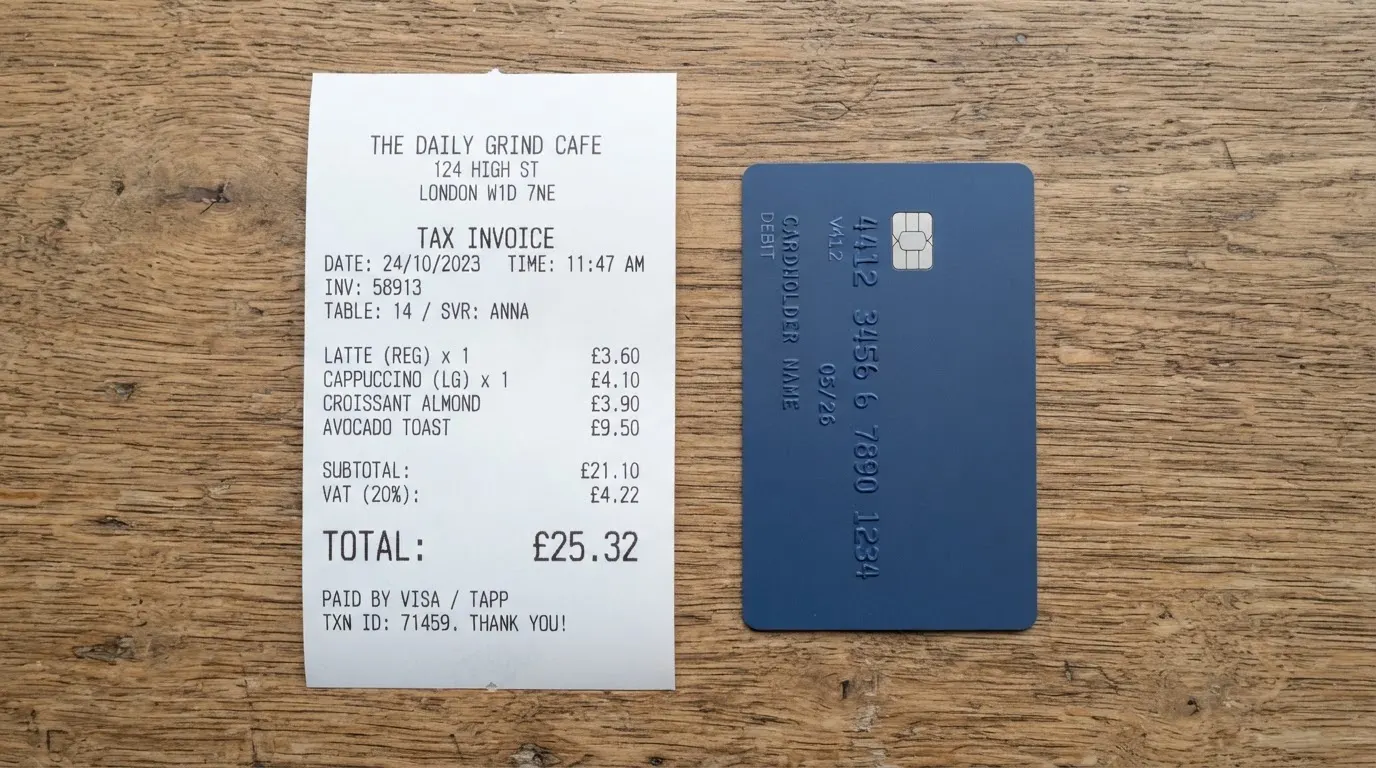
Here is every cost and limit the pages give a number for.
| Item | Green | Black |
|---|---|---|
| Card issuance | Free | Free |
| Monthly fee | None | None |
| Subscription | None | None |
| Card payment | Free | Free |
| First delivery (regular or urgent) | Free | Free |
| Replacement delivery | Free | Free |
| Replacement card | Free up to 3 per year (GBP card) | Free up to 3 per year (GBP card); Green: not applicable on EUR, Black: free up to 3 (EUR card) |
| ATM withdrawal, GBP account | First GBP 2,000 a month free, then 1% | First GBP 10,000 a month free, then 1% |
| ATM withdrawal, EUR account | First EUR 2,500 a month free, then 1% | First EUR 12,000 a month free, then 1% |
| Crypto conversion fee | Not stated | Not stated |
| FX abroad | “Zero FX fees abroad” | “Zero FX fees abroad” |
Two or three everyday payments, so you can see which of these lines actually lands in your life.
A coffee in a local shop, paid by tapping your phone. There is no card payment fee, so the only thing that can hit you is whatever the crypto conversion cost you earlier in the process, if the balance behind the card was filled from crypto. If you funded the account by SEPA transfer, nothing at the till costs you anything.
A holiday purchase abroad, in a currency that is neither GBP nor EUR. Here the card’s own line says “Zero FX fees abroad”, so on the face of it the exchange itself is free. That is the strongest claim the card makes, and it is the one most worth reading the separate FX terms for, because the asterisk is where the detail usually lives.
A cash withdrawal abroad. This is the one that costs you. Your free monthly allowance is spent first, and after that a withdrawal is charged 1%. Take more than GBP 2,000 a month on a Green card and you are paying a percentage on every unit of cash beyond it, which is the moment a debit card stops being convenient and starts being a money-transfer product. That is also the sharpest reason to choose Black over Green if you take out cash regularly.
The line I keep coming back to is the crypto conversion fee, which the public pages do not state. Because the card spends a fiat balance, any crypto you want to use has to be turned into GBP or EUR first, and the cost of that step is the missing number in this table. I would want it in writing before I committed real money to using this card as my everyday card.
Daily and monthly limits on ordinary spending are not stated. The pages refer you to a separate “Account Activity Limits” article for those, so check that before you rely on the card for a large purchase.
Top up: how money gets onto the card
The top-up story is short, and it is the card’s weakest point. The card does not hold crypto. It draws on your eToro Money fiat account, and if you hold crypto, converting it requires the eToro crypto wallet, which turns it into GBP or EUR first. Other funding methods are not described on these pages.
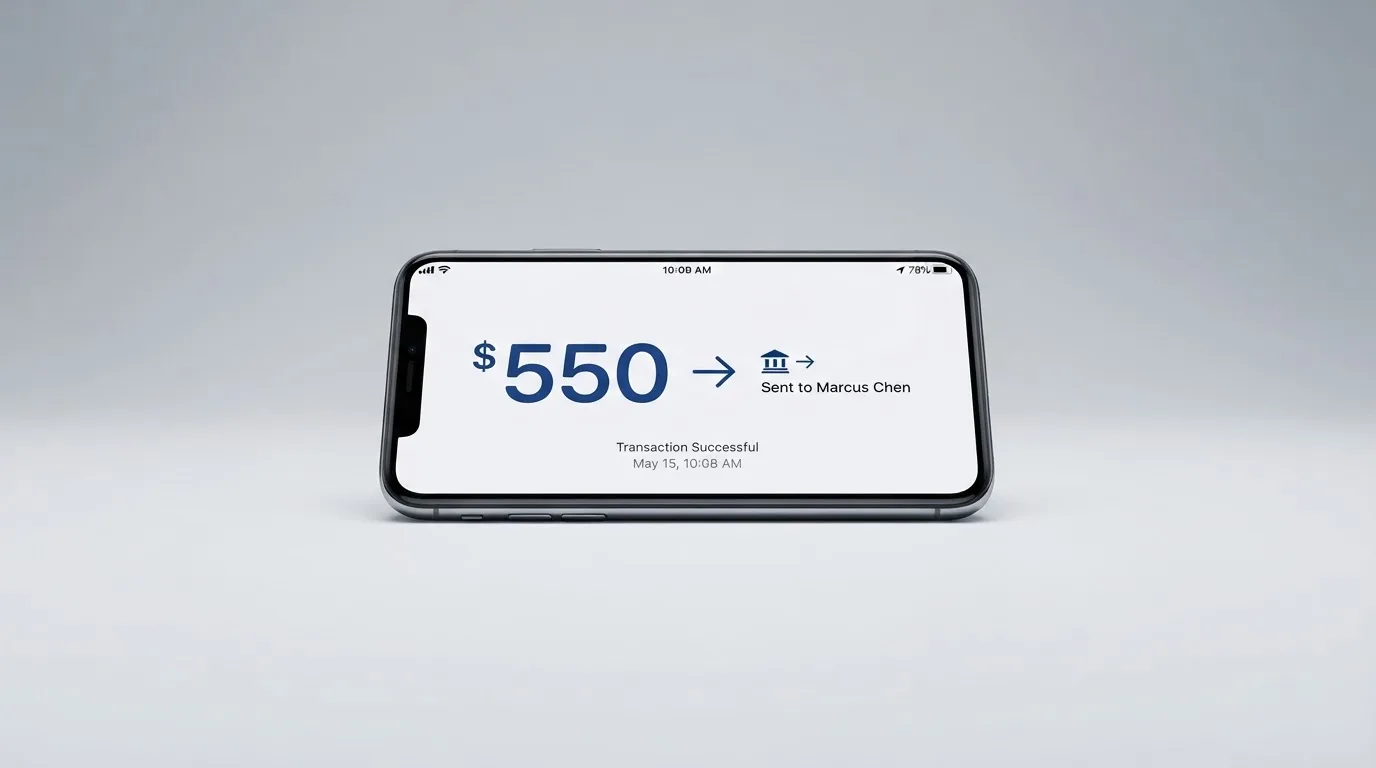
For a EUR account, the route the card describes is the Wallet tab in the eToro Money account, then Add Funds under that account, with the EUR local account funded by a SEPA bank transfer. SEPA transfers in and out are free, and opening, keeping and closing the account are free as well. For a GBP account the pages do not give me an equivalent top-up walkthrough.
The practical sequence, then, is: convert your crypto to GBP or EUR through the eToro crypto wallet, land that fiat in the local account, and the card spends from there. If you would rather not convert, this card is not for you, because there is no route that lets the card touch a crypto balance directly.
Two things I could not find: the minimum top-up amount and any card-specific top-up fee. Neither is stated, so if you plan to move small amounts, ask.
Withdrawing is the mirror image. From a local-currency account you send money to a linked bank account via SEPA, which is free. Fees and times for moving the card’s own balance are not stated on these pages, and what is left in the balance if you close the account is also not stated, though closing the account itself is free. A page footnote mentions AUD and DKK accounts as well, but whether the card works on those is not stated.
Paying with it every day
In daily use this is a Visa debit card, and it behaves like one: pay in a shop, pay online, and put it in Apple Pay or Google Pay. Both mobile wallets are supported. Whether any spending categories are restricted is not stated, which for a card attached to an investment platform is a fair thing to want written down.
Where the two tiers differ is cash and rewards. The free ATM allowance is GBP 2,000 a month on Green and GBP 10,000 on Black, and past that you pay 1%; on a EUR account it is EUR 2,500 on Green and EUR 12,000 on Black, then 1%. Stock rewards are for Platinum and above, and Black holders at Platinum+ and Diamond get them most clearly, though the pages are inconsistent about whether lower tiers get nothing or can opt in.
The rewards are worth understanding properly, because they are the main reason to choose Black. A press release describes up to 4% back in stock on everyday spending, where you pick a European-listed stock, with a value cap stated two ways: up to EUR 1,500 of value per month in the release, and up to $100 per month, GBP/EUR equivalent, on the card page. It is a launch offer that may change, it is opt-in via a form, and you get a monthly email confirming the stock has been added. Alongside that there are Visa perks: the Luxury Hotel Collection, up to 10% off Sixt, and Visa AirRefund. In practice, treat the rewards as a pleasant extra rather than the reason to switch your spending, and note that a rewards rate stated as a percentage is capped in value, not open-ended.
You manage the card in the eToro app, which is on the App Store and Google Play, plus a web platform. Its store rating and number of ratings are not stated on the pages I read.
If something goes wrong with a payment, chargebacks are listed as free in the fee table. The process and the time frames are not described, and only a Complaints Policy PDF is linked, so I would not assume a fast refund. One card-specific complaint does exist, though it is about access rather than a failed charge: a UK Financial Ombudsman decision, reference DRN-4221697, involved a complainant who never received a promised debit card because of their account type.
What can go wrong
Most of the risk here is not fraud risk. It is access risk: this card is tied to an investment platform, and the platform has its own history of problems.
The card itself is issued by a regulated e-money company: “etoro card services are provided by etoro Money Malta Ltd” for EU and DKK accounts, and the GBP account by etoro Money UK Ltd, FCA-authorised for e-money. The card’s BIN sponsor is not named. EU funds are held in a designated safeguarding account at a regulated EU bank, which is reassuring, but that money cannot be used for investing or lending and is not covered by the Malta Depositor Protection Scheme. If you are the kind of person for whom deposit-guarantee cover matters, read that as a limitation.
On security, the practical controls are there. In the UK you can freeze the card instantly in the eToro Money app, and there is a 24/7 stolen-card phone line. In the EU you use Manage Card, with “Report lost or stolen” and Disable Card. Two-factor authentication is not mentioned on these pages. Because a card number can be tokenised into your phone, the issuer can also restrict that tokenised number, blocking it on the magnetic stripe, on the phone, or on websites, which is the sort of switch you may want if your phone is ever compromised.
The bigger exposure is the parent platform’s track record. On Trustpilot, eToro’s main page reads 4.0 out of 5 from 32,233 reviews, with 20% one-star. The complaint themes are withdrawals held pending identity checks, restricted accounts, slow support, and trading and closing fees, and none of them are specifically about this card; I found no card-specific threads. A separate, unofficial, user-reported Trustpilot listing reads 2.5 out of 5 from 6 reviews, and those are again about the broker account, closures and forced liquidations rather than the card. Third-party status pages recorded credit-card deposit issues on 11 June 2026 and 7 July 2026, and an outbound-payments issue in August 2026. A declined payment can also leave a hold on your funds that lasts several days, typically up to seven, which is worth knowing before you assume a declined authorisation is a clean no.
None of this makes the card unsafe, and I want to be precise about that. It makes the card dependent. If the platform’s account is frozen for identity checks, the card is a door into an account you cannot currently reach. That is the trade you make when you take a spending card from a trading platform rather than from a bank.
What to take instead
If the Etoro Money card’s weak spot is that it will not spend crypto directly, the alternatives below all do it differently, and each trades something away. The scores here are on the same ten-point scale as the one above.
Bybit Card, 6.0 out of 10. This one does spend from crypto, but it draws first on your Funding Account and Flexible Easy Earn balance in fiat, and only if fiat runs short does it sell crypto at the One-Click Sell rate plus a card crypto conversion fee. The conversion fee is 0.9% in Australia, Asia Pacific, Georgia, Kazakhstan, Brazil and Mexico, and 0.5% in Argentina; Peru is not supported. FX is charged on top of the network rate at 2% in Australia, Asia Pacific, Georgia and Mexico, 2% as an “International Fee” in Kazakhstan (AIFC), 7% in Argentina, 1.5% in Brazil and 1% in Peru. Virtual issuance is free everywhere for now, physical issuance is 29.99 USD in Australia, 5 USD/USDT in Argentina, 5 USDT in Asia Pacific, and free in Brazil and Mexico. And its regional reach is the opposite of this card’s: Argentina, AIFC (Kazakhstan), Georgia, Kazakhstan, Australia, Mexico, Brazil, Peru and Asia Pacific, with the cards page stating plainly that “this product is not meant for European Economic Area customers” and that all EEA participation is strictly prohibited. Its rewards are tiered from 2% to 10% with caps, and since 5 October 2026 only crypto-funded transactions earn points or cashback.
Coinbase Card, 6.4 out of 10. The cleanest and least adventurous of the three. A Visa prepaid debit card, virtual or physical, available in all US states except Hawaii, spending cash or crypto with everything converted to US dollars at the point of purchase. It charges “zero spending fees and no annual fees”; the cost sits in the spread Coinbase applies when it buys, sells or trades your crypto, not in the card. Funding is a linked bank account or a paycheck deposit, both at zero fees, plus whatever crypto balance you hold. Rewards are optional crypto back on every purchase, US users only, at a variable rate shown in the app. The limitation is geography: US only.
OKX, 6.2 out of 10. A Mastercard euro-denominated virtual debit card linked to OKX Pay, for the EU plus Norway as of 28 January 2026, with Iceland and Liechtenstein excluded. No card fee, no transaction fee, no OKX FX fee, and a conversion spread reported as 0.1% by one May 2026 explainer versus 0.4% in the launch release, which is a conflict worth noting rather than resolving. You hold USDC or USDG in OKX Pay and other coins must be converted first; there is no auto top-up, and a payment is declined if the balance is short. Cashback accrues only on USDG purchases, not USDC, with EUR monthly caps that climb by tier. The card is virtual, issued via an unnamed European licensed payment provider, and no physical card is mentioned.
| Etoro Money | Bybit Card | Coinbase Card | OKX | |
|---|---|---|---|---|
| Score | 6.8 / 10 | 6.0 / 10 | 6.2 / 10 | 6.4 / 10 |
| Card type | Visa debit | Virtual and physical, Mastercard or Visa by region | Visa prepaid debit | Mastercard virtual debit |
| Where | EU and UK | Argentina, AIFC, Georgia, Kazakhstan, Australia, Mexico, Brazil, Peru, Asia Pacific; EEA excluded | US except Hawaii | EU plus Norway |
| Card fee | Free | Free virtual; physical varies by region | None | None |
| Crypto conversion fee | Not stated | 0.9% or 0.5% by region, plus sell spread | Spread at payment | 0.1% or 0.4%, sources conflict |
| Spends crypto directly | No, converts to fiat first | Yes if fiat short | Yes, converts at purchase | Yes, via OKX Pay |
| Rewards | Up to 4% back in stock, value-capped | 2% to 10% with caps, crypto-funded only | Variable crypto back | Cashback on USDG only |
Read across that table and the choice becomes obvious. If you are an EU or UK resident with an eToro Club membership and want a free, dependable Visa for ordinary spending, the Etoro Money card is hard to beat. If your problem is that you want your crypto to pay for things directly, Etoro Money is the wrong shape of product, and Bybit, Coinbase or OKX all do it. And if you are in the EEA but outside the UK, OKX is the one of these four designed for you.
Who I would recommend it to
I would recommend the Etoro Money card to someone who ticks all of these: you live in the EU or the UK; you already use eToro and hold a Club tier of Silver or above; you want a plain Visa for day-to-day spending with no monthly fee and no subscription; and you are comfortable converting crypto to fiat before you spend it. For that person it is a genuinely good card: free to hold, free to use at the till, free to deliver, free replacements, a workable free cash allowance, Apple Pay and Google Pay, and money held in a safeguarding account with an FCA-authorised issuer in the UK.
I would not recommend it to someone who wants to tap crypto and have it settle, because it will not do that. Nor to anyone outside the EU and UK, to anyone who does not want an investment-platform account, or to anyone for whom deposit-guarantee protection on the balance matters more than the fee savings. And I would be cautious, as I always am with a spending card attached to a trading platform, about how much you keep on it relative to your main bank account, given the platform-level access risk described above.
Two checks before you decide, in this order: get the undisclosed crypto conversion fee in writing, because that is the number that turns “free card” into an actual cost, and read the separate Account Activity Limits and FX terms, because the daily and monthly limits and the asterisk on “Zero FX fees abroad” both live there rather than on the pages you land on first.
Frequently asked questions
What is the Etoro Money card?
The Etoro Money card is a Visa debit card that spends from your eToro Money balance. It comes in two tiers, Green for Silver and Platinum Club members and Black for Platinum+ and Diamond. It is issued by etoro Money Malta Ltd in the EU and etoro Money UK Ltd in the UK. It is a payment card tied to an investment platform, not a card that holds crypto itself.
How does the Etoro Money card work?
The card draws on your eToro Money fiat account rather than on a crypto balance. If you hold crypto, you convert it to GBP or EUR through the eToro crypto wallet first, and the card then spends the resulting fiat. Card payments themselves are free. It works at tills, online, in Apple Pay and Google Pay, and at ATMs within a monthly free allowance.
Is Etoro Money a bank?
No, it is not a bank. It is an e-money business: etoro Money Malta Ltd for EU and DKK accounts, and etoro Money UK Ltd, FCA-authorised for e-money, for the GBP account. EU funds are held in a designated safeguarding account at a regulated EU bank, but that money cannot be used for investing or lending and is not covered by the Malta Depositor Protection Scheme.
Who can get the Etoro Money card?
Only residents of the EU or the UK. On top of residence you need a Club tier on eToro and an account in the matching currency: a EUR account in the EU, a GBP account in the UK. Green covers Silver and Platinum tiers, Black covers Platinum+ and Diamond. The country list sits on a separate availability page I did not read, so check your specific country there.
Does the Etoro Money card require KYC?
The card’s public pages do not state which identity documents you need, what level of verification you get, how long approval takes, or what causes a refusal. They require EU or UK residence, Club membership and a EUR or GBP account, and that is all the eligibility detail given. Under EU anti-money-laundering rules, due diligence normally covers name, address, date of birth, nationality, identity documents, a sanctions check and politically exposed person status.
How much does the Etoro Money card cost to hold and use?
Issuing and maintaining it are free, there is no subscription, card payments are free, first delivery is free and replacement is free up to three cards a year. The card claims “Zero FX fees abroad”. Cash withdrawals are free up to GBP 2,000 a month on Green or GBP 10,000 on Black, then 1%. The one real gap: the crypto conversion fee is not stated on these pages.
How do I top up the Etoro Money card?
For a EUR account, go to the Wallet tab in your eToro Money account and use Add Funds; the EUR local account is funded by SEPA bank transfer, and SEPA in and out is free. Crypto is converted to GBP or EUR through the eToro crypto wallet before it lands there. The minimum top-up amount and any card-specific top-up fee are not stated. A GBP top-up walkthrough is not given on these pages.
Can I use the Etoro Money card abroad, and is it safe?
The card says “Zero FX fees abroad”, with the detail behind an asterisk in separate FX terms, so read those before relying on it. On security, you can freeze the card instantly in the app in the UK, with a 24/7 stolen-card phone line, and Manage Card in the EU offers Disable Card and Report lost or stolen. Two-factor authentication is not mentioned. Treat the real risk as access: if your eToro account is frozen, the card is a door into it.
Is the Etoro Money card worth it for everyday spending?
For someone in the EU or UK already using eToro at a Club tier of Silver or above, yes: it is free to hold and free to use at the till, with Apple Pay, Google Pay and a usable free ATM allowance. The stock rewards, up to 4% back with a value cap, are a bonus rather than a reason. If you want to spend crypto without converting it first, this card is the wrong shape of product and Bybit, Coinbase or OKX fit better.
How do I withdraw money from Etoro Money?
From a local-currency account you send money to a linked bank account via SEPA, which is free. Fees and times for moving the card’s own balance are not stated on these pages, and what remains in the balance if you close the account is also not stated, though closing the account itself is free. If you need a balance returned, ask support for the specifics before you close anything.
Exchange cards – cryptocardpedia.com
Content created by the «cryptocardpedia.com» team