
A cheap virtual card in 180+ countries with an unnamed issuer and 2.7 stars from users
 Available in US
Digitap is a crypto card aimed squarely at one situation: you want a card that spends from a crypto balance, you cannot get an ordinary bank card, and you would rather not pay hundreds of dollars to start. On that narrow promise it is genuinely competitive. The virtual card is free, the Wallet tier costs nothing, and the marketing site says the card works in 180+ countries.
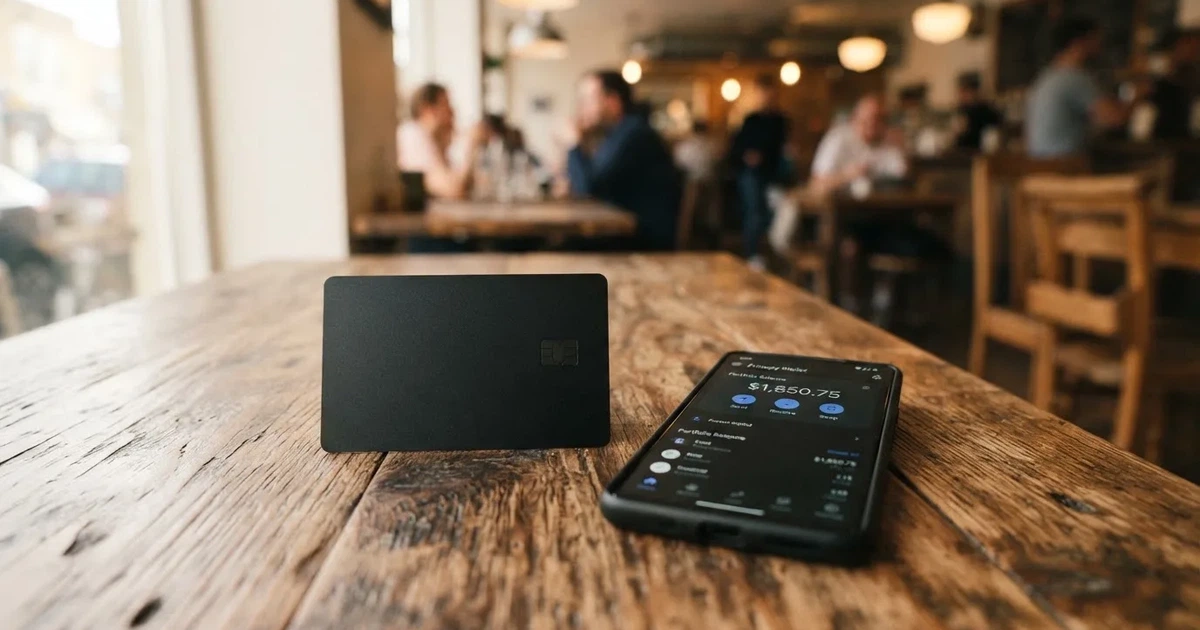
Everything else is where my confidence drops. The card’s own pages do not name the issuer, the registered company or the licences. The crypto conversion fee is not stated anywhere on the site. The limits are described only by adjectives — “Medium Limits”, “High Limits”, “No Limits” — with no amounts attached. And the Trustpilot page I read on 20 October 2026 shows 2.7 out of 5 across 13 reviews in the last 12 months, more than half of them one-star, with recurring themes of unanswered support emails and doubts about who actually runs the company. None of that makes the card a fraud. It makes it a card I would fund carefully and watch closely.
My score is 6.2 out of 10. That is a real card with real fees attached to real limits, held back by an absence of published detail that I cannot substitute for anything else.
The conditions described here are current as of October 28, 2026.
Verdict: 6.2 out of 10
| Criterion | Mark | Why |
|---|---|---|
| Who can get it | 9 / 10 | Stated to work in 180+ countries; the issuing countries are not named |
| Cost | 5 / 10 | Virtual tier free with 2 free virtual cards; 2.5% top-up fee (Wallet, Virtual), 2.2% (Pro); Pro costs $299 to open and $95 a year; no foreign transaction fees |
| Top-up options | 7 / 10 | Crypto (100+ assets) or fiat USD, EUR, GBP; networks not disclosed |
| Reliability and complaints | 3 / 10 | Issuer and legal entity not named; Trustpilot 2.7/5; complaints about silent support and doubts over the $TAP presale; app in beta |
| Everyday use | 7 / 10 | Virtual card instantly, plastic on order, ATMs worldwide; unofficial: Google Pay works, Apple Pay does not |
| Total | 6.2 / 10 | A real, cheap card wrapped in thin disclosure |
Who this suits: someone who wants a spending card funded from crypto, holds 100+ assets and does not want to pay an opening fee, and who is comfortable reading a fee table for themselves. Who it does not suit: anyone who needs a named, verifiable issuer; anyone whose income depends on the card and cannot absorb a support queue; anyone who needs Apple Pay; anyone who wants to know, in advance and in writing, what a conversion costs.
Will they give you the card?
The card says it “Works in 180+ countries worldwide”. That is the whole of the official eligibility statement. The site footer adds that it is not directed at places where use would be contrary to local law. No list of issuing countries is published, and no list of excluded ones either, so there is no way to check your own country against anything.
That gap matters more than it sounds. Nationality and residence are handled separately in how these businesses are screened — sanctions checks and issuer risk policy are typically applied to citizenship and country of birth as well as to your address — and a card that publishes no country list gives you no leverage when an application is refused. If your situation is complicated, plan on writing to support and asking before you pay anything.
How to get it
The signup path, as described: open a Digitap account online “in a few minutes”, pick a plan, and either get a virtual card instantly or order a physical one. The physical card comes with an EMV chip and a PIN and can be ordered with a custom design. The network is Visa. Fiat accounts are available in USD, EUR and GBP.
What the site does not say, and you should not assume: which KYC documents are required, what proof of address is acceptable, what the age threshold is, or how long verification takes. Delivery is not stated either — no countries, no timeframe, no delivery cost, with one exception: a physical replacement is $40 on the Pro tier.
The KYC level does vary by plan, and this is the one place the site is clear:
- Wallet — no KYC
- Virtual — “light KYC”
- Pro, Premium, Business — full KYC
Which documents are needed at each level, and how long processing takes, is not stated, nor are the reasons a file might be rejected. Unofficially, and reading that as a third-party claim rather than a card fact: a promotional article published in January 2026 — one that was promoting the $TAP presale, so treat it as interested — described the virtual card as following a simple identity check processed in under 24 hours, and the physical card as needing more verification including a passport scan and a selfie.
Fees: what it really costs
The costs that are published are these. The one that costs you the most to discover is the crypto conversion fee, which is not stated on the page.
| Fee or limit | Digitap |
|---|---|
| Wallet plan | $0, no physical cards |
| Virtual plan | Free, 2 free virtual cards, replacement free |
| Pro plan | $299 account opening fee, $95 yearly admin fee |
| Pro included cards | 3 free physical, 5 free virtual |
| Pro replacement | Physical $40, virtual $2.50 |
| Premium, Business | On request |
| Deposit fee | 2.5% (Wallet, Virtual), 2.2% (Pro, Premium) |
| Foreign transaction fees | None |
| Crypto conversion fee | Not stated |
| ATM fee and free allowance | Not stated |
| Withdraw to external wallet | 1% (Wallet, Virtual, Pro), 0% (Premium, Business) |
| Withdraw to external bank | 1% (Virtual, Pro), 0% (Premium, Business); not applicable for Wallet |
| Limits | “Medium Limits” (Wallet, Virtual), “High Limits” (Pro), “No Limits” (Premium, Business); amounts not stated |
There is also a toggle on the pricing page showing $15.99/month or $155/year, which the page does not map to any named tier. Treat it as unassigned until you can get it explained.
Now, three everyday payments, and what I can and cannot tell you about the fees.
A $20 coffee paid in USD from a Euro-denominated account. No foreign transaction fee applies, because the card states there are none. The rate you get, and any conversion cost, is governed by details the site does not publish.
A $30 subscription paid from a crypto balance. Here the unknown bites. If the balance is not already in the currency of the charge, some conversion happens, and the crypto conversion fee is not stated. The deposit fee you may already have paid — 2.5% on Wallet and Virtual, 2.2% on Pro and Premium — is separate from it, and the site does not present them as a combined figure either.
A $50 ATM withdrawal abroad. Withdrawals worldwide are offered with crypto-to-fiat conversion. Whether a fee applies, and how much is free before it starts, is not stated on the page.
The honest summary: for anything crypto-denominated, the site’s fee table does not add up to a number you can plan a month around. I would not treat “no foreign transaction fees” as “no cost”.
Top up: crypto or fiat
You can fund the card with crypto — 100+ assets — or with fiat in USD, EUR or GBP. The asset is chosen at checkout. Deposit fees are 2.5% on Wallet and Virtual, and 2.2% on Pro and Premium.
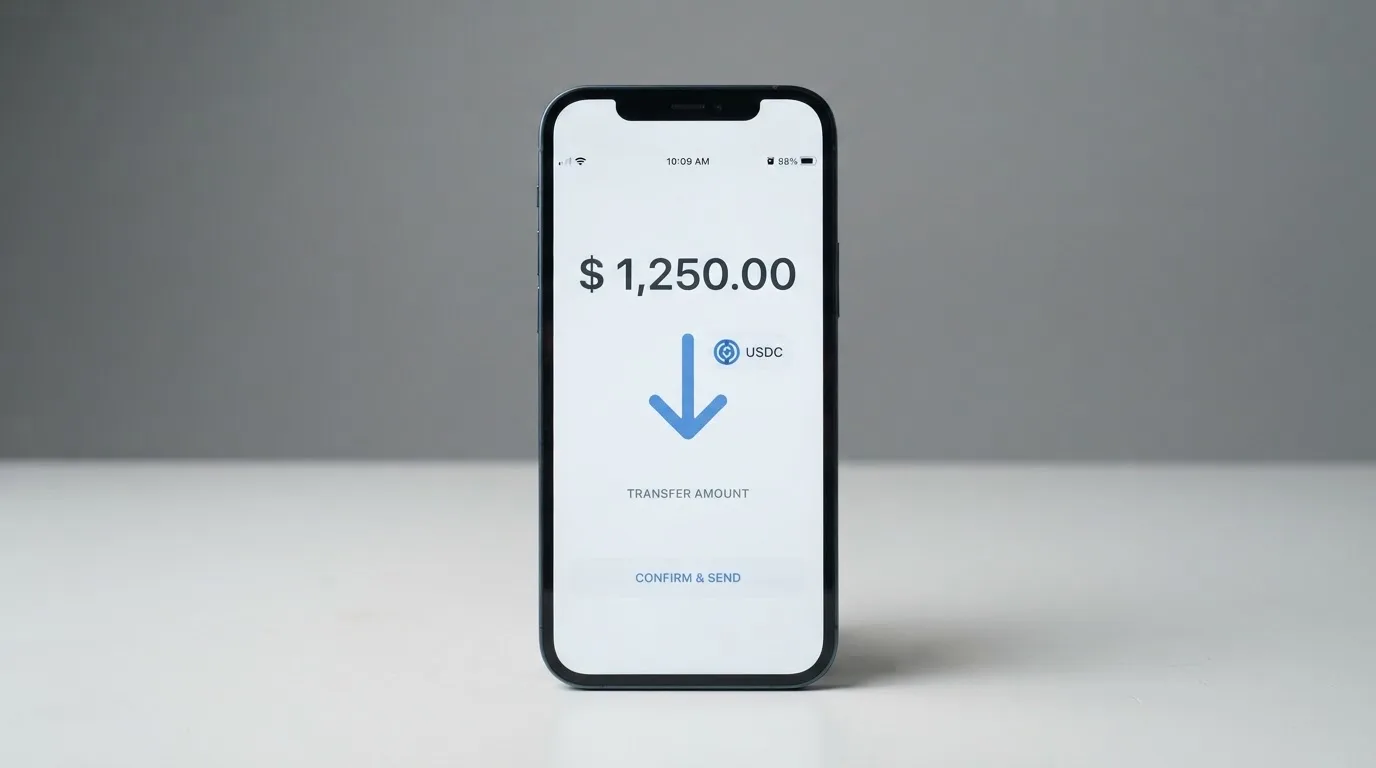
What is missing is the part that causes the expensive mistakes: networks are not disclosed. You are not told which chain your USDT must travel on, whether the card accepts a transfer from another exchange’s network, or who pays the on-chain network fee for a deposit. Chain fees are charged by the blockchain rather than by the card, but which chain you pick decides whether that cost is small or absurd.
Minimum top-up is not stated, and neither is the fiat top-up fee beyond the table above.
One practical warning that belongs here because it is the single most common way people lose money in this category: a transfer sent on a network the provider does not support, or to an address belonging to a different network, can be lost outright, and even a successful recovery through support is not guaranteed. Transfers are irreversible. If the network list is not published before you send, you are guessing — send a small test amount first.
Paying with it every day
The card is Visa. Virtual cards arrive instantly; plastic is ordered. ATMs are available worldwide. That is the core proposition and it works as described.
The mobile wallets are where the practical friction sits. The official page does not state whether Apple Pay or Google Pay are supported. Unofficially, and this is from user reviews rather than the card: Trustpilot reviewers in November 2025 and May 2026 report Apple Pay missing, while reviews in December 2025 and February 2026 say Google Pay works. If your day depends on tapping a phone at a terminal, that gap matters.
Also not stated: which merchant categories are blocked. In this category that usually means gambling — merchant code 7995 covers casinos, betting and lotteries — but blocking is a policy choice by the issuer and the list varies between them, so I can tell you it is not published, not that nothing is blocked.
Rewards are paid in $TAP tokens at a rate that depends on the plan: “basic cashback” on Wallet and Virtual, “high cashback” on Pro, and “Up to Double Digit % Cashback + Loyalty Benefits” on Premium. No percentages are published. The page states there are no monthly caps and no staking requirement.
Two more things you will use and not find documented. The app exists for iOS (iPhone iOS 12.0+, iPad, Mac M1) and Android (my.digitap.card), and the official page calls it “the official beta version” — so treat it as a beta. The App Store UK storefront, read on 20 October 2026, showed no rating and “not enough ratings or reviews”; the Google Play rating was not readable. And the dispute process — how a chargeback would actually be handled — is not stated.
What can go wrong
This is the section where Digitap is weakest, and I want to be precise about what is a finding and what is an absence.
No named issuer or company. Digitap describes itself as “a fintech application powered by licensed financial partners”. The issuer, the registered legal entity and the licences are not named on the public pages. For a card, the issuer is the party that actually holds your balance and stands behind it; the brand in front of you is often only a programme manager or front-end. When the front-end will not name who is behind it, you cannot check a licence register, and you cannot tell who would answer you in a dispute.
Support that does not reply. The site says it is “here to help 24/7 on email or submit a contact form”, and the same page’s table gives “Business Hours” for Wallet, Virtual and Pro, with 24/7 only on Premium and Business. Those two statements do not agree. Users report the weaker version: the Trustpilot page, read on 20 October 2026, sits at 2.7 out of 5 with 13 reviews in the last 12 months, 54% of them one-star. Reported themes include no reply from support (January, April and June 2026, one of them after a $299 Pro upgrade), an unanswered refund request on the Pro plan (April 2026), and slow KYC (June 2026). There are also doubts about who runs the company and “scam” claims tied to the $TAP token presale, running from November 2025 to June 2026, with one reviewer saying the website was unavailable in April 2026. A few positive notes mention Google Pay working.
I want to be fair about the scam claims. I found no Digitap-specific complaints on Trustpilot, Reddit or news beyond these, and no official incidents. The pattern people describe is a well-known one — a token presale bolted onto a card — and that is not the same as evidence of fraud. But when reviewers cannot get an answer from support, that is the environment in which any doubt goes unresolved. The $299 Pro tier is exactly where an unanswered refund hurts most.
Nothing documented about security. No two-factor authentication, no card freeze, no spending controls appear anywhere on the plans page, and the custody model is not described. Those are the standard safeguards in this category, and their absence from the page is not proof they do not exist — it is proof you cannot rely on them.
No dated news. No dated licence awards or programme events were found on the official pages.
The withdrawal math. Moving your balance out is not free on most tiers: 1% to an external wallet on Wallet, Virtual and Pro, and 1% to an external bank on Virtual and Pro, both free on Premium and Business. What happens to a remaining balance when you close an account is not stated. A closed account with a stranded balance is the kind of problem that only shows up when you have already stopped caring.
What to take instead
If Digitap’s open questions — unnamed issuer, unstated conversion fee, published only as adjectives — are dealbreakers for you, the alternatives have different shapes of risk. Two of them publish more. None of them is a substitute for your own situation.
| Alternative | Score | Card | Cost | Key difference |
|---|---|---|---|---|
| RedotPay | 6.9 / 10 | Virtual and physical; Visa debit in the Singapore terms; USD and HKD cards | Virtual card 10.00 USD, physical 100.00 USD; 1.00% transaction fee, 1.20% non-default currency | Publishes long KYC and card-issuance country lists, including overlapping entries on both |
| Wirex | 6.7 / 10 | Virtual and physical, Visa or Mastercard; metal “Visa Signature debit card” | Card issuance free in listed regions; metal card 45 GBP on the UK page; “no annual or foreign exchange fees” | Cashback up to 8% in WXT on Elite; detailed reward exclusions listed |
| Bitpanda | 6.5 / 10 | Physical Visa debit, EUR only, one active card | Account and monthly cost free, first shipment free; reissue EUR 5.90 | Requires residence in a euro-area country; spends from crypto, metals or EUR |
RedotPay is the one to look at if publication of rules matters most to you. It is the only one of the four with an explicit KYC exclusion list — a long one, running from Afghanistan through Zimbabwe — plus a separate card-issuance list dated 28 August 2026 covering 47 places, adding India, Indonesia, Morocco, Nepal, Singapore and Turkey, with the note that residents of those areas cannot use them as a billing address. Russia, Belarus, Ukraine and Serbia appear on both lists; Georgia, Armenia, Kazakhstan and the UAE on neither. Its fees are more legible too: a 1.00% transaction fee, 1.20% on non-default currency, waived small authorisations for the first five per card per month, and declined transactions waived for the first three. It costs more to open — 100.00 USD for the physical card, not cancellable or refundable once paid — and its welcome reward cannot be used toward that issuance fee.
Wirex is the middle path: virtual and physical, one of each at a time, with a metal option, and Cryptoback in WXT from 0.5% Standard to up to 8% on Elite. It also publishes what it excludes — ATM withdrawals, cash advances, crypto purchases, gambling and a long list of merchant category codes. Its availability depends on your region, and its fee pages are published separately for the UK, EEA, APAC, Singapore, Australia and “Other”, so the number you care about depends on where you are. Its Singapore terms say cash withdrawals “are not permitted in Singapore”, and transactions with prohibited countries are barred.
Bitpanda suits a narrower case: a verified account and residence in a euro-area country, EUR only, physical card, and spending that can come from listed cryptocurrencies, precious metals or EUR. Be aware that users verified via “Bankident” cannot order the card, the rule is by residence, and its cashback is stated inconsistently on its own pages — the body says 1% on crypto spending, the summary says “up to 2%” — with fiat, stocks, metals and stablecoins excluded.
Who I would recommend it to
I would recommend Digitap to someone in this position specifically: you already have crypto you want to spend, you cannot open an ordinary bank card, the Wallet or Virtual tier costs you nothing to try, and you are the kind of person who reads a fee schedule before a purchase rather than after one. For that person, the free entry point is hard to argue with, and 100+ assets with 2.2–2.5% to load is reasonable against the fees these cards usually charge.
I would hold off if any of these are true. You need an issuer whose licence you can look up in a register. You need Apple Pay. You need a number — any number — for what a crypto conversion costs. You need support that answers within a day, not eventually, especially if you are contemplating the $299 Pro tier. Or you simply do not want to hold a balance with an entity whose legal identity is not on its website.
My own approach would be: start on the free Virtual tier, keep the balance small, read the limits for what they are rather than what they are called, test the support channel with a real question before you need one, and withdraw small amounts early to see the 1% in practice rather than on the way out. None of that makes the card safe. It makes it comprehensible, and right now that is the most Digitap offers.
Frequently asked questions
What is Digitap card?
Digitap is a Visa payment card you fund from crypto or from fiat in USD, EUR or GBP. You can hold a virtual card immediately and order a physical one with an EMV chip and PIN. The card’s site says it works in 180+ countries and supports 100+ crypto assets. It is aimed at people who want to spend a crypto balance without first opening an ordinary bank account.
How does Digitap card work?
You top the account up, and the balance converts to fiat and pays for purchases, in the way a prepaid card behaves rather than a linked bank debit. Withdrawals worldwide at ATMs come with crypto-to-fiat conversion. The card says there are no foreign transaction fees, and deposit fees are 2.5% on Wallet and Virtual and 2.2% on Pro and Premium. The crypto conversion fee itself is not stated on the site.
Is Digitap a bank?
No — Digitap describes itself as “a fintech application powered by licensed financial partners”. The issuer, the registered legal entity and the licences are not named on its public pages. It is not a bank, and I could not verify a named regulated entity behind the card from what is published, which is the single biggest reason my score sits where it does.
Does Digitap require KYC?
It depends on the plan. Wallet requires no KYC, Virtual requires “light KYC”, and Pro, Premium and Business require full KYC. Which documents are needed, what proof of address is accepted, what the age threshold is, and how long processing takes are all not stated on the public pages, nor are the reasons a file might be rejected.
How much does the Digitap card cost?
The Wallet plan is $0 with no physical cards, and Virtual is free with 2 free virtual cards and free replacement. Pro costs a $299 account opening fee plus $95 a year, and includes 3 free physical and 5 free virtual cards; a physical replacement is $40. On top of that sit the deposit fees and, if you spend a crypto balance, a conversion fee the site does not publish.
Can I add the Digitap card to Apple Wallet?
Unofficially, and based on Trustpilot user reviews rather than the card, Apple Pay is not available — reviewers in November 2025 and May 2026 report it missing, while reviews in December 2025 and February 2026 say Google Pay works. The official page simply does not state support for either wallet. If tapping your phone is essential to how you pay, check this before you rely on the card.
What are Digitap’s limits?
The site gives only labels: “Medium Limits” for Wallet and Virtual, “High Limits” for Pro, and “No Limits” for Premium and Business. No amounts are stated anywhere, and there is no published daily or monthly figure to plan around. If limits decide whether the card works for you, you have to ask support and judge the answer.
How do I top up the Digitap card?
You can deposit crypto — 100+ assets, with the asset chosen at checkout — or fiat in USD, EUR or GBP. Deposit fees are 2.5% on Wallet and Virtual, 2.2% on Pro and Premium. Networks are not disclosed, and blockchain transfers are irreversible, so test a small amount before sending anything substantial.
Is the Digitap card safe?
I cannot call it safe, because the information needed for that judgement is missing. There is no named issuer or licence to verify, no documented security features, and a Trustpilot score of 2.7 out of 5 I read on 20 October 2026, with 54% of 13 recent reviews at one star and repeated reports of unanswered support. There are also no documented official incidents and no wider Digitap-specific complaints I found.
Is the Digitap card worth it?
For someone who wants a free virtual card to spend from a crypto balance and cannot open a normal bank card, yes — the free tier makes it a low-cost experiment. For anyone who needs a verifiable issuer, a stated conversion fee, Apple Pay or responsive support, the published details are too thin, and RedotPay or Wirex publish more of what you would need to decide.
App and neobank cards – cryptocardpedia.com
Content created by the «cryptocardpedia.com» team