
A Hong Kong-based prepaid Visa that lives on USDT — useful, but the price climbs fast once you leave the Adventure tier
 Available in US
The Fizen card is a USD-denominated Visa prepaid card that you fund by sending USDT to a wallet under Fizen’s control. It sits inside the wider Fizen Super App, which also bundles a non-custodial wallet, a swap feature, QR Scan-to-Pay and a few extra perks around eSIMs, hotels and flights. If you are weighing it against a bank card or another crypto card, the things that actually matter day to day are the country rules, the fee structure on the Adventure tier, how topping up works in practice, and the fact that the company is a Hong Kong tech firm, not a bank. This review walks through all of that.
Conditions are current as of October 28, 2026.
Verdict
Fizen scores 6.4 out of 10. It is a real, working prepaid Visa that solves a specific problem — spending a USDT balance like ordinary money — but it is not a bank account, the physical cards are still “coming soon”, and the fees on smaller balances are easy to underestimate. The card is best suited to people who already hold USDT and want a clean way to spend it where Visa is accepted, with the caveats explained below.
| Criterion | Mark | Why |
|---|---|---|
| Who can get it | 8 / 10 | Used in 160+ countries; explicitly not available in 43 jurisdictions, including Russia, Belarus, Serbia, India, Mainland China, Iran and Ukraine |
| Cost | 6 / 10 | Adventure $9.99 to issue, $0 monthly if you spend at least $500, otherwise $1.50; FX 1%, crypto conversion 0.5%, ATM $2 + 1.5% |
| Top-up options | 6 / 10 | Funded by USDT to a Fizen-controlled wallet; QR Pay only takes USDT on Solana or BNB Chain; fiat in via Transak |
| Reliability and complaints | 6 / 10 | Issued by Fizen Limited, Hong Kong; Tether investment announced 30 July 2026; Trustpilot 4.1 from 5 reviews |
| Everyday use | 5 / 10 | Virtual Visa issued straight away, works with Apple Pay and Google Pay; physical metal card “coming soon”; first ATM withdrawal up to $200/month free |
To put that in one sentence: if you are funding a USD virtual card with USDT and you spend more than $500 a month, the Adventure tier works as advertised. If you want a metal card, multi-currency balances, or you spend in a currency other than USD most of the time, the picture changes quickly and the next section explains why.
Will they give you the card
This is the part to check first, because nothing else matters if you are not in the right country.
The card page says you can use Fizen in “160+ countries”. The official list of places the card is *not* available is much shorter — about 43 jurisdictions — and includes the Russian Federation, Belarus, Serbia, India, Mainland China, Croatia, Slovenia, Montenegro, North Macedonia, Bosnia and Herzegovina, Iran, Ukraine and Venezuela. Georgia, Turkey, Kazakhstan, Armenia and the UAE are not on the restricted list.
The terms layer another rule on top of the country list: you cannot be a citizen, resident or located in a jurisdiction where the service is prohibited or under comprehensive sanctions. If you are a citizen of a restricted country but currently live in a supported country, the company says you may still be eligible — but the exceptions page on this is not public, so the only way to know for sure is to start the application.
A practical reading: the company runs a residence check and a citizenship check, and either can block you. If your situation is unusual — dual nationality, recent move, residency in one place and a tax address in another — expect questions and plan for the application to take a little longer.
How to get it
The sign-up is built to be quick on the surface, with identity checks underneath.
The flow is the standard three steps: download the Fizen Super App, create or import a wallet, then ask for the card. A sign-up link is provided on the card page. The company says the application takes about five minutes and the virtual card is issued immediately.
Behind the scenes, the terms say some services require KYC “at the level each Service requires” and that eligibility is checked at onboarding and on an ongoing basis (KYC, IP, device and location). The card page does not list the specific documents you will be asked for, nor the minimum age, so plan to have an ID and a proof of address ready.
There is only one tier open right now: Adventure ($9.99, virtual). The two higher tiers — Pioneer ($999.99) and Frontier ($9999) — list physical metal cards but are marked “coming soon” on the card page, and you cannot order them today.
The card is a Visa and the official terms file is titled “USD Visa Prepaid Card”. The exact card-issuing institution is named in the Issuer Cardholder Agreement, which was not read for this review, so the public documents only commit to a regulated issuer “under licence from Visa”. The network and the card currency are not stated on the card page itself.
What it really costs
Fees
This is where Fizen looks simple and then quietly charges more. There are three things to keep separate: the price of getting and keeping the card, the cost of turning crypto into a payment, and the cost of spending in a non-USD currency.
| Fee or limit | Amount |
|---|---|
| Adventure card issuance | $9.99 (free for pre-registered users) |
| Pioneer card issuance | $999.99 (coming soon) |
| Frontier card issuance | $9999 (coming soon) |
| Monthly maintenance | $0 if you spend $500 or more; $1.50 if you spend less (first month free) |
| Close card fee | $2.00 |
| FX fee on non-USD payments | 1% |
| Crypto-to-fiat conversion | 0.5% standard (Adventure card page advertises 0% “within plan limits”) |
| Small transaction fee (under $50) | $0.50 |
| ATM withdrawal (physical card) | $2 + 1.5% |
| Free ATM allowance | First withdrawal up to $200 per month |
| Per-transaction limit | $150,000 |
| Daily spending | $1,000,000 |
| Monthly spending | $1,000,000 |
| ATM withdrawal limit | $100,000 per day; $200,000 per month; 3 per day; 30 per month |
Two everyday scenarios to make those numbers feel real.
Coffee in a USD country. You tap a $5 coffee. The card has a USD balance, so there is no FX fee. The transaction is under $50, so the $0.50 small-transaction fee applies. That makes a $5 coffee cost $5.50 to Fizen, before the merchant’s own charges. If you do that every day, the monthly fee ($1.50) is the smaller part of the cost — the small-transaction fee is the part that adds up.
A €40 dinner in a euro country. The card converts USDT to USD balance, then Visa converts USD to EUR. The 0.5% crypto-to-fiat conversion and the 1% FX fee stack. A €40 dinner ends up costing roughly 1.5% more than the menu price, plus whatever spread is inside the conversion.
The card page advertises “0 crypto-to-fiat conversion fees” on Adventure. The official fee table lists 0.5% as the standard. Treat the 0% number as the best case inside the plan limits, not as a guarantee for every transaction.
Top up
Topping up Fizen is not the same as topping up a bank card. The card is funded by transferring USDT to a wallet that Fizen controls; the balance the card then spends is a USD balance, not a token balance.
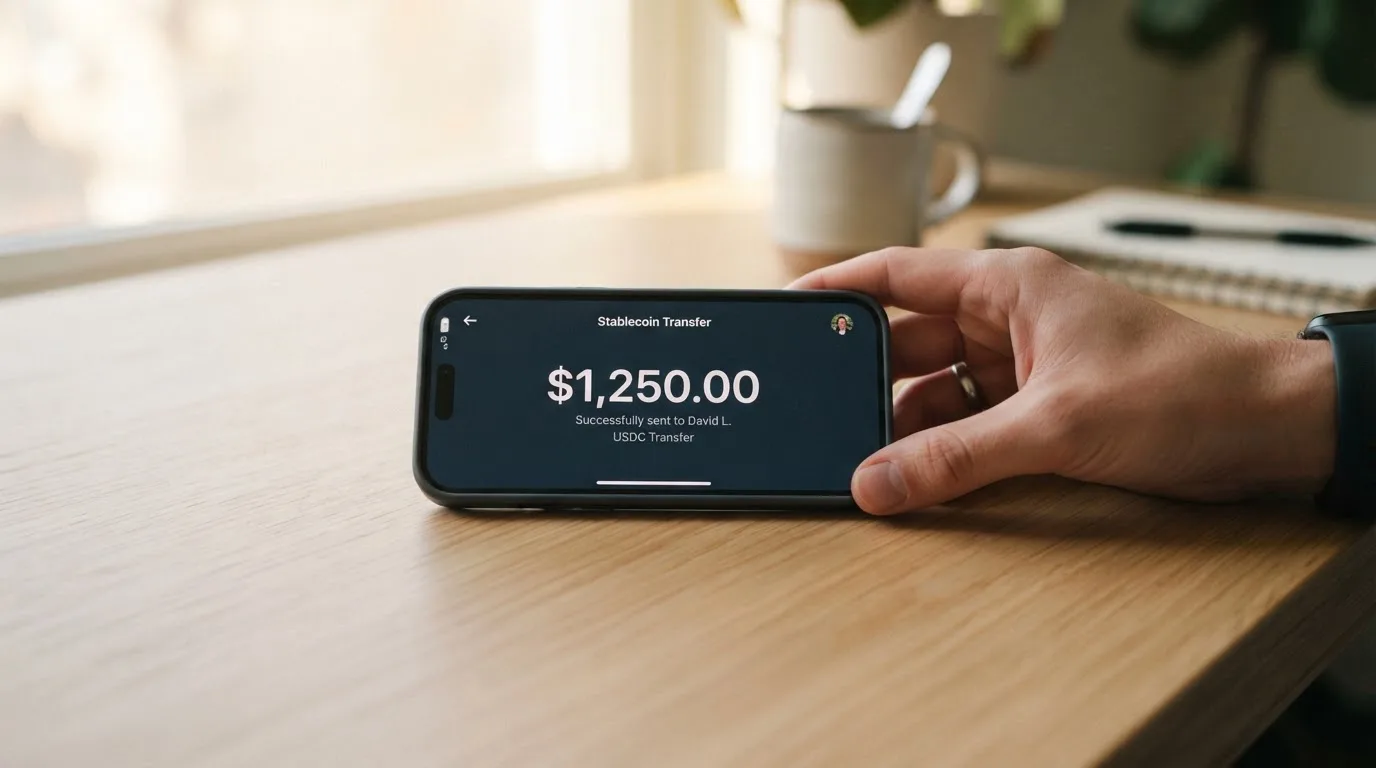
The standard route is on-chain: you send USDT from your own wallet to a deposit address the app gives you, on the network the app asks for. Network fees go to the blockchain’s validators, not to Fizen, but the minimum top-up is not stated in the public documents, so check the app for the current floor.
QR Pay is a separate funding flow. It only accepts USDT, and only on Solana or BNB Chain. Sending another token, or sending USDT on the wrong network, is described as funds that “may be permanently lost”. If you only have USDT on Ethereum or Tron, the QR Pay path is not for you until you bridge.
If you want to start from fiat, Fizen uses third-party on-ramps such as Transak. The terms call these out as separate services (clause 2.2, 3.1) and the fee schedule does not show a top-up fee line; the card page says “0 top-up fees within plan limits”, but a third-party on-ramp will charge its own fees and spread on top of that.
When it is time to get money back out, the close card fee is $2.00. The QR Pay balance can be discharged “where available” and Fizen says it will “provide a reasonable method” for that, possibly with extra identity, source-of-funds or destination-address checks. Card-balance withdrawal terms live in the Card Terms and Issuer agreement, which were not read for this review.
Paying with it every day
Once the virtual card is in the app, the day-to-day experience is mostly familiar. The card works with Apple Pay and Google Pay — both logos are shown on the card page — and you can also pay online by entering the card details. QR Scan-to-Pay is shown as live in Brazil, Argentina, Peru, Vietnam and the Philippines; it is a separate balance and is not the same as the card.
What you do not get on the open tier is a physical card. The metal Pioneer and Frontier cards are “coming soon” with no date, so right now you only have a virtual Visa. That is fine for online spend and phone payments, and it is the right shape for anyone whose main use case is subscriptions, online shopping and contactless in stores via Apple Pay or Google Pay. It is the wrong shape if you want a card to hand to a waiter in a country where QR is not the norm.
The free ATM allowance only applies to the physical card, and the physical card is not available yet. When the metal cards ship, the first withdrawal each month up to $200 will be free; after that, every ATM visit costs $2 plus 1.5%.
Rewards on Adventure are light: discounts and cashback on eSIMs, hotels and flights; “FiPoint cashback” (the rate is not stated); a 5% APR bonus on USDT Vault balances held in the app; and 0% trading fees on US stocks and ETFs for the first $5,000 of activity. Pioneer promises 10% APR bonus and higher FiPoint cashback; Frontier promises 20% and the highest FiPoint tier, plus 100+ card skins “coming soon”.
The official blog also ran a promo for “up to 10% cashback + FiPoints on every spend” and a $10 eSIM credit on 19 August 2026. Both come with terms, so do not plan around them as if they were default.
The terms are clear on a few practical points. Use for illegal gambling and any other illegal activity is prohibited. Disputes go to [email protected], then to a 60-day good-faith resolution, and if that fails, to SIAC arbitration in Singapore, with class actions waived and a one-year claim window. Blockchain transactions are described as “generally irreversible” and Fizen says it may reverse a transaction “where technically possible” — a small but real reminder that crypto rails are not symmetric with card rails.
What can go wrong
The product works, but the structure of the company is worth understanding before you load it with serious money.
Fizen Limited is registered in Hong Kong (company number 77059696; Unit 1411, 14/F, Cosco Tower, Queen’s Road Central). The terms state plainly that it is not a bank, not an e-money institution and not a licensed payment institution. The card-issuing institution is named only in the Issuer Cardholder Agreement, which was not read. The card page describes the issuer as a “regulated institution under licence from Visa”.
The custody model is split, and the split matters. Fizen Wallet and Fizen Swap are non-custodial: the private key is generated on your device, encrypted locally, and Fizen cannot recover it. Fizen Card is custodial: when you top up, your USDT moves to a balance Fizen holds on its internal ledger, and that balance is what the card spends. QR Pay is also custodial, and the terms say ownership of the accepted assets passes to Fizen and the funds are not segregated.
The Master Terms took effect on 5 June 2026; material changes take effect 30 days after notice. On 30 July 2026 Tether announced a strategic investment in Fizen; the amount was not disclosed. The Visa card issuer is not named in the announcement. There is no public $FIZEN token as of June 2026.
Trustpilot shows Fizen at 4.1 from 5 reviews, with all five reviews being five stars between 21 April and 3 June 2026, and the company replying to each one. One reviewer says the app is “a bit buggy” sometimes. Trustpilot flags the company as one that “may be associated with high-risk investments”, which is a generic badge it gives some crypto-adjacent businesses, not a specific complaint. No Reddit threads or card-specific complaints were found in the search.
Two practical safeguards to enable on day one: turn on 2FA in the app where offered, and report any unauthorised access to [email protected] within 72 hours. The card page advertises a freeze and controls feature, but those screens were not read in detail for this review. Insurance on the card balance is not stated.
Support is in-app live chat, [email protected], Discord, and [email protected] for formal notices. The card page advertises “24/7 support”, with priority support on Adventure and VIP on Pioneer and Frontier.
What to take instead
If Fizen is not a fit — wrong country, no physical card yet, fees too high on your spend pattern — these three are the natural comparisons, each picked for a different reason.
| Card | Score | Best for | What it does that Fizen does not, and what it does worse |
|---|---|---|---|
| RedotPay | 6.9 / 10 | People who want a virtual and a physical card in the same product | Two-card product (virtual + physical), separate USD and HKD card currencies, on-chain deposit in several tokens. Monthly Pro tier at $12.90. Two separate restriction lists — KYC country list and a card-issuance list — and the US is on the KYC list, which is a hard stop for many. |
| Bitpanda | 6.5 / 10 | Euro-area residents who want a Visa debit on a regulated exchange | EUR Visa debit, one active card, asset auto-converts to EUR on spend, 1% cashback on crypto spending (page summary says “up to 2%”). Restricted to euro-area residents with a verified Bitpanda account; “Bankident”-verified users cannot order. |
| Wirex | 6.7 / 10 | People who want a metal Visa and Cryptoback rewards | Virtual and physical card in one product, metal Visa Signature, Cryptoback in WXT (Standard 0.5%, Premium 3%, Elite up to 8%). Card issuance free in most listed regions; metal card £45 order fee in the UK with free DHL, €45 elsewhere. Cash withdrawals “not permitted in Singapore” per the Singapore terms. |
A few quick takeaways. If the missing physical card is the dealbreaker, Wirex is the safest substitute. If you specifically need HKD alongside USD, RedotPay is the only one of the three with both. If you live in the euro area and want a regulated exchange behind the card, Bitpanda is the cleanest fit, but only if you can satisfy its residence and verification rules.
Who I would recommend it to
If most of these sound like you, the Fizen card does what it says and the fees will not sting.
- You already hold USDT and want a clean way to spend it where Visa is accepted.
- You live outside the 43 restricted countries and can pass a standard KYC check.
- You spend $500 or more a month on the card, so the monthly fee is waived and the small-transaction fee is the main drag.
- Most of your spend is in USD or you are happy to pay a 1% FX fee on non-USD payments.
- You do not need a physical card today, or you can wait for the metal Pioneer or Frontier.
If most of these sound like you, look at one of the alternatives instead.
- You want a physical card you can hand to a waiter or use at an ATM today.
- You spend in several currencies and care about multi-currency balances.
- Your monthly spend is under $500, because the $1.50 monthly fee plus the $0.50 small-transaction fee will eat into a thin budget.
- You live in or hold citizenship of any of the 43 restricted countries, including Russia, Belarus, Serbia, India, Mainland China, Iran or Ukraine.
- You are uncomfortable with a custodial card balance held by a non-bank, non-EMI Hong Kong company, even one backed by Tether.
Frequently asked questions
What is the Fizen card?
It is a USD-denominated Visa prepaid card issued under the Fizen Super App. You fund it by sending USDT to a wallet Fizen controls, and the card spends a USD balance wherever Visa is accepted, including online and through Apple Pay and Google Pay.
Is Fizen a bank?
No. Fizen Limited is a Hong Kong-registered company (company number 77059696). The terms state that it is not a bank, e-money institution or licensed payment institution. The Visa card itself is issued by a separate regulated institution named in the Issuer Cardholder Agreement.
Who owns Fizen?
Fizen Limited is a private Hong Kong company. On 30 July 2026 Tether announced a strategic investment in Fizen, with no amount disclosed. There is no public $FIZEN token as of June 2026.
Is the Fizen card available in my country?
The card page says it is used in 160+ countries. The card itself is not available in 43 jurisdictions, including Russia, Belarus, Serbia, India, Mainland China, Croatia, Slovenia, Montenegro, North Macedonia, Bosnia and Herzegovina, Iran, Ukraine and Venezuela. You must also not be a citizen, resident or located in a place under comprehensive sanctions. The only certain way to know is to start the application.
How do I get the Fizen card?
Download the Fizen Super App, create or import a wallet, then tap to request the card via the sign-up link on the card page. The company says the application takes about five minutes and the virtual card is issued immediately. The required documents and minimum age are not stated publicly, so have an ID and a proof of address ready.
Does the Fizen card require KYC?
Yes. The terms say some services require KYC “at the level each Service requires” and that eligibility is checked at onboarding and on an ongoing basis. The specific documents, processing time and rejection reasons are not published.
How do I top up the Fizen card?
The standard route is on-chain: transfer USDT to the deposit address the app gives you, on the network the app specifies. Network fees go to the blockchain’s validators. QR Pay only accepts USDT on Solana or BNB Chain; other tokens or networks may be lost. Fiat on-ramps are handled by third parties such as Transak.
Is the Fizen card free?
The virtual Adventure card costs $9.99 to issue (free for pre-registered users). Monthly maintenance is $0 if you spend $500 or more, otherwise $1.50. There is also a 0.5% crypto-to-fiat conversion fee, a 1% FX fee on non-USD payments, a $0.50 small-transaction fee under $50, and a $2 close card fee.
How do I add the Fizen card to Apple Wallet or Google Pay?
The card page shows Apple Pay and Google Pay logos for the virtual card. Adding it works the standard way: open the card in the Fizen Super App, follow the prompt to add to Apple Wallet or Google Pay, and complete the issuer’s verification step on the device.
Is the Fizen card safe?
It uses standard safeguards (2FA, in-app controls, card freeze) and is backed by a Tether investment announced on 30 July 2026. The card balance is custodial — Fizen holds it on an internal ledger — so it carries the same counterparty and concentration risk as any other custodial crypto product. The terms describe blockchain transactions as “generally irreversible”, and there is no public insurance on the card balance.
App and neobank cards – cryptocardpedia.com
Content created by the «cryptocardpedia.com» team