Free to order, quick to open, and honest about being a crypto balance on a Mastercard
 Available in US
Krak is the crypto card that Kraken built into its main app. You order a Mastercard debit card, spend from the balance sitting in your Krak account, and pay nothing for holding it or for using it. That sounds like the ideal everyday card, and in the places it matters it mostly is: no monthly fee, no transaction fee, no foreign-exchange markup, no ATM fee of its own, and cashback on what you spend. The catch is not in the fee schedule. It is in who can get the card, in what happens to your balance when something goes wrong, and in a variable spread the card’s own pages never put a number on. I gave the card 7.1 out of 10 after checking its public pages and weighing them against what users report.
If you are in the UK or the EU and you already hold a working bank card, Krak is a reasonable second or third card rather than a replacement for the one you rely on. If you are the reason people search for crypto cards in the first place — because ordinary cards are hard to get where you live — read the access section carefully before anything else. This review is for October 28, 2026‘s terms, not next year’s.
Who the card actually suits
The short version: this card is built for people who already have crypto and want to spend it like money, and for people in the UK or EU who want a plain debit card with a crypto rebate and no monthly charge. It is not built for someone who needs a card in a country the card does not serve, and it is not built for someone who wants to hold a bank balance — what sits behind it is an e-money account, not a deposit.
Access is the first filter, and it is narrow. The card page says the card is “currently available to residents of the UK and the EU, with more countries coming soon”. That is a residence test, not a citizenship test, and the page carries a footnote that geo restrictions apply. There is a wrinkle worth knowing about: a Krak help article describes personal accounts for UK, EEA and US residents, which is not the same wording as the card page’s “UK and EU”. Where the two documents disagree, expect the card page to be the one that decides whether a card is issued. If you live in the United States, you can have an account and still find no card; if you live in the UK or EEA and have a verified account, the card is the part you are actually being considered for.
Cost is where this card scores best. The card is “free to order” and there are “no monthly or annual fees”. It states “zero transaction fees, FX fees, ATM withdrawal fees or monthly fees on your spend”. The one recurring cost I found was replacement: a fee of $4.99, or the equivalent in the card’s currency, charged by Monavate if you lose the physical card or need a new one. That is a fair price for a lost card, and it is the only figure on the whole page I would describe as a genuine charge.
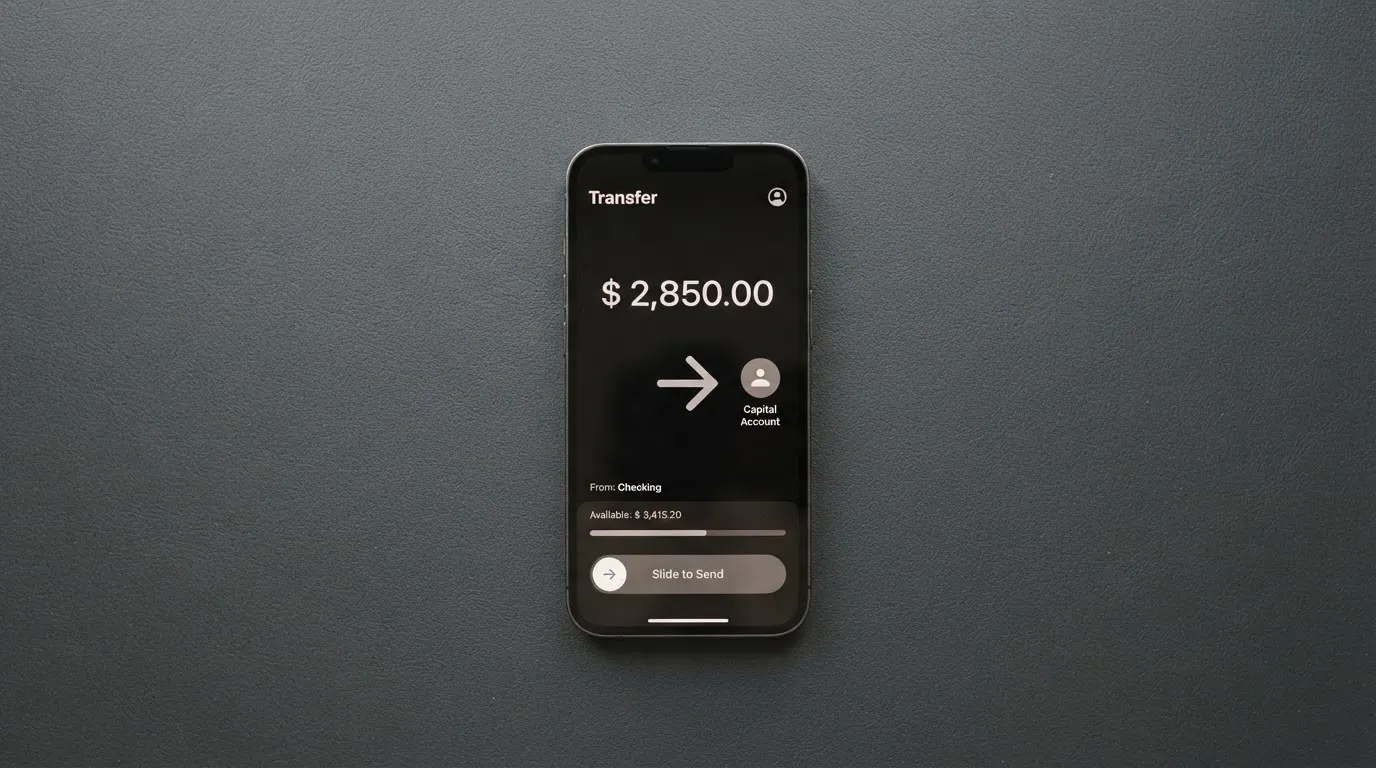
Top-up and funding are more complicated than the headline suggests. The card spends the Krak Everyday account balance, the app lets you set the order in which currencies and assets are drawn down, and 600+ assets are offered — but not all of them can actually be used with the card, and the specific coins and networks are not stated on the pages I read. You deposit in the app at any time, and some deposit methods carry a three-day withdrawal hold. If you are used to moving funds between exchanges instantly, that hold matters.
Reliability is the weak spot. The card is issued by Monavate in the UK (FCA FRN 901097) and by Monavate UAB in Lithuania (licence no. 92) — both regulated, which is a real point in the card’s favour. But Trustpilot scores for krak.app are reported inconsistently across sources: 3.8 from 34 reviews in one place, 1.9 from 126 in another. The complaints that recur are about accounts being restricted after a bank transfer, with the funds then hard to reach. That pattern is the single biggest reason I stopped short of a higher score.
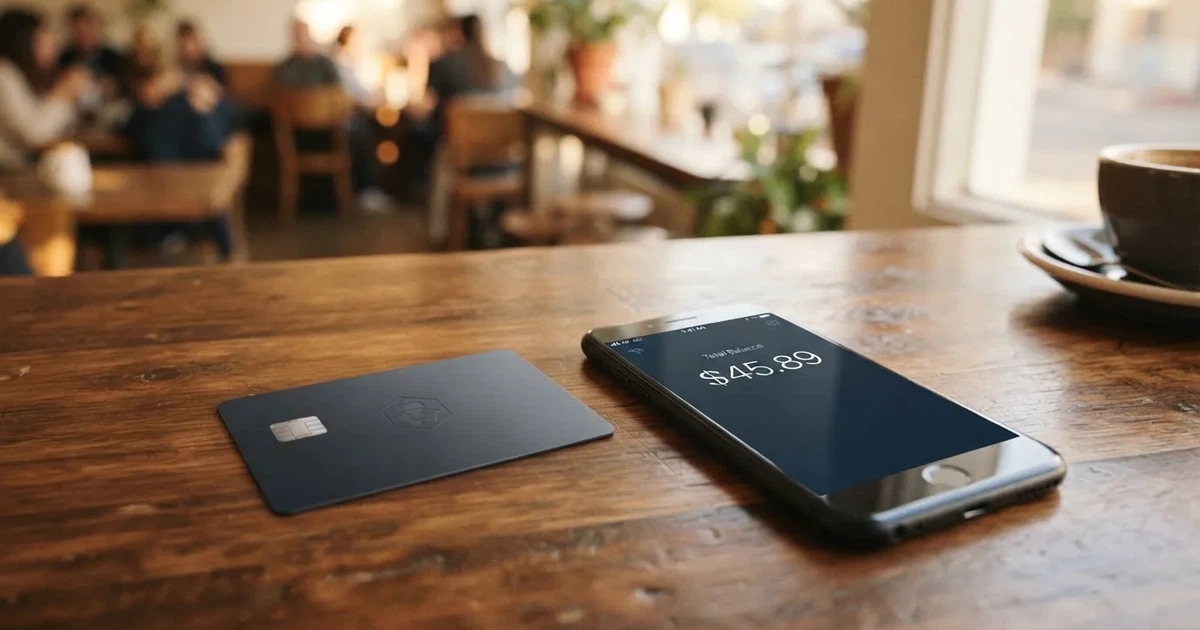
Everyday use is excellent. A virtual card is available immediately, the physical card comes in orange or black, and a stainless steel metal card weighing 16 g sits at the top of the range. It is a Mastercard, works with Apple Pay and Google Pay, and Krak states that ATM withdrawals carry no Krak fee in over 190 countries. If the question is “will this card work in a shop tomorrow”, the answer is yes, and that is not nothing.
The audience that fits best, in my view: UK and EU residents who want crypto cashback, who are comfortable with a variable spread instead of a fixed fee, and who treat the card as one instrument among several rather than their only link to money.
| Criterion | Mark | Why |
|---|---|---|
| Who can get it | 5 / 10 | Residents of the UK and EU, “more countries coming soon”; a help article adds US residents, and the wording differs from the card page |
| Cost | 9 / 10 | Free to order, no monthly or annual fee, zero transaction, FX and ATM fees; replacement costs $4.99, and a variable spread applies when you spend across assets |
| Top-up options | 7 / 10 | Spends the Krak Everyday balance, spend order set in the app, 600+ assets offered but not all usable on the card; networks not named |
| Reliability and complaints | 5 / 10 | Regulated issuers in the UK and Lithuania, but Trustpilot scores reported as 3.8 from 34 reviews or 1.9 from 126, with reports of accounts restricted after a transfer |
| Everyday use | 10 / 10 | Virtual card instantly, physical and metal options, Mastercard, Apple Pay and Google Pay, no Krak ATM fee in 190+ countries |
| Total | 7.1 / 10 | A cheap, well-behaved card for people who already have crypto and live where it is offered |
Will they give you the card?
Three conditions decide it, and only the first is spelled out cleanly.
A verified Krak account with completed identity verification. The card page states: “You must have a verified Krak account with completed KYC (identity verification)”. Everything else follows from that. The help article on being verified on Krak sets out the same requirement — a verified Krak account, an applicant aged at least 18, and Monavate’s own identity verification before a card is issued. So there are effectively two checks: one by Krak when it opens the account, and one by the issuer before the plastic or virtual card exists.
Residence in the UK or EU. This is where the wording splits. The card page says the card is currently available to residents of the UK and the EU, with more countries coming soon. A help article says personal accounts are for UK, EEA and US residents. If you are outside the UK and EEA, the honest answer from these pages is that the card is not available to you, whatever your account status says.
The issuer’s own decision. Monavate has to verify your identity before issuing. It sets its own policy about what it will accept and how long it takes. The Krak help article describes verification levels and processing times, but I did not read that article, so I cannot tell you how many tiers exist or how long any of them take — that is not stated on the pages I checked. If processing speed matters to you, check it in the app.
What is also not stated on the public pages: which documents you need, what age proof is required beyond the 18 minimum, and whether proof of address is collected. I am not going to guess at a document checklist that could send you into a rejection you did not see coming. The app will tell you what it wants when you start.
One point of background that explains part of this: identity verification in this sector is not a formality. Anti-money-laundering rules require regulated businesses to verify customers and assess risk, including ongoing monitoring and reporting of suspicious activity. In the EU, due diligence covers name, address, date of birth, nationality and identity documents, a sanctions check, the purpose of the relationship, and whether you are politically exposed. If the checks cannot be completed, EU rules require the institution to refuse the transaction or the relationship, and to end it where one already exists. That is the legal background to accounts being frozen pending documents — and to accounts being frozen without warning, which is where several Krak complaints sit.
How to get it
The path is short and the order is fixed.
Open a Krak account. This is Kraken’s app. You will go through identity verification as part of opening it.
Complete KYC. Krak must mark the account verified before any card is ordered. Monavate then verifies your identity separately.
Order the card. You can order a virtual card in minutes, or a physical one. The physical card comes in orange or black and is shipped free. Delivery countries are the UK and EEA; delivery time is not stated on the pages I read, so do not plan around a date.
The metal card, if you want it. The stainless steel metal card, 16 g, requires an average of GBP/EUR 50,000 in combined assets across Krak, Kraken and Kraken Pro. That is a real holding, not a fee — but it is a holding, and it is worth being honest that the top tier is a status tier rather than a functional one, because the underlying card does the same work.
Spending reach. You can spend in 600+ currencies.
If you need a replacement. A replacement carries “a fee of $4.99 (or equivalent card currency)”, charged by Monavate. Virtual and physical cards are cancelled separately, which matters if you freeze one and still want the other.
Unofficial figures exist for delivery and replacement, and they are worth knowing only as rough expectations, not as commitments: one third-party site (CryptoCardHub, 11 August 2026) reports plastic cards arriving “normally within 14 business days” and a metal card replacement at GBP/EUR 60. Neither is confirmed by Krak or Monavate. The card’s own pages do not state delivery times.
Fees: what it really costs
The fee schedule is the strongest part of this card, and it is also the part with the largest gap between what is promised and what is quantified.
What is free. The card is “free to order”, with “no monthly or annual fees”. Krak states “zero transaction fees, FX fees, ATM withdrawal fees or monthly fees on your spend”. Foreign exchange is “passed through at the Mastercard rate with no markup”. ATM withdrawals work in over 190 countries with no Krak ATM fee, though “third-party ATM fees may apply” and any free allowance is not stated.
What is not free, or not quantified.
| Fee or limit | What the card states |
|---|---|
| Issuing the card | Free to order |
| Monthly fee | None; no monthly or annual fee |
| Transaction fee | Zero on your spend |
| FX fee | None — the Mastercard rate is passed through with no markup |
| Card replacement | $4.99, or the equivalent in the card currency, charged by Monavate |
| Crypto conversion | “A variable spread applies when spending across assets” — the size of the spread is not stated |
| ATM withdrawal | No Krak fee in over 190 countries; third-party ATM operator fees may apply |
| Card currency | GBP for UK cards, EUR for EEA cards; card payments settle in the primary currency |
| Daily, weekly and monthly limits | Apply to both card spending and ATM withdrawals; they vary by region and are shown in the app; terms say counts and amounts “may be limited” |
| Hotel and car rental holds | May hold an extra 10–20%; the unused portion may take up to seven days to clear |
| Metal card | Requires average GBP/EUR 50,000 in combined assets across Krak, Kraken and Kraken Pro |
Three ordinary payments, and what each one costs.
*A coffee in your own country.* If the coffee is in London and your card currency is GBP, you pay the price on the receipt. No transaction fee, no conversion, no spread — you are spending a balance already in pounds. This is the case the card is genuinely built for, and the cost is zero.
*A coffee in a euro country on a UK card.* Here the card converts. The Mastercard rate is passed through with no markup, so the exchange itself adds nothing. But if you are spending crypto rather than a fiat balance, “a variable spread applies when spending across assets”, applied on the sell side when crypto is converted. The rate you get is therefore the network rate plus a spread of an undisclosed size. If you mostly hold fiat in your Everyday balance, this payment costs you nothing extra; if you are spending crypto directly, you are paying a spread you cannot see in advance.
*A hotel abroad.* The price is the price, plus the conversion on your side, plus — and this is the one that catches people — the hotel may place an additional 10–20% hold on the card. “Unused portion may take up to seven days to clear.” That is money out of your available balance for up to a week, which matters if you are spending from a card whose balance is also your savings.
The spread is the real price of this card, and it is the number you cannot get. Everything else in the fee table is stated. The spread is not. If you are the kind of person who reads a fee before opening an account, that gap is worth testing yourself with a small payment in the app before you commit anything substantial.
Top up: how money gets onto the card
The card does not have a balance of its own that you load like a traditional prepaid card. It spends the Krak Everyday account balance, and the app decides — or rather, lets you decide — how that balance is used up.
The spend order. When you spend, the card draws on currencies in the order you set in the app. You can also block individual currencies from being spent. 600+ assets are offered across the platform, but not all of them are available for card use; unsupported ones show as “Unavailable” in the list. Fiat balances can be spent as well as crypto. The specific coins and networks involved in funding are not stated on the pages I read, so I cannot give you a list to work from.
Deposits. You can deposit “at any time in the app”. Some deposit methods carry a three-day withdrawal hold — that is the one practical thing to plan around. Fiat funding routes exist through Plaid (EUR/GBP) and PayPal. Deposit fees and minimums are not stated on the pages I read.
Unofficial, and treat it as such. One third-party site (CryptoCardHub, 11 August 2026) reports near-instant card deposits at GBP/EUR 0.25 plus 3.75%. Krak’s own pages do not confirm this.
Getting money back out. Withdrawal of a card balance to a bank account or in crypto is not described in the card FAQ. To cancel, you contact Krak Support. A fee may apply if the agreement ends within six months. Closing the Kraken E-Wallet terminates the Monavate agreement. Redemption is governed by Kraken terms, which I did not read. In other words: the way out is described far more thinly than the way in, which is exactly the asymmetry to remember if you are thinking of parking funds here.
Paying with it every day
This is where the card earns its everyday-use score, and the answer for most people is that it just works.
In the wallet, in the shop. It is a Mastercard debit card. Apple Pay is supported on the official pages; a third-party source says it can be added to Google Pay and Apple Pay. Either way, tap-to-pay is the normal path. Apps exist for iOS (App Store) and Android (Google Play); ratings are not stated on the official pages.
At an ATM. Over 190 countries, no Krak fee, third-party operator fees possible. ATM limits apply, alongside the daily, weekly and monthly limits that also govern card spending — those limits vary by region and are shown in the app, and the terms say counts and amounts “may be limited”.
Getting paid back. “Up to 2% cashback in cash or crypto”, depending on average assets held with Krak, Kraken or Kraken Pro. Up to 4% applies to travel booked via Krak Concierge. There are no named tiers beyond the standard card and the metal card, so the cashback percentage is a function of your holdings rather than a ladder you climb.
When something goes wrong with a payment. Open the transaction in the app and tap “Get help with this transaction”. Refunds return to the Everyday account in the card’s primary currency, and crypto is not automatically converted back — a small, easy-to-miss detail that matters if you were refunded in a coin.
Complaint timelines. UK: acknowledged within 24 hours, final response within 15 business days, extendable by 20. EEA: 15 business days, or 35 if delayed. There is a 14-day cooling-off refund of fees. And a discrepancy worth flagging: a Kraken help article says disputes may take 45–60 days. Both statements come from Krak’s own materials, and they do not agree. Plan on the longer figure.
Unofficially, some limits. One third-party source (CryptoCardHub, 11 August 2026) reports contactless thresholds before a PIN is requested of GBP 300 in the UK and a cumulative EUR 150 in the EEA, up to two virtual and two physical active cards, and virtual card creation limited to three per rolling 30 days. None of this is on Krak’s pages, and no universal limit table is published. Treat it as orientation only.
What can go wrong
The card’s own page lists no official incidents. That is not the same as there being none, and the material that follows is either third-party reporting or user accounts, clearly labelled.
Frozen accounts and unreachable funds. This is the most common complaint theme, and the one that matters most. Trustpilot reviews for krak.app are reported at 1.9 out of 5 from 126 reviews, with recurring themes of accounts being restricted after a bank transfer or a deposit and the funds then being inaccessible (2026). Elsewhere the same score is reported as 3.8 from 34 reviews — the sources disagree, which is itself informative about how small and shifting the sample is. Other themes: generic escalation replies with no timeline, a slow response to an unauthorised-transaction claim, and a UK cardholder reporting terminals asking for a signature instead of a PIN and a delayed refund.
A suspension in July 2026. Third-party reporting (CryptoCardHub, 11 August 2026) describes a Reddit report of an 11-day security review suspending deposits, withdrawals and card use, with Kraken support later saying it “dropped the ball”. Krak’s own pages say nothing about this.
Service interruptions. An unverified third-party aggregator (penchan.co, undated) reports card payments failing for ~6.5h and ~8h in the UK and EEA, and automatic account freezes after small transfers from sanctioned addresses. One source, unverified, and no official incidents found — but outages are the kind of thing that only ever gets reported after the fact.
A regulatory mark against the issuer. The same unverified aggregator reports a Bank of Lithuania fine or warning for Monavate UAB relating to AML and safeguarding. I could not confirm this from an official source, so I am flagging it as a claim to check rather than a fact to rely on.
Where your money sits. This is the point most reviews skip and the one I would not skip. The E-Wallet is an e-money account issued by Kraken, not by Monavate. The card terms do not cover safeguarding. Third-party reporting (CryptoCardHub, 11 August 2026) says crypto remains custodial with Kraken/Krak, fiat is held in segregated accounts at regulated institutions, UK e-money is not covered by FSCS, and the EEA wallet has no deposit-guarantee coverage. I cannot promise you safety or anonymity here and I am not going to try; the honest summary is that your balance is not a bank deposit, and holding it means holding counterparty risk.
The issuer layer. Kraken is the app and the front end; Monavate and Monavate UAB are the licensed issuers, and Mastercard is the network. Visa and Mastercard do not issue crypto cards to consumers themselves — they license issuers and can suspend a programme. Visa terminated its global agreements with FTX on 13 November 2022 and the FTX US debit card was wound down; WaveCrest, a Visa issuer that supplied crypto card brands, was suspended by Visa in Europe in 2018, closing all WaveCrest-issued Visa programmes. Closures generally follow a pattern: a notice period, then spending and loading stop, then users are asked to withdraw remaining balances. With crypto custody, add the category’s own record: Mt. Gox (about US$350 million reported stolen, 2011–2014), Coincheck (about US$400 million, 2018) and Ronin Network (US$625 million, 2022). Transfers are typically irreversible, and a stolen key has no recovery path.
Practical things that will simply annoy you. Declined authorisations can leave a hold on funds for several days, typically up to seven. Hotels and car rentals may hold an extra 10–20%. Some merchants decline prepaid or foreign-issued cards because the BIN lookup reveals the card type and issuer country — a card issued in one country can simply look “foreign” to a shop in another. Address verification is mainly offered in the US, Canada and the UK and is generally unavailable for foreign-issued cards, which can cause declines on online payments. And if you are spending crypto directly, a network transfer sent on an unsupported network or to a wrong address can be lost or need manual support recovery with no guarantee.
On taxes. I am not giving tax advice, and I am not going to try. The category background worth knowing: the IRS treats digital assets as property, so exchanging them for goods, services or dollars generally produces a taxable gain or loss measured in local fiat currency at the fair market value on the transaction date — which means each card payment funded from crypto can be a separate disposal. Your own jurisdiction’s rules are yours to check with a professional.
What to take instead
If you are outside the UK and EU, or you want a card in a country Krak does not serve, the honest comparison is with what other products are actually structured like. Here is where they stand, and where each one wins or loses.
Bybit Card — 6.0 / 10. Wider geography than Krak in some directions, but it explicitly closes the EEA door: “This product is not meant for European Economic Area customers. All European Economic Area customer participation is strictly prohibited.” Regions listed in the help center include Argentina, AIFC (Kazakhstan), Georgia, Kazakhstan, Australia, Mexico, Brazil, Peru and Asia Pacific; if your country of residence is unsupported, the application “will register your interest”. The card has no balance of its own — it draws on the Funding Account and the Flexible Easy Earn balance, fiat first, and if fiat is insufficient, crypto is sold at the One-Click Sell rate plus a card conversion fee of 0.9% (0.5% Argentina). FX fees are 2% on top of the network rate in Australia, Asia Pacific, Georgia and Mexico, 7% in Argentina, 1.5% in Brazil, 1% in Peru. Physical issuance is free in Brazil and Mexico, 29.99 USD in Australia, 5 USD/USDT in Argentina, 29.99 USDT in Georgia, Kazakhstan and Asia Pacific; VIP holders pay nothing. Rewards run from a 2.00% base tier capped at 5 USD a month up to a 10% Infinite tier capped at 600 USD — but from 5 October 2026 only crypto-funded transactions earn points or cashback at all, and fiat-funded spending earns nothing. A richer rewards ladder than Krak, with tighter economics and no Europe.
Coinbase Card — 6.4 / 10. The simplest product here, and the narrowest. Available in all US states except Hawaii, and no other countries; account opening follows US PATRIOT Act identity rules. A Visa prepaid debit card, virtual or physical, spending cash or crypto, with all crypto converted to US dollars for purchases and ATM withdrawals. “Zero spending fees and no annual fees” — the fee story is genuinely simpler than Krak’s, because there is no FX layer and no variable spread to worry about; instead there is a spread applied when Coinbase buys, sells or trades. Optional crypto rewards on every purchase, US users only, with a variable rate shown in the app. If you are in the US and already on Coinbase, this is the comparison Krak cannot beat you to.
OKX — 6.2 / 10. The closest thing to a rival in Europe, and also the one with the most contradictory published figures. EU plus Norway, launched 28 January 2026; Iceland and Liechtenstein are excluded, though one explainer’s conclusion says “entire EEA”, which contradicts the launch information. A Mastercard, euro-denominated virtual debit card linked to OKX Pay; no physical card is mentioned, and it is issued via an unnamed European licensed payment provider. Card fee: none, per an explainer as of May 2026. No transaction fee and no OKX FX fee, but the conversion spread is given as 0.1% in the May 2026 explainer and 0.4% market spread in the launch press release — a conflict, and the explainer is the newer document. Funding is USDC or USDG held in OKX Pay; other coins must be converted first, there is no auto top-up, and a payment is declined if the balance is insufficient. Cashback only on USDG purchases — USDC earns none — with monthly caps from 2% capped at EUR 10 for Regular up to 10% capped at EUR 1,000 for VIP4+, the source text saying 2–5% where its own table says 10%. In short: cheaper and euro-native if you hold stablecoins, thinner if you hold anything else.
The plainest alternative of all: an ordinary debit card with a small crypto balance. Krak’s advantages are cashback and no monthly fee; its costs are spread opacity, custodial counterparty risk and a narrow footprint. If you are in the UK or EU and can open a normal bank account, a free debit card plus keeping your crypto where you already hold it is a comparison worth making honestly, because it moves the conversion to a moment you choose and shows you the rate before you commit.
| Option | Score | Who it serves | Main cost |
|---|---|---|---|
| Krak | 7.1 / 10 | UK and EU residents with crypto | Variable spread of unstated size; custodial e-money balance |
| Bybit Card | 6.0 / 10 | Argentina, Kazakhstan, Georgia, Australia, Mexico, Brazil, Peru, Asia Pacific; EEA excluded | Up to 2% FX on top of the network rate; crypto-only rewards |
| Coinbase Card | 6.4 / 10 | US residents except Hawaii | US only; conversion spread applied in-app |
| OKX | 6.2 / 10 | EU and Norway | Stablecoin funding only; conflicting published spread figures |
Who I would recommend it to
I would recommend Krak to three kinds of person, and be more careful with everyone else.
If you live in the UK or EEA, already hold crypto, and want a second card. You get a Mastercard with no monthly fee, no transaction fee, no FX markup, cashback of up to 2% depending on your holdings, Apple Pay and Google Pay, and ATM access in 190+ countries without a Krak fee. That is a genuinely good everyday card for spending crypto, and nothing about the price is a trap.
If cashback is what draws you in. The up to 2% in cash or crypto, and up to 4% on Krak Concierge travel, is real and it is simple. Just hold the card to the terms: there are no tiers to climb beyond the standard and metal versions, and the rate follows your average assets across Krak, Kraken and Kraken Pro.
If you are comfortable holding e-money rather than a bank deposit. You can freeze, unfreeze or replace a physical card instantly in the app, there is real-time transaction monitoring and data encryption, and in-app support runs 24/7. Two-factor authentication is not stated on the card pages, so if that matters to you, check it in the app. And remember what you are holding: an e-money account, not a bank deposit, with no FSCS cover and no EEA deposit guarantee.
I would be more careful if any of these are true: you live outside the UK and EU; you are planning to keep a large balance on the card rather than spending down to it; you need the card in countries where prepaid or foreign-issued BINs get declined; you need to know your cashback before you spend; or your main worry is the one the complaints share — that money goes in and becomes hard to reach. On that last point, keep a balance you can afford to have frozen, and use the dispute route in the app the moment something goes wrong rather than waiting to see whether it sorts itself out.
Frequently asked questions
What is the Krak card?
Krak is a crypto payment card from Kraken, the exchange. It is a Mastercard debit that spends the balance in your Krak Everyday account, converting crypto when you pay with assets rather than fiat. A virtual card is available immediately, physical cards ship free in orange or black, and a stainless steel metal version needs an average GBP/EUR 50,000 across Krak, Kraken and Kraken Pro.
Who owns Krak and who issues the card?
Krak is Kraken’s app. The card itself is issued by Monavate in the UK (FCA FRN 901097, company no. 12472532) and by Monavate UAB in Lithuania (licence no. 92). Mastercard routes the payments. So the brand you see is the front end; the regulated institution behind it is Monavate.
Is Krak a bank?
No. The Krak Everyday balance is an e-money account issued by Kraken, not by Monavate. Card terms do not cover safeguarding, and third-party reporting says UK e-money is not covered by FSCS and the EEA wallet has no deposit-guarantee coverage. Treat it as e-money, not as a bank deposit.
Which countries can get the card?
The card page says residents of the UK and the EU, with more countries coming soon, and notes that geo restrictions apply. A Krak help article adds US residents for personal accounts, so the wording differs between documents. Residence is the test on the card page, not citizenship.
Does Krak require KYC?
Yes. You need a verified Krak account with completed identity verification, you must be at least 18, and Monavate must verify your identity before issuing a card. That is two checks, not one. The public pages I read do not list which documents are required or how long verification takes.
How much does the Krak card cost?
The card is free to order with no monthly or annual fee, and Krak states zero transaction, FX and ATM fees on your spend, with foreign exchange passed through at the Mastercard rate with no markup. Replacement costs $4.99 or the card-currency equivalent. The one unquantified cost is a variable spread when you spend across assets.
Is the Krak card free, really?
Free to order, yes, and free to hold. There is no monthly or annual fee and no fee on your spending. What is not free is replacing the physical card at $4.99, any third-party ATM operator fee, and the variable spread applied when you pay using crypto across assets, whose size the card does not publish.
How do I top up the Krak card?
You deposit in the app at any time, and the card draws on the Krak Everyday balance in an order you set yourself. Some deposit methods carry a three-day withdrawal hold. Fiat funding runs through Plaid for EUR and GBP and PayPal. Deposit fees and minimums are not stated on the pages I read.
Can I use Krak at an ATM and in other countries?
Krak states its ATM withdrawals carry no Krak fee in over 190 countries, though third-party ATM operators may charge a fee shown before you withdraw. Daily, weekly and monthly limits apply to ATM withdrawals as well as card spending, vary by region, and are shown in the app.
Is Krak safe, and what about accounts being frozen?
There is no promise I can make here. Crypto on Krak is custodial, the Everyday balance is e-money, and Trustpilot scores for krak.app are reported at both 3.8 from 34 reviews and 1.9 from 126, with recurring complaints about accounts restricted after a bank transfer and funds becoming inaccessible. Use it for spending you control, not as a place to park money.
Exchange cards – cryptocardpedia.com
Content created by the «cryptocardpedia.com» team