Oobit review: a self-custody Visa card with a 1% spending fee and a thin safety net
 Available in US
Oobit is a Visa Platinum card that spends straight from a crypto wallet or from a balance held inside Oobit itself. That is the whole idea in one sentence, and it is genuinely useful if you already hold stablecoins and want to pay for ordinary things — a supermarket, a taxi, a subscription — without selling to an exchange first. If you are looking for an ordinary bank card and happen to be in the market for one that does not require a traditional banking relationship, the “75+ countries” claim is the part worth reading closely, because the list is not simply “everywhere except a few”.
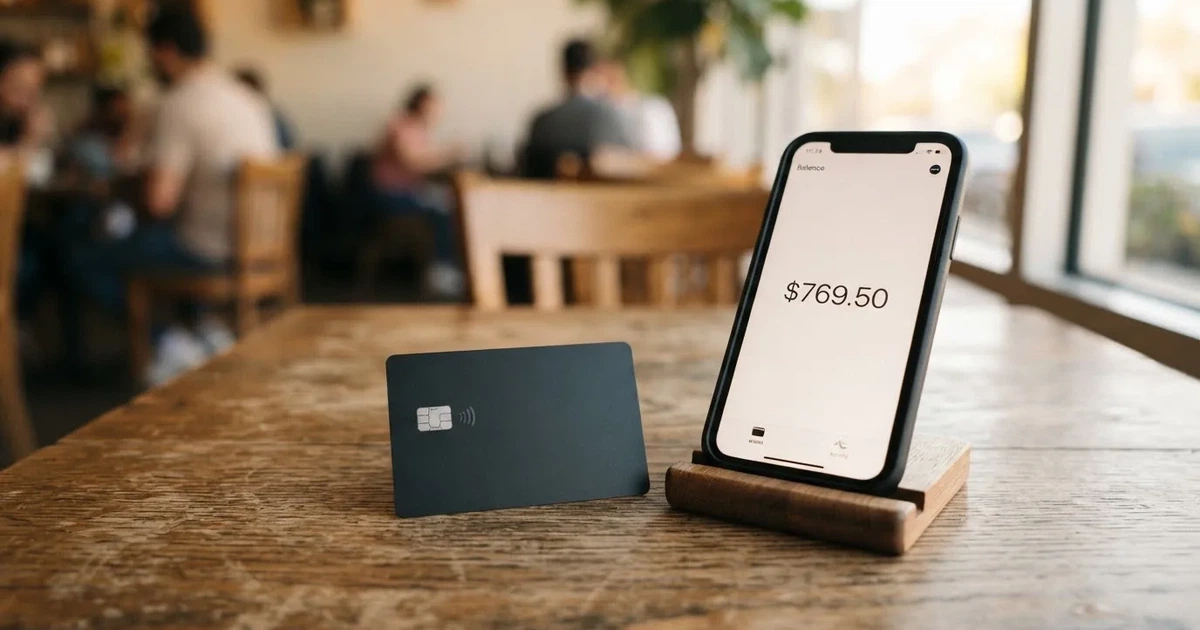
I scored this card 6.8 out of 10. That is a mid-table score for this category, and I want to be precise about why, because the number hides a card that is strong in some respects and weak in others rather than a card that is simply mediocre. It is well built for daily payments (8/10), it is genuinely cheap to hold (7/10), it opens in a wide range of countries (7/10), and the top-up options are flexible (7/10). The drag on the total is reliability and complaints, at 5/10, and that is where I would want you to keep your eyes open.
The conditions described here are current as of October 28, 2026.
Who it is for, and who it is not
The short answer: this card suits people who already hold crypto, understand what a self-custody wallet is, and want that crypto to be spendable without a detour through a bank. It does not suit people who want a bank account, and it does not suit people who need predictable, fully disclosed costs in every currency.
Here is how the score is made up.
| Criterion | Mark | Why |
|---|---|---|
| Who can get it | 7 / 10 | 75+ countries: Europe 43, Asia and Middle East 10, Americas 17, Africa 3, Oceania 2 |
| Cost | 7 / 10 | Issuance and holding free; purchases 1% (min $0.25), ATM 2.5% (min $0.25), swaps 0.95% |
| Top-up options | 7 / 10 | USDT, Bitcoin, Ethereum and other stablecoins; connect MetaMask, Phantom, Trust Wallet or Base; networks not named |
| Reliability and complaints | 5 / 10 | Issuer not named; Trustpilot 3.8 out of 5 from 495 reviews: held funds, card blocks, slow support |
| Everyday use | 8 / 10 | Virtual Visa, Apple Pay and Google Wallet, ATM up to $250 per withdrawal; physical card not named |
| Total | 6.8 / 10 | Strong day-to-day tool, thin documentation and a middling complaint record |
Some specifics on availability, because “75+ countries” is doing a lot of work in the marketing. The number counts 75 countries listed on the support site, and that list is not uniform. From the list I read: Europe accounts for 43 of them, including the UK, Germany and Spain; Asia and the Middle East for 10; the Americas for 17; Africa for 3 (Kenya, South Africa, Tanzania); and Oceania for 2. Georgia, Serbia, Kazakhstan, Kyrgyzstan and the UAE are among those listed. Turkey is not listed, and neither is Armenia. Russia and Belarus appear on the “Not supported in” list — so if you are reading this from either country, this card is not for you, and no amount of good intentions from the company changes that.
What this means for you: the availability line is real but uneven. If you are outside Europe or the Americas, you should assume nothing and check the support list for your own country before you download anything. I would also note that the geography is not just a marketing decision. Card issuing is a licensed business, and the issuing partner depends on where you live.
Will they give you the card?
Yes for most residents of supported countries, but you will not skip verification. Oobit’s public pages do not state a flat list of eligibility criteria in one place, and they do not state citizenship rules, so what follows is what the card does say about documents.
Verification is mandatory. You submit a passport or a driver’s licence, and sometimes proof of address. For bank transfers there is an extra step: one-time proof of address is required before the first payout. Most accounts are verified within minutes; some take up to 24 hours. Rejections are mostly about documents that are expired, unclear or do not match — and you resubmit inside the app.
Two things I would want a reader to understand before they start. First, a rejection here is usually administrative, not a judgement about you, and the stated remedy is simply to send better paperwork through the app. Second, and this is general to this whole category rather than specific to Oobit: identity checks are a legal requirement for regulated businesses, including ongoing monitoring and suspicious-activity reporting. In the EU, customer due diligence covers name, address, date of birth, nationality and identity documents, a sanctions check, the purpose of the relationship, and whether you are a politically exposed person. In the US, the customer identification programme requires name, date of birth, address and an identification number. Nationality is screened separately from residence, because sanctions screening applies to citizenship and country of birth as well as to your address. If due diligence cannot be completed, EU rules require the institution to hold back, and where necessary close, the relationship. That is the background reason accounts get frozen pending documents.
The card itself is described as a Visa Platinum card, and transactions run over the Visa network and settle in local currency. The card balance currency is not stated. What is stated clearly is that you get a virtual Visa card, requested in the app after identity verification, moving from Pending to Active. Whether a physical card exists is not stated on the pages I read, and neither is delivery cost or replacement cost. One concrete rule does exist: a card unused for 90 days is cancelled, and a new one can be requested.
So: no physical-card promise, no anonymity promise, no bypass. The virtual card can be added to Apple Pay, Google Wallet and smart watches.
How to get it
The process is short, and I will not dress it up. You sign up in the app, you submit a passport or driver’s licence (plus proof of address where it is asked for), you wait — usually minutes, at worst the stated 24 hours — and then you request the virtual Visa card in the app. It goes from Pending to Active. You add it to Apple Pay or Google Wallet, or a smartwatch, and you can spend.
That is the whole flow. There is no branch, no courier, no paper. If you are wondering how to activate it: activation follows verification, and the status change in the app is the signal. If a card sits unused for 90 days it is cancelled, and you request another.
The app is on iOS and Android. The ratings are worth a note because they are an easy thing to misread. The site shows App Store 4.8 (22K+) and Google Play 4.7–4.8 (25K+), but the App Store US listing itself showed 4.5 from 134 ratings, iPhone only, iOS 15.4+, when I read it on 20 October 2026. Two different numbers for the same store is normal enough — one is the global listing, one is the country-specific one — but if you are reading reviews to decide, read the one for your own storefront.
Who this suits at this stage: someone who has a passport or driver’s licence to hand, is comfortable uploading a document to a financial app, and wants a spendable balance in minutes rather than a plastic card in the post. Who it does not suit: anyone who needs a card for a merchant that insists on a physical card or a billing address that matches the card’s issuing country, which I come back to below.
Fees: what it really costs
This is the section I read most carefully, and the answer is: the card is free to hold, and every transaction has a price on it. The figures below are the ones stated by Oobit. Where the card’s own pages disagree with each other, I say so.
| Fee or limit | What Oobit states |
|---|---|
| Issuance | Free |
| Monthly or holding fee | Free |
| Card purchase | 1% (minimum $0.25) |
| Card purchase in Brazil | 1% with no minimum, plus IOF and FX charges |
| Foreign exchange fee | Not separately stated |
| ATM withdrawal | 2.5% (minimum $0.25), plus any fee the ATM operator charges; free allowance not stated |
| Swap | 0.95% (3% when receiving OOB) |
| Crypto deposit | Minimum $0.10 |
| Crypto withdrawal | $1 to $50,000 per withdrawal ($5 minimum for US residents); daily limit per asset, amount not stated; network fee shown before confirming |
| Card purchase limits | $1 to $2,000 per purchase, up to $25,000 per rolling 24 hours (the FAQ says up to $10,000 per day; the two official pages differ) |
| ATM limits | Up to $250 per withdrawal including operator charges, 3 attempts per 24 hours |
| Swap limits | $5 to $10,000 |
| Bank transfer | Up to $50,000 per transfer, minimum €10 / £10 / $10; bank-transfer fee not specified; failed transfers auto-refunded to the balance |
| Fiat top-up fee | Not stated |
Account creation, card issuance and holding are free. That part is genuinely good and unusual in the sense that plenty of competitors charge $199 a year for a metal version of the same idea.
Now let me walk through three ordinary payments, because a fee schedule on its own does not tell you what a coffee costs.
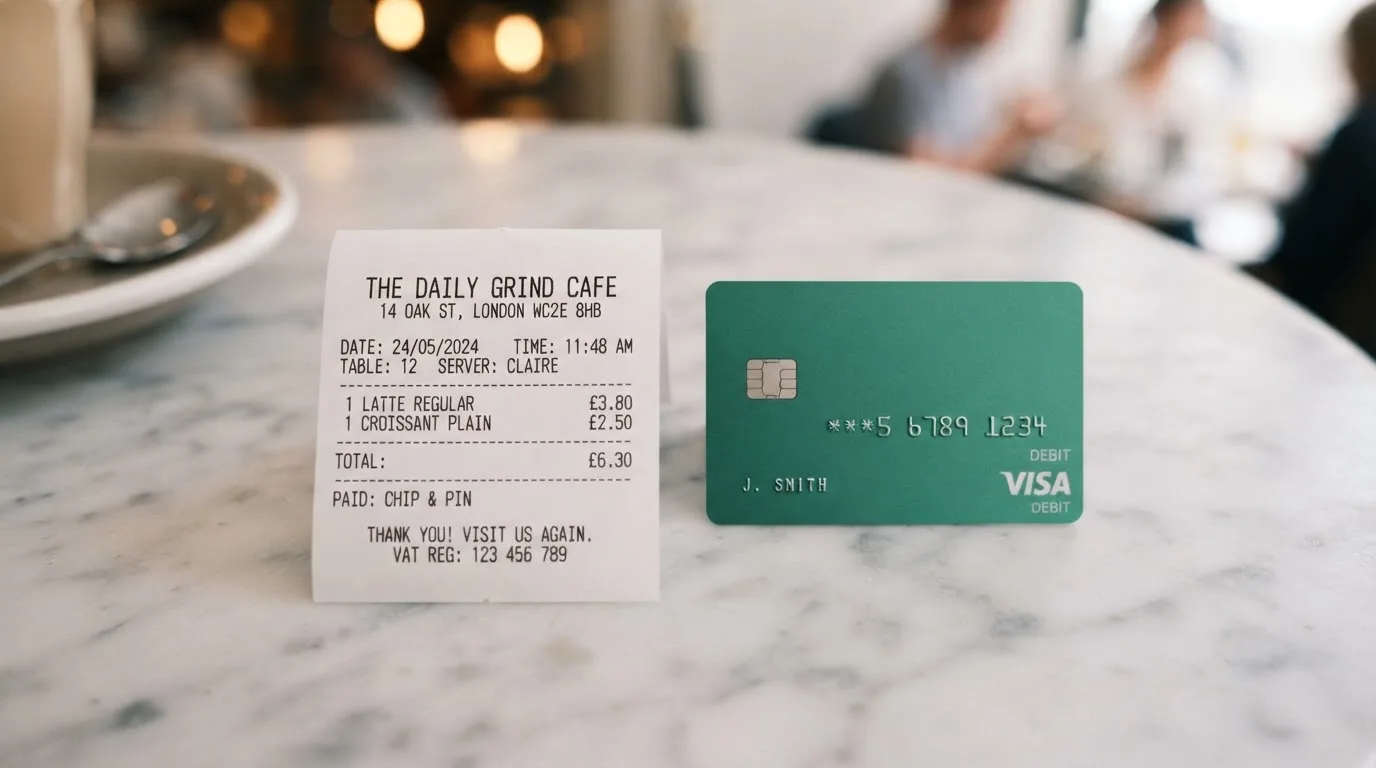
A $4.20 coffee. You pay 1%, which is 4.2 cents, and the minimum of $0.25 applies because 4.2 cents is below it. So you pay $4.45. On a small purchase the minimum dominates, and that is worth internalising: percentage fees are the small-purchase tax of this category. If you use the card for a dozen $3 coffees a month, you are paying $3 in fixed minimums.
A $60 weekly grocery run. 1% is 60 cents, above the minimum, so you pay $60.60. This is the case the fee is designed around, and 60 cents on $60 is the honest everyday cost of the card.
A holiday in a country that is not the US. Two layers appear. First, a possible 1% purchase fee on the local-currency amount. Second, and not stated as a separate number by Oobit: the Visa network converts at its own rate, so a difference between that rate and the mid-market rate is the FX cost. I want to be careful here because this is exactly the sort of thing that gets glossed over. Oobit does not publish a separate FX fee, and I will not invent one. What readers do report is a cost of about 7% on non-USD payments in a Trustpilot review dated 24 August 2026 — that is a user report, not something Oobit has confirmed, and I would treat it as a signal to test small rather than as a published rate. In Brazil the picture is stated more concretely: 1% plus IOF and FX charges, and a local and an international card can coexist.
Two more things on fees. In the country list, a few reviewers mention opaque fees as a theme in August 2026, so ask support directly what a specific payment will cost before you rely on it. And one rule that catches people out is not a fee at all but behaves like one: a declined payment can leave a hold, and a hold can sit for days — typically up to 7. That is money you cannot spend while it clears.
Top up: how you fund the card
The answer here is the part of Oobit that is different from most of its competitors, and it is worth understanding properly.
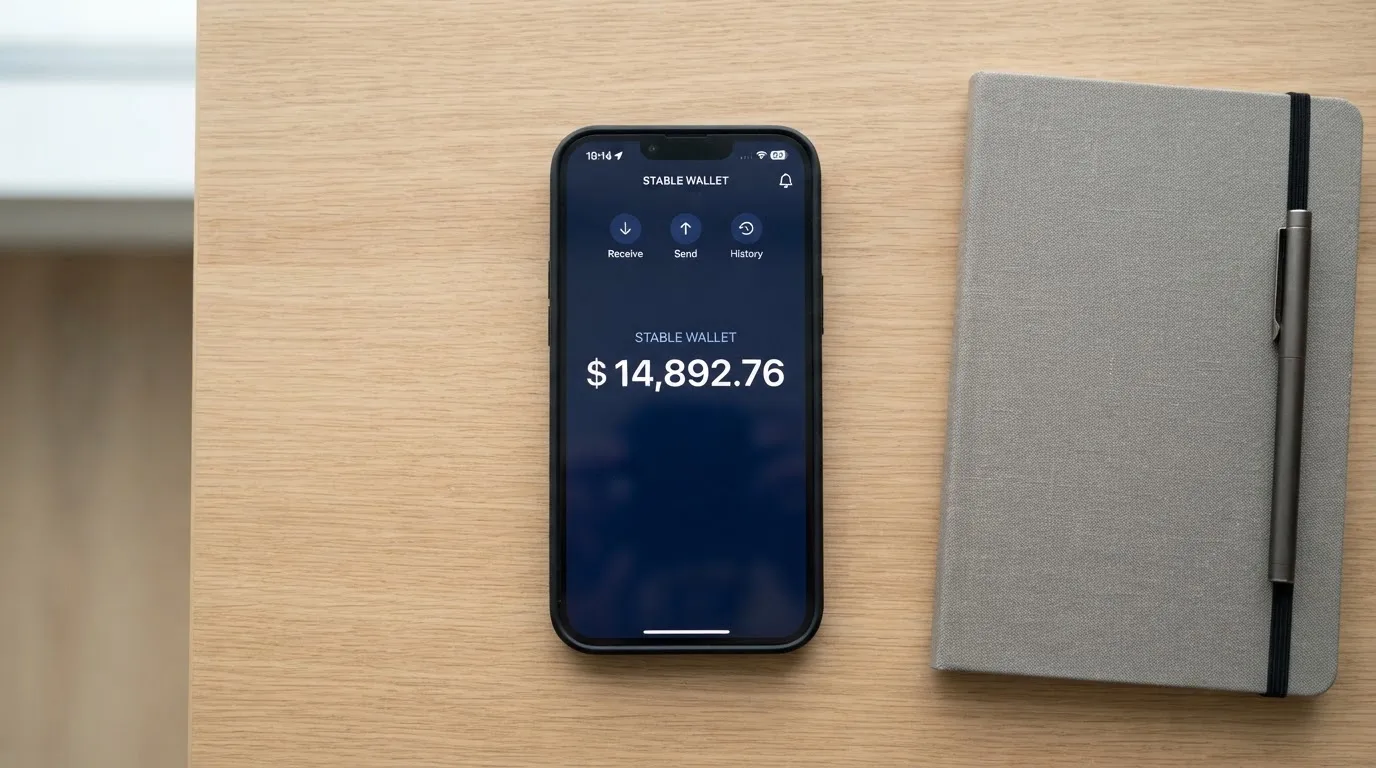
You do not need to preload. The card pays either from a connected self-custody wallet (DePay) or from the Oobit balance. If you connect a wallet you already own, the crypto stays there until you authorise a payment. There is no step where you convert everything in advance.
If you do want a balance, the stated assets are USDT, Bitcoin, Ethereum and other stablecoins, and you can connect MetaMask, Phantom, Trust Wallet or Base. Networks are not named on the pages I read, and that is not a small gap — see the risks section, because sending on the wrong network is the single most expensive mistake available to you here.
Other funding facts, briefly: crypto deposits start at $0.10. If you buy crypto inside the app, the limits are set by Transak and shown at checkout. Withdrawals to external wallets pay a network fee, shown before you confirm. Swaps cost 0.95%, and 3% when you receive OOB. Fiat top-up fees are not stated. Withdrawals run $1 to $50,000 ($5 minimum for US residents) with a daily limit per asset that is not stated. Bank transfers go up to $50,000 per transfer with a €10 / £10 / $10 minimum; the bank-transfer fee is not specified, and failed transfers are automatically refunded to your balance. You can delete your account in the app or via Support — though what happens to any remaining balance on closure is not stated, which is a small thing to check before you close anything.
The background here matters for your own safety. Blockchain transfers are typically irreversible: the network cannot freeze or return funds. And gas is charged by the blockchain, not by Oobit — on Ethereum that means a wallet holding USDT with no ETH cannot send, because gas is paid only in ETH.
One last piece of context on the assets themselves, because it affects what you are actually holding: stablecoins aim to hold a stable value but are not necessarily stable. Tether’s USDT and Circle’s USDC are dollar-pegged and between them make up about 90% of stablecoin market capitalisation, per the BIS in July 2025. USDC can be redeemed 1:1 for USD and is described by Circle as fully backed by cash and cash equivalents with monthly reserve attestations. But depegs happen — TerraUSD collapsed in May 2022 and USDC lost its peg briefly in March 2023.
Paying with it every day
The day-to-day experience is the strongest part of this card, and I scored it 8/10 for a reason: the things you actually touch are all there.
You get a virtual Visa card, Apple Pay and Google Wallet, and it can be added to smart watches. Transactions settle in local currency over the Visa network. The card can be locked in the app if it goes missing or looks wrong. Spending limits are visible and adjustable in the app, ATM withdrawals go up to $250 per withdrawal including operator charges with 3 attempts per 24 hours, and card purchases run $1 to $2,000 each.
The rewards. This is where I would slow you down, because Oobit’s headline is “10% Cashback Anywhere” and the detail underneath it is different. The FAQ says cashback and 5x Rewards points on card purchases, starting from level 1. The reward levels work on cumulative spend over a 90-day cycle:
| Level | Cumulative spend over 90 days | Points |
|---|---|---|
| Level 1 | 0 USD | 1x |
| Level 2 | 250 USD | 2x |
| Level 3 | 500 USD | 3x |
| Level 4 | 1,000 USD | 4x |
| Level 5 | 1,500 USD | 5x |
1,000 points = 1 USD. Separately, stablecoin rewards are 5% of eligible payments up to a cap of $200 of spend, or 10% with OOB tokens up to a cap of $5,000 of spend. The payout asset and the caps on the headline cashback are not stated. Read that last sentence again before you build a budget around the number: the 10% figure has a stated cap of $5,000 of qualifying spend, and what you actually receive depends on points levels that start at 1x. Treat the headline as marketing and the level table as the reality.
Where payments get declined. A few general things about card acceptance that explain most failures. Merchants can look up the BIN and see which institution and country issued the card, and may apply extra scrutiny if the issuer country differs from your billing address — which is why a card issued in one country can look foreign to a shop in another. Some merchants decline prepaid or foreign BINs precisely because of that lookup. Address Verification Service compares the numeric parts of the billing address you type with issuer records; it is mainly offered in the US, Canada and the UK and is generally unavailable for foreign-issued cards, which can cause declines. For online payments, 3-D Secure adds an identity check — Visa’s brand is Visa Secure — where the issuer either approves frictionlessly or challenges you with a one-time code or biometric. And gambling (MCC 7995) is blocked by many issuers by policy rather than by law, though which categories Oobit blocks is not stated.
When a payment fails. Oobit’s stated procedure: check the in-app notification and retry. The genuinely useful warning here is that a merchant charging more than the first approved amount can leave you with a negative balance and a paused card. That is the failure mode to plan for, not the declined payment itself.
Disputes. There is no formal card dispute process described in the help centre. That is a real gap and I want to be plain about it. In this category, a chargeback is a refund ordered by the card issuer to settle a dispute, with reason codes such as fraud, duplicate billing or goods not received; US debit card reversal rights come from Regulation E and credit card rights from Regulation Z, and prepaid-card coverage varies and should not be assumed. None of that machinery is documented by Oobit. If a merchant keeps your money, your first route is in-app support.
Support itself: in-app, plus [email protected], which is the address given in developer replies on the App Store. The help centre is in English, Portuguese and Spanish, and there are Telegram, X, Reddit, Instagram and LinkedIn channels. Recurring complaint themes are slow responses to email.
What can go wrong
Four things, in descending order of how much they should worry you.
1. The wrong network. This is the big one. Networks for supported assets are not named on the pages I read, and blockchain transfers are irreversible — a deposit sent on a network the provider does not support, or to an address belonging to a different network, can be lost or need manual support recovery with no guarantee. The practical rule, and it is not a trick: before your first transfer, check the network the app shows for that asset and check the receiving address network yourself, character by character. Clipboard-hijacking malware that silently swaps a copied address is a real attack, and the only defence is comparing the first and last six characters of the address after pasting.
2. The card is a token, and the issuer is unnamed. Oobit does not name the card issuer — it refers to “licensed partners depending on your location”. This is normal for the category and worth understanding: Visa and Mastercard do not issue crypto cards to consumers themselves, they license issuers, and the crypto brand is often only a programme manager or front-end. Oobit Technologies “operates through multiple entities globally”, and US crypto services run “in partnership with Bakkt Financial Solutions I, LLC”. That structure is normal. It also means that when something goes wrong with your card, you are dealing with a licensed partner you never chose and cannot name. A December 2025 report put the US launch via Bakkt across all 50 states (secondary report — not confirmed by Oobit), and November 2025 brought an expansion to South Africa. I found no 2026 licence news.
3. Programme and support risk. Cards in this category do close. Visa terminated its global agreements with FTX on 13 November 2022 and the FTX US debit card was wound down; WaveCrest, a Visa issuer that supplied crypto card brands, was suspended by Visa in Europe in 2018, closing all WaveCrest-issued Visa programmes. The pattern is usually a notice period, then spending and loading stop, then you are asked to withdraw remaining balances. One 2026 closure reported by a secondary source ended new loads on 8 July 2026 and spending on 8 August 2026 — single source, unconfirmed, and included here only to show the shape of the risk.
4. Fees and blocked funds in practice. Trustpilot shows Oobit at 3.8 out of 5 from 495 reviews, read on 20 October 2026, with no recent history of asking for reviews. The one-star themes, all user reports rather than company statements: a deposit from another wallet that never arrived with no support response (April 2026); high fees converting USDC/EURC to euros and on withdrawals (March 2026); a delayed USDC-to-BTC conversion (March 2025); an LTC transaction not accepted within two hours (February 2025 — Oobit replied that delays can come from network conditions). Over Jul–Sep 2026 the themes are held or missing funds, an unresolved Amazon refund (8 October 2026), unresponsive support (Jul–Oct 2026), card suspension or account block (July, September 2026) and opaque fees (August 2026). In Oobit’s defence: it answers 100% of negative reviews, often with a template — which tells you something about the ceiling on that response, too. I found no official incidents and no Reddit threads.
On the self-custody side, the trade-off is honest. With DePay, the crypto stays in your wallet until you authorise a payment, and Oobit claims bank-grade encryption and real-time blockchain monitoring, with the card lockable in-app. What is not stated: two-factor authentication, insurance, and safeguarding arrangements. And self-custody means the risk is yours — control belongs to whoever holds the private key, and a seed phrase is typically 12 to 24 words in unencrypted form that anyone who obtains it can use to restore the wallet and spend its funds. Custody has its own history: Mt. Gox (about US$350 million reported stolen 2011–2014), Coincheck (about US$400 million in 2018) and Ronin Network (US$625 million in 2022). Two-factor authentication, instant freeze, spending limits, 3-D Secure and tokenised mobile wallets are the typical safeguards; only some of them are confirmed here.
Is Oobit a bank? No — not on the public pages. An electronic money institution in the EU can issue e-money, payment cards and e-wallets but cannot lend; e-money institutions must safeguard customer funds by segregating them or insuring them, and such funds are not the same as bank deposits and may not be covered by deposit guarantee schemes. A card is a payment service regulated separately from the crypto side, so a card like this often rests on two licences. In the US, FinCEN guidance treats administrators and exchangers of convertible virtual currency as money transmitters, while ordinary users buying goods are not.
What to take instead
Three alternatives I looked at, all virtual-first, all comparable. Scores are on the same 10-point basis.
| Card | Score | Card type | Cost to hold | Key fees | Funding |
|---|---|---|---|---|---|
| Oobit | 6.8 | Virtual Visa Platinum, physical not stated | Free | Purchase 1% (min $0.25), ATM 2.5% (min $0.25), swaps 0.95% | Connected self-custody wallet or Oobit balance |
| MetaMask | 7.1 | Mastercard; virtual instantly, metal pre-orderable | Virtual free; metal $199/year | “Minimal fee” per transaction, amount not stated; no FX fee, Mastercard rate | Straight from wallet: Linea, Base, Monad, Solana |
| KAST | 6.1 | Visa Platinum / Infinite metal / Infinite gold; up to 10 cards | Standard $0, Premium $1,000/yr, Private $10,000/yr | Stablecoin top-up 0%, USD spend 0%, non-USD FX 0.5%–1.75%, decline $0.50 | Own balance: USDT, USDC, PYUSD, RLUSD |
| Zeal | 6.1 | Visa, virtual | Not stated | No additional FX fee; Visa wholesale rate | Card Safe balances in EUR/USD/GBP on Gnosis Chain, Celo |
MetaMask (7.1/10) edges ahead of Oobit on the strength of transparency rather than price. Sign-up is open in 45 listed countries and territories, with proof of residency required and other regions on a waitlist — and the useful detail is the line “ineligible regions limit sign-ups, not spending”, which means an account you already have keeps working. US and UK sign-ups are temporarily closed per the FAQ. The issuer is named: Monovate, with Crypto Life as card provider. On fees, “minimal fee for each transaction” with the amount not stated on the pages I read, and no foreign transaction fee — the Mastercard rate is used. Cashback is 1% on Virtual paid in mUSD; the Metal card’s headline 3% has a footnote limiting 3% to the first $10,000 spent then 1%. One token restriction to know: Solana-only wallets cannot withdraw credit.
KAST (6.1/10) is the opposite trade: you pay for status and get very low transaction fees. Membership runs 0 / 1,000 / 10,000 USD a year, billed annually upfront with no monthly option, plus extras like a $2 virtual card and 40 USD delivery on the Standard physical card, and a 1 USD/month inactivity fee after 12 months. In exchange, stablecoin top-up is 0%, card spend in USD is 0%, Apple and Google Pay are 0%, and the FX fee is 0.5%–1.75% depending on your country, the transaction country and the card programme. Its eligibility test is stricter and worth reading closely: you can create an account in an unsupported country, but KYC stays locked, and living in a supported country while holding only an ID from a restricted region can still make you ineligible — a VPN does not bypass it. Cashback is 1.5% / 2% / 3% on the first 2,000 / 10,000 / 40,000 USD per month by tier. Its own documents contradict each other in places — the app lists PYUSD and RLUSD while the Terms say acceptable tokens are “currently USDT and USDC”.
Zeal (6.1/10) is the quietest option. You can spend in 150+ countries, with issuance dependent on eligibility and regional availability, and the card programme live in the EU, UK, Brazil, Colombia, Mexico, Japan, Singapore, the Philippines, Indonesia and Thailand. It charges no additional FX fee and converts at the Visa wholesale rate, though Gnosis Pay fees such as ATM may still apply. Spending comes from EUR/USD/GBP balances in the card Safe. Cashback is up to 4%, paid in GNO, and must be held in the card Safe to qualify; rates can change.
My read on the comparison: if your priority is knowing exactly what you pay and in what currency, MetaMask and Zeal publish more of their model than Oobit does. If your priority is spending directly from a wallet you already hold without preloading anything, Oobit’s DePay route is the cleaner fit. If your priority is paying nothing per transaction and you genuinely spend enough to justify it, KAST’s Premium tier is the only one of these where a large monthly spend can come out at zero.
Who I would recommend it to
I would recommend the Oobit card to you if all four of these are true. You already hold stablecoins and would rather not sell them to an exchange first. You have a passport or driver’s licence and are comfortable with identity verification in an app. You mostly spend in the currency your balance is in, or you are willing to test a small foreign-currency payment before trusting it with a large one. And you are comfortable owning the operational risk — that the issuer is unnamed, that support can be slow, and that a wrong-network transfer is not recoverable.
I would point you elsewhere if any of these are true. You need a physical card, or you need one that works at merchants who reject foreign-issued cards — in which case look at the geography and BIN rows above before anything else. You want a bank account or deposit guarantee: this is not that. You spend heavily and your currency is not the dollar, because the purchase fee plus the Visa conversion rate is where the cost hides, and Oobit does not publish the FX number. Or you need a documented dispute process — there isn’t one in the help centre, and if a merchant keeps your money you will be relying on in-app support alone.
One last thing, and I will keep it general rather than advising you on your accounts: the IRS treats digital assets as property, so exchanging them for goods, services or dollars generally produces a taxable gain or loss. For personal holdings that is a capital gain or loss, short-term if held a year or less, measured in local fiat currency at the fair market value on the date of the transaction — which means each card payment funded from crypto can be a separate disposal. Nothing here is tax advice; take your own position on it.
Frequently asked questions
What is the Oobit card?
Oobit is a Visa Platinum payment card that spends crypto. You can pay straight from a connected self-custody wallet through DePay, so the crypto stays in your wallet until you authorise a payment, or from a balance held inside Oobit itself. Transactions run over the Visa network and settle in local currency. What the card’s public pages describe is a virtual Visa card; a physical card is not stated.
How does the Oobit card work?
You load or connect, then you spend. Assets named include USDT, Bitcoin, Ethereum and other stablecoins, and you can connect MetaMask, Phantom, Trust Wallet or Base — though the supported networks are not named, which matters before your first transfer. Card purchases cost 1% with a $0.25 minimum, and swaps cost 0.95%, or 3% when you receive OOB. Points accrue on spend over a rolling 90-day cycle.
Is Oobit a bank?
Not on the evidence of its public pages — Oobit is a company, Oobit Technologies, operating through multiple entities globally, with US crypto services in partnership with Bakkt Financial Solutions I, LLC. It does not name its card issuer, referring only to licensed partners depending on your location. Treat it as a card programme manager rather than a bank, and do not assume your balance is a bank deposit.
Does the Oobit card require KYC?
Yes, verification is mandatory. You submit a passport or driver’s licence, sometimes with proof of address, and most accounts clear in minutes while some take up to 24 hours. Rejections are usually expired, unclear or mismatched documents, which you resubmit in the app. Bank transfers need one-time proof of address before the first payout.
Is the Oobit card free?
Free to get and free to hold — account creation, card issuance and holding all cost nothing. Spending is not free: card purchases are 1% with a $0.25 minimum, ATM withdrawals are 2.5% with a $0.25 minimum plus whatever the ATM operator charges, and swaps are 0.95%. Any foreign exchange cost is not separately stated by Oobit.
How do I top up the Oobit card?
You do not have to preload it. The card pays from a connected self-custody wallet or from your Oobit balance. If you want to deposit crypto, the minimum is $0.10, and withdrawals to external wallets pay a network fee shown before you confirm. Buying crypto inside the app uses Transak limits shown at checkout, and fiat top-up fees are not stated.
How do I add the Oobit card to Apple Wallet?
Once the virtual card is Active in the app, you add it to Apple Pay, Google Wallet or a smartwatch. When you pay, your phone replaces the card number with a device-specific number stored in the phone’s secure element, not on Apple’s servers, and each payment uses a one-time code. One rule to know: a card left unused for 90 days is cancelled, and you can request a new one.
Is the Oobit card safe?
It has real protections and real gaps. The DePay route is non-custodial, the card locks in the app, and Oobit claims bank-grade encryption and real-time blockchain monitoring. Not stated: two-factor authentication, insurance, and safeguarding. The transfer risk is the one to internalise — blockchain payments are irreversible, so a wrong network or a swapped address can mean lost funds.
How do I withdraw money from Oobit?
Two routes. Crypto withdrawals to an external wallet run $1 to $50,000 per withdrawal, with a $5 minimum for US residents, a daily limit per asset that is not stated, and a network fee shown before you confirm. Bank transfers go up to $50,000 per transfer with a €10 / £10 / $10 minimum; the fee is not specified, and failed transfers are automatically refunded to your balance.
Is the Oobit card worth it?
For a self-custody wallet user paying directly from crypto, yes — holding is free, daily use is smooth, and Apple Pay and Google Wallet are supported. Weigh it against three things: the 1% purchase fee with its $0.25 floor, an unnamed issuer with no documented dispute process, and a Trustpilot score of 3.8 from 495 reviews covering held funds, card blocks and slow support. Test a small foreign-currency payment before you rely on it.
Wallet cards – cryptocardpedia.com
Content created by the «cryptocardpedia.com» team