RedotPay card review — a crypto-to-fiat card for the places the usual banks won't go
 Available in US
The RedotPay card sits in a small but busy corner of the market: a Visa debit you can fund with stablecoins, spend almost anywhere Visa is taken, and load into Apple Pay or Google Pay in seconds. The pitch is simple — turn USDT or USDC held in your wallet into something that pays at a supermarket, refills at an ATM, and settles at a real-world rate. In practice the card does that, but at a price, and with the kind of account-freeze risk that hangs over most crypto-native programmes.
I went through RedotPay’s own pages, the Singapore terms of service, the App Store listing, the iOS app store ratings and user reports on Trustpilot and review-analysis sites. The card is a 6.9 out of 10 in my scoring, with strong marks for everyday usability and weak marks for reliability and the transparency of who’s actually behind the card. Below I walk through who can get one, what it costs, how topping up works, what day-to-day life with it looks like, and the complaints that drag the score down.
Conditions are current as of October 28, 2026.
Verdict
The headline is that RedotPay is a fit for crypto holders outside a fairly long list of restricted places who want a card that turns stablecoin balances into everyday spending. It is not a fit for residents of the United States, the United Kingdom’s most heavily restricted equivalents, or anyone who needs a proper bank behind the card or a card that works in countries the card is blocked from delivery to.
Score
| Criterion | Mark | Why it scores that way |
|---|---|---|
| Who can get it | 8 / 10 | A long list of places is closed for both card issuance and delivery, and the United States is on it; the rest of the world is open, and the company claims 9 million-plus users |
| Cost | 6 / 10 | The 100 USD physical card is steep, the 1% crypto conversion and 1.2% non-default-currency fee add up, and the ATM percentage isn’t trivial at 2% |
| Top-up options | 8 / 10 | On-chain deposits in USDT, USDC and ETH, USDT-TRC20 from 1 USDT, free to load onto the card balance, with the network list visible before you send |
| Reliability and complaints | 4 / 10 | The actual issuer is unnamed (“BIN Sponsor”), the programme manager is Redotpay Technology Pte. Ltd., and Trustpilot users report KYC-driven freezes and slow support |
| Everyday use | 9 / 10 | Virtual and physical cards, Apple Pay and Google Pay, ATMs worldwide, and a clean mobile app with tokenised wallet support |
| Total | 6.9 / 10 | A genuinely useful everyday card for the eligible, with a high physical-issuance fee and a thin public record on the issuer to balance against the convenience |
For crypto holders outside the restricted list who want virtual or plastic without waiting for a traditional bank, this is one of the more usable cards on the market. The 6.9 reflects a real product rather than a polished one: the everyday-experience number is high, the reliability number is the lowest in the table, and the gap between them is the story of this card.
Who can get the RedotPay card
The eligibility question has two answers on RedotPay’s own pages, and they don’t quite match. The first is the KYC “Unsupported Countries/Regions” list, which RedotPay says is for identity verification and service use: “If you are a citizen of any of the countries or regions listed below, you will not be able to complete identity verification (KYC) or use RedotPay’s services”. The list is long: Afghanistan, Albania, Belarus, Bosnia and Herzegovina, Bouvet Island, Burkina Faso, Burundi, Central African Republic, Congo (DR), Croatia, Cuba, Eritrea, Ethiopia, Guinea-Bissau, Haiti, Iran, Iraq, Kosovo, Lebanon, Liberia, Libya, Mainland China, Mali, Montenegro, Myanmar, Netherlands Antilles, Nicaragua, North Korea, North Macedonia, Russia, Serbia, Slovenia, Somalia, South Sudan, Sudan, Syria, Ukraine, United States, Venezuela, Yemen, Zimbabwe.
The second is the card-issuance list, dated 28 August 2026, which adds India, Indonesia, Morocco, Nepal, Singapore and Turkey on top, and tightens the rule to: “Residents of these areas are ineligible for both virtual and physical cards”; the same places cannot be used as a billing address. Note that this list talks about residence, not citizenship; the KYC list talks about citizenship. Russia, Belarus, Ukraine and Serbia appear on both, so they are excluded on both grounds. Georgia, Armenia, Kazakhstan and the United Arab Emirates appear on neither, which is the practical bright spot for a lot of readers.
A few practical points follow from that. The KYC list reads by citizenship, so the country on your passport matters even if you live somewhere else. The card-issuance list reads by residence, so where you actually live matters for getting a card. The overlap is what matters most — and the overlap is broad.
The minimum age is 18. You need an original physical ID, valid for at least three months from the date of submission, with both sides if anything is printed on the back, and only in formats the system can read (JPG, PNG, PDF, up to 10 MB). You type in your “true, current address in full”; RedotPay doesn’t mention a separate proof-of-address document, so the address field carries that weight.
Delivery to the card-issuance-restricted places is closed, and as of 21 July 2026 the list of places where delivery is unavailable also includes Egypt, Palestine and Tunisia, “due to logistical and customs constraints”. The actual delivery time is not stated on the public page, so don’t plan around a specific number of days.
How to get the RedotPay card
The flow is the same shape as most crypto cards: install the app, sign up, verify, fund, open the card section, pick virtual or physical. Sign-up accepts email, Google, or Apple ID. The identity step takes the original physical ID; the system only asks for extra documents (payslips, source-of-funds, additional address proof) when it has a reason to.
For the physical card, the billing and shipping address has to be entered in English. The cardholder name printed on the back cannot be changed later, so get it right the first time. The network is Visa — the Singapore terms call it that; the card-marketing page is more cautious and just says “leading card networks”. The card comes in two flavours: a USD card on a USD BIN and an HKD card on an HKD BIN. You pick the currency at the application step.
Standard shipping is free, and RedotPay offers DHL Express with a fee “varies by country” that’s calculated at checkout. The processing time and the official rejection reasons for verification are not stated, which is something to be aware of before you start a long ID upload you can’t pace yourself through.
What the RedotPay card really costs
The fee picture is the part that decides whether this card is a good deal for you, so it is worth a careful read. I worked from the published fee table that took effect on 1 December 2025.
| Fee or limit | Amount |
|---|---|
| Virtual card application | 10.00 USD |
| Physical card application | 100.00 USD (not cancellable or refundable once paid) |
| Virtual card replacement | 5.00 USD for the first, 10.00 USD each later |
| Account maintenance | Waived (no monthly, annual, or inactivity fee stated) |
| Crypto conversion fee | 1.00% |
| Non-default currency transaction | 1.20% |
| Small-authorisation fee (≤1.00 USD) | First 5 per card per month waived, then 0.20 USD per authorisation |
| Declined transaction | First 3 per month waived, then 0.50 USD per decline |
| ATM withdrawal — HKD card | 2.00% |
| ATM withdrawal — USD card | 2% up to 10,000 USD per month, 3% above |
| Per-transaction spending cap | 100,000 USD |
| Daily spending cap | 1,000,000 USD (both BINs) |
| ATM — daily / monthly counts | 3 per day, 30 per month |
| ATM — HKD card | 23,000 HKD per day; 75,000 HKD per month |
| ATM — USD card | 3,750 USD per day; 50,000 USD per month |
| USD card country cap | In some countries and regions, daily limits are 3,000 USD and monthly limits are 10,000 USD |
| Balance limit | Unlimited |
| RedotPay Pro | 12.90 USD monthly or 129.00 USD annually (annual plan includes ATM fee waivers) |
A few things to notice. The 100 USD physical card fee is paid once and is not cancellable or refundable, so if verification fails after the fee is taken, the 100 USD is gone. The 5 USD welcome reward “can’t be used toward the issuance fee” — it is for spending, not for offsetting the cost of getting the card. The 1% crypto conversion fee is the central cost: every time you load from USDT to card balance, that 1% is on top of any spread in the conversion rate. If you then pay in a currency the card isn’t denominated in, the 1.2% non-default fee applies on top.
The merchant-specific 1.5% fee (minimum 0.50 USD, first 3 per month waived) is a real wrinkle. The list published by RedotPay includes Gulf Health Counsel, Free Fire, PUBG Mobile, Brawl Stars, eFootball, Facebook Ads and Discord. If any of those are where you spend, plan for the 1.5%.
Three everyday payments and which fees apply
To make the fee table less abstract, here is what three common situations actually cost you.
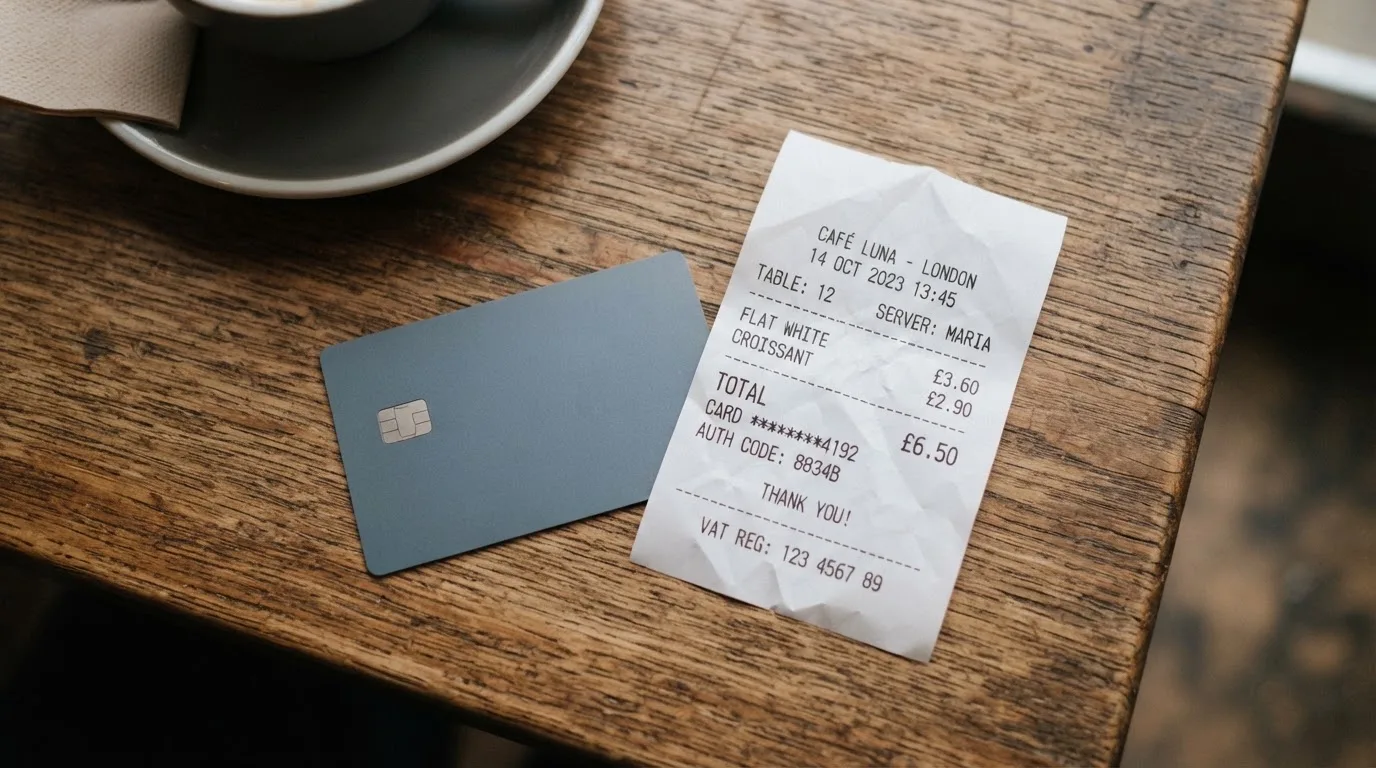
- A 50 USD grocery payment from your USD card, paid in USD. Crypto conversion has already happened when you loaded the card. The card charges the default-currency transaction fee, which is waived, so the cost of paying is just the 1% conversion you paid at load. Net: 1% on the loaded amount.
- A 50 USD online subscription paid in EUR to a European merchant. You paid a 1% conversion fee at load, and because the transaction settles in EUR, a 1.2% non-default-currency fee applies. You pay both fees, plus the merchant’s own FX margin.
- A 100 USD ATM withdrawal with the USD card, while your monthly ATM total is below 10,000 USD. You paid a 1% conversion fee to load the card. The ATM charges 2%. If your monthly ATM total exceeds 10,000 USD, the ATM fee becomes 3%.
The RedotPay Pro paid plan is 12.90 USD per month or 129.00 USD per year; the annual plan includes ATM fee waivers. Whether that pays for itself depends on how much you load and how often you hit the ATM.
How to top up the RedotPay card
Top-up is the cleanest part of the product. The two paths are: an on-chain crypto deposit, or buying crypto with a credit card inside the app. The on-chain route is what most users will use.
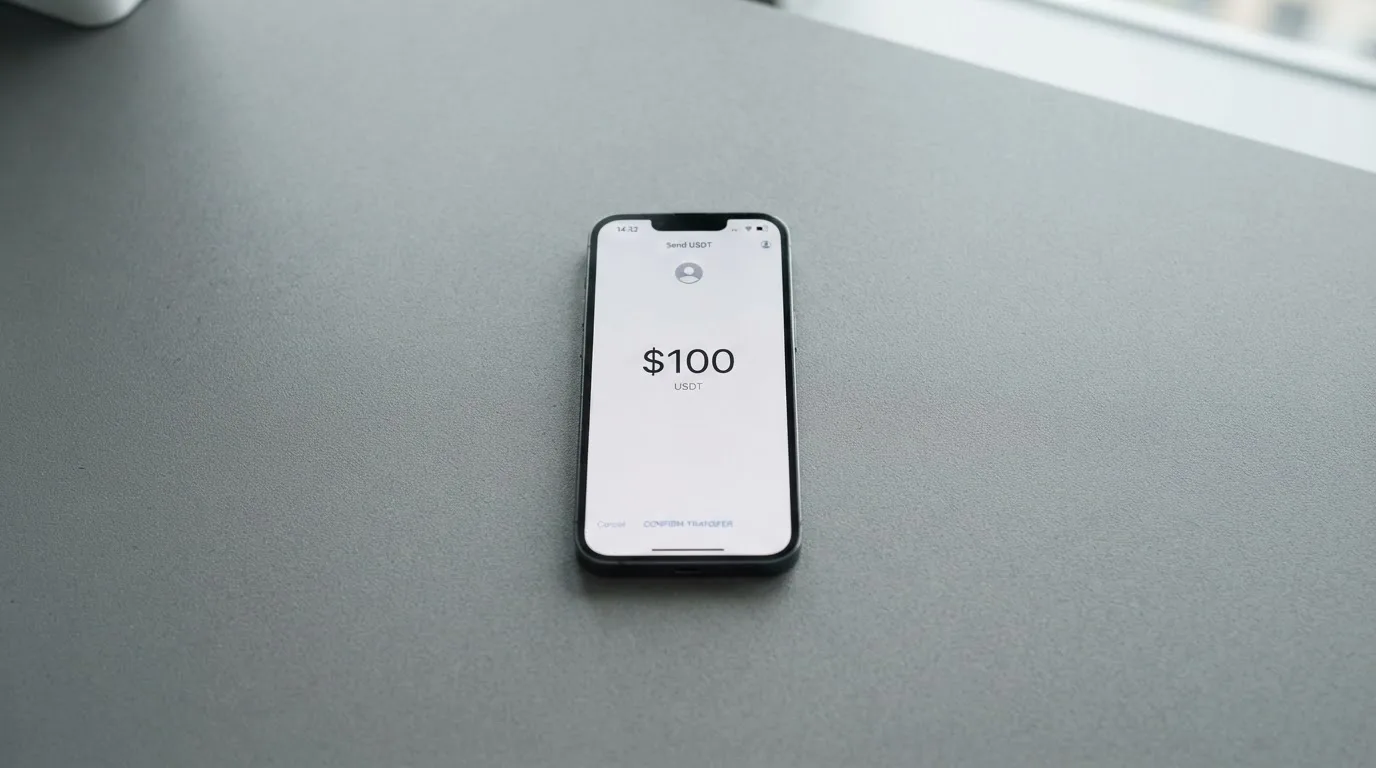
The minimum on-chain deposit is 1 USDT on TRC20 (after network fees), and the supported assets include USDT, USDC and ETH — though the exact set depends on the region and the networks the Deposit page shows at the time. Each asset is only accepted on the networks RedotPay lists on that page, and the page can change. Transfers from a credit or debit card in the app cost 3% with a 1 USD minimum, which is fine for small one-offs but a poor deal for any regular top-up.
A few things to be careful of here. The network fee (gas, bandwidth, energy) is paid by the sender and counts toward the minimum, so on a busy Ethereum day the network fee alone can be larger than a 1 USDT minimum. Sending a USDT transfer to a USDC address, or to a network RedotPay doesn’t support, can mean the funds are lost — blockchain transfers are irreversible. The address and network check on the Deposit page is the single most important part of the flow; double-check before you confirm. Withdrawal limits from the card are not stated on the public pages I read.
Paying with the RedotPay card every day
In normal use the card behaves the way a Visa debit should. The virtual card supports Apple Pay and Google Pay integration, and a tokenised version of the physical card works the same way. Tap, swipe, insert and online checkout all work; the card can be set to online-only, POS-only, or both; and the currency toggles in the app let you choose which currencies the card will accept (a disabled currency gets declined).
The controls on the card are standard for the category: per-card limits, online / POS / ATM toggles, and currency toggles. There is no formal list of blocked merchant categories published on the public pages — RedotPay says “Some individual merchants may have their own internal policies regarding prepaid or crypto cards” — so the practical block list is the merchant’s, not the issuer’s. Illegal use is banned. The card is not usable in sanctioned countries. The welcome reward is 5 USD, usable on spending only, valid for 30 days. The card page lists “Points & Rewards” and “RedotPay Pro” as separate programmes; no card cashback rate is stated.
The iOS app has a 4.75 rating from 4,312 ratings on the App Store, last updated 28 September 2026, read 20 October 2026. The Android rating is not stated on the public App Store-equivalent page I looked at. These ratings are a useful proxy for day-to-day stability — and a 4.75 is high for a fintech app.
What can go wrong with the RedotPay card
The risk picture has two parts: the publicly known complaints, and the structural risks that come from how the card is set up.
The published complaints fall into a familiar pattern for crypto cards. RedotPay’s own help pages flag freezes linked to P2P orders and dispute handling. User reports on Trustpilot (2026) describe KYC-related holds on funds, support escalations that go unanswered for days, and tight daily payment limits. A review-analysis site (a third party, not confirmed by RedotPay) calls freezes tied to source-of-funds reviews that last weeks the most serious complaint in the current feedback. The Trustpilot page shows 778 reviews in 2026; the themes are stable across them.
The structural risks are about who is actually behind the card. The Singapore terms name “Redotpay Technology Pte. Ltd.” as the programme manager, and the actual issuer is described only as a “BIN Sponsor” — a name that is not stated on the public pages. The App Store seller is listed as “Red Dot Technology Limited”. The website footer carries a “N° 144 en el Registro de PSAV de la CNV (República Argentina)” line, which is an Argentine registration reference rather than a card-issuer licence. The site claims 9 million-plus users; the issuer of those users’ cards is not named on the public pages I could see.
A few specific risks follow from that. The Singapore terms say fees are non-refundable (clause 16.3) and let RedotPay freeze accounts; “insurance/safeguarding and 2FA” is not stated, so the protections on the card balance are not spelled out on the public pages. The withdrawal rules and the dispute process are not stated. Customer support hours and channels are not stated. The delivery-restricted list and the card-issuance-restricted list both moved in 2026, so the rules are not fixed in time — re-check before any application.
A note on what is and isn’t covered. Prepaid-card coverage for chargebacks and reversals is generally thinner than credit-card coverage, and you should not assume chargeback rights that aren’t stated. The frozen-funds pattern in user reports is a real risk: if your account is held for review, the wait time is not stated and the resolution channel is not stated, and the fee you paid for the physical card is not refundable.
What to take instead
A review is more useful with a comparison, so here is how RedotPay stacks up against three commonly-named alternatives. The numbers are the alternatives’ own; RedotPay’s column is what we have already covered.
| Card | Score | Card form | Network & currency | Issuance & ongoing | Cashback / rewards | Top-up & funding |
|---|---|---|---|---|---|---|
| RedotPay | 6.9 / 10 | Virtual + physical | Visa; USD and HKD cards | Virtual 10 USD; physical 100 USD; no monthly fee; ATM 2% | 5 USD welcome reward (spending only, 30 days); no stated card cashback | On-chain USDT, USDC, ETH; credit/debit card top-up 3% (min 1 USD) |
| Bitpanda | 6.5 / 10 | Physical | Visa debit; EUR only; one active card at a time | First shipment free; reissue 5.90 EUR; each additional card 10 EUR | Up to 2% cashback on crypto spending (page summary); body says 1% (unreconciled) | Spends from main asset (crypto, metals or EUR) auto-converted at payment |
| Wirex | 6.7 / 10 | Virtual + physical; metal card | Visa (Signature on metal); or Visa/Mastercard elsewhere | Card issuance free in UK, EEA, APAC, SG, AU and “Other”; metal 45 GBP / 45 EUR delivery; one-off 30 GBP admin fee for terms-of-service violations | Cryptoback in WXT: Standard 0.5%, Premium 3%, Elite up to 8% | Linked to Wirex account; cash, stablecoins, cryptocurrencies; SEPA / Faster Payments / ACH / PIX |
| COCA | 6.4 / 10 | Virtual + physical | Visa; currency not stated | Fees disclosed at the time of access | Up to 8% cashback in stablecoins; up to 50% on subscriptions; Basic tier automatic; higher tiers need $COCA held | Assets transferred to a third-party linked smart contract wallet for fiat payments |
A few quick reads. Bitpanda is the cleaner European choice if you live in the euro area and your spending currency is the euro, but the EUR-only card and the residence rule rule out most non-European readers. Wirex has a richer cashback tier system (up to 8% in WXT on Elite and on the metal card), a wider list of supported geographies, and free card issuance in many regions, but its FX fee is hidden in “market-leading exchange rates” and Singapore residents can’t withdraw cash. COCA’s cashback rates are eye-catching — up to 8% on card spend, up to 50% on subscriptions — but most of its fees are “disclosed at the time of access” rather than published, which is harder to plan around than a published table.
If you mainly want a card that takes USDT cheaply, RedotPay’s published 1% conversion is more transparent than Wirex’s app-only quote. If you mainly want cashback, Wirex’s WXT rates and COCA’s stablecoin cashback are the bigger numbers. If you mainly want a euro-area card for euro spending, Bitpanda is the more obvious fit.
Who I would recommend the RedotPay card to
Putting the pieces together, the picture is a card that does the everyday job well for a particular reader. The total comes out at 6.9 / 10, dragged down by the unnamed issuer and the KYC-freeze pattern in user reports, and lifted by the everyday-usability score of 9 / 10 and the clean on-chain top-up flow.
The card suits you if you live outside the restricted list (which excludes the US, large parts of Eastern Europe and the Balkans, several sanctioned jurisdictions, and the card-issuance-restricted places added in 2026), hold stablecoins or another supported crypto, want a card that can sit in Apple Pay or Google Pay in minutes, and are comfortable with the 1% conversion plus 1.2% non-default-currency fees. It also suits you if you are willing to pay 100 USD for a physical card and treat that as sunk cost, because the issuance fee is not refundable.
The card does not suit you if you are a US citizen or resident, live in one of the KYC-restricted places, want a clearly identified bank issuer behind your card, expect cashback as a core benefit, or need a card that delivers to Egypt, Palestine or Tunisia. It is also a poor fit if you need the strongest possible chargeback and dispute protections, or if you want a card whose fee table and processing time are stated in full on the public pages — RedotPay is more transparent than some crypto cards but less than a regulated bank.
The honest summary is that the card is a useful tool in the right situation, with a cost structure you can plan around and a reliability score I would not ignore. The everyday-use side of the product is well above average for the category, and the structural side of the product is where the questions sit.
Frequently asked questions
What is the RedotPay card?
A Visa debit card issued under a programme managed by Redotpay Technology Pte. Ltd. and run on an unnamed “BIN Sponsor” issuer. It comes as a USD card and an HKD card, both virtual and physical, and is funded by converting stablecoin or other crypto balances held in the RedotPay app into a spendable card balance. The card supports Apple Pay and Google Pay.
How does the RedotPay card work?
You load the card balance from a crypto deposit on a supported network (USDT on TRC20 from 1 USDT, plus USDC and ETH where supported) or by buying crypto with a credit card in the app. The card then pays from that loaded balance, with a 1% crypto conversion fee taken at load. Payments in the card’s default currency are free of an extra transaction fee; payments in another currency cost 1.2% on top.
Is RedotPay a bank?
No. The Singapore terms describe Redotpay Technology Pte. Ltd. as the programme manager; the actual issuer of the card is referred to only as a “BIN Sponsor” on the public pages. The website footer carries an Argentine PSAV registration, not a banking licence. Treat RedotPay as a programme manager, not a bank.
Who owns RedotPay?
The App Store seller is listed as “Red Dot Technology Limited”; the Singapore terms name “Redotpay Technology Pte. Ltd.” as the programme manager. Ownership above the named entities is not stated on the public pages I could see.
Is the RedotPay card available in the United States?
No. The United States is on the KYC “Unsupported Countries/Regions” list, which means identity verification and service use are not available to US citizens. The card-issuance list adds India, Indonesia, Morocco, Nepal, Singapore and Turkey, so residents of those places cannot get either a virtual or a physical card.
Does the RedotPay card require KYC?
Yes. You need an original physical ID, valid for at least three months from the date of submission, with both sides if anything is on the back, plus your full current address. Extra documents (source of funds, address proof) are only requested if the system has a reason to ask. The minimum age is 18.
How do I top up the RedotPay card?
Send crypto on-chain to the address the Deposit page shows for the asset and network you chose, or buy crypto with a credit or debit card inside the app. On-chain deposits are free to the card balance; the credit/debit card top-up is 3% with a 1 USD minimum. Always check the network the Deposit page shows before sending — sending on the wrong network can lose the funds.
How do I add the RedotPay card to Apple Wallet or Google Pay?
Open the Card section in the app, choose the virtual or physical card, and follow the tokenisation flow for Apple Pay or Google Pay. The card page describes Apple Pay / Google Pay integration for the virtual card. Once tokenised, the card number is replaced by a device-specific account number stored in the phone’s Secure Element.
Where can I use the RedotPay card?
Anywhere Visa is accepted, including online checkout, point-of-sale, and ATMs worldwide (subject to local availability). The card is not usable in sanctioned countries, and the merchant may decline the card if its own policy excludes prepaid or crypto-funded cards. Some merchant categories carry an extra 1.5% fee — Gulf Health Counsel, Free Fire, PUBG Mobile, Brawl Stars, eFootball, Facebook Ads and Discord.
Is the RedotPay card safe?
The published safeguards include per-card limits, online / POS / ATM toggles, currency toggles, and tokenised mobile wallet support. The Singapore terms let RedotPay freeze accounts and say fees are non-refundable. Insurance or safeguarding of the card balance, the dispute process, and the resolution timeline are not stated on the public pages. Trustpilot user reports (778 reviews in 2026) flag KYC-related holds and slow support as recurring themes, which is the main reason the reliability score is the lowest in the table.
App and neobank cards – cryptocardpedia.com
Content created by the «cryptocardpedia.com» team