SafePal gives crypto users a Swiss IBAN and a virtual Mastercard — but the region list is empty, the issuer is unnamed, and 2026 brought a data breach
 Available in US
The SafePal card is not really a bank card in the ordinary sense. It is a virtual Mastercard that spends out of a Swiss IBAN account opened for you through Fiat24, with crypto as the way you usually fill that account. That is the whole pitch, and it is a genuinely interesting one for anyone who holds stablecoins and wants ordinary-looking payment details rather than a wallet address. I have been through SafePal’s own pages with a fine comb, compared the fee schedule against the alternatives, and read the complaints. My score is 6.2 out of 10. Here is why, in the order I would explain it to a friend.
The conditions described here are current as of October 28, 2026.
The score, and who this card is for
SafePal scores 6.2 out of 10. The shape of that number matters more than the number itself: the good parts are genuinely good, the weak parts are genuinely weak, and they do not cancel out.
| Criterion | Mark | Why |
|---|---|---|
| Who can get it | 5 / 10 | Citizens of supported regions living in supported areas, but the region list was empty when I fetched it |
| Cost | 8 / 10 | No creation or management fee, 0% standard top-up, 1% Mastercard fee on non-USD settlement, 1 USD/EUR/CHF refund processing |
| Top-up options | 9 / 10 | Crypto from 40+ blockchains, converted to USDC by default, 10 USDC activation on Arbitrum |
| Reliability and complaints | 4 / 10 | Swiss IBAN via Fiat24 with no issuer named, a 2026 customer data breach, Trustpilot at 3.1 from 5 on 394 reviews, complaints about withdrawals that never arrived |
| Everyday use | 5 / 10 | Virtual Mastercard with Apple Pay, Google Pay, Samsung Pay and PayPal; no physical card named, unofficial ATM data conflicting |
| Total | 6.2 / 10 | A strong top-up story and honest fees, held back by an opaque eligibility page and a thin safety margin |
Who it suits: you already hold stablecoins, you want to spend them like a normal balance, and a Swiss IBAN is part of what you are after. You are comfortable doing identity checks with a Swiss partner, and you understand that this is a euro-denominated wallet wrapped around a Mastercard number rather than a full current account with a bank behind it.
Who it does not suit: you need a physical card in the post, you need to know exactly which countries are open before you commit, or you want a named card issuer and a chargeback process the card itself documents. If your money needs to be somewhere you can rely on for rent and groceries, the complaints I read should make you think twice.
And one audience note that the score hides: if you are an existing SafePal wallet owner who wants a Swiss IBAN, this is aimed squarely at you. If you came to crypto through some other wallet and have no reason to be inside SafePal’s ecosystem, the IBAN is the only thing here that is hard to get elsewhere.
Will they give you the card
The stated rule is short and unhelpful: “Citizens of supported regions who live in supported areas”. That is the entire eligibility sentence. The list of regions is supposed to live on a page under the bank section, headed “Supported regions for SafePal Fiat gateway” — and when that page was fetched it showed no names at all. Only the limits were visible: monthly limits of $100,000 with Mastercard, or $1,000 without.
I want to be plain about what that means, because it is the kind of small thing that decides whether you waste a week. The card does not publish its own eligibility list. You cannot look at a page and say yes or no. The only names I found were on the region page heading, and there were none. If you live somewhere unusual, plan on asking support directly rather than assuming. I would treat “my country is supported” as something to confirm before you send a passport anywhere, not as something you can read off a list.
Two things you should know before you start, because they are not things you can fix later:
- Nationality and residence are both checked. The rule says citizens of supported regions who live in supported areas. That is two conditions, not one. Living somewhere open does not help if your passport is from a restricted place.
- KYC is not optional. It is required by licence and regulator, and it is handled by Fiat24, not by SafePal. There are no credit checks and no staking requirement — you do not need to lock anything to qualify.
How to get it
The onboarding is KYC through Fiat24, and the card that comes out is a virtual Mastercard. Here is what the process actually involves, step by step, as the pages describe it.
- Verify email and phone. Standard first step, done inside the Fiat24 flow.
- Check your address against your location. This one surprises people. The address check requires a residential address within 2 km of your current location, and the app needs permission to access your device location. If you have just moved, or you are travelling, or your address is formatted in a way the system reads differently, this is where it can stall.
- Scan your passport in the ReadID Ready app. The passport is the only named document. Not a driving licence, not a national ID card — the pages name the passport.
- Wait for limits to be assigned. Your account gets limits by region: $100,000 or $1,000 per month.
Beyond that, the details are not stated. Processing time is not stated. The minimum age is not stated. The reasons a verification gets rejected are not stated. That is a real gap, and it is the kind of gap that turns a fifteen-minute signup into a two-week mystery if anything goes wrong.
Two practical notes. You need the SafePal app at version 4.5.0 or later, and you need 0.0001 ETH on Arbitrum to pay for the activation transaction — a negligible amount, but you cannot do it with an empty wallet. The card is virtual. Spending limits are given in EUR, because the underlying Swiss Fiat24 account is denominated in euro.
On whether a physical card exists: not stated. Only a virtual Mastercard is described, and there is no physical-card article anywhere in the Banking Gateway help section. Unofficial sources are worth hearing but flagging as such — some suggest it is virtual only with no physical card. Neither is confirmed by SafePal. Treat “virtual only” as the working assumption, and if a physical card is what you are really after, ask before you spend time on the KYC.
Fees: what it really costs
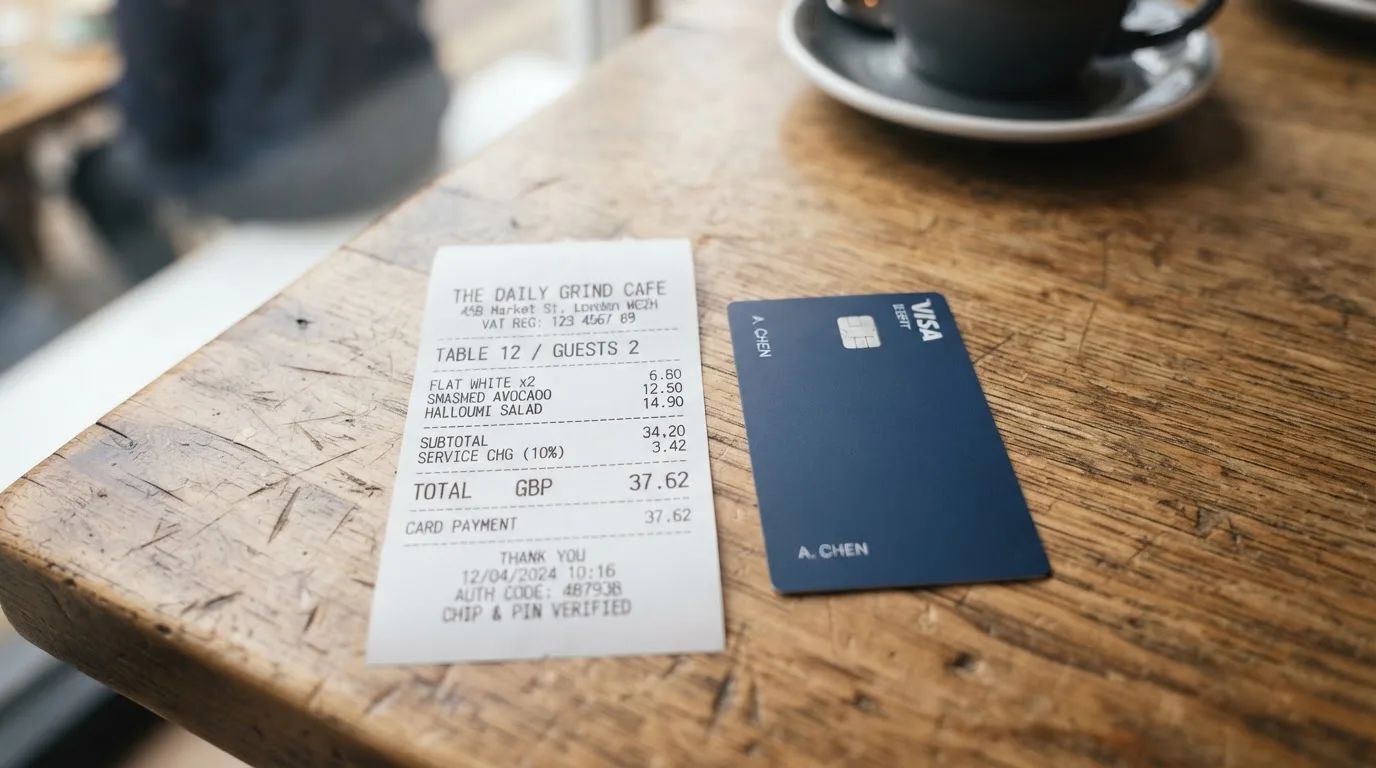
This is the strongest part of the card, and I want to show you the whole table rather than the highlights, because the hidden lines are the ones that decide whether a card is cheap for you.
| Fee or limit | Value |
|---|---|
| Account creation | No fee |
| Account management | No fee |
| Card issuance | Not stated |
| Standard top-up | 0% |
| Crypto top-up on top tier | From 0.4% |
| Mastercard non-USD settlement | 1% FX fee |
| Swaps | Include a spread, not quantified |
| Refund processing | 1 USD / EUR / CHF / 7 CNH per refund |
| ATM withdrawal | Not stated |
| Contactless limit | 1,600 EUR/day |
| Other payment methods | 5,000 EUR/day |
| Monthly limit | Equal to the transaction limit |
| Regional monthly limits | $100,000 with Mastercard, $1,000 without |
The structure is simple and, for most people, genuinely good. There is nothing to pay for holding the account. Standard top-ups are free. If you spend in a currency you have switched on, there is no exchange fee at all — the pages state zero FX fees for EUR, CHF, USD and CNY. That last point is the one most people miss: you enable the currencies you actually use, and payments in an enabled currency skip the conversion charge. If you do not enable it, the default currency is used instead and you are back to paying the 1%.
There is one figure that appears in three different guises across the pages, and I would rather you saw it than discovered it later. The top-up fee is 0% standard. The bank page says crypto top-up “as low as 0.4%” on the top tier. The tier article cites a standard 1% deposit rate. Same product, three numbers, three pages. Read the fee article that applies to your tier at the moment you are about to transfer, not a marketing page from last month.
Now let me walk three everyday payments through the table, because that is where fees stop being abstract.
Coffee at 4 EUR, paid by tapping. If you have EUR enabled, no exchange fee. If you have not, the default currency is used and you may pay the 1% Mastercard fee on non-USD settlement. Either way you are inside the 1,600 EUR/day contactless limit, so this clears without thinking about it. Cost: zero, or 1%.
A 300 EUR monthly software subscription. Same logic, and the daily limit stops mattering because 300 EUR is well inside the 5,000 EUR/day figure for other payment methods. This is the kind of payment the card is actually good at. Cost: zero, or 1% if your currency is not enabled.
A holiday in a country whose currency you did not enable. Here the 1% Mastercard fee on non-USD settlement is the number that matters, and the spread inside any swap is the number the pages decline to quantify. So the real cost of spending abroad is not 1% — it is 1% plus an unnamed spread, plus whatever the two networks charge you on the way. That is not a criticism of SafePal specifically; it is how FX works. But it means “0% fees” and “no account fee” do not mean a holiday is free.
A last line for anyone who reads “not stated” as “zero”: ATM withdrawals are not stated, card issuance is not stated, and refund processing is 1 USD/EUR/CHF/7 CNH per refund. If a purchase is reversed, you pay a unit of currency to get your own money back. That is unusual and worth knowing before it happens. Unofficial directories list ATM withdrawals as available with no fee or limit given, but others say there is no physical card at all, so the sources contradict each other. Neither confirms anything for you. Ask.
How to top up the card
Topping up is where this card earns its 9 out of 10, and if you are coming from crypto it is the reason to stay interested.
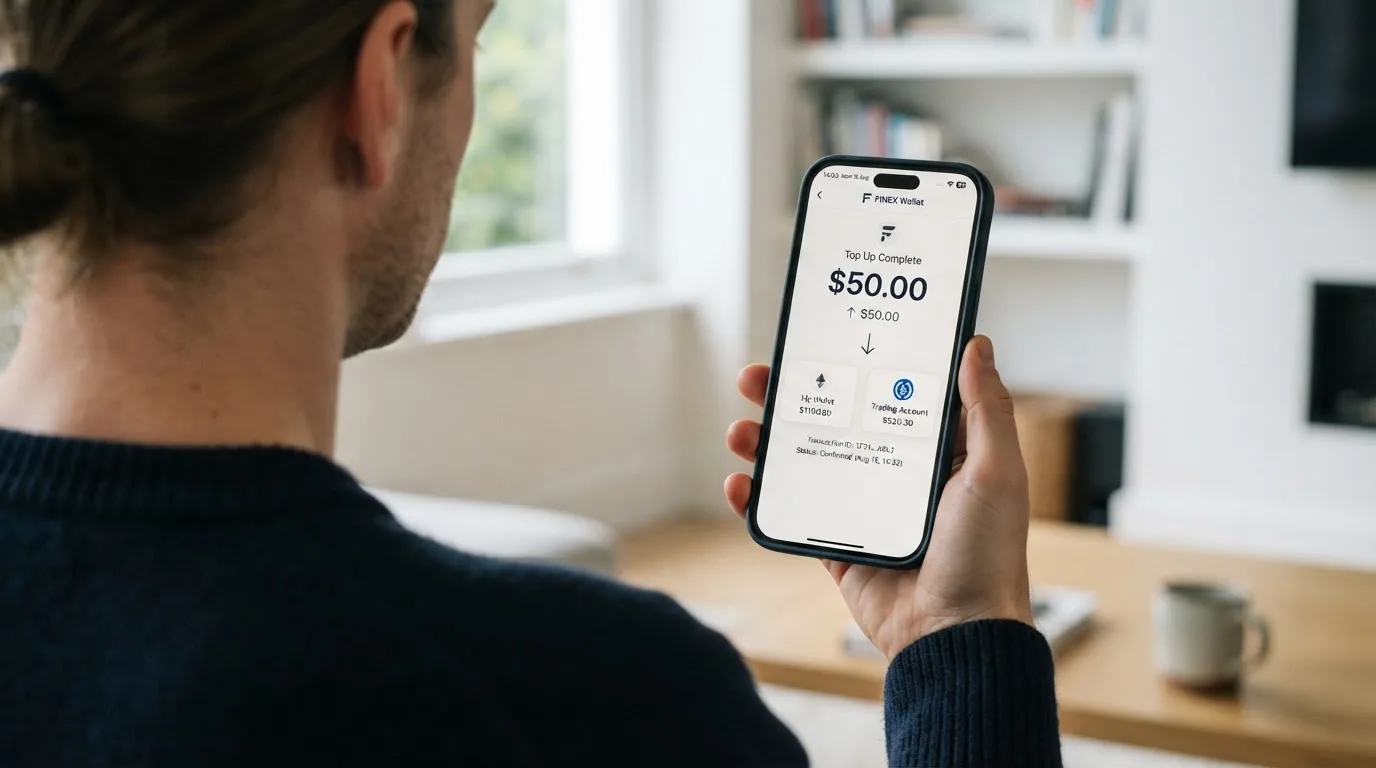
Crypto arrives from more than 40 blockchains. By default it is converted to USDC; you can also choose to keep it as fiat. Transactions settle on Arbitrum. That combination — many networks in, Arbitrum for the card activation, USDC as the resting balance — is a well-built path, and it is much less fragile than a card that only accepts one token on one chain.
The fees repeat the pattern from the previous section, and I will not pretend they are different. Standard top-up is 0%. The bank page says fiat deposit fees from 0.6% and crypto top-up from 0.4% on the top tier. The tier article cites a standard 1% deposit rate. There is a zero-fee waiver on on-ramp and deposit while SafePal’s programme runs — but the terms of that waiver can change, so treat it as a promotion, not a feature.
Activating the Mastercard specifically requires a deposit of 10 USDC on Arbitrum, plus ETH for the gas. That is the one fixed upfront cost I can point to, and it comes from a help article dated 2026-07-25, so it is recent. The sender pays the blockchain gas; SafePal does not charge you for it, the network does.
Three practical things about moving money out:
- Transfers between IBAN accounts are free. Moving money between your own accounts costs nothing.
- Transfers to external banks carry no SafePal or Fiat24 fee. Other banks may charge, which is their business and not theirs.
- Withdrawing back to crypto, and the balance when you close an account: not stated. This is a genuine gap and I would want it answered before I committed a large balance, because “what happens to my money if I leave” is a fair question to ask of any gateway account.
One timing note that is easy to miss: in March 2026 SafePal’s blog said the fiat on-ramp is disabled until further notice. Crypto on-ramps via third parties like MoonPay still work. So the “from fiat, from crypto” round trip I have described is not currently symmetric.
Paying with it every day
Everyday use is where the score drops to 5, and the reason is that a virtual card is a narrower tool than most people assume.
Supported: Apple Pay, Google Pay, Samsung Pay and PayPal. That is a good list — it means the card lives in your phone wallet and you rarely touch the number. You can freeze and unfreeze the card in the app, view transactions there, and customise your own spending limit. Support runs through a dedicated channel specifically to counter impersonation, which is a small thing that shows someone thought about the attack.
Not supported, or not stated: no physical card described. No list of blocked merchants. And here is the thing that trips people up most often. A payment card number starts with an issuer identification number of six or eight digits, and any shop can look that up and see which institution and country issued it. If the issuer country differs from your billing address, some merchants apply extra scrutiny, and some decline prepaid or foreign-issued cards outright. A Swiss-issued virtual card can look “foreign” in a shop in another country, and address verification is generally unavailable for foreign-issued cards, which causes declines. None of that is SafePal’s fault, and none of it is avoidable by you — but it is a predictable source of “card declined” moments that has nothing to do with whether you have money.
There are also category codes. Gambling sits in MCC 7995, and many issuers block it by policy rather than by law, with the blocked list varying by issuer. SafePal does not publish its blocked-merchant list, so you cannot check in advance.
Refunds and problems: each refund carries a processing fee of 1 USD/EUR/CHF/7 CNH. Chargeback terms are not stated. Failed registrations or banned accounts go to Fiat24 support, not SafePal — a distinction worth internalising, because it tells you which company you are actually dealing with at the moment things go wrong.
One more: a declined authorisation can leave a hold on your funds for several days, typically up to seven. That is normal for card payments, but on a balance you are managing yourself it is worth knowing.
There is no cashback. What there is instead is a points system: referral commission of up to 40% of referred top-up fees, and tier privileges tied to deposits, referrals and staking $SFP. The staking route comes with a 90-day lock and no early redemption — so it is not money you can get back on demand, and I would read that word carefully before you do it.
On the app itself: iPhone and iPad, iOS 15.0 and later, version 4.11.12 from October 12. The App Store rating is 4.7 from 5 across 17K ratings, read on 2026-10-20. Be aware that is the wallet rating, not the card rating — I could not find a card-specific score, and the Google Play rating was not read. The app interface includes Russian alongside English and twelve other languages.
What can go wrong
This is the section that pulls the reliability mark down to 4, and I would not skip it.
The 2026 data breach. SafePal disclosed a data breach exposing order information of roughly 39,798 customers. According to SafePal, no seed phrases, keys, card numbers or ID documents were exposed. In early July, before that statement, users reported phishing attempts using accurate personal data. The gap between an attacker holding your details and an attacker calling you is not large.
Complaints about money that never arrived. Trustpilot for the company reads 3.1 out of 5 from 394 reviews: 57% five-star, 37% one-star, and the company answers 93% of negative reviews. Reading the individual reports: between February and September 2026, swaps and withdrawals shown as completed in the interface but not actually arriving. In May 2026, a Fiat24 refund arrived with about 20% missing, with the user told to contact Fiat24. Between July and September 2026, phishing and scam calls using order details. Between June and July 2026, email-only support with copy-paste replies. No review mentions the card or the IBAN directly, and it is worth saying that plainly: the card product is not the thing people are complaining about. The gateway is.
The anonymity problem is not what the marketing implies. The SafePal wallet is non-custodial per SafePal’s own replies on Trustpilot, but the KYC and the account are run by Fiat24 in Switzerland. So the crypto side and the money side have different custody models, and the money side has your identity on it. That is the arrangement; it is not a flaw, but it is not what “self-custodial” means to most people who read the word.
Unnamed issuer, unnamed insurance. The card issuer is not named on the pages I read. Insurance is not stated. Support hours are not stated. An electronic money institution must safeguard customer funds by segregating them or insuring them, but safeguarded funds are not bank deposits and may not sit under a deposit guarantee scheme — which is a distinction that matters a great deal on the day something goes wrong.
Programme risk is real in this category. Visa and Mastercard do not issue crypto cards to consumers themselves; they license issuers and can suspend a programme. Visa terminated its global agreements with FTX on 13 November 2022 and the FTX US debit card was wound down. WaveCrest, a Visa issuer that supplied crypto card brands, was suspended by Visa in Europe in 2018, closing all WaveCrest-issued Visa programmes. Closures follow a pattern: a notice period, then loading and spending stop, then you are asked to withdraw. I am not saying SafePal is heading that way. I am saying this is what happens in this category, and a gateway account is worth keeping thin.
A naming detail worth one sentence. At launch in March 2024, press coverage called the card Visa. SafePal’s current pages say Mastercard. If you have been reading older articles, that is why they sound different.
What to take instead
If SafePal’s Swiss IBAN is the draw, fine. If you mainly want a card that spends straight out of crypto without an IBAN in the middle, there are three I would look at, each scoring better than SafePal’s 6.2.
| Alternative | Score | Card | Headline cost | Notable difference |
|---|---|---|---|---|
| MetaMask | 7.1 / 10 | Mastercard, virtual instantly, metal pre-orderable | Virtual free, no annual or maintenance fee; metal $199/year | Open sign-up in 45 listed countries and territories; 1% cashback on virtual, 3% headline on metal with 3% capped at the first $10,000 then 1% |
| KAST | 6.1 / 10 | Visa — virtual and physical, up to 10 cards | Standard $0/year, Premium $1,000/year, Private $10,000/year | Stablecoin top-up 0%, USD spend 0%, non-USD FX 0.5%–1.75% by country |
| Zeal | 6.1 / 10 | Visa, virtual, addable to Apple Pay | Not stated, no fee schedule published | No additional FX fee, conversion at the Visa wholesale rate; up to 4% cashback in GNO if held in the card Safe |
MetaMask is the strongest of the three at 7.1, and the eligibility picture is clearer than SafePal’s: sign-up is open in 45 listed countries and territories — Andorra, Argentina, Brazil, Canada, Mexico, Germany, France, Spain, Uruguay among them — with other regions on a waitlist. Proof of residency is required, and the citizenship rule is not stated. US and UK sign-ups were temporarily closed per the FAQ. Spending directly from a connected wallet with no FX surcharge is a cleaner model than converting to a balance first.
KAST is the only one of the three with a physical card I can point to, up to ten cards per user, Visa across Standard, Premium and Private tiers. Its residency rules are the strictest: if you live in a supported country but hold ID from a restricted region, you may still fail KYC; VPN does not bypass it. Fees are the most transparent of the group — 0% stablecoin top-up, 0% USD spend, non-USD FX between 0.5% and 1.75% depending on where you live and which card programme you are on, and 0.10 USD on non-USD transactions under 25 USD. Cashback runs 1.5% to 3% of monthly spend depending on tier.
Zeal spends in 150+ countries and charges no additional FX fee, converting at the Visa wholesale rate — though Gnosis Pay fees such as ATM may still apply. Its card programme is live in the EU, UK, Brazil, Colombia, Mexico, Japan, Singapore, the Philippines, Indonesia and Thailand. The catch is disclosure: no fee schedule is published on its site or App Store, and the exact coins accepted are not stated.
One note on what all crypto cards share. MiCA took legal effect in June 2023; its rules on stablecoins applied from 30 June 2024 and the remaining provisions, including crypto-asset service provider rules, from 30 December 2024. Transitional arrangements ran until 1 July 2026 or until a provider got or was refused authorisation, whichever came first. And a card is regulated separately from the crypto side, which is why a crypto card often depends on two licences. If you want to check a provider rather than take my word, ESMA keeps an interim register of authorised providers.
Who I would recommend it to
I would recommend SafePal to someone specific, and I would not recommend it to everyone.
Try it if: you already sit on stablecoins across several chains, you want a Swiss IBAN more than you want a fancy metal card, you are comfortable with KYC through a Swiss partner, and you will spend inside the currencies you have switched on rather than converting on the fly. For that person, the fee structure is genuinely good — no account fee, free standard top-ups, zero FX on enabled currencies — and 40+ chains in with USDC out is a well-built route.
Leave it if: you need a physical card, you need to know your country is supported before you start, you want a named issuer and a documented chargeback process, or this money has to be somewhere you can rely on. The empty region list, the unnamed issuer, the unstated insurance and the withdrawal complaints are not individually alarming. Together, they are a thinner margin than I would want under money I cannot replace.
And a caution for everyone reading this: none of this is tax or legal advice, and I am not going to pretend otherwise. What I will say is a fact about how the tax works in the US — digital assets are treated as property, so exchanging them for goods, services or dollars generally produces a taxable gain or loss, measured in local currency at fair market value on the date of the transaction. Which means each card payment funded from crypto can be its own disposal. Whatever country you are in, that is worth checking against a professional rather than a review page.
Frequently asked questions
What is the SafePal card?
It is a virtual Mastercard debit card that spends out of a Swiss IBAN account opened through Fiat24, a Swiss company handling compliance and licensing. You normally fill that account with crypto, which is converted to USDC by default or held as fiat. It is not a bank account with a named bank behind it, and SafePal does not name the card issuer on its public pages. No physical card is described.
How does the SafePal card work?
You convert or transfer crypto from more than 40 blockchains, it lands as USDC or fiat in a Swiss IBAN account, and the virtual Mastercard spends that balance. The card can be frozen and unfrozen in the app, transactions can be viewed there, and you can set your own spending limit. Activating the Mastercard needs a deposit of 10 USDC on Arbitrum plus ETH for gas. It is a virtual Mastercard debit card.
Is SafePal a bank?
Not a bank — SafePal is a crypto wallet and card programme manager. The money side runs through Fiat24 in Switzerland, which holds the IBAN and does the KYC. SafePal is the brand and the app you interact with; Fiat24 is the regulated partner behind the account. That distinction matters when something breaks, because account problems go to Fiat24 support rather than SafePal’s own desk.
Who owns SafePal, and who issues the card?
SafePal is the crypto brand behind the app, the wallet and the card programme. The Swiss IBAN and fiat gateway come from Fiat24, which does the identity checks and runs the account. The card issuer is not named on the public pages I read — that is a real gap. At launch in March 2024 press coverage called the card a Visa; SafePal’s current pages say Mastercard, which is why older articles disagree.
Does the SafePal card require KYC?
Yes, and it is required by licence and regulator, not as a discretionary choice. KYC is performed by Fiat24: email and phone verification, an address check requiring a residential address within 2 km of your current location with location access enabled, and a passport scan in the ReadID Ready app. The passport is the only document named. No credit checks and no staking are required, but processing time and rejection reasons are not stated.
How much does the SafePal card cost?
There is no account creation or management fee, and the standard top-up fee is 0%. The Mastercard fee on non-USD settlement is 1%. Swaps include a spread that is not quantified. Refund processing costs 1 USD/EUR/CHF/7 CNH per refund. One figure appears three ways across the pages — 0% standard, 0.4% crypto top-up on top tier, and a 1% standard deposit rate — so check the fee article for your tier before transferring.
Can I use the SafePal card in my country?
That depends on which country and which passport you hold. Eligibility is stated as “citizens of supported regions who live in supported areas”, and the regions page showed no country names when it was fetched. Only the limits were visible: $100,000 a month with Mastercard, $1,000 without. Before sending a passport, ask support directly whether your country of residence and your nationality both qualify, because both are conditions.
How do I top up the SafePal card?
You send crypto from any of more than 40 blockchains, and it is converted to USDC by default or kept as fiat, with transactions on Arbitrum. Standard top-up is 0%, though the pages also quote from 0.4% crypto top-up on the top tier and a 1% standard deposit rate. The sender pays the blockchain gas. Fiat deposits start from 0.6%, and SafePal’s blog said in March 2026 that the fiat on-ramp is disabled until further notice.
Is the SafePal card safe?
SafePal disclosed a 2026 data breach affecting order information of about 39,798 customers, saying no seed phrases, keys, card numbers or ID were exposed, and users reported phishing using accurate personal data before that statement. Trustpilot reads 3.1 from 5 on 394 reviews, with complaints about completed withdrawals that never arrived. The wallet is non-custodial; the account and KYC sit with Fiat24 in Switzerland. Insurance is not stated and the issuer is not named.
What are the limits and where can I spend?
Contactless spending is 1,600 EUR a day and other payment methods 5,000 EUR a day, with the monthly limit equal to the transaction limit. The regions page also cites $100,000 a month with Mastercard and $1,000 without. You can spend wherever Apple Pay, Google Pay, Samsung Pay and PayPal are accepted, since the card is virtual. A blocked-merchant list is not published, so you cannot check gambling or similar categories in advance.
Wallet cards – cryptocardpedia.com
Content created by the «cryptocardpedia.com» team