A Telegram-only virtual Visa that skips KYC and only speaks one network
 Available in US
Tegro is not a bank and not quite a crypto exchange either. It is an ordering and support interface — a Telegram bot — in front of a virtual Visa card issued by a partner bank that the company does not name. You send USDT on the Tron network, the card balance is credited in dollars, and you spend it wherever Visa is accepted, including through Apple Pay and Google Pay. There is no plastic, no app, no cashback, no stated FX fee, no published daily limits, and no list of countries. That is the whole product, and both its appeal and its problems come from how little there is.
My score for it is 4.7 out of 10. That is not a rounding of something higher; the number comes from six criteria weighed together, and the weakest of them — cost — sits at 3.
The conditions described here are current as of October 28, 2026.
Verdict: 4.7 out of 10, and it suits a very specific person
If you already hold USDT on Tron (TRC-20), you have a Telegram account, you cannot or will not complete identity checks, and you want a card number that behaves like an ordinary Visa online, Tegro does that job with less friction than most. No documents, no selfie, no passport, no monthly fee. You should still read the rest of this page, because the same simplicity is what makes the card hard to rely on.
If you need a physical card, need to pay a subscription that keeps charging, want to withdraw cash, or spend in more than one currency without surprises, this is not the card for you. Neither is it the card for you if you are uneasy about handing your crypto to an unnamed operator.
| Criterion | Mark | Why |
|---|---|---|
| Who can get it | 7 / 10 | Works wherever Visa is accepted; no countries are listed, and people from sanctioned countries are excluded |
| Cost | 3 / 10 | $13 issuance once, no subscription or monthly fee; 4% top-up fee; $50 minimum, so a $50 card costs $65 |
| Top-up options | 4 / 10 | USDT on Tron (TRC-20) only; other networks must be converted to TRC-20 first |
| Reliability and complaints | 4 / 10 | Issuer, a “Visa programme partner bank”, is unnamed; operator Libermall LLC; licences not disclosed; no complaints found, one positive review |
| Everyday use | 5 / 10 | Virtual Visa in a Telegram bot only; Apple Pay and Google Pay supported; no plastic, no ATM |
| Total | 4.7 / 10 | Strong on access, weak on everything you rely on afterwards |
The reason the total sits below the midpoint is not the KYC-free part. Zero-KYC access is genuinely useful for the audience it targets — people who hold USDT on TRC-20 and want a no-KYC card. The drag comes from the cost side (3/10) and top-up side (4/10): you pay 4% on the way in, and you can only pay in one way. Everything after that is thin but not hostile.
Will they give you the card?
No country list exists. The card works “wherever Visa is accepted”, and the terms add two conditions: you confirm you are 18 or older, and you confirm you are not in a country under international sanctions. The service is unavailable to people from sanctioned countries and to people on sanctions lists. No country is named either way, and the company’s public pages do not say more — not stated.
That is a different shape of answer from most cards in this category. Where a competitor says “200+ countries and territories where Visa is accepted” and then adds that availability depends on local regulation and partner coverage, Tegro says nothing at all about where you live. It does not ask about citizenship. It does not ask about residence. It asks you to tick a box about sanctions.
What that means practically: nobody at Tegro is going to turn you away for where you say you are, and equally nobody is going to have checked. If you are in a place where holding such a card conflicts with local rules, that conflict is yours to reason about — not something this review can resolve, and not something the card’s terms will resolve for you. The sanctions tick-box is the only geographic rule that exists.
Eligibility also runs through age: prepaid and debit cards in this category are generally for adults 18+, and Tegro’s terms ask you to confirm exactly that.
How to get it
This is the shortest part of the process, and that is the point.
- Open the Telegram bot @TegroCardbot.
- Order a card in the chat.
- Send USDT on TRC-20 to the address the bot gives you.
There is no KYC for this card. The card’s own description says “zero KYC” — a Telegram account is enough, no documents. No passport, no selfie, no verification.
What you receive is a virtual Visa card, with the card details delivered in the Telegram chat. There is no plastic and nothing is delivered to you. The card’s header also mentions Visa/Mastercard; the card itself is described as Visa. The currency is not stated, though card amounts and limits are in USD.
A caveat worth pausing on: no KYC for the virtual card, but KYC is required for “some products” with extended features — name, date of birth, citizenship, address, ID and selfie. So the no-documents promise is true of the basic card, not necessarily of everything the operator may later offer. Monitoring of unusual activity can also trigger a request for more information. The reasons for rejection are not stated. If you trip a risk check, you are in a conversation with support, not a published appeals process.
Fees: what a payment really costs
The headline price is friendly: $13 to issue, once, and “no subscriptions” — no monthly fee at all. There is a single product, one virtual Visa, no tiers.
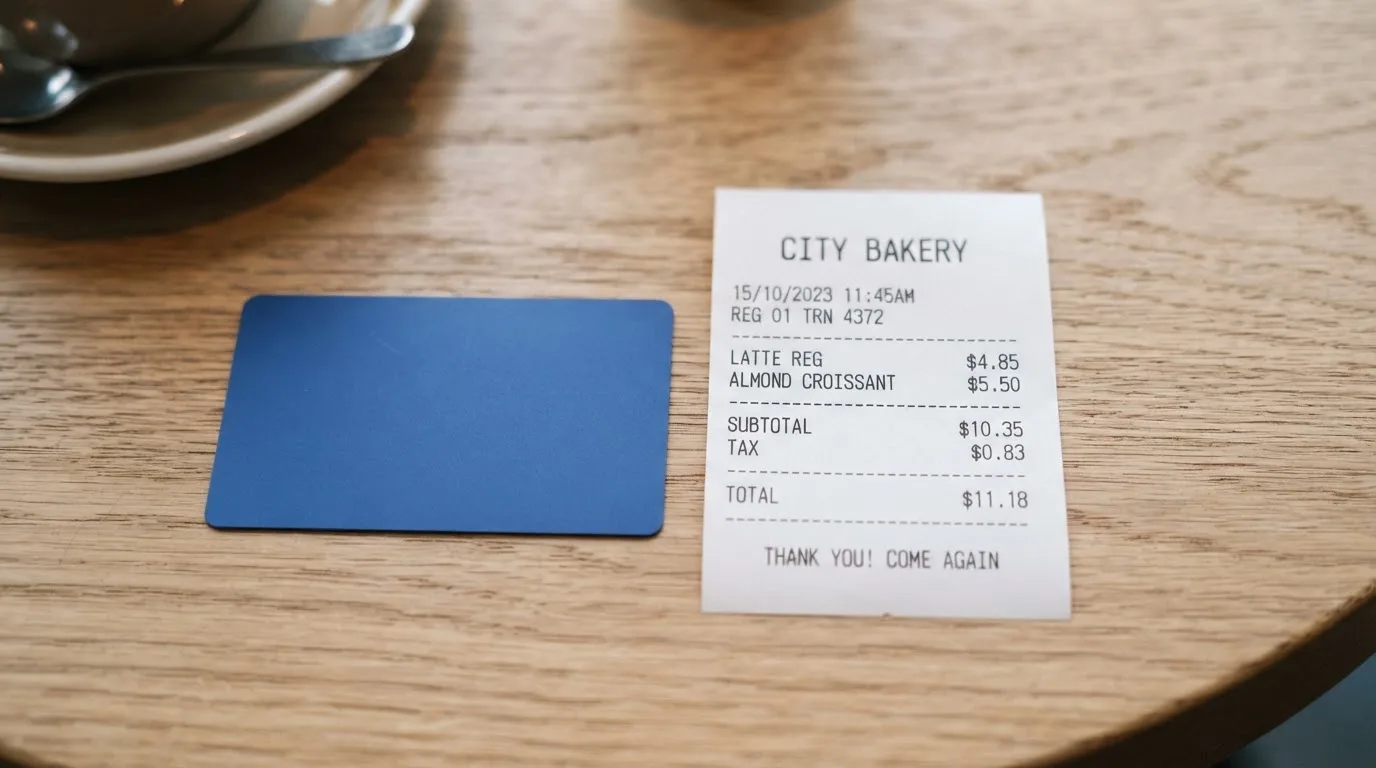
The catch is the deposit fee: 4% of the amount you top up. And there is a floor: the minimum card balance is $50. The card’s own worked example is the clearest way to see it — a $50 card costs $65 in total, which is the $50 balance, the 4% deposit fee and the $13 issuance together.
| Item | What the card says |
|---|---|
| Issuance | $13 one-time |
| Monthly fee | None, no subscriptions |
| Top-up fee | 4% of the amount |
| Minimum balance | $50 |
| Starting card limit | $1,000 |
| FX fee | Not stated |
| Conversion spread | Not stated |
| ATM withdrawal | Not stated, and there is no plastic card |
| Daily spend limit | Not stated |
| Monthly spend limit | Not stated |
Now, two or three everyday payments, and which of these lines actually touch them.
A $30 subscription. You have a $50 balance. You spend $30. The top-up fee was already charged on the way in — that is the 4%, and it does not apply again per purchase. No stated fee per transaction appears anywhere. What is not stated is the FX fee and conversion spread, so if the merchant charges you in euros, the amount that comes off your USD balance is not something the public pages let me calculate.
A $12 lunch in a currency that is not dollars. Same situation: no per-transaction fee is stated, but the conversion terms are not stated either. Treat the effective rate as unknown rather than as free.
Cashing out. There is no physical card, so there is nothing to insert into an ATM. The card’s pages do not mention ATM withdrawals at all. If you need cash, this is not the route.
Two structural notes. Limits depend on card type and may change — the terms say so without publishing daily or monthly figures, which is a phrase to keep in mind whenever you are surprised. And the fee for paying in another currency, or holding multi-currency balances, is not stated either.
How to Top up
Top-up means one thing here: USDT on Tron (TRC-20). That is the only route the card describes.
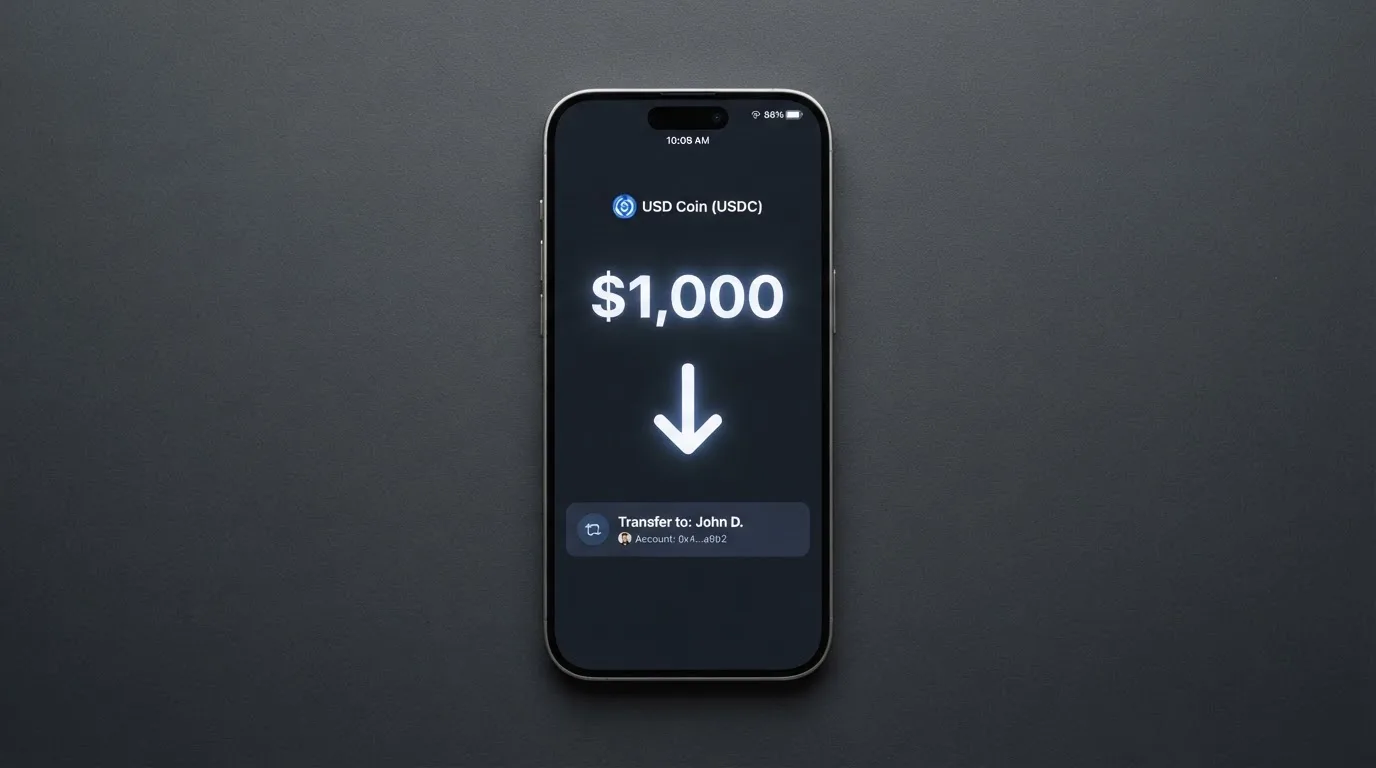
The bot issues an address and a unique amount to send, and the balance is credited automatically — you are matching a specific sum, not paying a reference. Other networks are not supported directly: if your USDT sits on Ethereum, Polygon or anywhere else, you must convert it to TRC-20 first. You cannot load the card with dollars, euros or any fiat currency — fiat top-up is not offered.
The cost of a top-up, again in the card’s own numbers: minimum card balance $50, deposit fee 4%, plus the $13 issuance fee, with the worked example that a $50 card costs $65 in total.
Two things are worth understanding before you send anything.
First, the Tron network fee — the cost of the transfer itself — is charged by the blockchain, not by the card company, and who ends up paying it is not stated. You will see it in your wallet before you confirm, and it is separate from the 4%.
Second, and this is the general risk every crypto top-up carries: blockchain transfers are irreversible. Send on a network the card does not support, or to an address belonging to a different network, and the funds can be lost or need manual support recovery with no guarantee. There is no chargeback mechanism at the blockchain layer.
On the way out, withdrawal terms are not stated: what happens to your balance if you stop using the service is not described. The terms do say that crypto transfers are irreversible, that you may stop using the service at any time, and that the operator may suspend or terminate access for violations, legal requirements or fraud prevention.
Paying with it every day
Everything happens in Telegram. There is no app — the service runs in the bot @TegroCardbot — and the site is in Russian and English.
Apple Pay and Google Pay are supported, which is the practical way to use a virtual card day to day: you add the card details to your phone’s wallet and tap from then on. Whether blocked merchant categories exist is not stated; gambling is a category many issuers refuse, and this card’s policy on it is simply not published.
No rewards. Cashback is not mentioned anywhere on the card’s pages, which means the only “back” you get is the money you did not spend on fees — and there is a 4% fee going in.
If a payment goes wrong, the terms say that refunds and disputes are handled under the rules of the payment systems and the timelines of Tegro’s partners. The suggested route is to try the merchant first, then contact support. No time frames are given. The governing law is Wyoming, USA.
A last practical warning about declined payments, which applies to any card: a declined authorisation can leave a hold on your funds that stays for several days, typically up to seven. And because this is a card whose issuer country is not disclosed, some merchants apply extra scrutiny to prepaid or foreign-issued card numbers and may decline them outright. Address verification is generally unavailable on foreign-issued cards, which causes declines on some US, Canadian and UK sites.
What can go wrong
Grouped by how likely it is to matter to you.
Who is actually behind it. The card is issued by an unnamed “Visa programme partner bank”. Tegro is the ordering and support interface. The terms page is titled “Libermall Card” and names Libermall LLC as the operator, but the company entity and its licences are not stated. Nobody is publishing a licence number I can point you at. That is the single largest unknown on this page, and it is not a detail I can fill in for you — it has to come from them.
Custodial by design. The card is issued by a partner bank and Tegro is the interface, which means this is a custodial arrangement: you are trusting the provider with your funds rather than holding keys yourself. The standard advice follows — never share your PAN and CVV, never store card details unencrypted. Tegro may pause an operation or restrict access on risk. No two-factor authentication, no in-app freeze and no insurance are described.
Sanctions screening. The service is not available to people from sanctioned countries or on sanctions lists. Tether itself disables tokens in wallets on the OFAC sanctions list and has frozen funds tied to illicit activity, so a stablecoin balance is not censorship-proof at the issuer level either.
Complaints: none found, which is not the same as none existing. I found one 5-star Trustpilot review, dated June 2026, calling the card simple and noting that support and clear limits and fees will matter. No substantive complaints surfaced and no Reddit threads appeared. Two caveats on that evidence: the review sits on tegro.cash, a possibly related brand, so its link to this card is unconfirmed; and a listing in the style of a product directory shows 0 upvotes, 1 comment and no user feedback at all. A young product with almost no public track record is a fact in its own right.
Support. Telegram at @Tegro_bot, with replies promised “within a day”. That is the whole support offering; opening hours are not stated.
Regulatory backdrop, briefly. A card is a payment service regulated separately from the crypto side, so a crypto card like this one often depends on two licences — one for the card programme and one for custody or exchange. In the EU, MiCA has applied in stages since June 2023, with the stablecoin and e-money-token rules from 30 June 2024 and the crypto-asset service provider rules from 30 December 2024; under MiCA, e-money tokens may be issued only by a credit institution or an electronic money institution. Transitional arrangements run until 1 July 2026 or until a provider gets or is refused authorisation, whichever comes first. In the US, FinCEN guidance treats administrators and exchangers of convertible virtual currency as money transmitters. None of this tells you Tegro is compliant or not — it tells you which rules are the ones that apply to this category, and where to look if you want to check a provider yourself.
Tax. One thing the card’s pages do not address: how a payment funded from crypto is treated. In the US the IRS treats digital assets as property, so exchanging them for goods, services or dollars generally produces a taxable gain or loss, measured in local currency at the value on the transaction date — which can make each card payment its own disposal. I am not giving tax advice; I am flagging that this question exists and that the card is silent on it.
What to take instead
Three alternatives for comparison are listed here.
MaxSwap — 5.2 / 10. A virtual Mastercard, no geographic restrictions claimed, card 50 USD with 25 USD required as a first deposit (total issuance listed 77.125 USD). Top-up costs 4.5% plus $1, transactions 0.25 USD plus 0.4%, and there is no separate FX rate to look at. Its advantage over Tegro is network choice: a long list of supported coins and networks, from ADA and ALGO through BTC, ETH, TON, TRX and USDC. Its currency is not stated on the home page. If your problem is “I hold six different assets on six different chains”, this is a better fit; if your problem is KYC, the pages do not state whether there is any.
Karta — 7.9 / 10. The strongest of the three by a distance. Visa Signature, virtual and physical, working “in 200+ countries and territories where Visa is accepted” with availability dependent on local regulation and partner coverage. Virtual activation from 5.00 USDT (an FAQ shows “30 USDT 5 USDT”, apparently an old price struck through), physical from 100.00 USDT, virtual accounts free, no monthly fee listed. Crypto top-up is free; card payments 1.5%; SEPA 1.5% plus EUR 2; SWIFT in USD 1.4% plus $2. It accepts USDT or USDC on Tron, Ethereum, BNB Smart Chain, Polygon, Arbitrum, Optimism, Base and Solana, plus fiat rails including ACH, SWIFT, domestic wire, SEPA, PIX, bank transfer in COP and SPEI, varying by country. Cashback is claimed on spending with the rate not stated, and referral rewards in KARAT points at 1 KARAT = 0.01 USDT. The trade-off is obvious: you verify your identity, and the card costs more to move money.
Worldwide — 4.2 / 10. A Russian-language Telegram mini-app, positioned around being ordered and topped up “from Russia without a VPN”. In the ‘Card Without Borders’ product, a virtual Mastercard is issued in tiers — Standard from 2,900 RUB/year, Premium from 3,900 RUB/year, Promo at 2,390 RUB with 0 RUB maintenance in the first year, Business from 12,900 RUB/year. Operations are 0.00 USD, SBP top-up carries no transfer fee, and the FX rate is described as close to the exchange or central bank rate with the rate shown before top-up. Top-up is by SBP from any Russian card, credited in 1-3 minutes; an App Store app also takes USDT TRC-20. Eligibility rules and countries are not described, and citizenship versus residence is not stated.
| Tegro | MaxSwap | Karta | Worldwide | |
|---|---|---|---|---|
| Score | 4.7 / 10 | 5.2 / 10 | 7.9 / 10 | 4.2 / 10 |
| Card | Virtual Visa | Virtual Mastercard | Visa Signature, virtual and physical | Virtual Mastercard |
| Countries | Not stated | Not stated, no restrictions claimed | 200+ where Visa is accepted, subject to local rules | Not described |
| Issuance | $13 | 50 USD card, 25 USD first deposit, 77.125 USD total | 5.00 USDT virtual, from 100.00 USDT physical | 2,390 RUB Promo to 12,900 RUB/year Business |
| Top-up | USDT TRC-20 only | Crypto, many networks, no network list specifics | USDT or USDC on eight networks, plus fiat rails | SBP from Russian cards, USDT TRC-20 in the app |
| Top-up fee | 4% | 4.5% plus $1 | Free for crypto top-up | 0% on Promo, no SBP transfer fee |
| Card payments | Not stated | 0.25 USD plus 0.4% | 1.5% | 0.00 USD |
| Cashback | Not stated | Not stated | Claimed, rate not stated | Not stated |
| KYC | None for the virtual card | Not stated | Not stated | Not stated |
Read that table as a set of trade-offs rather than a ranking. Tegro wins the KYC column outright and loses almost everything else. Karta wins on cost per payment, on reach and on having a physical option, at the price of verification. Worldwide wins if your banking problem is a Russian one. MaxSwap sits in the middle on everything.
Who I would recommend it to
I would recommend Tegro to exactly one person: someone who already holds USDT on Tron, is not willing or able to complete KYC, and needs a Visa number that works at ordinary online merchants and in a phone wallet. For that person, a 4% top-up fee and a $13 issuance is a fair price for a working card, and I can see the appeal.
I would not recommend it to anyone whose money depends on the card being there in two years. The issuer is unnamed, the licences are not disclosed, the limits can change without notice, there is no plastic, no ATM, no rewards, no app, and no published policy on blocked merchant categories. The category has a documented history of programmes closing — WaveCrest was suspended by Visa in Europe in 2018, and Visa terminated its global agreements with FTX on 13 November 2022, winding down the FTX US debit card — and closure typically means loading stops, then spending stops, then you are asked to withdraw what is left. Nothing in Tegro’s pages tells you how your balance would be handled that day, because the withdrawal terms are not stated.
Before you put real money in, check three things yourself: what the withdrawal terms say, in writing, from support; whether the 4% plus any conversion cost still leaves you better off than simply holding the USDT and converting when you need it; and whether your own country and circumstances make this card something you can use lawfully. If you cannot get a straight answer on the first, treat the balance as money at risk.
Frequently asked questions
What is the Tegro card?
Tegro is a virtual Visa card you order and use through a Telegram bot, funded by USDT. You send USDT on the Tron network to an address the bot gives you, the balance is credited in dollars automatically, and you spend it wherever Visa is accepted, including via Apple Pay and Google Pay. It is an interface in front of an unnamed partner bank, not a bank itself, and there is no physical plastic.
Is Tegro a bank, and who owns it?
No, it is not a bank. The card is issued by an unnamed “Visa programme partner bank”, and Tegro acts as the ordering and support interface. The terms page is titled “Libermall Card” and names Libermall LLC as the operator, but the company entity and its licences are not stated. So you are trusting an unnamed issuer and a named-but-undisclosed operator.
Does the Tegro card require KYC?
Not for the virtual card. The description says “zero KYC” — a Telegram account is enough, with no documents, passport, selfie or verification. KYC is required only for “some products” with extended features, covering name, date of birth, citizenship, address, ID and selfie. Monitoring of unusual activity can also trigger a request for more information, and rejection reasons are not stated.
Which countries can use the Tegro card?
No country list is published. The card works “wherever Visa is accepted”, and the terms ask you to confirm you are 18 or older and not in a country under international sanctions. The service is unavailable to people from sanctioned countries and on sanctions lists. No country is named either way, so if where you live matters to you, you will not find the answer here.
How do I top up the Tegro card?
With USDT on the Tron network (TRC-20) only. The bot issues an address and a unique amount, and the balance is credited automatically. Other networks must be converted to TRC-20 first, and fiat top-up is not offered. The minimum card balance is $50, and the deposit fee is 4% — so the card’s own example, a $50 card, costs $65 in total.
What does the Tegro card cost?
Issuance is $13 once, and there is no subscription and no monthly fee. There is a single virtual Visa product with no tiers. The deposit fee is 4% of the amount. The FX fee and conversion spread are not stated, ATM withdrawals are not mentioned, and daily and monthly spend limits are not stated either — terms do say limits depend on card type and may change.
Can I add the Tegro card to Apple Wallet?
Yes, Apple Pay is supported, and so is Google Pay. That is the normal way to use a virtual card day to day, since the card details arrive in the Telegram chat rather than as plastic. There is no app to download — the whole service runs in the bot @TegroCardbot — and the site itself is in Russian and English.
Is the Tegro card safe?
It is custodial: the card is issued by a partner bank and Tegro is the interface, so you are trusting a provider rather than holding keys yourself. Standard hygiene applies — never share your PAN and CVV, and do not store card details unencrypted. Tegro may pause an operation or restrict access on risk, and no two-factor authentication, in-app freeze or insurance is described. Given the unnamed issuer, treat the balance as money at risk.
Why does everyone say Tegro is risky?
Because what is missing is more visible than what is present: no named issuer, no disclosed licences, no withdrawal terms, no published limits, no physical card, and a provider history in this category that includes programme shutdowns. Against that, Tegro has almost no public complaint record at all — one 5-star Trustpilot review from June 2026, on a possibly related domain, and a product directory listing with no feedback. That is not evidence of danger; it is evidence of a young product.
Can I withdraw money from Tegro, or delete my account?
Withdrawal terms are not stated — the card’s pages do not describe what happens to your balance if you close or stop using the service. What the terms do say is that crypto transfers are irreversible, that you may stop using the service at any time, and that the operator may suspend or terminate access for violations, legal requirements or fraud prevention. If the balance question matters to you, ask support in writing before you load it.
Is the Tegro card worth it?
For its one clear audience — USDT TRC-20 holders who want a no-KYC card — $13 plus 4% per top-up is a reasonable price for a working Visa number. For everyone else, the fees add up while the limits, the issuer and the withdrawal rules stay unpublished, and a card with a 1.5% payment fee and a wider choice of top-up networks may serve you better.
Virtual cards – cryptocardpedia.com
Content created by the «cryptocardpedia.com» team