A USDT-funded Visa card with four tiers and no monthly fee — but thin published detail
 Available in US
Tevau is a payment card you load with USDT and then spend like an ordinary Visa card, either a virtual one inside an app or a physical card in metal or gold. The pitch is straightforward: keep your stablecoins on-chain, hold a card balance, and pay for things directly. The marketing is confident — “200+ countries”, Apple Pay and Google Pay everywhere, no monthly fee. But the published detail is thin, and a striking amount of what you will read about this card comes from a site that says it is not Tevau. I went through all of it. Here is where I land, and where the gaps are.
The conditions described below are current as of October 28, 2026.
Verdict: 6.0 out of 10, a good fit for stablecoin holders and a poor fit for everyone else
My score for Tevau is 6.0 out of 10. That is not a dismissal. This is a competently built product aimed at one specific person: someone who already holds USDT, wants a card that spends it, and does not mind a custodial wallet and a single-asset funding rail. If that is you, the card does what it says. If you want a bank card equivalent with a full multi-currency account, spending caps you control, or a regulated European issuer, this is not the product, and no amount of marketing copy will change that.
The single biggest reason I do not score it higher is not the product — it is the documentation. The independent information site carrying most of the pricing detail explicitly states it is “an independent information site, not Tevau itself”, while other pages sit on the same domain. That is a strange arrangement to rely on for your fee schedule, and it means several numbers you will see quoted are unofficial and unconfirmed by the card.
The second reason is structural. Funding is USDT only. Fiat top-up is not stated. If your income arrives in a bank account in euros or dollars and your crypto arrives on a different network than the app tells you to use, this card adds friction rather than removing it.
The third is trust. The company is Hong Kong-based, launched in 2024, and its card issuer is not named anywhere I could find. It states that its Payment Service Provider registration with the Bank of Canada was approved in August 2026 — a claim on the site that I could not independently verify, and one that I would treat as a claim rather than a fact until you see it in writing elsewhere.
Here is the score, criterion by criterion, as I weighed it.
| Criterion | Mark | Why |
|---|---|---|
| Who can get it | 9 / 10 | Pages claim 200+ countries with availability varying by region, but no country list or exclusion list is published. |
| Cost | 4 / 10 | Virtual $20, plastic $100; top-up 1%, non-USD payment 1.2%, ATM 1.9%, monthly fee $0, and $3 after 90 days of no activity. |
| Top-up options | 4 / 10 | USDT only, with the network shown in-app but no networks named on the page; fiat not disclosed. |
| Reliability and complaints | 4 / 10 | Hong Kong office, issuer not named, claimed Bank of Canada registration unverified; no complaints or independent reviews found. |
| Everyday use | 9 / 10 | Virtual, plastic, metal and 24K Gold cards; Apple Pay and Google Pay on all types; ATMs on the physical cards. |
Two of those marks — the 9s — are earned by breadth: four card formats and mobile wallets on every one of them is genuinely more choice than most cards in this category give you. The three 4s are earned by thinness: no published country list, one funding asset, and no independent track record to read.
Who they will give the card to
The eligibility page says “200+ countries” and that availability “varies by region”. That is the whole of it. No country list is published, no exclusion list is published, and “varies by region” is doing a lot of quiet work in that sentence. It could mean anything from a formal onboarding check in each market to a support agent deciding case by case.
So the honest answer to “can I get this in my country” is: nobody can tell you from the published material. What you can do is install the app and attempt sign-up. The signup flow runs KYC, and the result is where the real answer lives.
Two things to understand before you try. First, KYC is mandatory. Second — and this matters for anyone reading this hoping for an anonymous card — KYC means exactly what it always means: documents, a selfie, and a check against sanctions and identity databases. This is a card for people who are willing to be identified. That is not a flaw; it is what a regulated-looking payment service looks like. Anyone advertising you a way around that is selling something else.
How to get it
The application is described as one continuous flow rather than tiers. You supply one government ID — a passport, a driving licence, or a national ID — plus a selfie taken in the app. You must be 18 or over. There are no levels to climb; one verification, one outcome.
The detail that will save you a wasted trip is the one nobody publishes: processing time is not stated as a policy. The site suggests the usual reason for a re-submission is a blurry photo, which tells you the failure mode is usually you, not them — but it is advice, not a service level. If you are in a hurry, do not assume next-week delivery.
On cards: Visa, in four formats — Virtual, Plastic, Metal and 24K Gold. Virtual cards are issued instantly in the app. Shipping and replacement are described as free, though delivery countries are not specified (the card is said to work in 200+ countries) and delivery time is not stated. The card’s own currency is not stated either, which becomes important the moment you pay somewhere that is not in dollars.
If a physical card has not arrived within 14 days, the advice is to check the tracking code, then contact in-app support. That is a reasonable escalation path, and it is the first thing to use.
All of this comes from a site that says it is not Tevau. Treat the specifics as unofficial until you see them in the app during your own signup.
What it really costs: Fees
Here is the price list as published, unofficial and unconfirmed by the card.

| Fee or limit | Value |
|---|---|
| Virtual card, one-time | $20 |
| Plastic card, one-time | $100 |
| Metal card, one-time | $199 (unofficial) |
| 24K Gold card, one-time | $499 (unofficial) |
| Monthly fee | $0 |
| Annual fee | Not stated |
| Top-up from the card balance | 1% (unofficial) |
| USD payment | $0.20 + 0.5% (unofficial) |
| Non-USD payment | 1.2% |
| ATM withdrawal | 1.9% |
| Small authorisation hold | First 5 per month free, then $0.20 (unofficial) |
| Declined transaction | First 3 per month free, then $0.50 (unofficial) |
| Inactivity | $3 after 90 days with no transaction, then $1 every 30 days (unofficial) |
| Closing a card | $2 |
| Card validity | 3 years |
Two rows in that table need a warning. The top-up fee of 1% appears in one place as the general rate and in another as discounted to 0.5% on up to five top-ups per month for the Gold card, with the page itself unclear whether the discount is 5 waivers per month or a 50% discount on up to 5 top-ups. And the inactivity fee appears in the FAQ but not in the fee table — two sources on the same site disagree, and the fee is the one you can be charged without choosing anything. These details are unofficial and not confirmed by the card.
One more contradiction worth knowing: a Product Hunt listing by the maker from 2026 puts the virtual card at $10, while the price page says $20. If you are budgeting, use the higher number until the app shows you otherwise. These figures are unofficial and not confirmed by the card.
Now, three everyday payments, with the fees that actually apply:
Paying $40 in the United States in dollars. The USD rate is $0.20 plus 0.5%. On $40 that is a fixed $0.20 and half a percent, so about $0.40 total. Nothing else applies. This is the cheapest path the card offers and the one to aim for. This pricing is unofficial and not confirmed by the card.
Paying €30 in a European shop. Non-USD payments cost 1.2%, on top of the exchange rate spread that is mentioned but not quantified anywhere. So you carry a visible percentage fee plus an invisible margin. The spread is the part to interrogate in the app before a large purchase.
Taking $100 out of an ATM. The ATM fee is 1.9%. On $100 that is $1.90. USD ATM withdrawals in local currency carry no FX fee, but the local bank’s rate still applies, and the ATM operator may add its own. Virtual cards do not work at ATMs at all.
One more cost people forget: moving your deposited USDT onto the card balance costs 1%. Wallet deposits are free, but the step from wallet to spendable balance is not.
How to Top up
Top-up is USDT only. You send the stablecoin to the address shown in the app, and the app tells you which network to use — but the networks are not named on the page. That detail is doing real work, because sending on the wrong network is the classic way to lose money here: wrong-network funds are not recoverable.
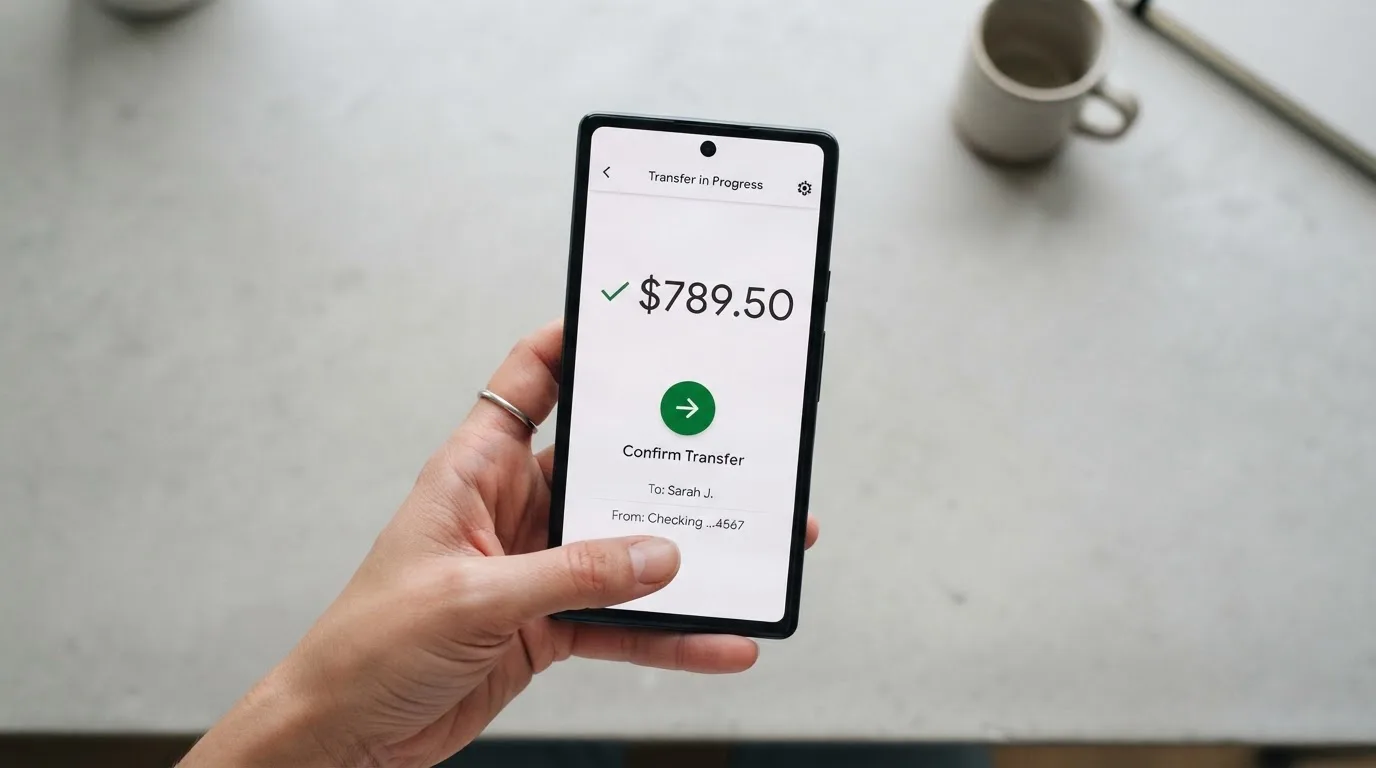
So the sequence is: open the app, read the network it displays, send USDT on that network, and watch for the 1% top-up fee. The minimum top-up is not stated.
What is stated about moving money out: USDT can be withdrawn from the wallet to an address shown in the app. Once a card is topped up, that balance can only be spent or withdrawn at an ATM — it is not, in practice, free to move back to an exchange from the card side. Closing a card returns the remaining balance to the wallet, costs $2, cannot be undone, and does not refund the application fee. A virtual card with no transactions for four consecutive months closes automatically, quietly returning its balance to the wallet.
Fiat top-up is not stated. There is a “Withdraw to bank (IDR supported)” guide linked from the page with no details attached, which suggests some fiat path exists and nothing more. Treat fiat funding as unconfirmed.
Paying with it every day
Day to day, Tevau behaves like a normal Visa card, and this is where the card is strongest. Apple Pay and Google Pay work on all card types, physical and virtual, which means most of your spending will never touch a physical terminal. A virtual card added to Apple Pay is about as close as this category gets to a low-friction everyday card.
The app is a native iOS app, “Tevau” by Tevau Technology Limited, rated 4.4 out of 5 from 7 ratings when I checked, latest version 2.0.010 dated 11 September. Seven ratings is not a review history — it is a rounding error — but the score is high. An Android listing exists; its rating is not shown.
The friction points are the ones a prepaid-funded card carries everywhere. Merchants may decline prepaid or crypto-funded cards because the BIN lookup reveals the card type and issuer country. OpenAI billing is not supported. Blocked merchant categories are otherwise not stated, which means you will find out by trying. The page also notes that declines and refunds can occasionally be delayed, and a declined authorisation can leave a hold on your funds for several days.
Dispute handling is not stated. No chargeback process, no timeframe, nothing. If you are weighing this against a card from a bank in your own jurisdiction, remember that a dispute route is one of the things deposit relationships normally give you and this one does not describe.
No cashback is mentioned.
What can go wrong
The complaints section is empty, and that is a finding rather than a comfort. No Trustpilot page and no Reddit thread could be found for Tevau; no independent review was found. That is consistent with a product launched in 2024 that has not yet built a public reputation — it is also consistent with a product whose users have not had cause to write publicly. You cannot tell which from here, and neither can I.
On the company: headquartered in Hong Kong, launched 2024, described elsewhere as a Hong Kong-based platform. The card issuer is not named, and company registration is not independently confirmed. The site says its Payment Service Provider registration with the Bank of Canada was approved in August 2026; that is the site’s claim and I did not verify it. The site also states plainly that Tevau is not a bank licensed in Japan, the US or the EU, and that home-country deposit protection may not apply. That sentence is the most useful thing on the page.
Recent news items listed: 500,000 users claimed on 19 August 2026; the Bank of Canada registration claim in August 2026; a security update on suspicious transactions and risk-control upgrades on 21 August 2026; a USDT card guide on 27 August 2026.
On security, the model is custodial. Assets are described as stored with licensed custodians, with cold and hot wallet separation claimed. You can lock a card in the app, and if it is stolen or leaked, close it. If your account is frozen, re-verification is personal, through support. Two-factor authentication and insurance are not stated.
Let me be direct about what custodial means here, because it is the single biggest thing you are accepting. Whoever holds the credentials holds the money. A seed phrase is typically 12 to 24 words in an unencrypted form; anyone who obtains it can restore the wallet and spend its funds. Blockchain transfers are irreversible, and a stolen key has no recovery path — the network cannot freeze or return anything. This is not a theoretical concern: custodial platforms have a documented history of it, including Mt. Gox at roughly US$350 million reported stolen between 2011 and 2014, Coincheck at about US$400 million in 2018, and Ronin Network at US$625 million in 2022. None of that predicts a problem at Tevau. All of it describes the category risk you are taking by trusting a custodian with your balance.
Support is in-app chat — a bot first, a live agent on request, with “business hours” undefined. There is a Help Center, a Telegram community, and an X account. The website is offered in 17 languages including Russian, though the support channels’ languages are not confirmed.
What to take instead
If the shape of this card does not fit you, the alternatives are worth an hour of your time. All three below are compared on the same basis I used for Tevau.
| Card | Score | Card and cost | Funding | Rewards |
|---|---|---|---|---|
| Bitrefill | 6.8 / 10 | Virtual and physical Visa, card free through the app; issuance and monthly amounts not stated; inactivity fee after 12 months, amount not stated | Bitcoin, Lightning, Ethereum, USDC, USDT, Solana, BASE, Polygon, plus SEPA | 2% total cashback, no cap: 1% per crypto deposit and 1% per purchase |
| UPay | 6.1 / 10 | Virtual and physical, personal and business; network not named; converts to USD, EUR, AED and others; costs not stated | BTC, ETH, USDT, USDC; networks not stated; no cashback stated | None stated on the card page |
| Kemy | 6.0 / 10 | Unlimited virtual cards and one physical Mastercard; virtual $15 issuance plus $2/month; physical $250 plus $10/month | USDT and USDC on the main networks, BTC, ETH, SOL via on/off ramp; fiat via mobile money and virtual bank accounts | Cashback not mentioned |
Bitrefill scores highest here at 6.8, and the reason is its funding breadth — it is the only one of the three that lists a wide crypto menu and a fiat rail together, and the only one with a stated rewards scheme. Its eligibility terms say access is “subject to eligibility criteria” with further requirements “established and verified by our partners”, which is its version of the same opacity Tevau has, just worded differently. Its deposit spread on crypto-to-euro conversion is a percentage not stated.
UPay at 6.1 is the closest analogue to Tevau: a card that converts and loads, in this case to USD, EUR and AED. Its country position is the interesting part — the page says it does not serve residents of certain countries, that the list may change with regulatory or issuer policies, and its KYC partner accepts only ID documents issued by the same country as the user. That last point is a real constraint if you hold a passport from one country and live in another.
Kemy at 6.0 matches Tevau’s score but is structured differently, and the difference matters for anyone who spends. Its virtual card carries a transaction fee of 3.5% plus $1 and a failed-transaction fee of $0.8 — materially heavier per purchase than Tevau’s dollar-plus-half-percent on USD payments. Its physical card at $250 with $10 per month is the expensive route. Its own pricing page conflicts on the main-account deposit fee, showing 8% in one place and 5% in another, which is a small sign of how carefully to read it.
None of these three is a bank. Each is a programme on somebody’s licence, and in each case the issuer relationship is the thing to establish before you rely on it.
Who I would recommend it to
I would recommend Tevau to a person who already holds USDT, spends most of it in dollars or occasionally in one other currency, does not need a bank account in their own name, and is comfortable with a custodial balance and a Hong Kong-based operator that does not name its issuer. For that person, four card formats, mobile wallets everywhere, no monthly fee and a 1% top-up is a workable, well-built deal.
I would not recommend it to a person whose priority is getting hold of an ordinary bank card in a jurisdiction where they are blocked or under-served by banks — because the answer to “is Tevau available in my country” is not published, and you should not build a plan on an unverified assumption. I would not recommend it to anyone who needs USDT on a specific chain, because the app names the network but the page does not, and the wrong-network mistake is unrecoverable. And I would not recommend it to anyone whose money depends on a dispute route, deposit protection, or a named issuer at a regulator they recognise — the card itself says it is not a bank licensed in Japan, the US or the EU.
The card’s own score, 6 out of 10, is a fair summary: strong at the thing it does, unverified at everything around it.
Frequently asked questions
What is the Tevau card?
The Tevau card is a Visa payment card funded from USDT rather than a bank account. You hold stablecoins in the app’s custodial wallet, move them onto a card balance, and spend that balance like any other Visa card. Four versions exist: Virtual, Plastic, Metal and 24K Gold. It is marketed as working in 200+ countries, with availability said to vary by region. It is a card for people who already hold stablecoins, not a general bank replacement.
Is Tevau a bank?
No, and the company says so itself. Tevau states that it is not a bank licensed in Japan, the US or the EU, and that home-country deposit protection may not apply. It is described as a Hong Kong-based platform launched in 2024, and its card issuer is not named. It claims Payment Service Provider registration with the Bank of Canada approved in August 2026 — the site’s claim, which I did not independently verify.
How much does the Tevau card cost?
One-time fees: Virtual $20, Plastic $100, Metal $199, 24K Gold $499. The monthly fee is $0, and there is no annual fee stated. A close-card fee of $2 applies, and cards are valid three years. A Product Hunt listing from 2026 says $10 for the virtual card, contradicting the $20 on the price page — budget for the higher figure until the app shows otherwise. These figures are unofficial and not confirmed by the card.
Does Tevau card require KYC?
Yes, KYC is mandatory. The flow described is one government ID — passport, driving licence or national ID — plus a selfie taken in the app, and you must be 18 or over. There are no tiers. Documents, proof of address and processing time are not stated as policy. Blurry photos are given as the usual reason for re-submission, so take the photo properly.
How do I top up the Tevau card?
With USDT, from the app’s wallet, at a top-up fee of 1%. The app displays which network to use, but networks are not named on the page, and funds sent on the wrong network are not recoverable. The minimum top-up is not stated, and fiat top-up is not disclosed. Once topped up, the card balance can be spent or withdrawn at an ATM; closing the card returns the balance to the wallet.
What are Tevau’s fees and limits?
Payments cost $0.20 plus 0.5% in USD, 1.2% on non-USD payments, plus an unquantified FX spread on overseas spending. ATM withdrawals cost 1.9% and are unavailable on virtual cards. Small authorisations up to $3 are free for the first five a month, then $0.20; declines are free for the first three, then $0.50. Inactivity costs $3 after 90 days, then $1 every 30 days. Daily and monthly spend limits are 3,000,000 USD. These figures are unofficial and not confirmed by the card.
Is the Tevau card safe to use?
It is custodial: assets are described as stored with licensed custodians, and you can lock or close a card in the app. That means trusting the provider, because crypto transfers are irreversible and a lost key has no recovery path — the category has a documented history of custodian failures. Two-factor authentication and insurance are not stated. No complaints and no independent reviews were found, which tells you about the public record, not about your funds.
Which countries is Tevau available in?
The published answer is “200+ countries” with availability that “varies by region”. No country list and no exclusion list are published, and the top-up network is shown only inside the app. The practical test is the signup flow itself — install the app and attempt verification. If your income is fiat and your crypto arrives on a chain other than the one the app names, expect friction.
Does Tevau work with Apple Pay and Google Pay?
Yes, on all card types, physical and virtual, which is the card’s strongest everyday feature. A virtual card added to Apple Pay gives you a working contactless payment with no plastic. Two limits are worth knowing: OpenAI billing is not supported, and merchants may decline prepaid or crypto-funded cards outright because the BIN lookup reveals the card type and issuer country.
Is the Tevau card worth it?
Worth it if you already hold USDT, mostly spend in dollars, and want a custodial card with no monthly fee and mobile wallets everywhere — a $20 virtual card plus 1% top-up is cheap for that. Not worth it if you need a named EU or US issuer, deposit protection, a stated dispute process, a published country list, or funding in anything other than USDT. The honest summary is a 6 out of 10: strong at the thing it does, unverified around it.
Virtual cards – cryptocardpedia.com
Content created by the «cryptocardpedia.com» team