
A euro prepaid card funded from crypto, with thin official detail and heavy user complaints
 Available in US
The Trastra card is a euro prepaid Visa card that you fund with cryptocurrency held in a Mover wallet, and on paper it is a sensible answer for anyone in the European Economic Area who cannot or will not open an ordinary bank account. The card costs EUR 9.00 to order and EUR 15.00 a year, it has its own euro IBAN, and cash withdrawals are accepted at ATMs across Europe. That is the good half. The other half is that almost every number you would want before committing money is missing from the public pages, and the review record on Trustpilot is poor enough that I would not treat this as your only card.
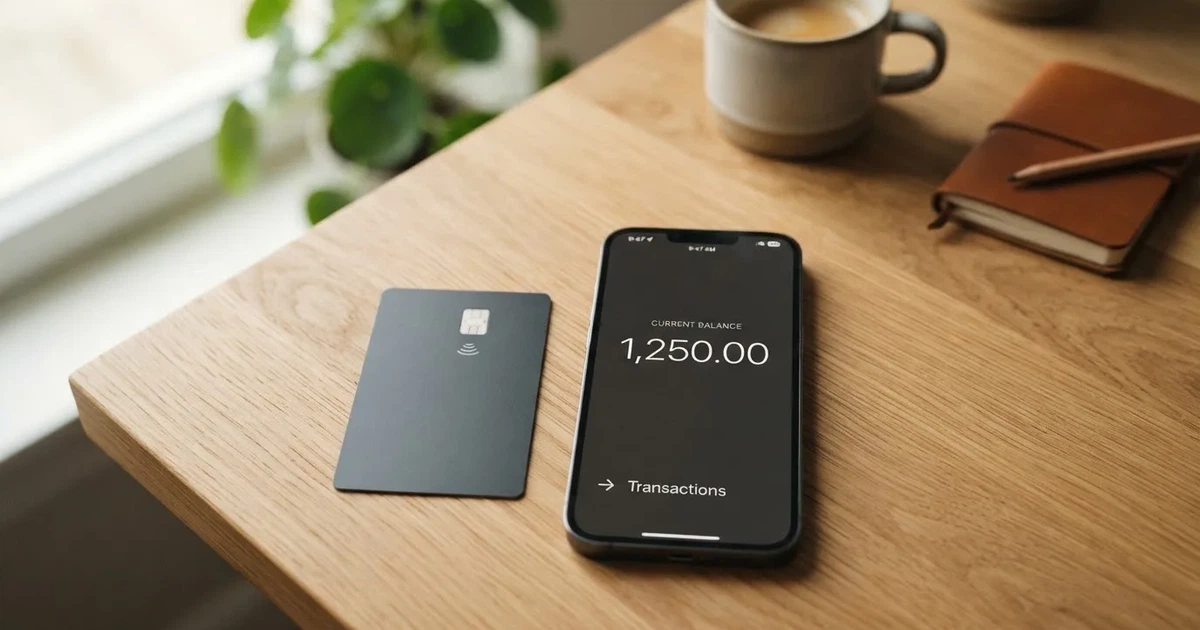
My score for Trastra is 4.1 out of 10.
The conditions described here are current as of October 28, 2026.
Verdict: 4.1 out of 10, and it depends entirely on where you live
| Criterion | Mark | Why |
|---|---|---|
| Who can get it | 5 / 10 | Available in 31 listed countries, including Germany, France and the UK; promised for all EEA residents, but not for non-European residents at the moment |
| Cost | 3 / 10 | Card order EUR 9.00, card management EUR 15.00 per year, a payment not in EUR costs 3%, a euro ATM withdrawal EUR 2.25, delivery free |
| Top-up options | 4 / 10 | Topped up with crypto in the Mover wallet and exchanged to euro for free, but no coins and no networks are named |
| Reliability and complaints | 3 / 10 | Issuer is UAB “Finansinės paslaugos ”Contis“” (Bank of Lithuania licence No. 53); Trustpilot 2.0 out of 5 from 747 reviews, with frozen funds and refused withdrawals, plus letters about insolvency proceedings against a related company |
| Everyday use | 6 / 10 | ATMs across Europe and a personal euro IBAN; unofficially Google Pay and Apple Pay; no virtual card is named |
Who this suits: residents of the European Economic Area who already hold crypto, want a euro card they can top up from a crypto balance, and can tolerate a product whose own pages leave important details unstated. Who it does not suit: anyone outside the EEA, anyone who needs a card they can rely on for rent or salary, and anyone who wants to know the exact cost of a withdrawal before they happen.
The most useful thing I can say about this card is that the fee structure, where it is stated, is genuinely competitive. The 3% on a non-euro purchase and EUR 2.25 on a euro ATM withdrawal are not predatory numbers. What I cannot do is tell you what a euro purchase costs, because the page does not say. Not stated means the card’s public pages do not say it, and in the case of Trastra that phrase has to carry real weight: the fee list, the limits summary and the top-up details are each thin or absent on the pages I could read.
There is a second problem that shapes everything else. The issuer is a licensed Lithuanian e-money institution with an EU licence, which is the correct regulatory home for this product. But the name on the card, the brand you search for, and the company some users wrote to in 2025 are not the same set of names. Trastra is the card brand; Mover is the wallet and the partner on the user side; Holyheld Labs is described as an authorised partner of Trastra Inc. Read the section on what can go wrong before you decide, because that is where this product’s real texture is.
Will they give you the card?
They will, if you live in the right place. The card is available in 31 listed countries, and the listed set includes Germany, France and the United Kingdom. The company says it “will be available for all residents of the European Economic Area (EEA)”. For non-European residents the answer is flat: “Not at the moment.”
The rule appears to be residence-based rather than citizenship-based. That distinction matters more than it first appears, because sanctions screening and issuer risk policy are often applied to citizenship and country of birth as well as to the country of address — a company may refuse you on grounds you cannot see, and that is a decision made at application, not at the counter.
What is not stated: nothing on the page tells you which documents you need, whether proof of address is required, or what the minimum age is. Prepaid and debit cards are generally available to adults (18+), and some issuers set higher limits, but that is a category statement, not a Trastra term. If you are under 18, or you have just moved address, or your name is written differently on your documents than on your ID, expect the application to be the point where you find out what the real rule is.
The security side is better documented. Every transaction is verified by Visa and 3-D Secure, login is by wallet password plus a 2FA one-time code, and a new device or browser has to be approved by email. Funds sit in a segregated account. There is no mention of an in-app card freeze, which is one of the standard safeguards you would expect to find.
How to get it
The card is a “prepaid debit card” and is accepted at Visa merchants worldwide. Whether you get a physical card, a virtual card, or both is not specified on the page; the fact that ATM withdrawals are supported implies a physical card exists. The currency is the euro — that comes from the card’s own batch notes rather than the page text, so treat it as a strong indication rather than a quoted term.
The card order costs EUR 9.00 and is charged from your first top-up. Delivery is free, and delivery goes to the 31 listed countries, which is to say the EEA. The delivery time and the replacement cost for a lost or stolen card are not stated. That gap is worth pausing on: if the card is lost abroad, you have no published figure for what replacing it will cost, and no published timeframe for a replacement arriving.
There is a single card, with no tiers. Early customers could order a “limited card design” — a cosmetic difference, not a different product. Anyone hoping for a metal card, a higher-limit card, or a business version will not find one described.
What the page does not describe is the application itself. Whether it is a manual approval or an automated check, how long it takes, and what happens if it is refused are all not stated. If the decision time matters to you — and for someone waiting on a replacement while abroad it always does — you should ask support before you rely on it.
What it really costs: Fees, limits and three everyday payments
The full cost picture, where it exists:

| Fee or limit | Value |
|---|---|
| Payment account creation | Free |
| Card order | EUR 9.00, from first top-up |
| Card delivery | Free |
| Card management fee | EUR 15.00 per year, “not charged by Mover”; first charge within 45 days of ordering |
| Purchase not in EUR (online or offline) | 3% |
| Crypto to EUR exchange | Free, rate set at the transaction |
| Internal card-to-card transfer | EUR 0.20 |
| ATM balance inquiry | EUR 0.35 |
| PIN change | EUR 0.40 |
| ATM withdrawal in euro | EUR 2.25 |
| ATM withdrawal in non-euro or outside the EEA | EUR 2.25 plus 3% |
| Some ATM providers | May add their own fees |
| Maximum card balance | EUR 8,000 |
| Daily card spend | EUR 7,700 |
| Daily ATM withdrawal | EUR 300 |
| Overall daily spend, purchases plus ATM | EUR 8,000 |
| Weekly, monthly, annual limits | None |
Three payments to picture. A EUR 40 coffee in Berlin paid by tapping the card or typing the number: the fee is not stated, so I cannot tell you the cost, only that the balance moves by 40 euro plus whatever is invisible on the page. A EUR 25 subscription in a US dollar store: that is 3%, so EUR 0.75 in fees before any currency movement in the rate you were given. A EUR 100 withdrawal from a euro ATM: EUR 2.25, so EUR 102.25 leaves your balance, plus whatever the ATM’s own operator adds if it charges anything.
The EUR 300 daily ATM cap is the number I would look at first. It is low relative to the EUR 7,700 daily card spend, and it means this card is built for spending in shops rather than for moving meaningful amounts of cash. The EUR 8,000 maximum balance is a similar signal: this is a spending instrument, not a place to hold money.
One more fee that is easy to miss. A declined authorisation can leave a hold on your funds that stays for several days, typically up to seven. That is how card networks work in general, and on a prepaid balance with an EUR 8,000 ceiling a stuck hold is a real constraint rather than an annoyance.
How to Top up
Topping up starts with a transfer: you add cryptocurrency to your Mover wallet, and the card is topped up from that balance. The crypto-to-euro exchange is free, with the rate set at the time of the transaction. The EUR 9.00 card order fee comes out of the first top-up, and the card management fee is described as “not charged by Mover”, with the first charge falling within 45 days of ordering. The order fee can be covered by Smart Treasury bonuses if you have them.
Here is the problem: the coins and the networks are not named. That single omission covers most of the ways a top-up can go wrong. A deposit sent on a network the provider does not support, or to an address belonging to a different network, can be lost or need manual support recovery with no guarantee, because blockchain transfers are irreversible. The top-up minimum is not stated, and fiat top-up options are not stated either — so if you want to add money without selling crypto, the pages do not confirm you can.
What about getting money back out? The card can be used for “transferring money to local banks”, and there are ATM withdrawals. The fees for moving a balance back to crypto, and for closing an account and handling the remainder, are not stated. If your plan involves eventually converting the balance back, that is a conversation with support, not a fact you can read.
One small, practical note on stablecoins, since that is what most people hold. USDT and USDC are the two that dominate the market — the BIS put about 90% of stablecoin market capitalisation in them as of July 2025. They are not interchangeable: USDC is native on 38 networks as of 16 September 2026 according to Circle, while USDT has been issued on Ethereum, Tron, Solana, Polygon and Avalanche among others. Circle stopped supporting USDC on Tron in February 2024, so “USDC over TRC20” is not a native option. And stablecoins can move away from their peg: TerraUSD collapsed in May 2022, USDC briefly lost its peg in March 2023. None of this is a Trastra rule, but it is the terrain your top-up travels across.
Paying with it every day
In the shops it behaves like a normal Visa prepaid card: accepted at Visa merchants worldwide, verified by Visa and 3-D Secure, with a personal euro IBAN attached to the euro card. There are mobile apps for Android and iOS, and a web app at app.viamover.com. Store ratings were not read, so I am not going to characterise how people rate the software.
Two things that would make everyday use much easier are unofficially supported: Google Pay and Apple Pay work with the card, per Trastra’s own self-description on its Trustpilot company page. That is not confirmed by the card’s own pages, and neither is a virtual card, which the page never mentions. If phone-pay is what you actually want, treat it as plausible rather than documented.
Two everyday features the page does not mention at all: rewards. There is no cashback rate, no programme, no partner merchants. And disputes — how you complain about a charge that is wrong — are not stated. For a prepaid card that is a genuine gap, not a technicality. Chargebacks are refunds ordered by the issuer, and prepaid-card coverage varies by jurisdiction and should not be assumed. US debit card rights come from Regulation E and credit card rights from Regulation Z; outside the US, your protection depends on the issuer’s terms, which here are not published.
Where the card can be turned down is worth knowing, because it is not Trastra-specific. A merchant category code is the four-digit number classifying a business, and some merchants decline prepaid or foreign-issued cards because the BIN lookup reveals the card type and the issuer country — that lookup is possible because the card number starts with a 6 or 8 digit issuer identifier. Address verification is generally unavailable for foreign-issued cards, which also causes declines. If you travel outside the EEA, the 3% plus EUR 2.25 withdrawal charge and the possibility of a foreign-looking BIN are the two things most likely to make an ordinary day slightly annoying.
What can go wrong
The complaints are the part that moved this score most.
Officially, there is nothing to report. A search for Trastra, Holyheld and Mover card complaints returned nothing relevant — no Reddit thread, no Trustpilot page found through official channels. The trust side of the picture comes entirely from third parties and is unverified, and it is not reassuring: on Trustpilot the service sits at 2.0 out of 5 from 747 reviews, with 65% of ratings at five stars and 23% at one star, and only 7 reviews in the last 12 months. Those 7 are a small sample of a large total, which on its own is worth noticing.
What users describe, across 2025: funds blocked or frozen and withdrawals refused from January to December; support answering with copy-paste replies from January to May; a maintenance window during which the balance was inaccessible from March to June; and worries about insolvency or closure from March to June. One important caveat the page itself makes: these reviews concern the Trastra service, not necessarily the Mover card, so you should not read them as a verdict on either product in isolation.
The news layer is the same shape. No dated official news was found. Third-party and unverified: a March 2025 email referring to “Initiation of Insolvency Proceedings” against a related entity, and May 2025 claims that the company is closing, with police information about bankruptcy proceedings. I am not treating any of this as established fact. But you should make your decision in the knowledge that the people using the service were worried about exactly that in 2025, and that those worries have not been answered anywhere on the pages I could read.
The structural risk sits under everything. Mover partnered with Trastra; Holyheld Labs is described as an authorised partner of Trastra Inc.; and the card issuer is UAB “Finansinės paslaugos ”Contis“”, which holds electronic money institution licence No. 53 from the Bank of Lithuania. That licence is the strong part — an EMI in the EU can issue e-money, payment cards and wallets, and it may serve customers across the EU/EEA from a licence granted in one member state. What it cannot do is make your money a bank deposit. The product is explicitly “not covered by the Deposit Insurance System of the Republic of Lithuania”. Funds are safeguarded by segregation, which is a different protection with a different failure mode: segregated money is not the same as insured money, and a provider failure can still freeze your access for weeks.
The wider regulatory picture is also worth one paragraph, because it explains the shape of the risk rather than the risk itself. MiCA, the EU’s markets-in-crypto-assets regulation, took legal effect in June 2023; its rules on e-money tokens applied from 30 June 2024 and the remaining provisions, including crypto-asset service provider rules, from 30 December 2024. Under it, e-money tokens may be issued only by a credit institution or an electronic money institution. The transitional period lets providers operating under national law continue only until 1 July 2026 or until they receive or are refused a MiCA authorisation, whichever comes first. ESMA keeps an interim register of authorised providers, and a provider authorised in one member state can serve the whole EU. A card is regulated separately as a payment service, so a product like this often depends on two licences — one for the crypto side, one for the card. It also helps to keep a category fact in view: Visa and Mastercard do not issue crypto cards to consumers themselves; they license issuers and can suspend a programme. WaveCrest, a Visa issuer that supplied crypto card brands, was suspended by Visa in Europe in 2018, closing all WaveCrest-issued Visa programmes. Closures typically mean a notice period, then loading and spending stop, then you are asked to withdraw what remains. This is not a prediction about Trastra. It is what a licence arrangement is worth to you if the front end ever becomes unreachable.
Where to write if you need to: [email protected], with a knowledge centre at faq.viamover.com. Languages and opening hours are not stated.
One more thing to check before you commit money, and it is a small thing: tax. The IRS treats digital assets as property, so exchanging them for goods, services or dollars generally produces a taxable gain or loss, measured in local fiat currency at the fair market value on the date of the transaction — which means each card payment funded from crypto may be a separate disposal. I am not giving you tax advice, and only your own jurisdiction’s rules matter, but if you are in the US this is worth a conversation with an accountant before you spend, not after.
What to take instead
None of these is a like-for-like replacement — Trastra’s combination of an EEA residence rule, a crypto-funded euro balance and a euro IBAN is fairly specific. But each does one thing better, and comparing them honestly is more useful than a ranking.
| Card | Score | Cost shape | Funding | Distinctive point |
|---|---|---|---|---|
| Trastra | 4.1 / 10 | EUR 9.00 order, EUR 15.00 a year, 3% non-euro, EUR 2.25 euro ATM | Crypto in a Mover wallet, exchanged to euro free | Euro card with personal euro IBAN for EEA residents |
| Gemini | 4.9 / 10 | No annual fee, no foreign transaction fees; issuance fee not stated | Not prepaid — a credit card settled in fiat | Cashback paid in crypto: 4% gas/EV/transit on the first $300 a month, 3% dining, 2% groceries, 1% other |
| Lava | 7.1 / 10 | “no annual fees”, “no FX fees, and no FX spread” | Local currency or stablecoins | Up to 5% back in bitcoin on every purchase |
| RedotPay | 6.9 / 10 | Virtual card 10.00 USD, physical 100.00 USD, transaction fee 1.00%, non-default currency 1.20% | On-chain deposit, or buy ETH/USDC/USDT in the app | Virtual and physical cards, USD and HKD currencies |
A few honest observations on each.
Gemini is a credit card, which changes the category. There is no foreign transaction fee because you are not converting from crypto at the moment of purchase, and the rewards arrive in Bitcoin or 50+ other cryptos on Gemini and can be changed at any time. The referral side is $50 crypto each, $250 per five referrals, up to 50 a year. Its drawback is obvious: you need a bankable credit line to begin with, which is precisely what a lot of people reading about Trastra do not have. Its country eligibility is not stated on the card page.
Lava has the most attractive fee structure on this list — no FX fees and no spread is a genuinely strong claim, and 150 million merchants in 150+ countries is a real reach. But its country eligibility, card network and physical or virtual form are all not stated, and “up to 5% back in bitcoin” comes with conditions that are also not stated. Deposit networks are not named, so the same transfer risk applies.
RedotPay is the one with the most transparent tables and the most complicated eligibility. Its two official lists disagree: one KYC list bars citizens of 39 listed countries and regions from completing identity verification or using the services, saying the restrictions are “based on local regulations and sanction policies—not on individuals”. A separate card-issuance list, dated 28 August 2026 across 47 places, says residents of India, Indonesia, Morocco, Nepal, Singapore and Turkey are “ineligible for both virtual and physical cards” and cannot be billing addresses, and says nothing about citizenship. Russia, Belarus, Ukraine and Serbia appear on both; Georgia, Armenia, Kazakhstan and the UAE on neither. Its cost structure is clear and it is not cheap: 1.00% transaction fee, 1.20% for non-default currency, 0.2 USD for small authorisations after five free a month, 0.5 USD for declines after three free, and 1.5% at a named list of merchants after three free a month, with the table effective 1 December 2025. The physical card application at 100.00 USD is not cancellable or refundable once paid, and the 5 USD welcome reward cannot be used toward the issuance fee. There is also a paid tier, RedotPay Pro, at 12.90 USD monthly or 129.00 USD annual.
My advice if Trastra is not right for you: work out which of your three problems is the real one. If it is access to a euro account, none of these alternatives solves it better than Trastra does. If it is foreign-exchange cost, Lava’s stated terms are the ones worth examining. If it is predictable pricing and readable tables, RedotPay is far easier to model. If it is spending rewards, Gemini’s crypto cashback is the strongest published number here.
Who I would recommend it to
I would recommend Trastra to one specific person: someone living in the EEA who already holds crypto, has EUR 8,000 or less they want available as spendable balance, mostly buys in euros, and treats the card as one instrument among several rather than as their financial foundation. If that is you, the EUR 9.00 order fee and EUR 15.00 annual fee are good value, the free crypto-to-euro exchange removes the friction that usually makes crypto cards expensive, and the euro IBAN is a genuinely useful thing to have.
I would not recommend it to you if any of the following is true. You live outside the EEA — you simply cannot have it. You need the card for rent, salary or anything where a failed payment is a serious problem, because the Trustpilot record on frozen funds and refused withdrawals is not the kind of noise you want in that situation. You are planning to hold a larger balance than EUR 8,000 or to move real amounts of cash, because the daily ATM cap is EUR 300. You cannot tolerate an absence of published terms — because here, the basic cost of a euro purchase is not stated, the replacement cost for a lost card is not stated, and the coins and networks you can send are not stated. Or you are deciding this while an insolvency email is sitting in your inbox, because whatever the truth of that turns out to be, it deserves to be resolved by the company in public before you move money, not after.
If you are still weighing it, the three questions I would ask support before sending a single coin are simple: which networks and which coins can I actually send, what happens to a deposit sent on the wrong one, and what does it cost to move my balance back out. All three are answerable, and none of the answers is written down. Get them in writing, keep the reply, and then decide.
Frequently asked questions
What is the Trastra card?
The Trastra card is a prepaid Visa debit card denominated in euro that you fund with cryptocurrency held in a Mover wallet. Money arrives as crypto, is exchanged to euro, and the euro balance is what the card spends. It has a personal euro IBAN, is accepted at Visa merchants worldwide, and works at ATMs across Europe. It is issued by UAB “Finansinės paslaugos ”Contis“”, a Lithuanian electronic money institution with licence No. 53.
Who can get the Trastra card?
Residents of the 31 listed countries, including Germany, France and the United Kingdom, and the card is promised for all residents of the European Economic Area. The rule appears to be residence-based rather than citizenship-based. For non-European residents the answer is “Not at the moment.” Which documents you need, whether proof of address is required, and the minimum age are not stated on the public pages.
Is Trastra a bank?
No. It is an e-money product, not a bank account. The card issuer is a licensed electronic money institution, which in the EU can issue e-money, payment cards and wallets but cannot lend. Your funds are held in a segregated account, and the product is explicitly not covered by the Deposit Insurance System of the Republic of Lithuania — segregation is a real protection, but it is not deposit insurance.
How much does the Trastra card cost?
Card order is EUR 9.00, charged from your first top-up, and the card management fee is EUR 15.00 per year, described as not charged by Mover and first charged within 45 days of ordering. Delivery is free. A purchase not in euro costs 3%, a euro ATM withdrawal costs EUR 2.25, and a non-euro or outside-EEA withdrawal costs EUR 2.25 plus 3%. Creating the payment account is free.
How do I top up the Trastra card?
You send cryptocurrency to your Mover wallet and the card balance is topped up from it. The crypto-to-euro exchange is free, with the rate set at the time of the transaction. The significant gap is that no coins and no networks are named on the public pages — and transfers are irreversible, so sending on an unsupported network can mean losing the money or needing manual recovery with no guarantee.
Is the Trastra card free?
Partly. Opening the payment account is free, delivery is free, and the crypto-to-euro exchange is free. Ordering the card costs EUR 9.00 and holding it costs EUR 15.00 per year. Some small charges add up: EUR 0.35 for an ATM balance inquiry, EUR 0.40 to change a PIN, EUR 0.20 for an internal card-to-card transfer, and some ATM operators may add fees of their own.
Can I use the Trastra card in Apple Pay and Google Pay?
Probably yes, and unofficially. Trastra’s own self-description on its Trustpilot company page says the card can be used with Google Pay and Apple Pay, but the card’s public pages do not confirm this, and no virtual card is named at all. If phone-pay is essential to you, treat it as plausible rather than documented and ask before you rely on it.
Is the Trastra card safe to use?
Safety has two halves and they point in different directions. Technically it is conventional: Visa verification, 3D Secure on transactions, 2FA and email approval for new devices, funds in a segregated account. Operationally it is weaker: the Trustpilot score is 2.0 out of 5 from 747 reviews, describing frozen funds, refused withdrawals and unanswered support in 2025. Only 7 of those reviews are from the last 12 months, which is a small sample.
What are the Trastra card limits?
The maximum card balance is EUR 8,000. Daily card spend is EUR 7,700, daily ATM withdrawal is EUR 300, and the overall daily ceiling for purchases plus ATM withdrawals is EUR 8,000. There are no weekly, monthly or annual limits. The EUR 300 daily ATM figure is the one that most clearly marks this as a spending card rather than a way to move cash.
Is the Trastra card worth it?
If you are an EEA resident who already holds crypto and wants a euro card with a low annual charge and a free conversion, the arithmetic is in your favour and 4.1 is arguably harsh. If you are relying on it as your main card, need large cash withdrawals, or want published terms before committing money, it is not worth the uncertainty. The deciding factor is not the fees — those are competitive — it is how much blank space you are willing to accept on a product you depend on.
Credit and cashback cards – cryptocardpedia.com
Content created by the «cryptocardpedia.com» team