Is the Bit2Me card actually worth using? A look at the real costs, who can get one, and where it falls short
 Available in US
The Bit2Me card is a Mastercard debit product sold by the Spanish crypto exchange Bit2Me and issued by a regulated e-money institution, PECUNIA CARDS EDE, S.L.U. (trading as PECUNPAY), supervised by the Bank of Spain. The pitch is straightforward: load the card from a euro wallet or straight from a crypto balance, spend anywhere Mastercard is accepted, and earn up to 7% cashback in B2M tokens at the top loyalty tier. Whether that pitch holds up depends on where you live, how you fund the card, and how often you actually pay in euros rather than in crypto.
This review is current as of October 28, 2026.
Verdict
Bit2Me earns 6.8 out of 10 in my assessment. That puts it in the middle of the pack of crypto cards I’ve looked at: solid for everyday spending inside the eurozone, weaker once you factor in the country restrictions, the absence of an official fee schedule on the card page, and a string of user complaints about frozen withdrawals.
| Criterion | Score | Why it matters |
|---|---|---|
| Who can get it | 5 / 10 | The card page does not list supported countries; unofficial sources cite roughly 29, weighted toward the EEA, with the US, Canada, Ireland and Japan excluded |
| Cost | 7 / 10 | No maintenance fee and a zero commission on euro-wallet spending, but crypto-funded spending costs 0.95% and foreign-currency spending can reach 2% |
| Top-up options | 7 / 10 | Dozens of supported currencies, you pick which wallet pays, stablecoins can be linked, but the full coin list is buried on the support site |
| Reliability and complaints | 7 / 10 | Issuer is supervised by the Bank of Spain and Bit2Me holds a MiCA authorisation; Trustpilot sits at 3.9/5 from around 2,484 reviews, with recurring complaints about withdrawal delays and account freezes |
| Everyday use | 9 / 10 | Physical, virtual or both, Mastercard, Apple Pay and Google Pay, 24/7 ATM withdrawals — the basics are all there |
Who it suits: EU/EEA residents with a verified Bit2Me account who want a Mastercard paid from a euro balance, who like high cashback in B2M tokens, and who already trust the Bit2Me platform enough to keep funds on it.
Who it does not suit: US, Canadian, Irish or Japanese residents (the card is not available there, per unofficial sources), anyone who needs a published fee schedule before signing up, and anyone uncomfortable that the card’s official pages do not state the supported countries, conversion fees, FX fees, ATM fees, or spending limits.
Will they give you the card
This is the first question to settle, and the official Bit2Me card page is unusually quiet about it. There is no list of supported countries, no explanation of whether the rule is based on citizenship or tax residence, and no description of the KYC checks. The card page just says you need a Bit2Me account and that Mastercard will be accepted “any online or physical store”.
Unofficial sources fill in some of that picture. CryptoCardHub, writing in August 2026, reports the card is available in around 29 countries, mostly inside the EEA (Austria, Belgium, Germany, Poland, Spain, Sweden and so on), with tax residence in one of those countries required, and that the US, Canada, Ireland, Japan, Tajikistan, Iran and Cuba are excluded. A separate blog, Bleap, gives a slightly different framing — EEA tax residents excluding Ireland, plus Argentina on a virtual-only basis — and adds Tajikistan to the restricted list. The point where the two sources agree is the principle: tax residence in a supported country, not just citizenship, is the gatekeeper.
On the KYC side, the card page is again silent. Unofficial reporting from August 2026 says a registered and verified Bit2Me account is required, with a government photo ID and a liveness check at the base tier and proof of address for higher tiers, and that users have reported follow-up document requests and manual reviews. That is consistent with the EU’s customer-due-diligence framework, which requires institutions to verify name, address, date of birth, nationality and identity documentation, run sanctions and politically exposed person checks, and refuse or end the relationship if due diligence cannot be completed.
The practical takeaway: if you live in an EEA country other than Ireland, you are very likely in the supported set. If you are a US, Canadian, Irish or Japanese resident — or live anywhere the issuer considers high-risk for sanctions or anti-money-laundering reasons — you should not expect to be approved. Everything else on this page assumes you are in.
How to get it
The card is offered in three forms: virtual, physical, or both, all on the Mastercard network. The card page does not name a card currency, and it does not state the issuance fee, the shipping time, or the shipping countries — those details, if you can find them, are on the support site or in third-party reviews.
The signup flow itself is the standard crypto-card shape: open a Bit2Me account, complete identity verification, request the card, and choose virtual or physical (or both). Unofficial sources describe a base tier that needs a government photo ID plus a liveness check, with proof of address required for higher tiers and additional documents requested on a case-by-case basis. None of the documents themselves are named on the official card page.
What the card page does say is that the cashback rate and other benefits “depend on your tier”, without naming the tiers or the cashback percentages. A third-party source from August 2026 (CryptoCardHub) describes an eight-level “Space Center” loyalty programme from L0 to L7, with cashback ranging from 0% at L0 to 7% at L7 (requiring 9,000 points), paid in B2M tokens rather than euros, with monthly caps that rise from €7.50 at L1 to €300 at L7, and exclusions for casinos, lotteries and betting. Treat that as unofficial: it is not confirmed on the official card page.
If you are considering the physical card, one unofficial figure to bear in mind: the issuance fee is €20 at levels L0–L2, drops to €10 at L3, €5 at L4 and €0 at L5–L7, with a €5 delivery fee outside Spain. The virtual card is reported as free. None of this is on the official page.
What it really costs: Bit2Me card fees
The headline is friendly: “Don’t pay anything for the maintenance of your virtual or physical cards”. That is confirmed on the official page. Almost everything else is missing from the official page, so the table below combines the figures that are official with those that unofficial sources have reported.
| Fee or limit | Amount | Source |
|---|---|---|
| Maintenance fee | None | Official card page |
| Virtual card issuance | €0 (unofficial) | CryptoCardHub, Aug 2026 |
| Physical card issuance | €20 at L0–L2, €10 at L3, €5 at L4, €0 at L5–L7 (unofficial); €5 delivery outside Spain (unofficial) | CryptoCardHub, Aug 2026 |
| Conversion fee, euro-wallet spending | 0% (unofficial) | CryptoCardHub, Aug 2026 |
| Conversion fee, crypto-funded spending | 0.95% (unofficial) | CryptoCardHub, Aug 2026 |
| Foreign-currency fee, SEPA in non-euro | 1.75% (unofficial) | CryptoCardHub, Aug 2026 |
| Foreign-currency fee, other currencies | 2% (unofficial) | CryptoCardHub, Aug 2026 |
| ATM, Spain | €0 from Bit2Me (unofficial) | CryptoCardHub, Aug 2026 |
| ATM, rest of Eurozone | €2.50 (unofficial) | CryptoCardHub, Aug 2026 |
| ATM, outside Eurozone | €0.55 + 1%, minimum €0.75 (unofficial) | CryptoCardHub, Aug 2026 |
| ATM limits | €300/day, €3,000/month, €30,000/year; 5/day, 50/month, 150/year (unofficial; Bleap contradicts with €3,000/day and 5/day) | CryptoCardHub, Aug 2026 |
| Purchase limits | €2,500/transaction and /day, €20,000/month, €200,000/year (unofficial) | CryptoCardHub, Aug 2026 |
| Monthly cashback cap | €7.50 at L1 rising to €300 at L7 (unofficial) | CryptoCardHub, Aug 2026 |
| Excluded categories for cashback | Casinos, lotteries, betting (unofficial) | CryptoCardHub, Aug 2026 |
Three everyday scenarios to put the percentages in context:
Buying coffee with euros from a euro wallet. Conversion 0% (unofficial), no foreign-currency fee, no maintenance fee. The only cost is whatever the merchant’s bank charges you indirectly via merchant surcharges on debit. If you spend enough each month to be at L5 or higher, the 3% to 7% cashback in B2M (unofficial) more than offsets any retail fee, but the cashback is paid in a token whose value can move, not in euros.
Buying lunch abroad with crypto. Crypto-funded spending carries a 0.95% conversion fee (unofficial) on top of the foreign-currency fee of 1.75% to 2% (unofficial), depending on whether the merchant settles in euros or another currency. On a €50 lunch that is roughly €1.35 to €1.48 in fees before any cashback. That is competitive with most crypto cards, but it is not free.
Withdrawing €200 from an ATM in Spain. According to the unofficial figures, Bit2Me charges €0 inside Spain, so you only lose whatever the ATM operator charges, plus the implicit cost of converting from your chosen wallet. The same withdrawal outside the Eurozone costs roughly €0.55 + 1% (minimum €0.75) on top of any interbank fee.
Two cautions. First, the official card page does not state the conversion, FX, ATM or top-up fees, so the percentages above are unofficial and not confirmed by Bit2Me on the card’s public pages. Second, two unofficial sources disagree on the daily ATM limit (€300 vs €3,000), which is the kind of conflict you should expect to see again before you travel.
Top up
Funding the card works in two layers. The card page says you can pay in “dozens of currencies” and that you choose which wallet pays at the point of sale. It also says you can “pay in euros without any commission” when funding from the euro wallet, and that a stablecoin can be linked for a yield component on purchases (up to 7% in the marketing text). The full list of supported coins, the network options, the minimum top-up and the deposit fee are not on the card page — those live on the support site.
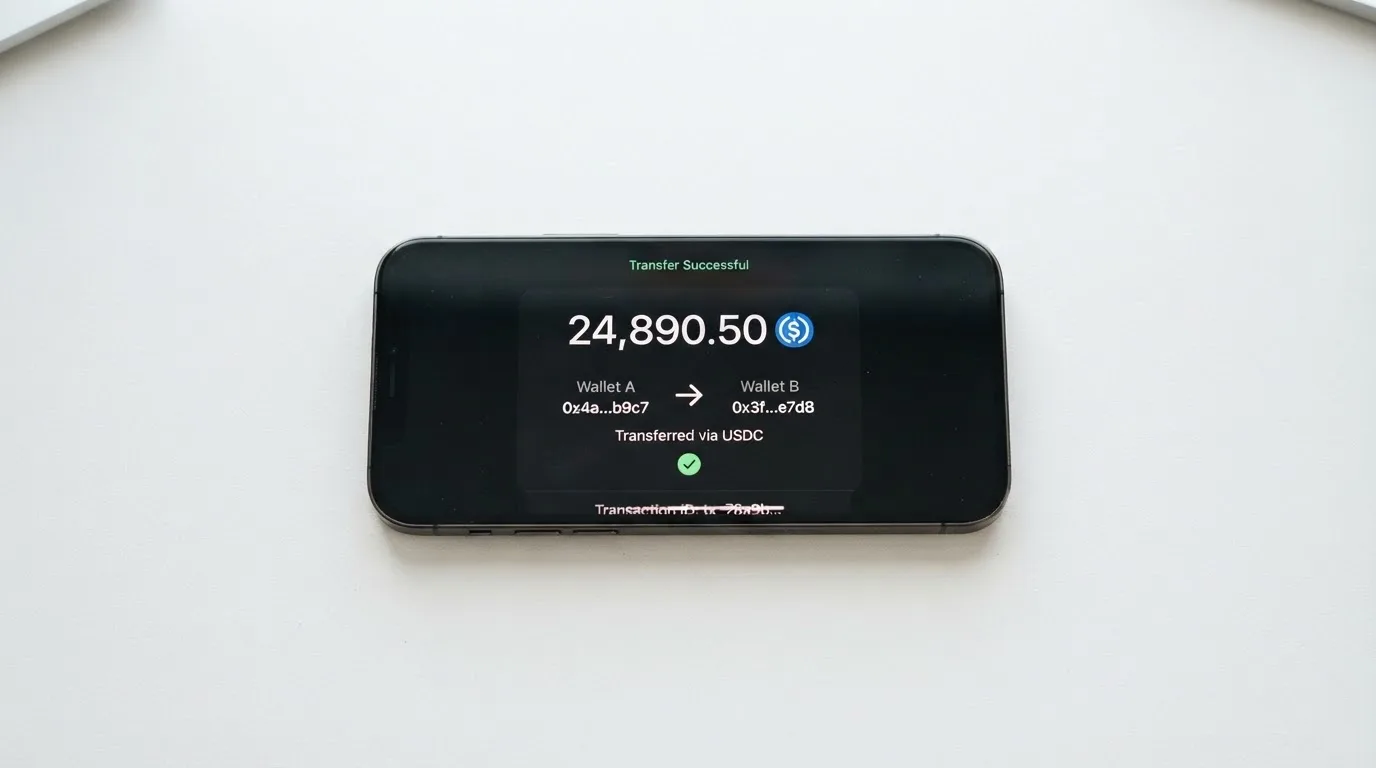
The shape of the flow is what you would expect. You deposit or already hold balances on Bit2Me, you nominate which wallet (euro, a specific crypto, a stablecoin) the card draws from at the moment of payment, and the conversion happens at the network rate plus the fees described in the previous section. Crypto transfers are irreversible, so the network matters: if the card provider does not support the network you used, or you send to an address of another network, the deposit can be lost or need manual recovery. On-chain network fees (gas or bandwidth) are charged by the blockchain itself, not by Bit2Me.
A few practical points to keep in mind. First, ERC-20 transfers on Ethereum require ETH in the same wallet to pay gas, so a wallet holding only USDT cannot send. Second, Tether’s USDT and Circle’s USDC together account for about 90% of stablecoin market capitalisation, and USDC is no longer natively supported on Tron (Circle stopped support in February 2024), so “USDC over TRC20” is not an option. Third, both Tether and Circle have, at various times, frozen funds linked to sanctioned wallets, so stablecoins are not censorship-proof. None of that is specific to Bit2Me; it is the shape of the wider market, and the card’s design pushes you straight into it.
Paying with it every day
Day-to-day use is where Bit2Me looks strongest. The card works at any merchant that accepts Mastercard online or in store, supports Apple Pay and Google Pay, and offers 24/7 cash withdrawals at ATMs. That covers most of what a debit card needs to do.
The cashback structure is the part that grabs attention. The card page advertises “up to 7%” cashback and “up to 39% cashback” when combined with other Bit2Me products. Linking a stablecoin earns up to 7% yield on purchases, and an additional “up to +25% extra with Bit2Me Life at 10+ merchants”. Two important caveats that the page does not resolve: the cashback is paid in B2M tokens (whose value moves with the market), and the asterisk on “up to 7%” links to conditions that are not stated on the card page itself. The unofficial cashback table (0% at L0, 0.25% at L1, 0.5% at L2, 1% at L3, 2% at L4, 3% at L5, 5% at L6, 7% at L7) is consistent with the marketing claim but is not confirmed on the official page.
On the app side, Bit2Me is available on iOS, iPad, Mac (M1 and later) and Android. The App Store listing for Spain rates it 4.5 out of 5 from about 3,800 ratings (read 20 October 2026); the Google Play listing exists but its rating was not read for this review.
Three things to be aware of in daily use. First, the official card page does not list the merchant categories that are blocked — only the unofficial source mentions casinos, lotteries and betting as cashback exclusions, which is normal. Second, the card’s dispute process is not described on the official pages, so you should not assume the same chargeback rights as a regulated bank debit card: prepaid-card coverage varies and should not be assumed. Third, an authorisation hold (for example on a hotel or a car hire) can leave funds unavailable for several days, typically up to seven, and that interacts with the daily and monthly spending limits above.
What can go wrong
The card is issued by a regulated institution, but the platform behind it is still a crypto exchange with a Trustpilot profile to match.
Trustpilot score, October 2026. Bit2Me sits at 3.9 out of 5 from 2,484 reviews. About 26% of those are one-star, and the company has replied to 97% of the negative reviews. The recurring themes in recent months are withdrawals or transfers held under review (complaints from July and April 2026), account lockouts or hack reports with unanswered calls (March and April 2026), slow support (February to April 2026), and complaints about fees on small purchases (July 2026). On the positive side, phone and WhatsApp support has drawn praise in May to August 2026. One May 2025 one-star review describes an account being locked and funds held for over a year, with the company replying that it prioritises security. No card-specific complaint pattern was found in the reviews, and no Reddit threads surfaced. No official incidents — breaches, regulator action against the card, programme suspension — were found.
Issuer and regulation. The card and its payment account are issued and managed by PECUNIA CARDS EDE, S.L.U., an electronic money institution supervised by the Bank of Spain and trading as PECUNPAY. Bit2Me itself holds MiCA authorisation from Spain’s CNMV; press reports describe it as the first Spanish platform to receive one, with the registry listing 2025-10-31 (press dates conflict). MiCA’s transitional period runs until 1 July 2026 or until a provider receives or is refused authorisation, so a current MiCA registration is the relevant signal. On the capital side, Bankinter joined a €30 million funding round with a minority Tether stake, which is a non-trivial signal of institutional interest, though it is not a deposit guarantee.
Counterparty risk. The card sits on top of two licences at once: MiCA covers the crypto side (custody, exchange, transfer), while the card itself is a payment service regulated under e-money and payment-services law. The EMI licence requires safeguarding of customer funds, usually by segregating them in dedicated accounts or insuring them, but those safeguarded funds are not bank deposits and are not covered by deposit guarantee schemes. The wider history of crypto custodians — Mt. Gox, Coincheck, Ronin — is a reminder that even regulated platforms can fail.
Operational risk. Authorisation holds can leave a balance unavailable for several days. Sanctions screening is applied at sign-up, and a change in your circumstances (residency, sanctions list updates) can lead to account closure. Programme-level closures have happened before: Visa terminated its global agreements with FTX on 13 November 2022, and the WaveCrest suspension in 2018 closed every WaveCrest-issued Visa programme in Europe. Bit2Me is on the Mastercard network, not Visa, but the structural risk is the same: a card programme depends on the network’s continued willingness to license the issuer.
Support. Customer service is offered in 9 languages, the support email is [email protected], and the phone number listed in the App Store is +34 910913788. Hours are not published.
What to take instead
No single card fits everyone, so the right comparison depends on what you actually want. Three cards I have looked at sit close to Bit2Me and are worth a side-by-side check.
| Card | Score | Best for | Watch out for |
|---|---|---|---|
| Bit2Me | 6.8 / 10 | EEA residents who want a Mastercard with high B2M cashback and accept a published-fee gap | Unofficial country list; no official fee schedule; crypto-funded spending costs 0.95% |
| RedotPay | 6.9 / 10 | Users in Asia, Latin America and other non-US regions who want a Visa debit in USD or HKD | Two official lists (KYC and card-issuance) that disagree on some countries; $100 physical card fee |
| Bitpanda | 6.5 / 10 | Euro-area residents who want a plain Visa debit tied to a regulated Austrian platform | No virtual card; only one active physical card at a time; non-EUR FX fee €0 but a Visa mark-up applies |
| Wirex | 6.7 / 10 | Users who want WXT-based “cryptoback” and a metal Visa Signature option | Cash withdrawals not permitted in Singapore; FX fee not stated on the fee page; one-off £30 fee for terms violations |
A few contrasts that come up repeatedly:
- Card cost. Bit2Me’s virtual card is free (unofficial) and the physical card is €20 at the entry tiers (unofficial). RedotPay charges $10 for a virtual and $100 for a physical (non-refundable). Bitpanda’s first shipment is free, with €5.90 for a reissue.
- Funding model. Bit2Me lets you pick a wallet per payment, so you can mix euro and crypto spending without a manual top-up. RedotPay funds from a pre-loaded balance; Bitpanda converts a chosen main (and optional fallback) asset to EUR at payment. The differences matter if you want to leave funds in crypto between purchases versus holding them in fiat on the card.
- Cashback currency. Bit2Me pays in B2M tokens; Wirex pays in WXT; RedotPay does not state a card cashback rate; Bitpanda’s body copy says 1%, the page summary says “up to 2%”. If you want cashback in euros, none of these are quite that.
- Country list. Bit2Me’s is the most opaque. RedotPay publishes both a KYC list and a card-issuance list (and the two lists do not fully agree). Bitpanda’s rule is plain: euro-area residence, except users verified via “Bankident” cannot order. Wirex publishes fees for the UK, EEA, APAC, SG, AU and “Other” and says it serves 130+ countries.
If you are choosing between these on the basis of country eligibility, sort that out first. If you are choosing on cashback, the B2M and WXT payouts are different products with different token risk profiles. If you are choosing on cost transparency, Bitpanda and Wirex publish more on their public pages than Bit2Me does.
Who I would recommend it to
I would recommend the Bit2Me card to an EEA resident — outside the excluded countries — who already uses the Bit2Me exchange, is comfortable with a euro-wallet-funded debit card, and is willing to verify the unofficial fee schedule against the live app before relying on it. In that situation the card’s strengths line up: a regulated issuer, Mastercard acceptance, Apple Pay and Google Pay, no maintenance fee, and a cashback rate that, at the upper tiers, is meaningfully higher than what most crypto cards offer. The €0 commission on euro-wallet spending and the unofficial 0.95% on crypto-funded spending are also competitive.
I would not recommend it if you live in a country the unofficial sources list as excluded, if you need an official fee schedule before you sign up, if your main reason for wanting a crypto card is to spend stablecoins in non-Eurozone currencies (where the 1.75% to 2% FX fee plus the conversion fee adds up), or if the unofficial reputation for withdrawal delays and account freezes is a deal-breaker for you. In any of those cases, the alternatives above are worth a serious look.
The honest summary: Bit2Me has the right building blocks — a regulated issuer, a MiCA-authorised parent, a Mastercard product, mobile wallet support, and a real cashback programme — but the official card page leaves a lot of the practical questions unanswered. If you can live with that gap, the card is worth considering. If you cannot, look at Bitpanda or Wirex for a more published schedule, or RedotPay if you are outside the EEA.
Frequently asked questions
What is the Bit2Me card?
The Bit2Me card is a Mastercard debit product sold by the Spanish crypto exchange Bit2Me. It can be virtual, physical or both, and it is issued by PECUNIA CARDS EDE, S.L.U. (trading as PECUNPAY), an e-money institution supervised by the Bank of Spain. You fund it from a euro wallet or from a crypto balance, and it is accepted anywhere Mastercard is taken.
How does the Bit2Me card work?
You hold balances on Bit2Me, you choose which wallet pays at the point of sale, and the card converts and settles at the network rate plus the card’s fees. Crypto-funded spending is reported to cost 0.95% in conversion, euro-wallet spending 0%, and foreign-currency spending 1.75% to 2% (unofficial). Cashback is paid in B2M tokens, not in euros.
Is Bit2Me a bank?
No. Bit2Me is a crypto exchange, and the card is issued by a separate e-money institution, PECUNIA CARDS EDE, S.L.U. (trading as PECUNPAY), which is supervised by the Bank of Spain. The funds safeguarded under an EMI licence are not the same as bank deposits and are not covered by deposit guarantee schemes.
Who owns Bit2Me?
Bit2Me is a Spanish company. In a €30 million funding round, Bankinter took a stake and Tether took a minority stake. The card issuer, PECUNIA CARDS EDE, S.L.U., is a separate legal entity under Bank of Spain supervision.
Is the Bit2Me card available in my country?
The official card page does not publish a list. Unofficial sources from August 2026 describe support for around 29 countries, weighted toward the EEA (Austria, Belgium, Germany, Poland, Spain, Sweden and so on), with the US, Canada, Ireland, Japan, Tajikistan, Iran and Cuba excluded. Tax residence in a supported country is reported as the rule. Treat that as unofficial until you confirm with Bit2Me directly.
How do I get the Bit2Me card?
Open and verify a Bit2Me account, complete KYC, and request the card from the app. The card can be virtual, physical, or both. Unofficial sources describe a base tier needing a government photo ID and a liveness check, with proof of address required at higher tiers.
Does the Bit2Me card require KYC?
Yes, because Bit2Me is a regulated crypto-asset service provider. Unofficial reporting from August 2026 says the base tier needs a government photo ID and a liveness check, with proof of address for higher tiers and additional documents requested on a case-by-case basis. The card page itself does not list the documents.
Is the Bit2Me card free?
There is no maintenance fee. The virtual card is reported to be free (unofficial) and the physical card €20 at the entry loyalty levels, falling to free at L5 and above (unofficial). The page does not state the issuance fee, the conversion fee, the FX fee or the ATM fee.
How do I add the Bit2Me card to Apple Pay or Google Wallet?
The card is compatible with Apple Pay and Google Pay, so the usual flow applies: open Wallet on iOS or the Google Wallet app on Android, add the card, and complete the issuer’s verification step (typically a one-time code or biometric prompt). No specific instructions for Bit2Me were published on the card page.
Is the Bit2Me card safe?
The issuer is regulated by the Bank of Spain and Bit2Me holds MiCA authorisation from Spain’s CNMV. Card safety features (2FA, freeze, insurance, custody model) are not described on the card page. The wider risks of a custodial product apply: account freezes, withdrawal delays, and platform failure. The Trustpilot profile sits at 3.9 out of 5 from 2,484 reviews, with recurring complaints about withdrawal delays and account lockouts.
App and neobank cards – cryptocardpedia.com
Content created by the «cryptocardpedia.com» team